Topic

Place Value

25 articles
math

10 More and 10 Less in 1st Grade: Blocks, Chart and 6 Examples

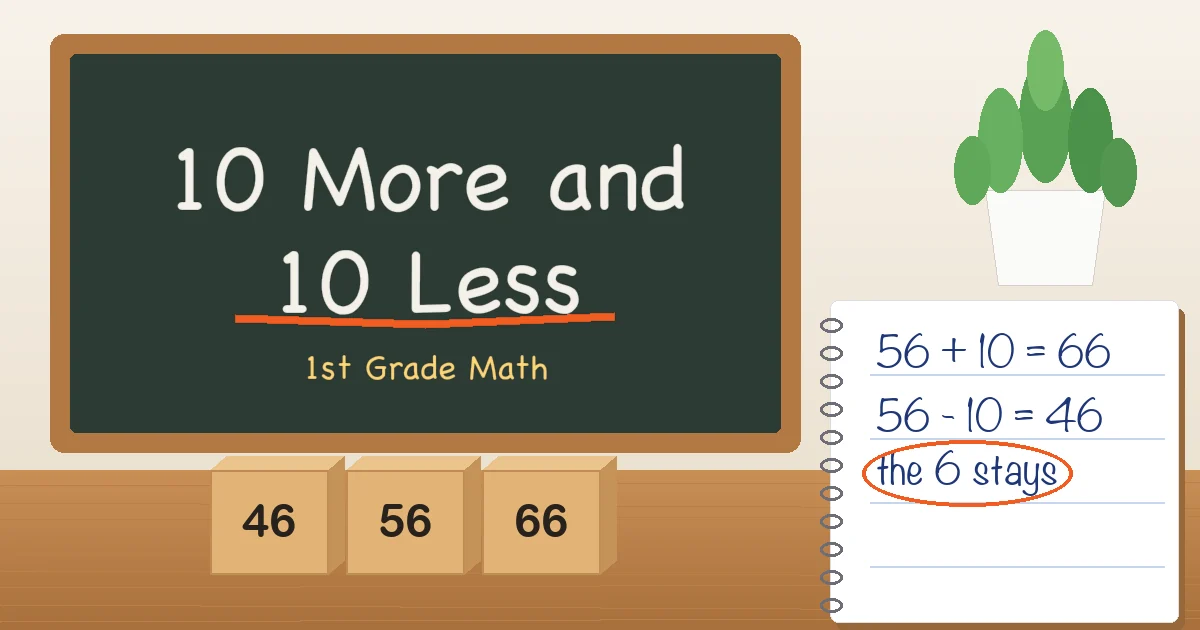
10 more and 10 less means adding or taking away one ten, so the ones digit stays put. A hundred chart and six worked examples show why it works, even past 100.

1st Grade MathPlace Value10 More and 10 Less
10 More and 10 Less in 1st Grade: Blocks, Chart and 6 Examples
math

Adding and Subtracting 10 and 100 Mentally: 2nd Grade Guide

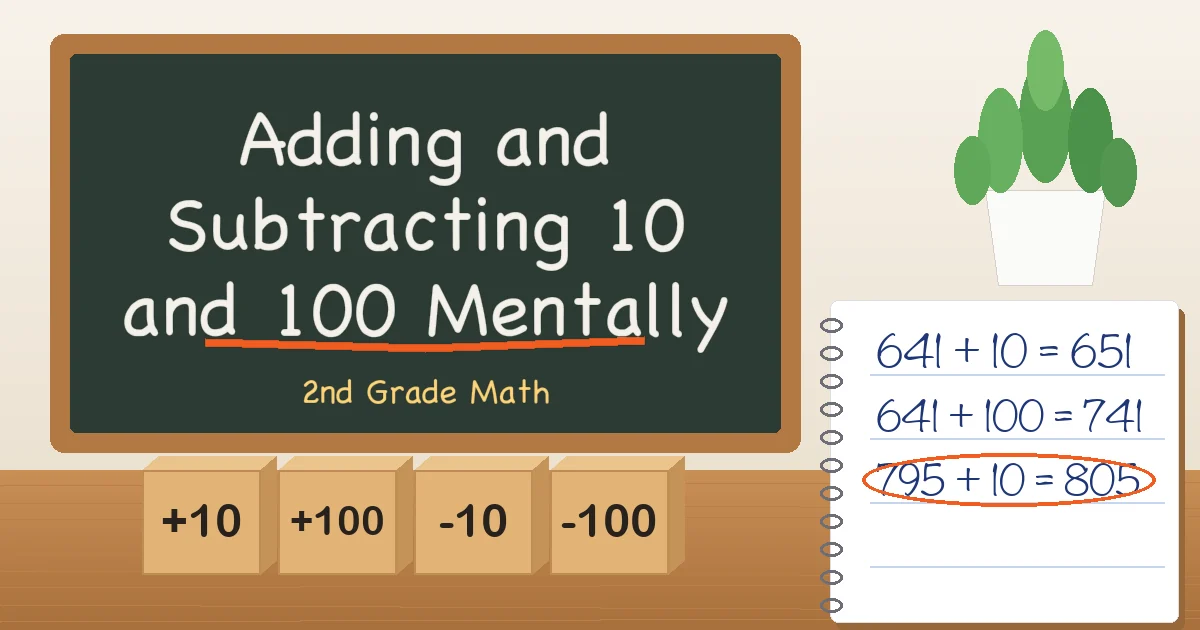
Adding and subtracting 10 and 100 adds or removes one ten or one hundred, so usually only the tens or hundreds digit changes. Here is why, and what happens across a hundred.

2nd Grade MathPlace ValueAdding and Subtracting 10 and 100 Mentally
Adding and Subtracting 10 and 100 Mentally: 2nd Grade Guide
math

Adding Tens and Ones Without Regrouping: 6 Examples for 1st Grade

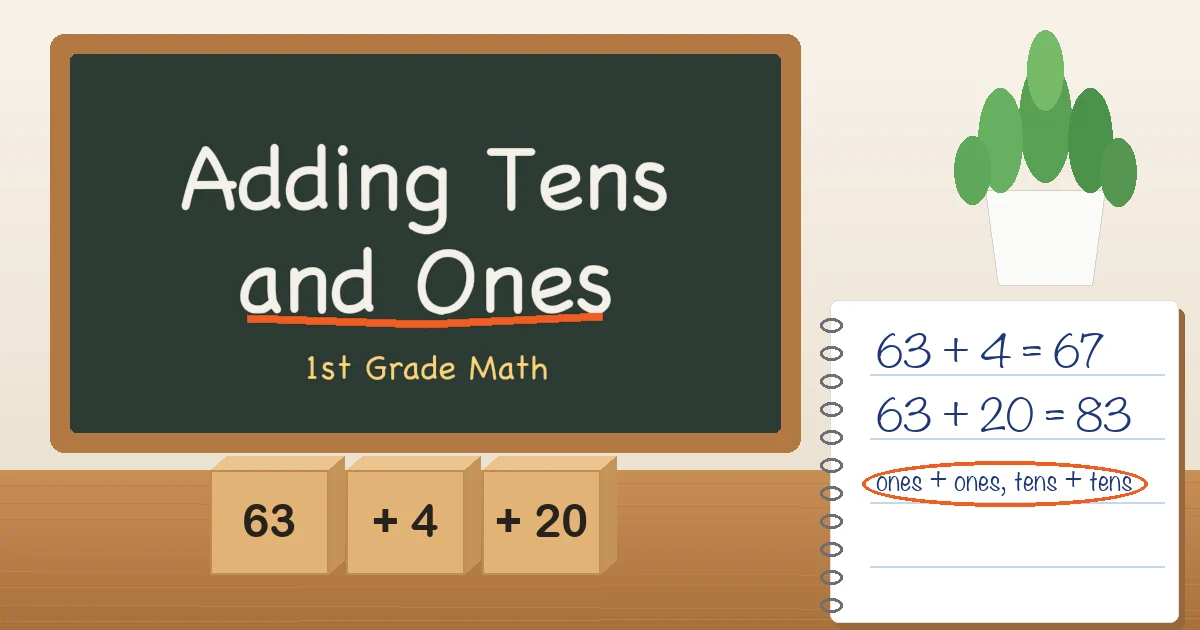
Adding tens and ones means adding ones to ones and tens to tens, so 63 + 4 is 67 and 63 + 20 is 83. Six worked examples and the 9-or-less check come next.

1st Grade MathPlace ValueAdding Tens and Ones
Adding Tens and Ones Without Regrouping: 6 Examples for 1st Grade
math

Adding Multiples of 10 in 1st Grade: Tens in a Row, 6 Examples

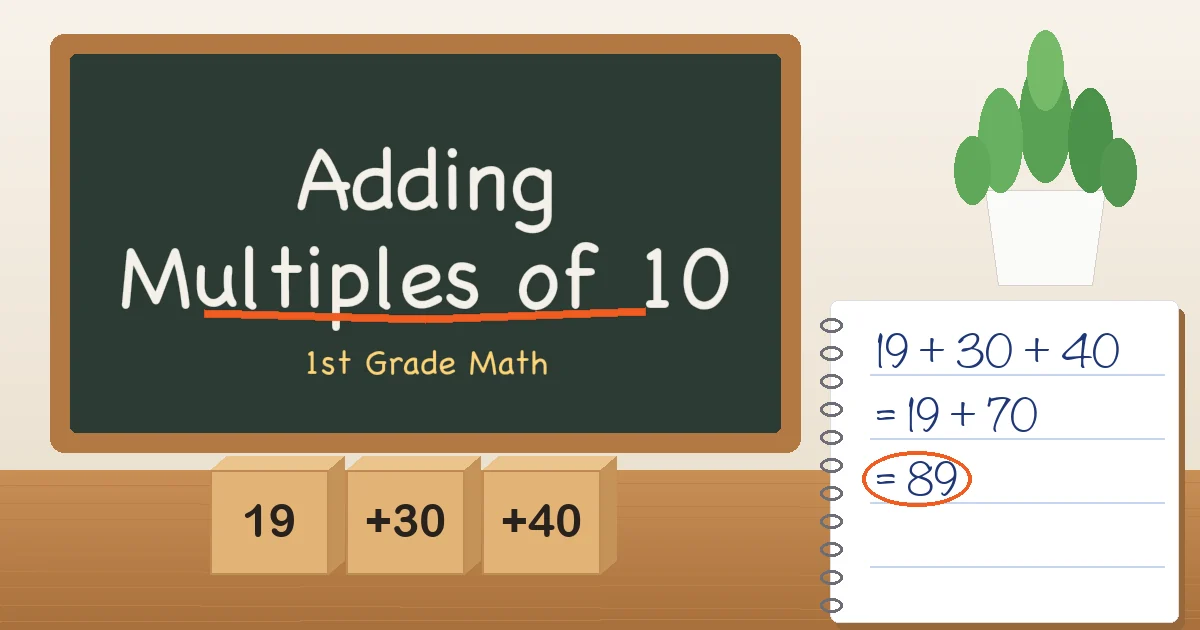
Adding multiples of 10 means adding whole tens, so the number of tens grows and the ones stay the same. See two ways to add several tens and six worked examples.

1st Grade MathPlace ValueAdding Multiples of 10
Adding Multiples of 10 in 1st Grade: Tens in a Row, 6 Examples
math

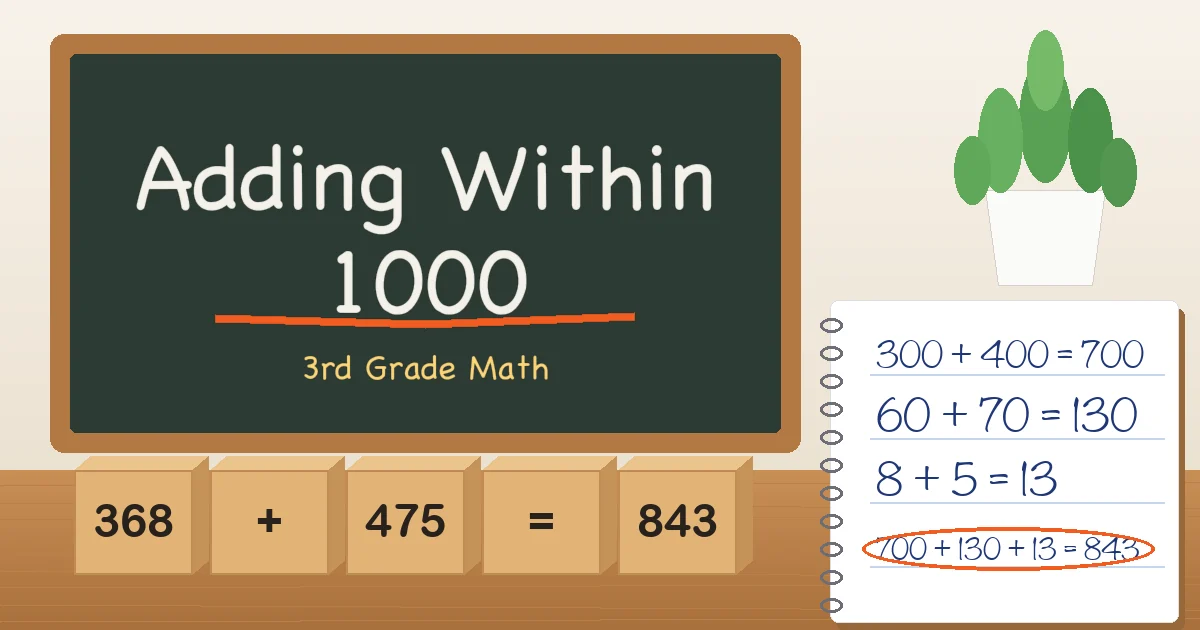
3rd Grade Adding Within 1000: Strategies, Checks and 6 Examples

Adding within 1000 means joining hundreds, tens and ones into a sum up to 1,000, trading any 10 for 1 of the next place. Three strategies, two checks and six examples follow.

3rd Grade MathPlace ValueAdding Within 1000
3rd Grade Adding Within 1000: Strategies, Checks and 6 Examples
math

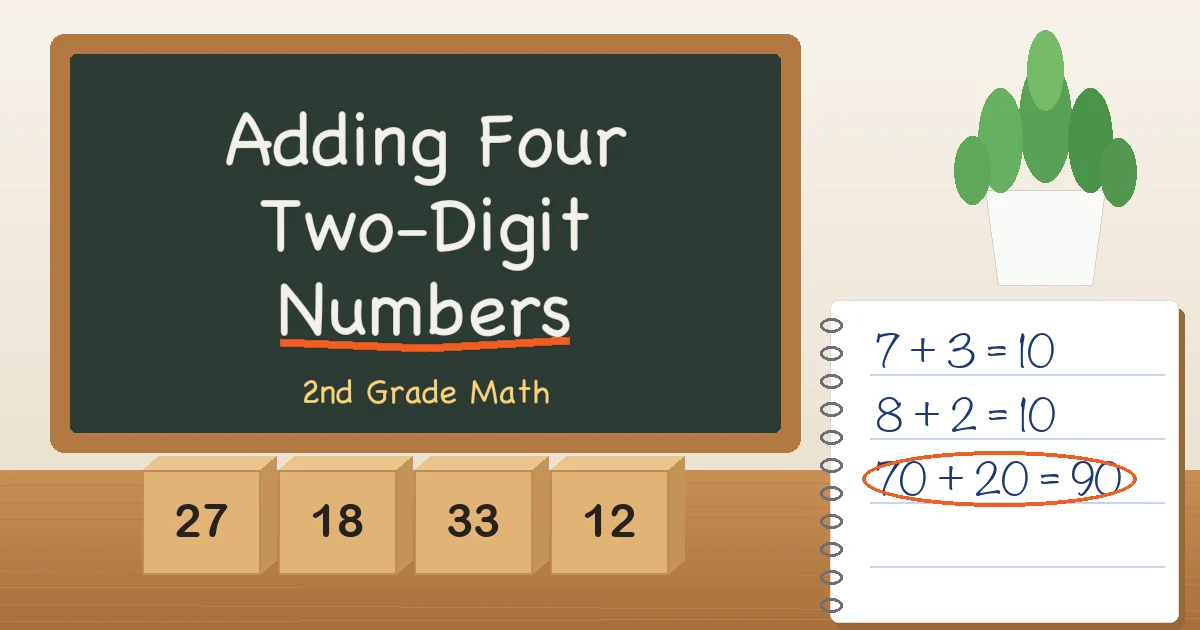
Adding Up to Four Two-Digit Numbers: Grade 2 Steps and Examples

Adding up to four two-digit numbers means adding all the tens, adding all the ones, then trading every 10 ones for a new ten. Friendly pairs, columns and three common mistakes come next.

2nd Grade MathPlace ValueAdding Up to Four Two-Digit Numbers
Adding Up to Four Two-Digit Numbers: Grade 2 Steps and Examples
math

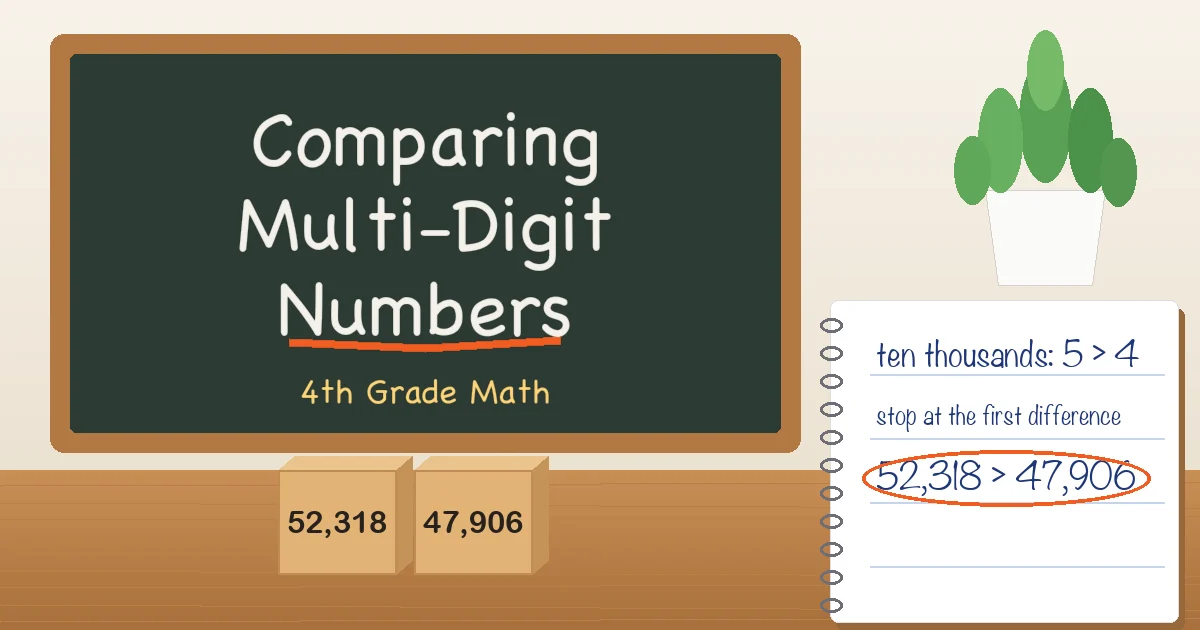
Comparing Multi-Digit Numbers: Place Value Rules and 6 Examples

Comparing multi-digit numbers means reading from the greatest place until two digits differ, and the bigger digit wins. That digit decides because each place is worth 10 times the place to its right.

4th Grade MathPlace ValueComparing Multi-Digit Numbers
Comparing Multi-Digit Numbers: Place Value Rules and 6 Examples
math

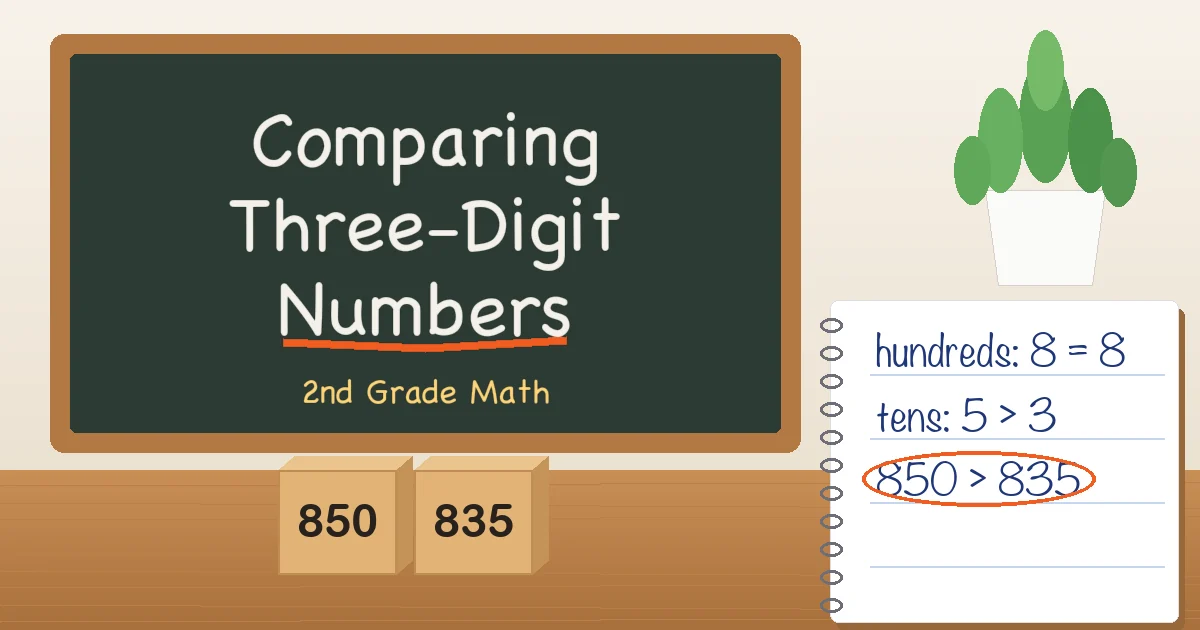
Comparing Three-Digit Numbers and Ordering Them: 6 Examples

Comparing three-digit numbers means checking the hundreds first, then the tens, then the ones, and stopping at the first place that differs. See why it works, how to order a set and the two-digit trap.

2nd Grade MathPlace ValueComparing Three-Digit Numbers
Comparing Three-Digit Numbers and Ordering Them: 6 Examples
math

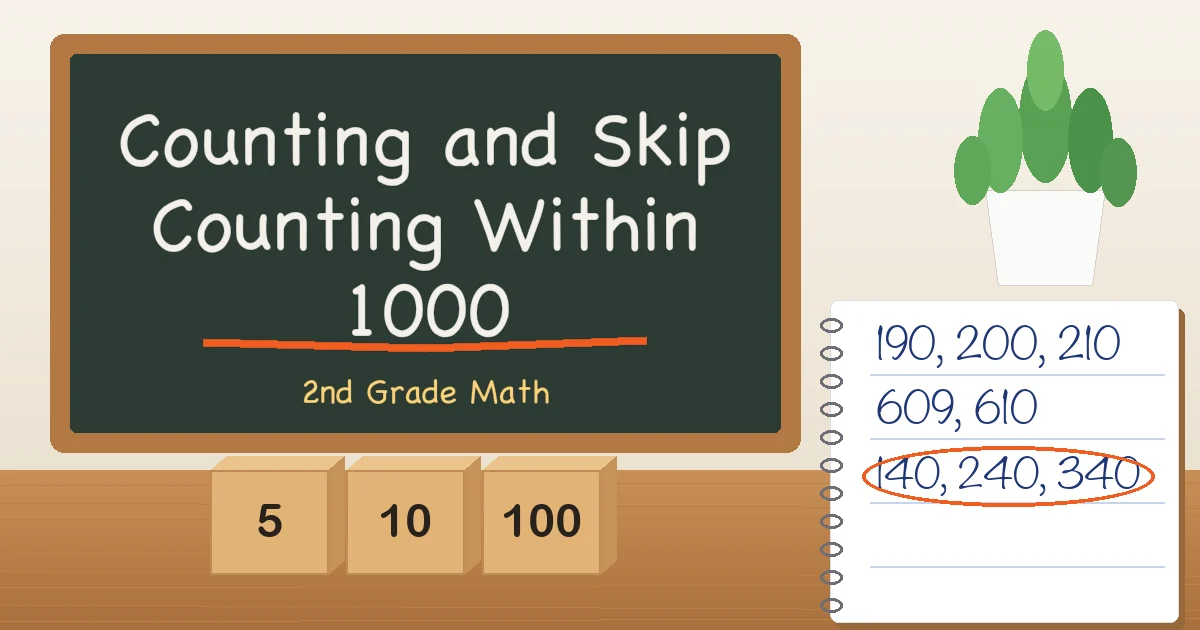
Counting and Skip Counting Within 1000: 2nd Grade Lesson

Skip counting within 1000 means counting forward or back by the same jump, like 5, 10 or 100, up to 1,000. You'll also count by ones past each hundred and fix three mistakes.

2nd Grade MathPlace ValueCounting and Skip Counting Within 1000
Counting and Skip Counting Within 1000: 2nd Grade Lesson
math

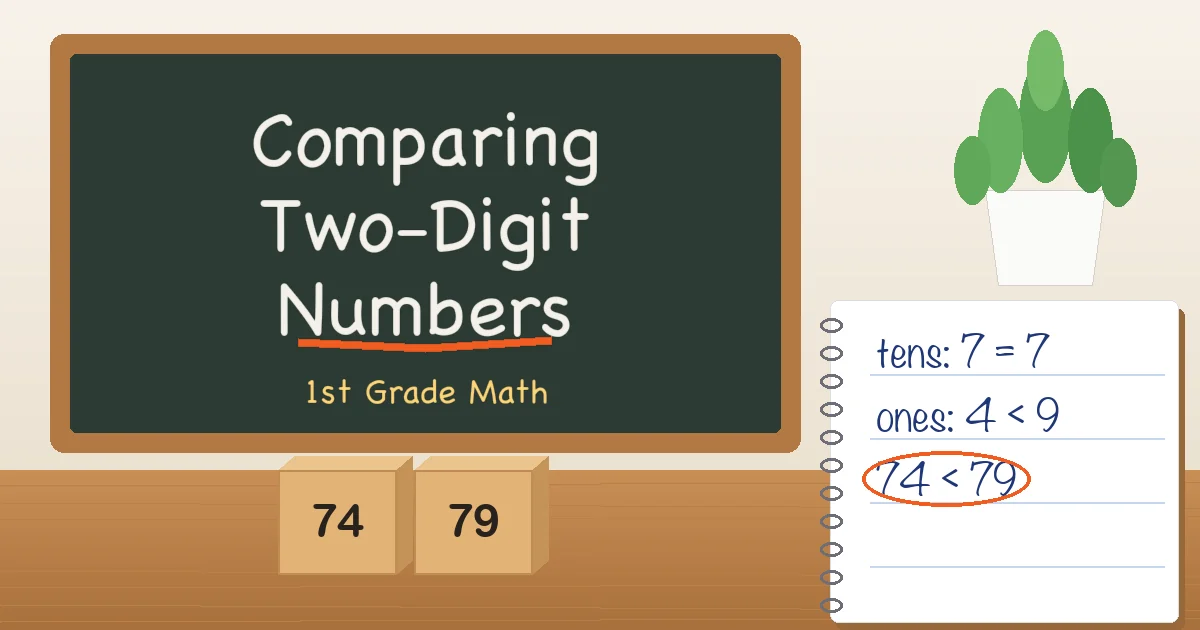
Comparing Two-Digit Numbers in 1st Grade: Tens First, 6 Examples

Comparing two-digit numbers means checking the tens first and using the ones only to break a tie. See why 63 beats 48 and which way the greater than sign points, with six worked examples.

1st Grade MathPlace ValueComparing Two-Digit Numbers
Comparing Two-Digit Numbers in 1st Grade: Tens First, 6 Examples
math

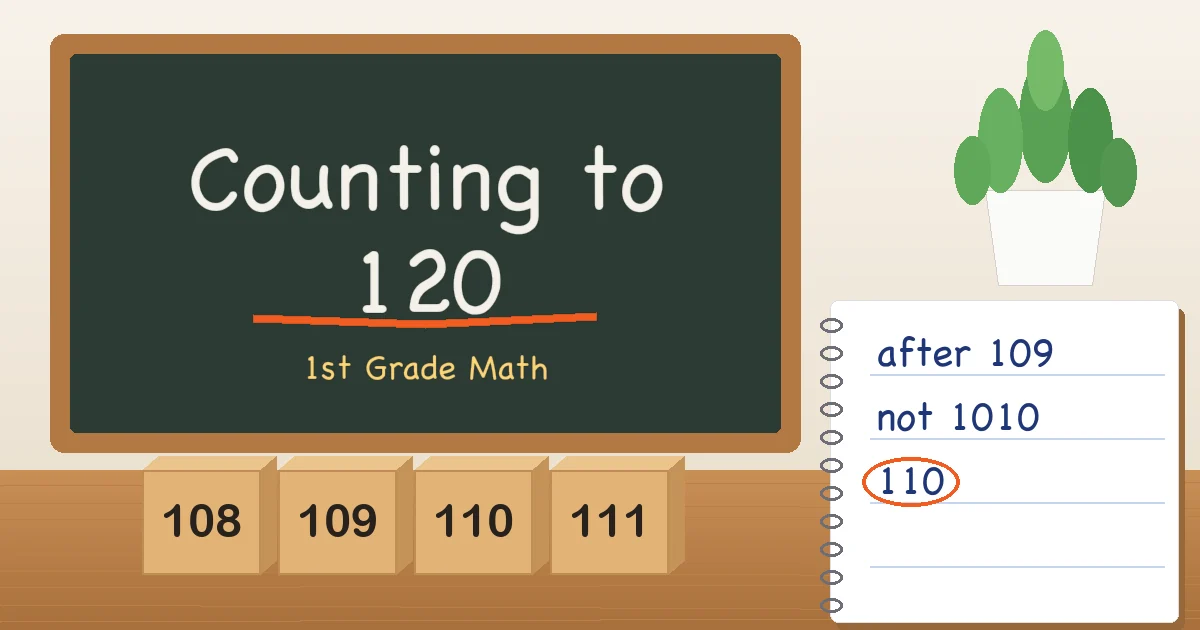
1st Grade Counting to 120: Count Forward, Back and Past 100

Counting to 120 means saying and writing numbers in order up to 120, from any starting number. The tricky crossings are 99 to 100 and 109 to 110, and the five worked examples include both.

1st Grade MathPlace ValueCounting to 120
1st Grade Counting to 120: Count Forward, Back and Past 100
math

Estimating to the Nearest Ten and Hundred for 2nd Graders
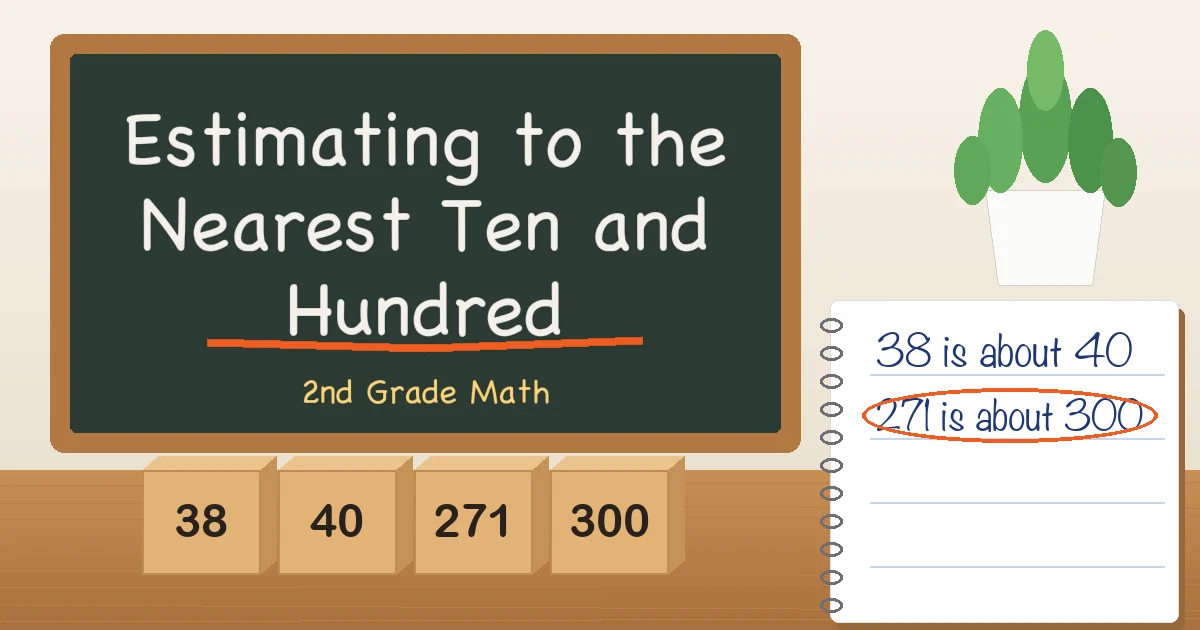
Estimating to the nearest ten and hundred means swapping a number for its closest ten or hundred, so 38 is about 40. Those easy numbers then check sums and differences.

2nd Grade MathPlace ValueEstimating to the Nearest Ten and Hundred
Estimating to the Nearest Ten and Hundred for 2nd Graders
math

Multiplying and Dividing by Powers of 10: How the Digits Shift

Multiplying and dividing by powers of 10 slides every digit one place for each zero in the power, left to multiply and right to divide. Placeholder zeros, exponents and six worked examples follow.

5th Grade MathNumber and Operations in Base TenPlace ValuePowers of 10
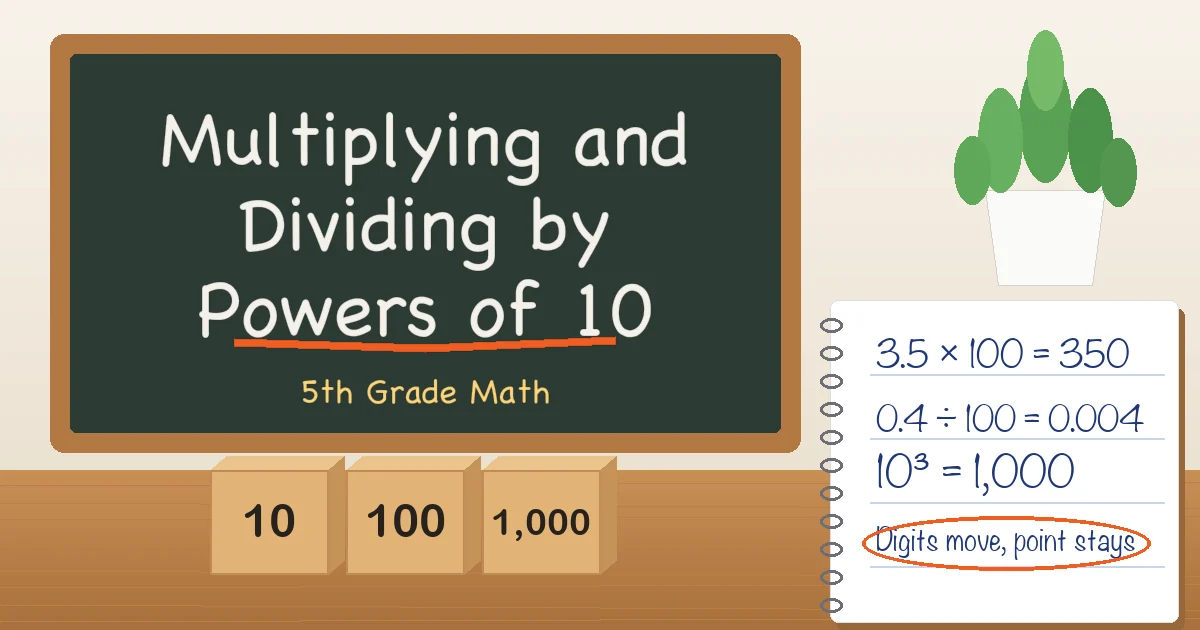
Multiplying and Dividing by Powers of 10: How the Digits Shift
math

Multi-Digit Subtraction: 4th Grade Steps, Zeros and Practice

Multi-digit subtraction means subtracting column by column, starting with the ones, and regrouping whenever a top digit is smaller than the digit under it. Zeros, two ways to check and five examples follow.

4th Grade MathPlace ValueMulti-Digit Subtraction
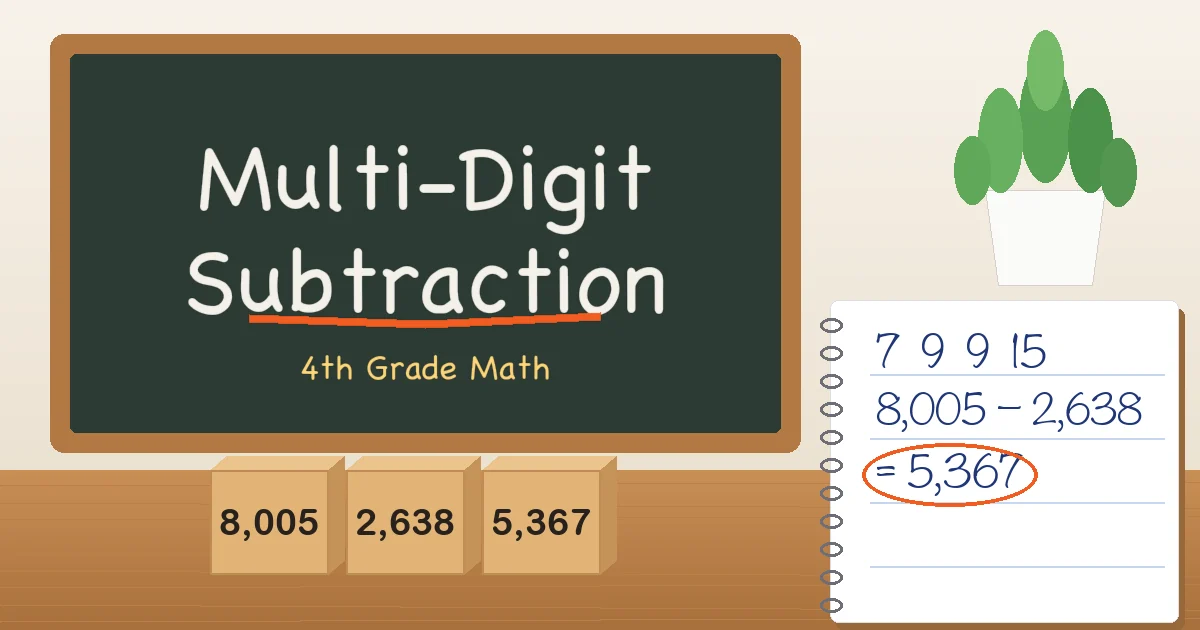
Multi-Digit Subtraction: 4th Grade Steps, Zeros and Practice
math

Multi-Digit Addition: 4th Grade Steps and Worked Examples

Multi-digit addition lines up numbers by place value, adds the columns from the ones, and regroups each 10 as 1 in the next place. Two checks and five worked examples follow.

4th Grade MathPlace ValueMulti-Digit Addition
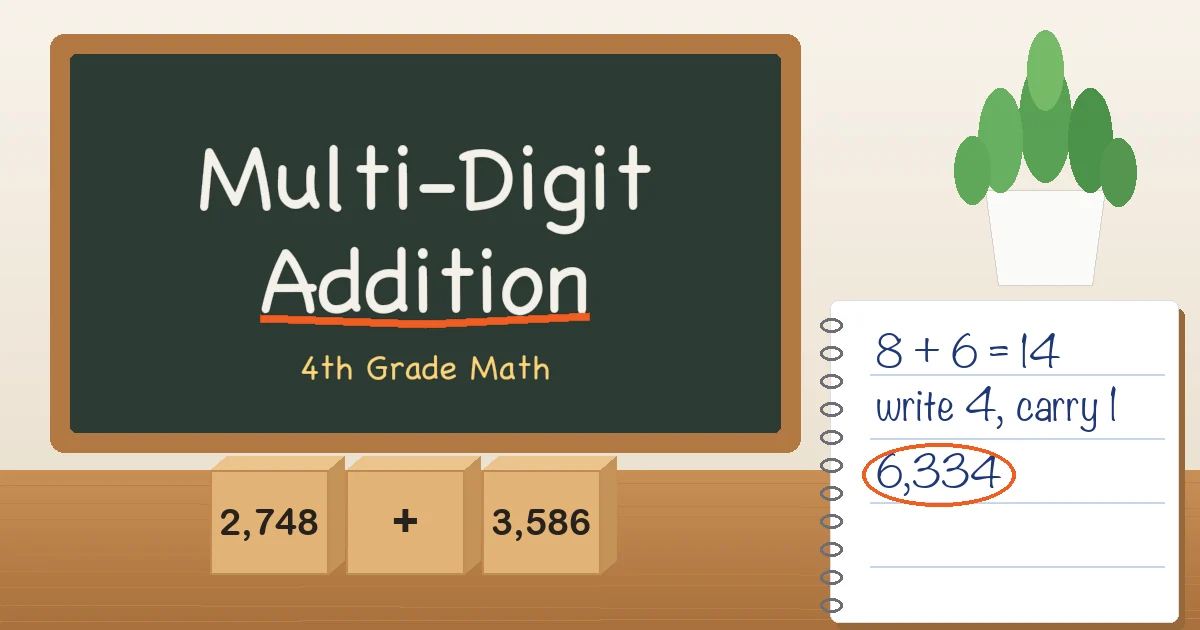
Multi-Digit Addition: 4th Grade Steps and Worked Examples
math

Multiplying by 1-Digit Numbers: 4th Grade Methods and Examples

Multiplying by 1-digit numbers means splitting the bigger number into place values, multiplying each part, then adding, so 7 groups of 2,346 make 16,422. Three methods, six examples and two checks follow.

4th Grade MathPlace ValueMultiplicationMultiplying by 1-Digit Numbers
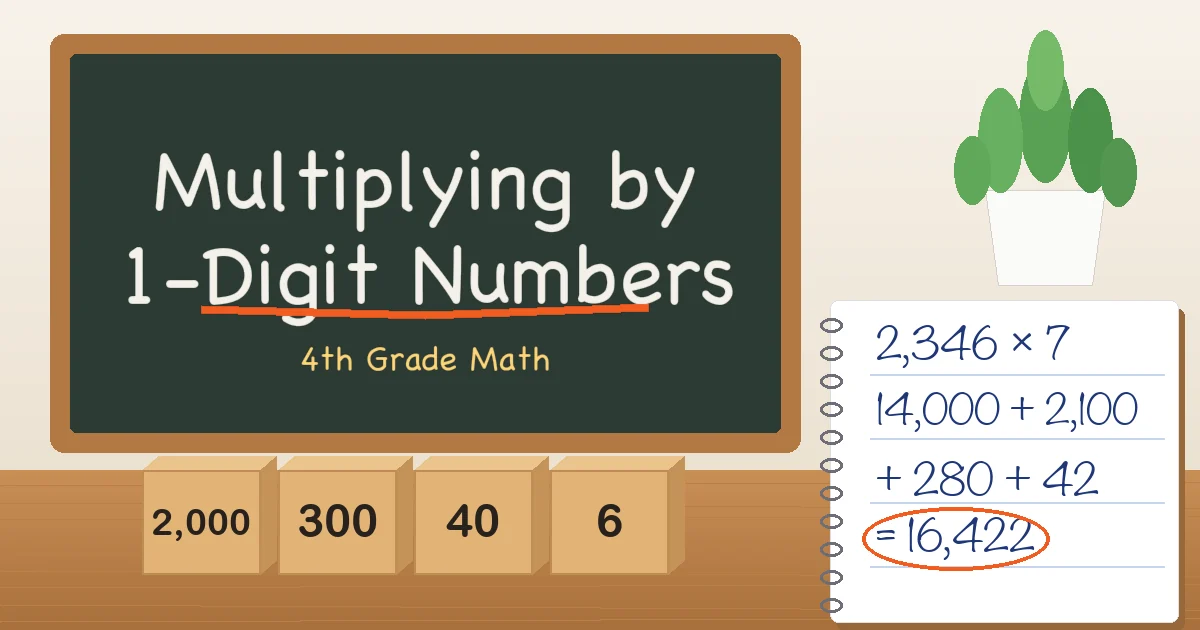
Multiplying by 1-Digit Numbers: 4th Grade Methods and Examples
math

Multiplying by Multiples of 10: 3rd Grade Steps and Examples

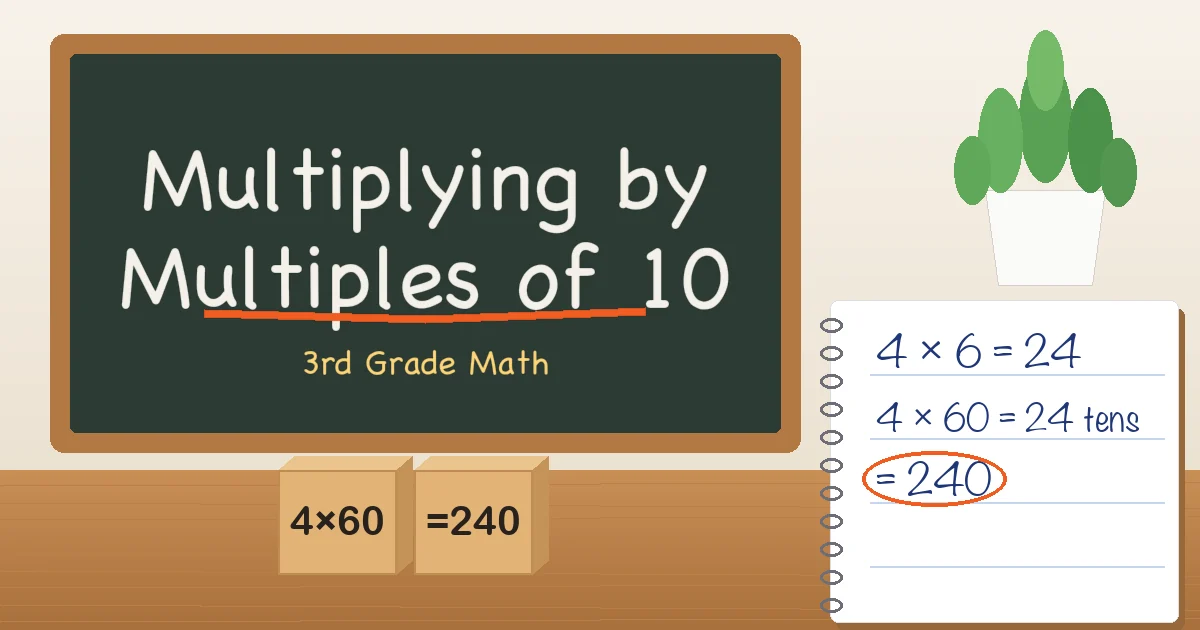
In 3rd grade, multiplying by multiples of 10 means multiplying by 10, 20, 30 and up to 90, so 7 times 40 is 28 tens, or 280. Ten-rods show why the zero appears.

3rd Grade MathPlace ValueMultiplying by Multiples of 10
Multiplying by Multiples of 10: 3rd Grade Steps and Examples
math

Multiplying by 10, 100, and 1,000: Why the Digits Slide Left

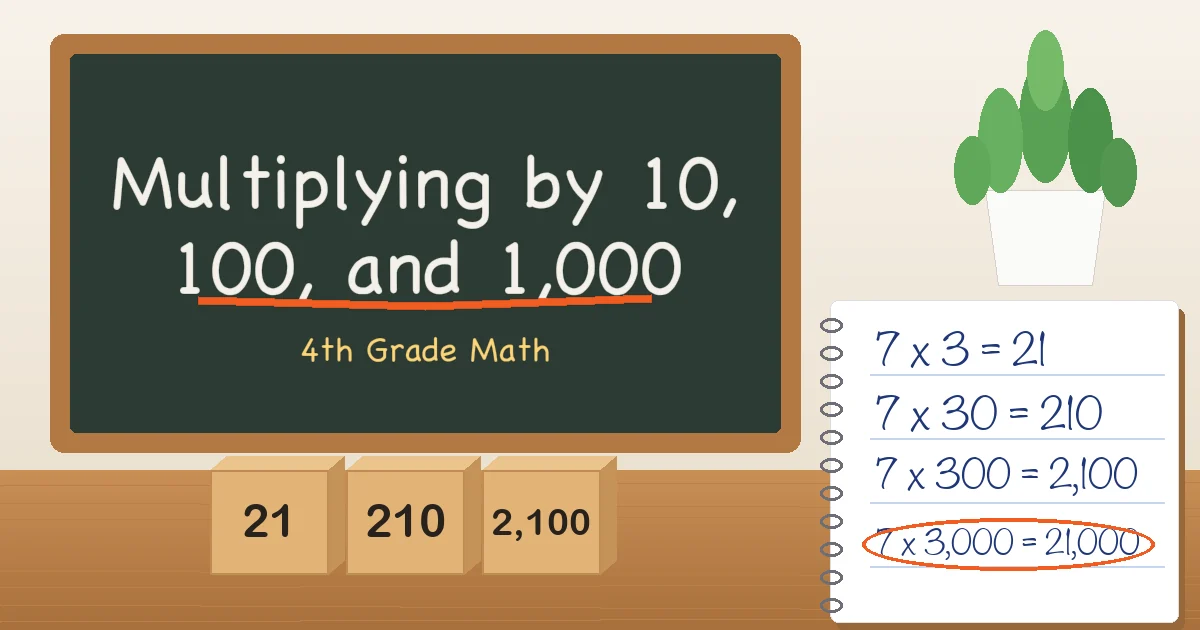
Multiplying by 10, 100, and 1,000 slides each digit of a whole number one, two or three places left, and a 0 fills each empty place. Multiples like 400 need one basic fact first.

4th Grade MathPlace ValueMultiplicationMultiplying by 10 100 and 1000
Multiplying by 10, 100, and 1,000: Why the Digits Slide Left
math

Regrouping Whole Numbers: 4th Grade Place Value Examples

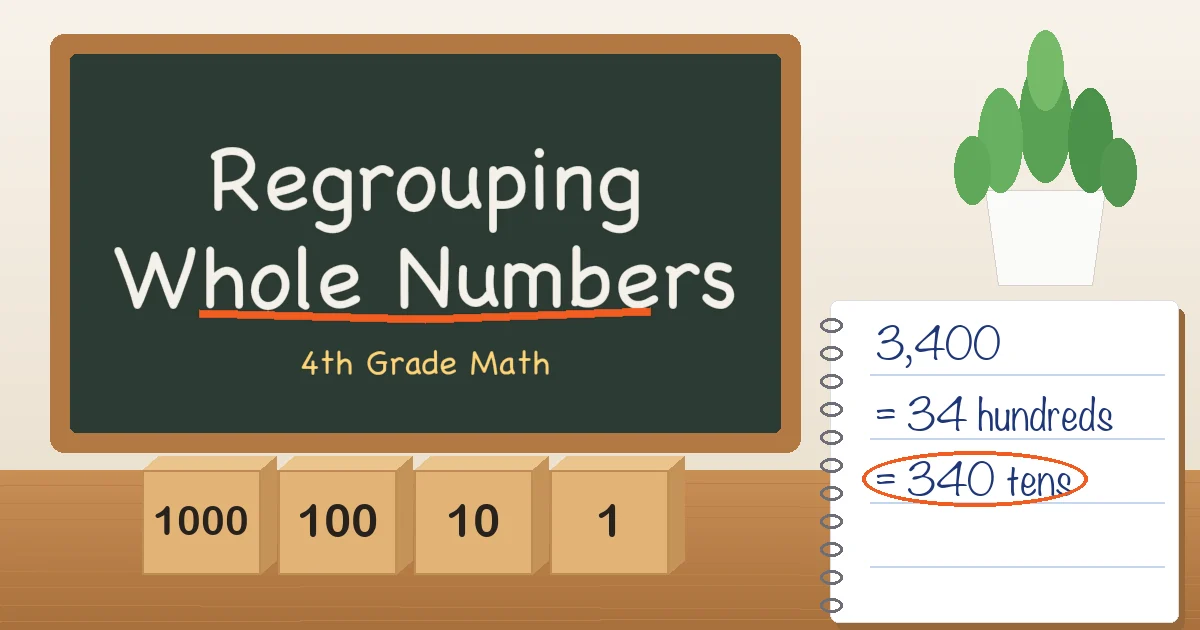
Regrouping whole numbers means trading 1 unit of a place for 10 of the next smaller place, or 10 for 1, without changing the total.

4th Grade MathPlace ValueRegrouping Whole Numbers
Regrouping Whole Numbers: 4th Grade Place Value Examples
math

Rounding Multi-Digit Numbers to Any Place, With 6 Examples

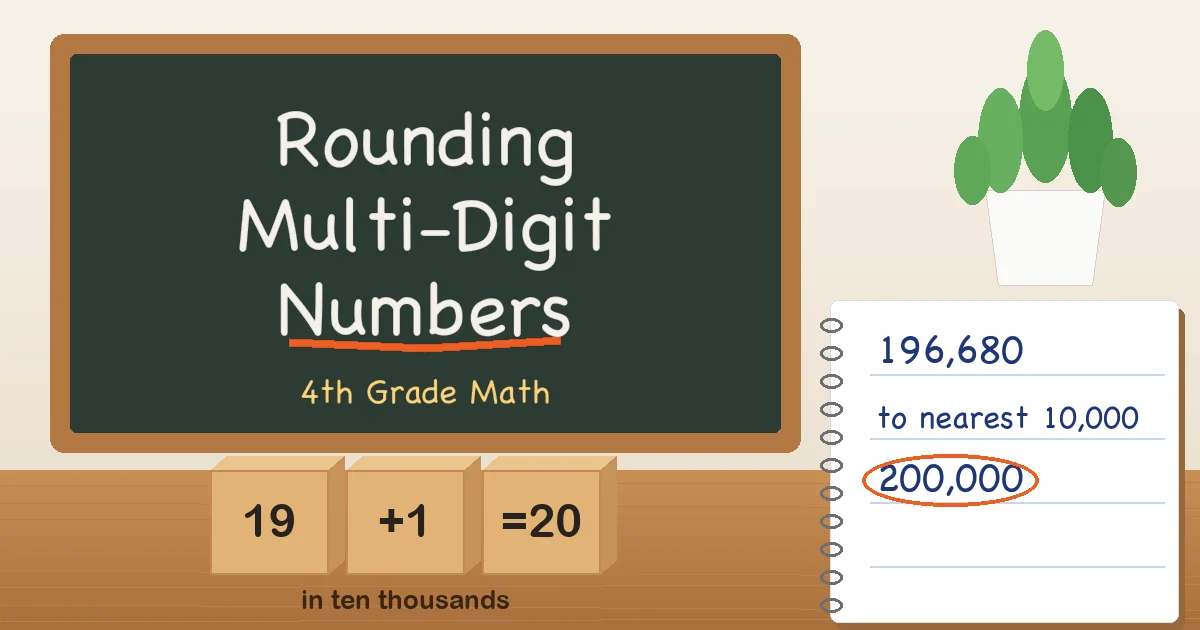
Rounding multi-digit numbers means replacing a number with the nearest multiple of a place value, so 391,243 becomes 390,000 at the nearest ten thousand. Nines that round up and missing digits follow.

4th Grade MathPlace ValueRounding Multi-Digit Numbers
Rounding Multi-Digit Numbers to Any Place, With 6 Examples
math

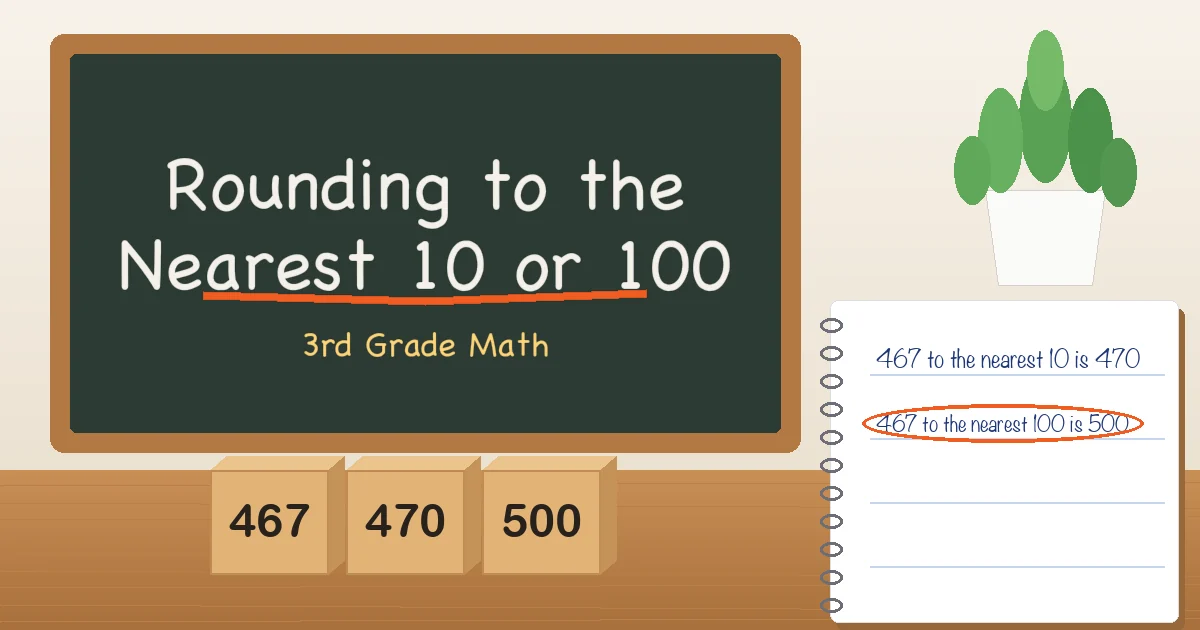
Rounding to the Nearest 10 or 100: A 3rd Grade Math Lesson

Rounding to the nearest 10 or 100 means trading a number for the closest ten or hundred, like 467 to 470 or 500. Place value names the choices, and the halfway rule settles ties.

3rd Grade MathPlace ValueRounding to the Nearest 10 or 100
Rounding to the Nearest 10 or 100: A 3rd Grade Math Lesson
math

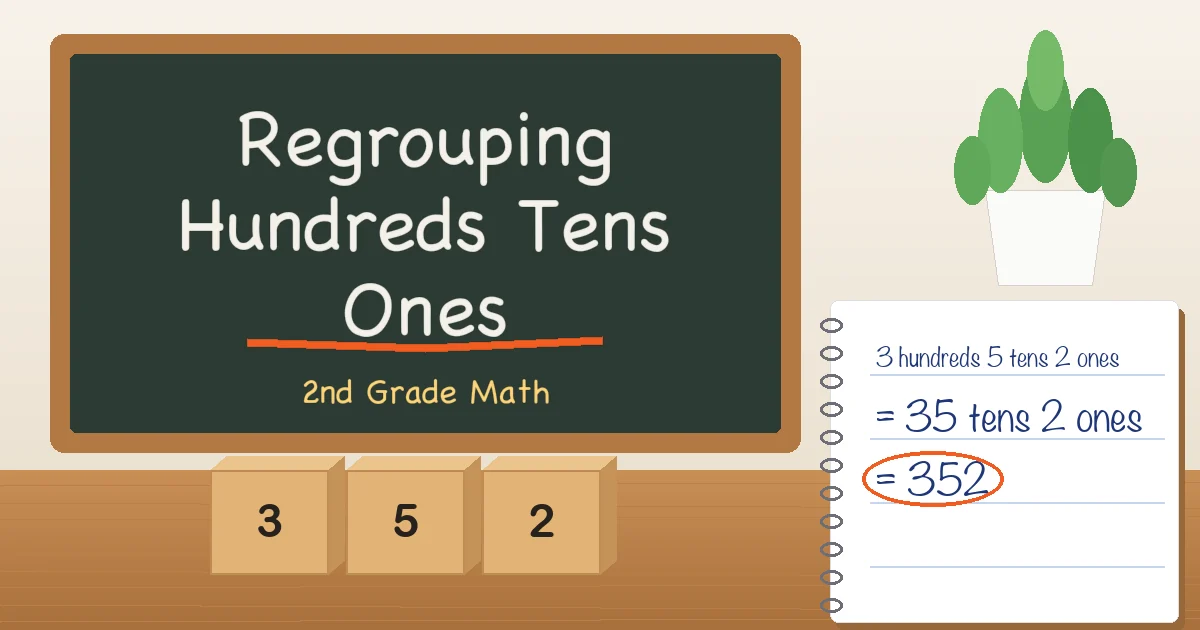
Regrouping Hundreds Tens and Ones in 2nd Grade: 6 Examples

Regrouping hundreds tens and ones means trading 1 hundred for 10 tens, or 1 ten for 10 ones, without changing the number's value. Blocks, examples and three mistakes follow.

2nd Grade MathPlace ValueRegrouping Hundreds Tens and Ones
Regrouping Hundreds Tens and Ones in 2nd Grade: 6 Examples
math

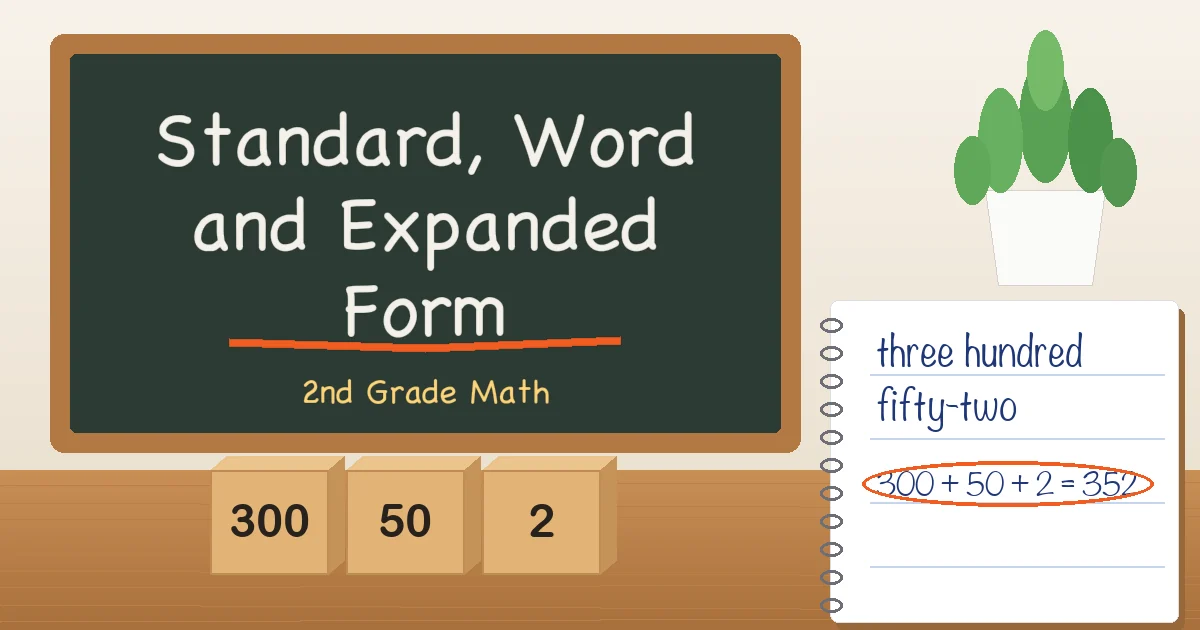
Standard Word and Expanded Form for 2nd Grade (6 Examples)

Standard word and expanded form are three ways to write one number, such as 406, four hundred six, or 400 + 6. Switching between them needs place value, a 0 for each empty place, and hyphens.

2nd Grade MathPlace ValueStandard Word and Expanded Form
Standard Word and Expanded Form for 2nd Grade (6 Examples)
math

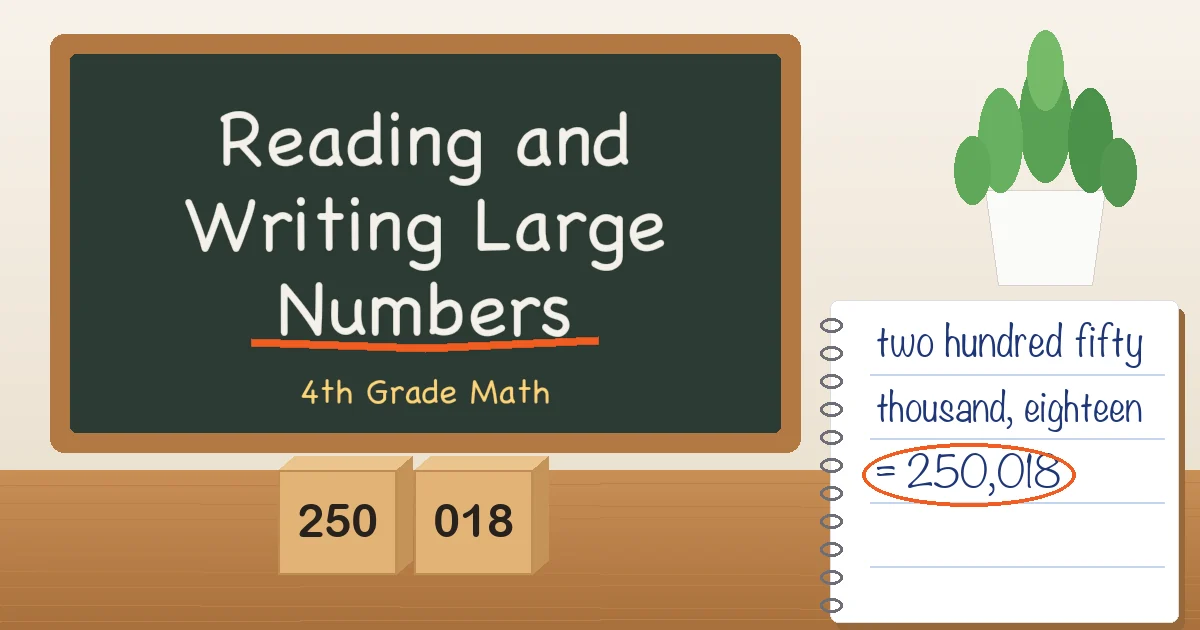
Reading and Writing Large Numbers: Standard, Word, Expanded Form

Reading and writing large numbers means moving a number like 935,094 between standard, word and expanded form, one three-digit period at a time. Six worked examples and three common traps follow.

4th Grade MathPlace ValueStandard FormWord FormExpanded Form
Reading and Writing Large Numbers: Standard, Word, Expanded Form
math

Subtracting Multiples of Ten: 1st Grade Lesson With 6 Examples

Subtracting multiples of ten means taking whole tens away from whole tens, so 80 minus 50 is 8 tens minus 5 tens, or 30. Ten rods, number line hops and six examples show how.

1st Grade MathPlace ValueSubtracting Multiples of Ten
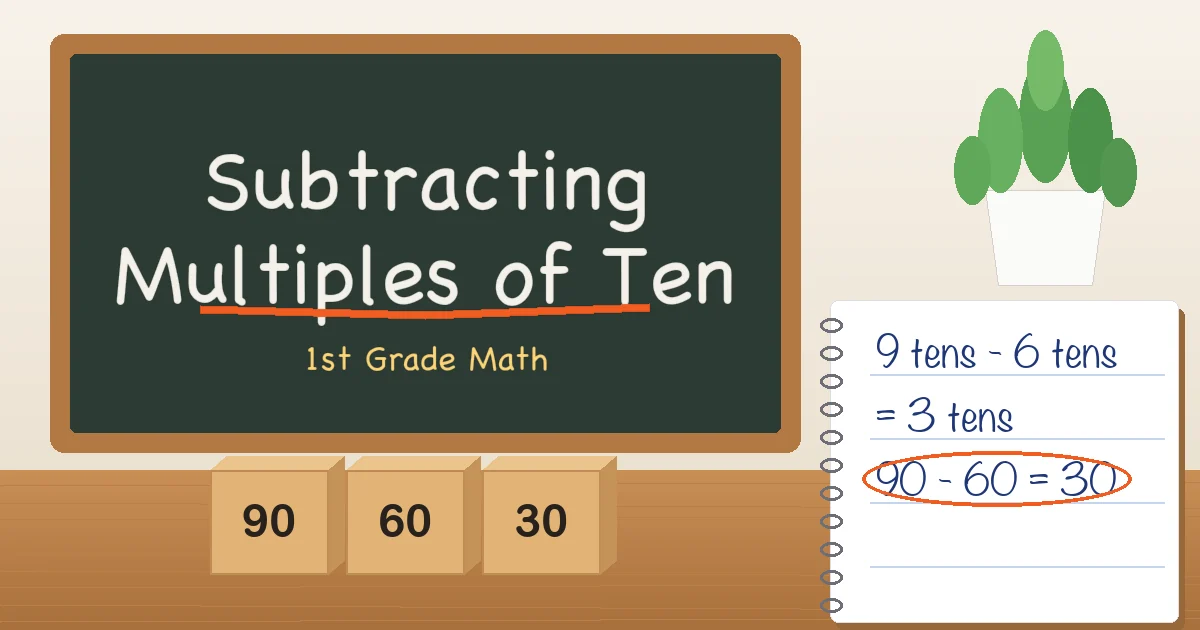
Subtracting Multiples of Ten: 1st Grade Lesson With 6 Examples