Topic

6th Grade Math

24 articles
math

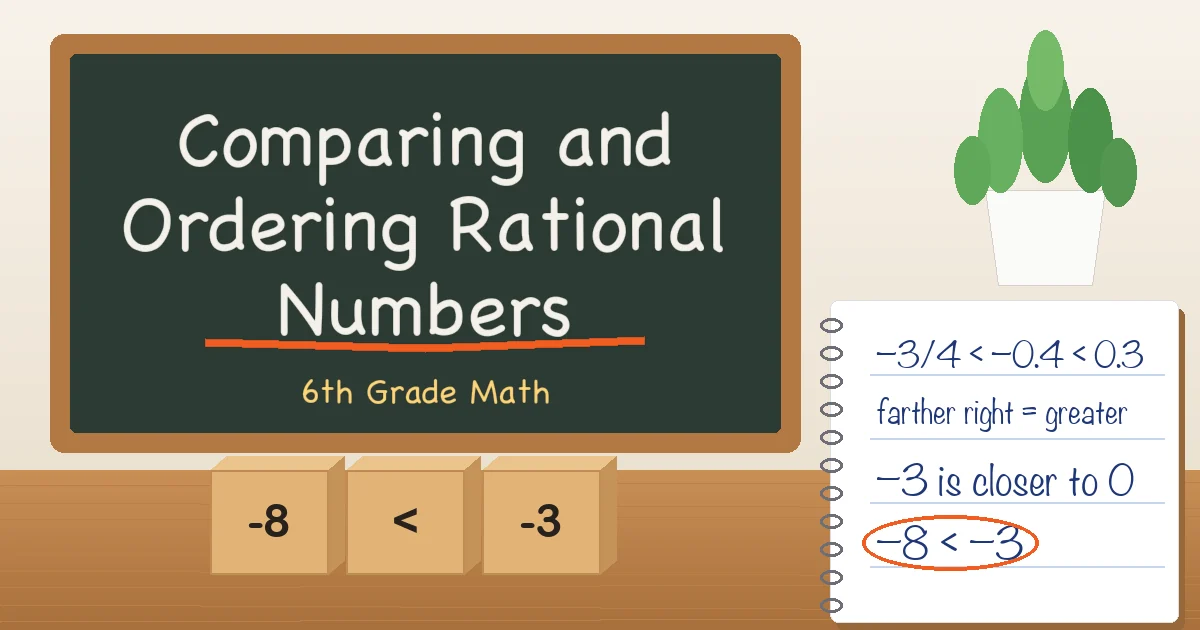
Comparing and Ordering Rational Numbers: Rules and 6 Examples

Comparing and ordering rational numbers means placing fractions, decimals and negatives on a number line, where the number farther right is greater. Two negatives, mixed forms and temperatures below zero all follow that one rule.

6th Grade MathThe Number SystemNegative NumbersComparing and Ordering Rational Numbers
Comparing and Ordering Rational Numbers: Rules and 6 Examples
math

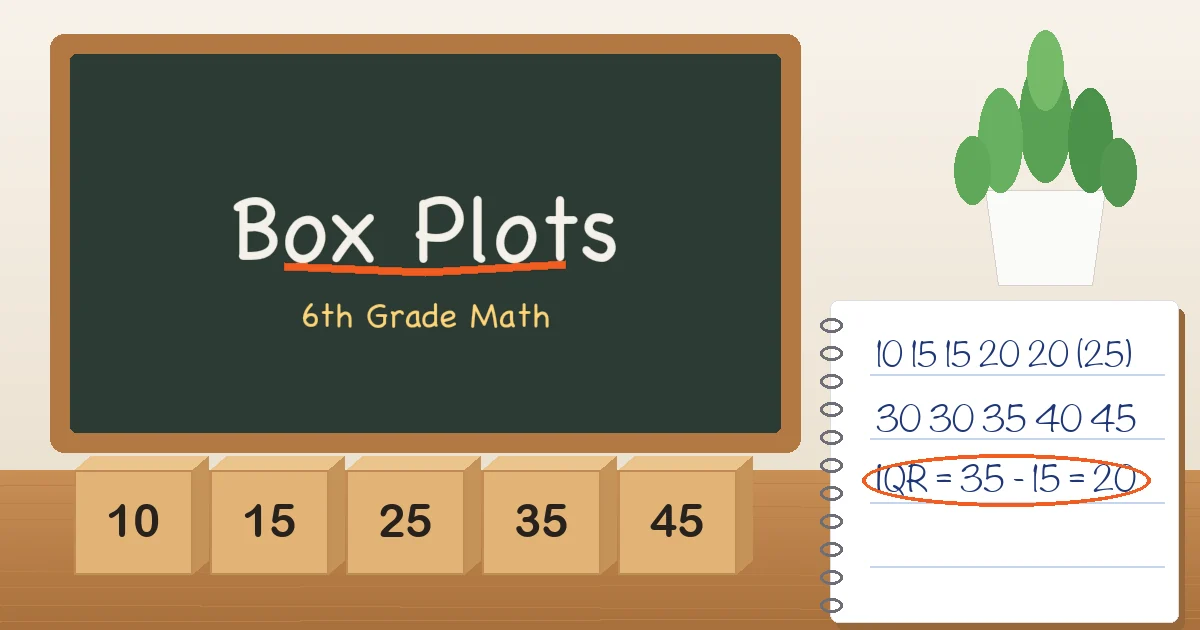
Box Plots for 6th Grade: How to Make and Read Them (6 Examples)

Box plots picture a whole data set on a number line with five numbers (minimum, lower quartile, median, upper quartile and maximum). You'll find those numbers, draw the box and read what it tells you.

6th Grade MathStatisticsBox Plots
Box Plots for 6th Grade: How to Make and Read Them (6 Examples)
math

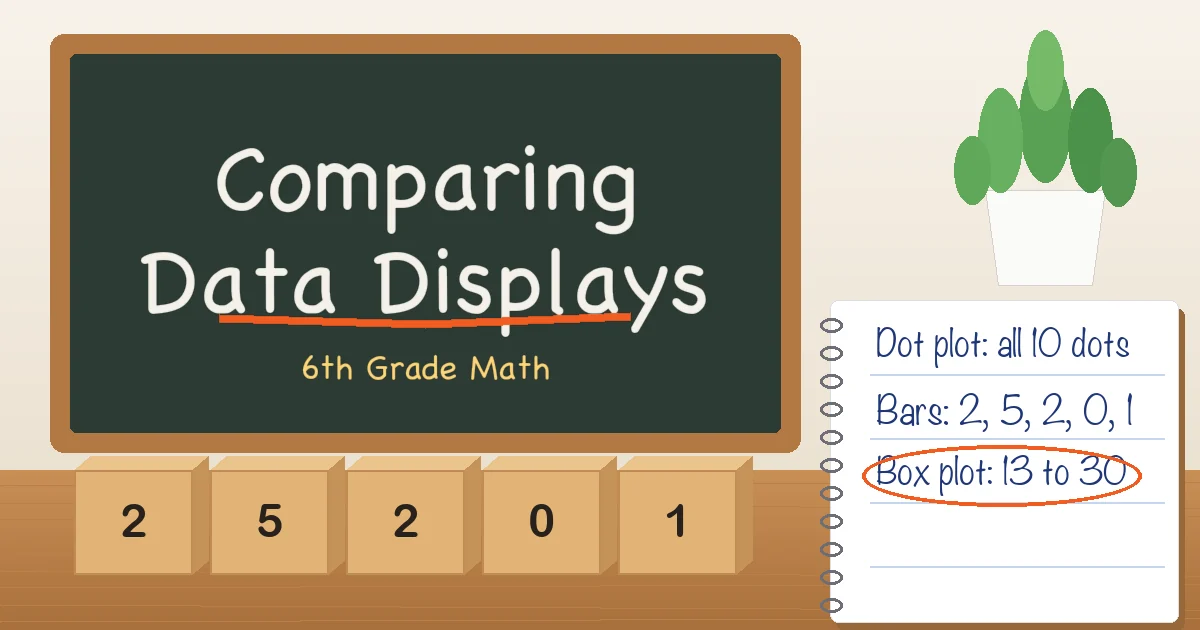
Comparing Data Displays: Dot Plots, Histograms and Box Plots

Comparing data displays means choosing the dot plot, histogram or box plot whose kept information answers your question. Ten real storm seasons, drawn all three ways, show what each display hides.

6th Grade MathStatisticsComparing Data Displays
Comparing Data Displays: Dot Plots, Histograms and Box Plots
math

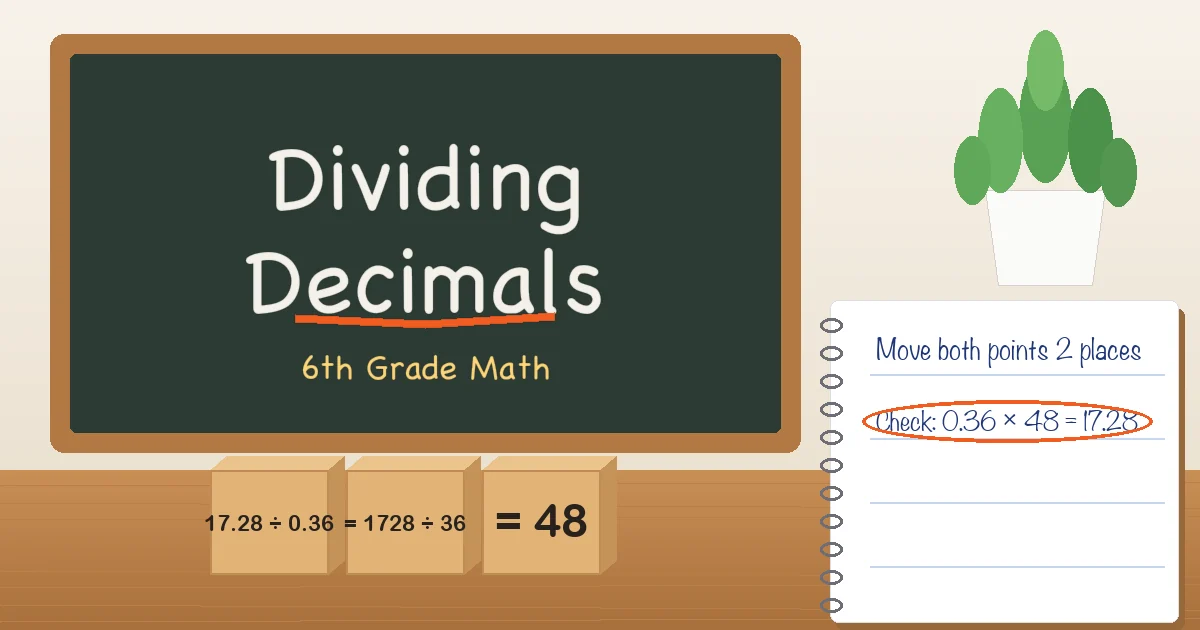
Dividing Decimals: How to Divide Step by Step, With 6 Examples

Dividing decimals means shifting both decimal points until the number you divide by is whole, then using long division. Six examples show where the point lands, when to add zeros and how to check.

6th Grade MathThe Number SystemDividing Decimals
Dividing Decimals: How to Divide Step by Step, With 6 Examples
math

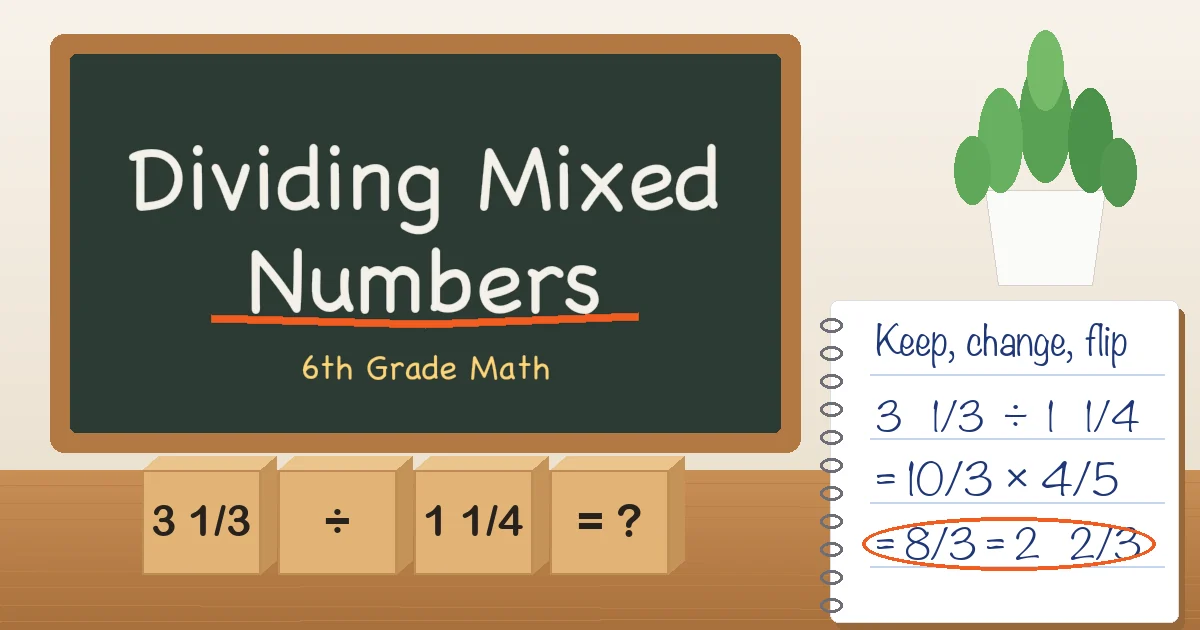
Dividing Mixed Numbers: How Many Fit, With 6 Worked Examples

Dividing mixed numbers means rewriting both numbers as improper fractions, then multiplying the first by the reciprocal of the second. Fraction bars show why the flip works, and six worked examples put it to use.

6th Grade MathThe Number SystemDividing Mixed Numbers
Dividing Mixed Numbers: How Many Fit, With 6 Worked Examples
math

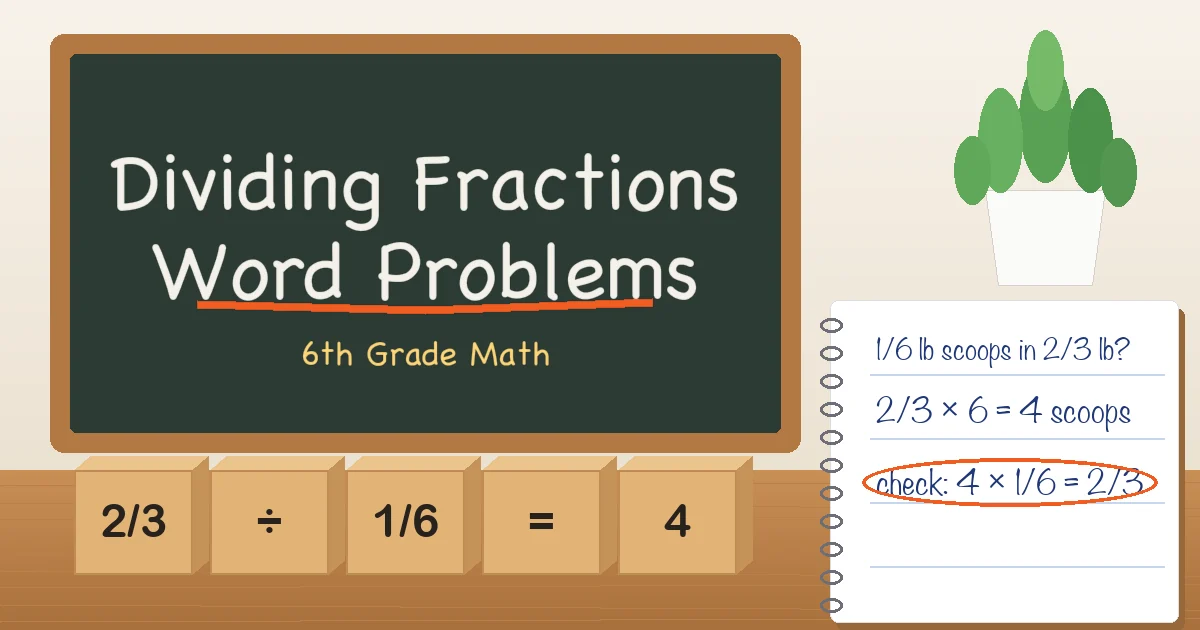
Dividing Fractions Word Problems in 6th Grade, With 6 Examples

Dividing fractions word problems ask how many groups of a fraction fit in a total, or how much fills one whole group. Below are 5 steps, 6 worked examples and 3 common mistakes.

6th Grade MathNumber SystemDividing Fractions Word Problems
Dividing Fractions Word Problems in 6th Grade, With 6 Examples
math

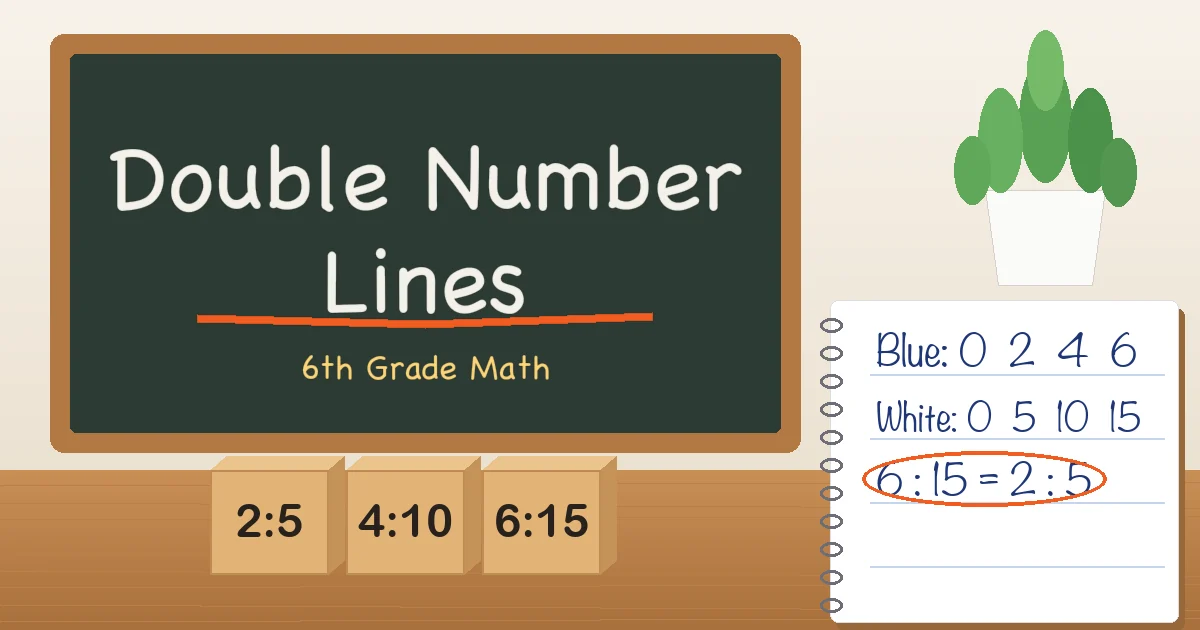
Double Number Lines: How to Draw and Use Them, With Examples

Double number lines are two lined-up number lines starting at 0, where each pair read straight down is an equivalent ratio. You'll draw one, read between ticks, then solve rate and percent problems.

6th Grade MathRatiosDouble Number Lines
Double Number Lines: How to Draw and Use Them, With Examples
math

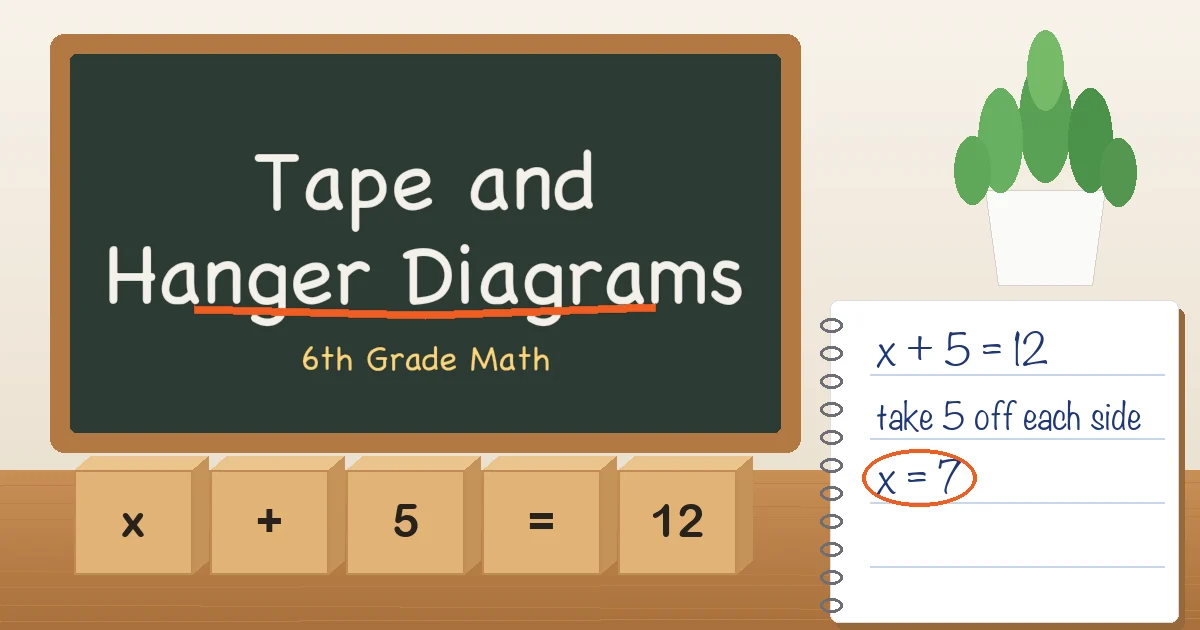
Tape and Hanger Diagrams: Solving Equations With 6 Examples

Tape and hanger diagrams show an equation as a picture, so you can find the unknown by keeping both sides equal. You'll solve addition and multiplication equations with both models and check every answer.

6th Grade MathExpressions and EquationsTape and Hanger Diagrams
Tape and Hanger Diagrams: Solving Equations With 6 Examples
math

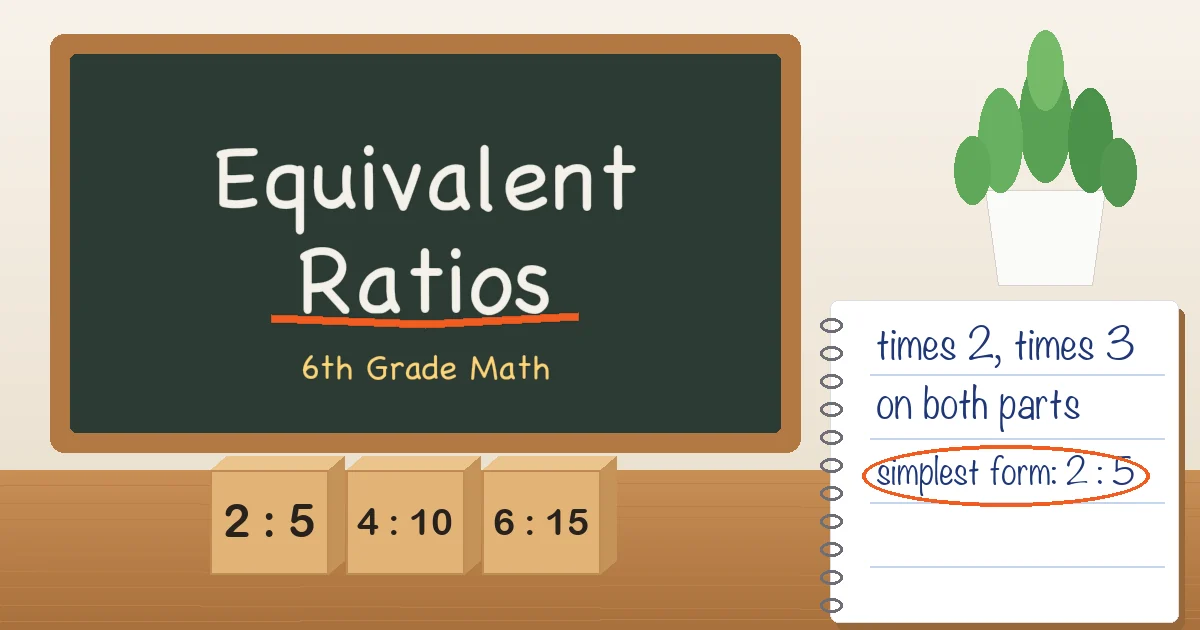
Equivalent Ratios: Definition, Models and Examples

Equivalent ratios are ratios with the same relationship, such as 2 to 3 and 4 to 6, made by multiplying both parts by one number. Tape diagrams build them, and simplest form checks them.

6th Grade MathRatiosEquivalent Ratios
Equivalent Ratios: Definition, Models and Examples
math

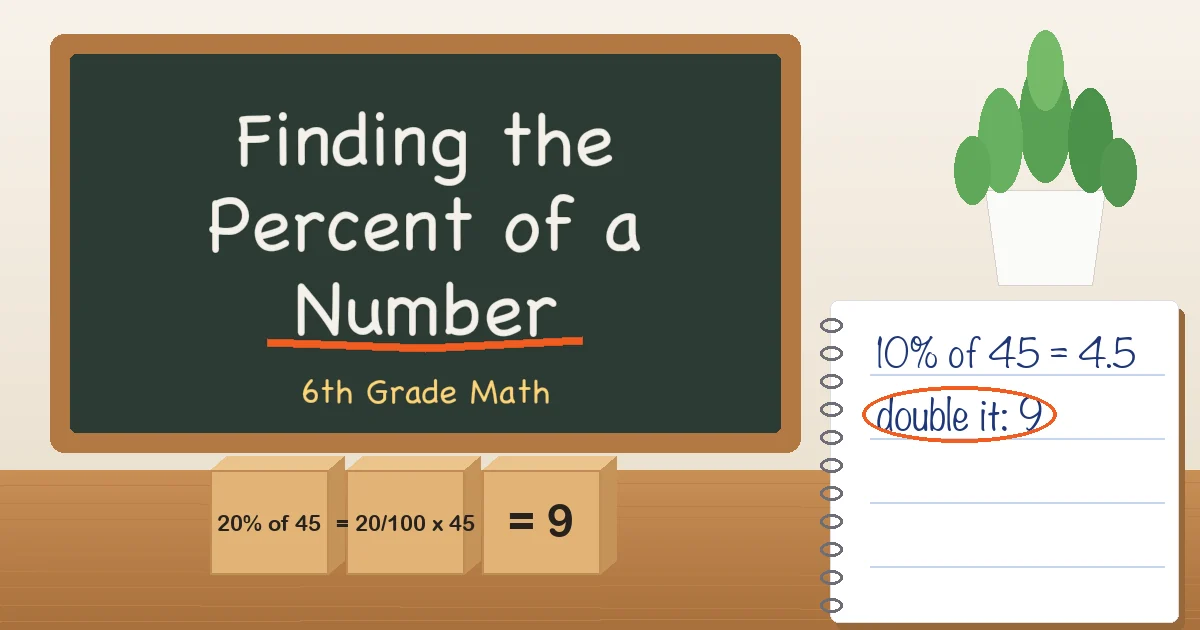
Steps for Finding the Percent of a Number, With 6 Examples

Finding the percent of a number means taking that many hundredths of it, so 30% of 60 is 18. You'll see it on a double number line, a tape diagram and as one multiplication.

6th Grade MathRatios and Proportional RelationshipsFinding the Percent of a Number
Steps for Finding the Percent of a Number, With 6 Examples
math

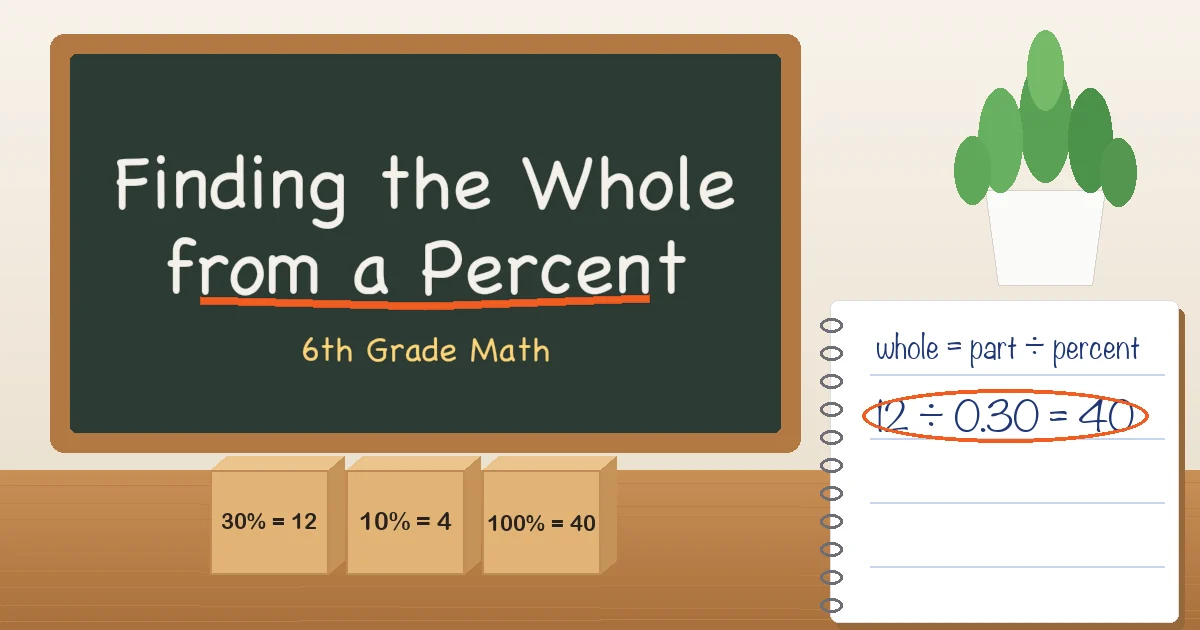
Finding the Whole from a Percent: Steps and 6 Examples

Finding the whole from a percent means using a part and its percent to work out the full amount, the 100%. Three methods, a size check and six worked examples follow.

6th Grade MathRatios and Proportional RelationshipsFinding the Whole from a Percent
Finding the Whole from a Percent: Steps and 6 Examples
math

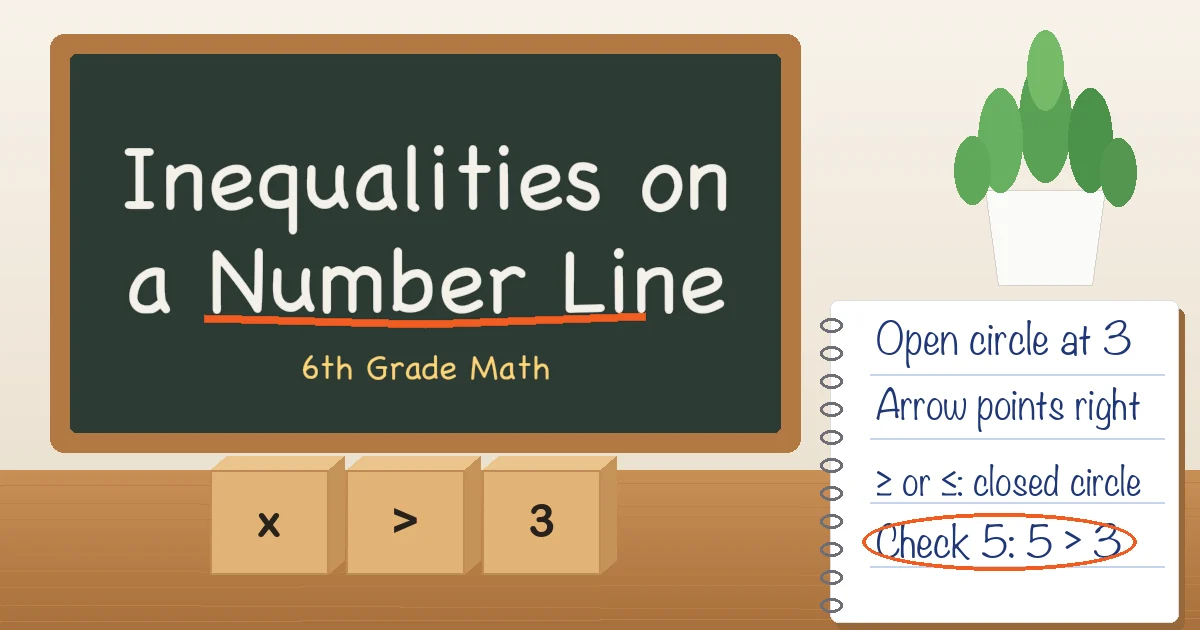
Inequalities on a Number Line: How to Graph and Write Them

Inequalities on a number line show every number that makes a statement like x > 3 true, with an open or closed circle and an arrow. Six worked examples cover graphing, reading graphs and real-world limits.

6th Grade MathExpressions and EquationsInequalities on a Number Line
Inequalities on a Number Line: How to Graph and Write Them
math

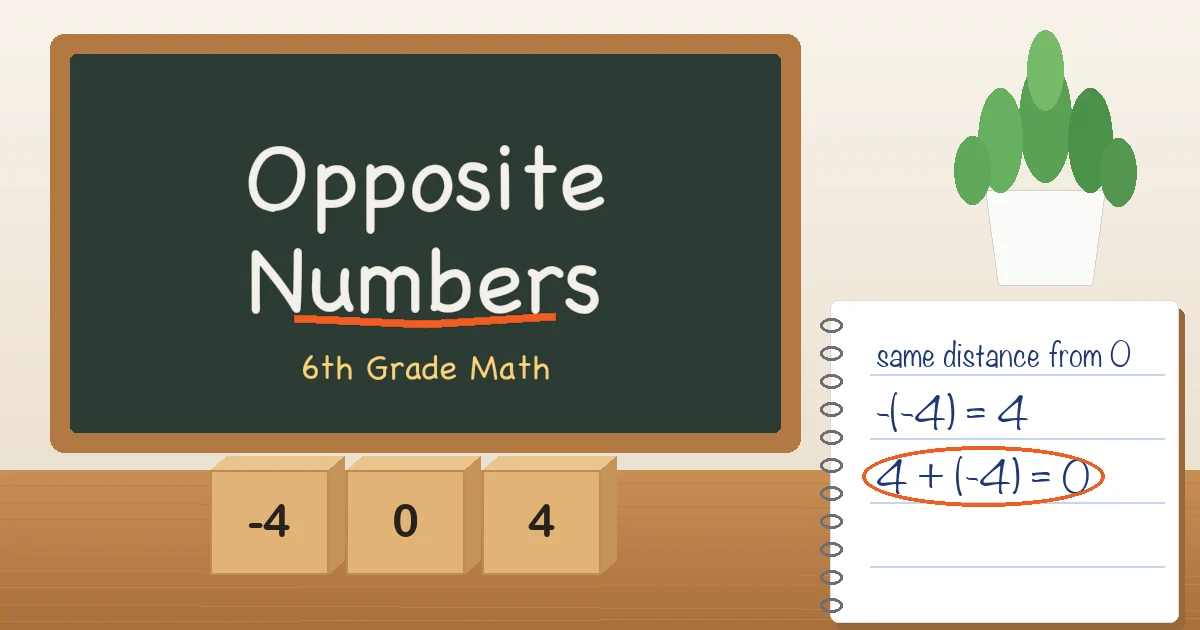
Opposite Numbers: Definition, Number Line and 6 Examples

Opposite numbers sit the same distance from 0 on opposite sides of the number line, like 4 and -4. Change the sign to find one, and the opposite of an opposite is the number itself.

6th Grade MathThe Number SystemNegative NumbersOpposite Numbers
Opposite Numbers: Definition, Number Line and 6 Examples
math

Nets of 3D Figures: How Prisms, Pyramids and Cubes Unfold

Nets of 3D figures are flat patterns of faces that fold up into solids such as prisms, pyramids and cubes. See how to match nets to solids, spot cube nets and find surface area.

6th Grade MathGeometryNets of 3D Figures
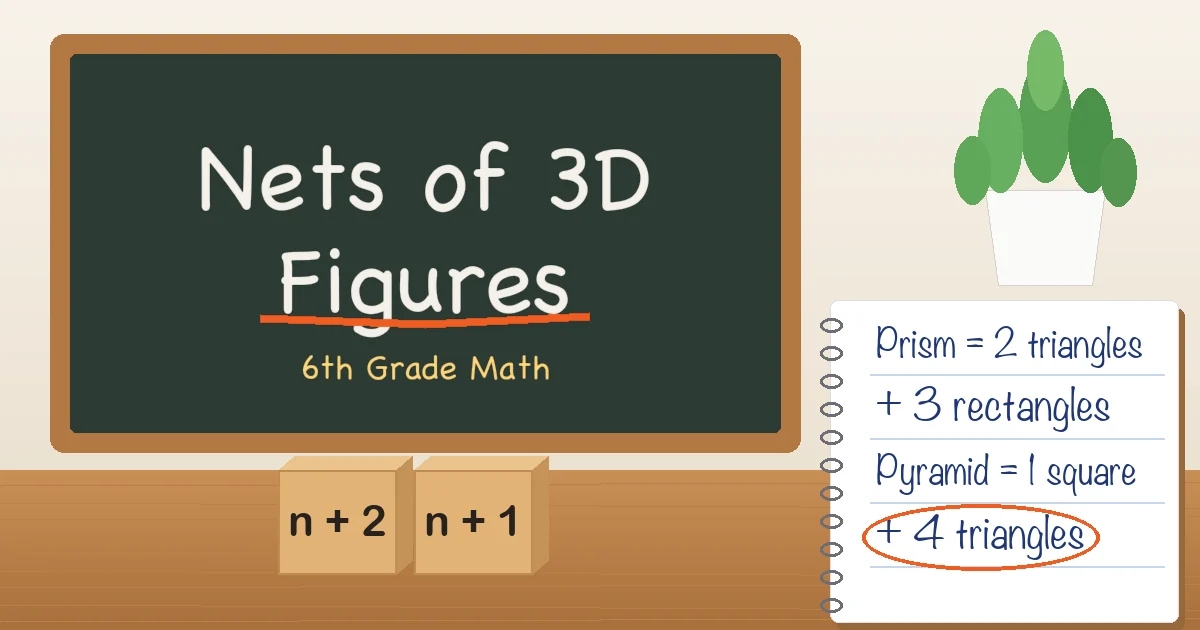
Nets of 3D Figures: How Prisms, Pyramids and Cubes Unfold
math

Multiplying Multi-Digit Decimals: Standard Algorithm Steps

Multiplying multi-digit decimals means multiplying the digits with the standard algorithm, then giving the product the decimal places of both factors combined. An area model, the reason the count works and six examples follow.

6th Grade MathThe Number SystemMultiplying Decimals
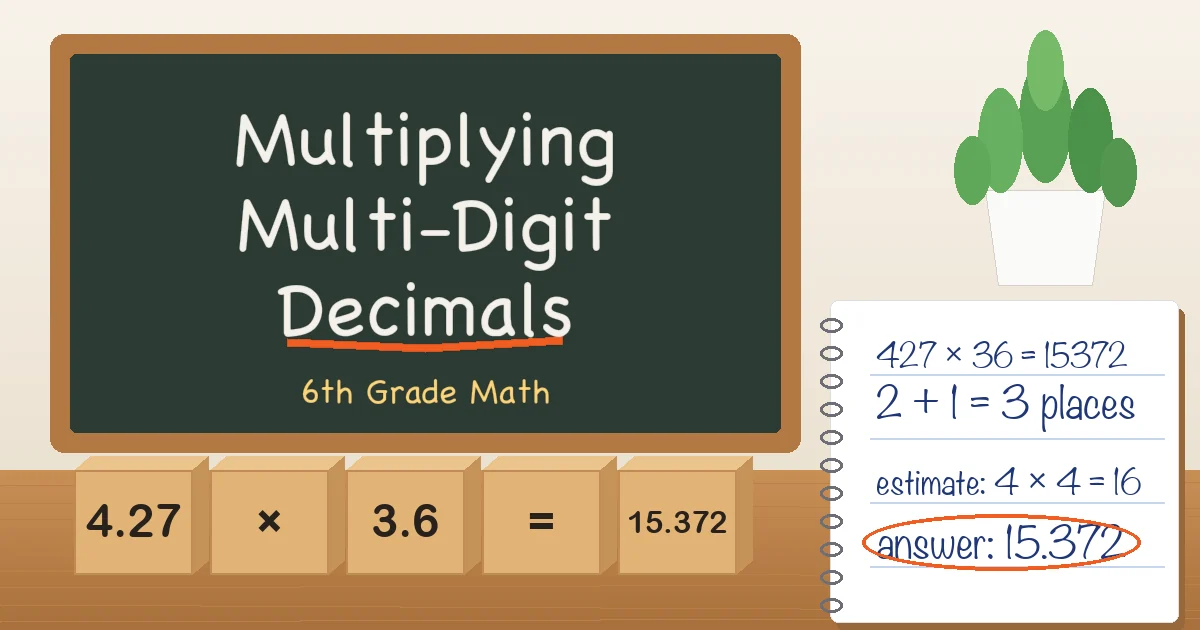
Multiplying Multi-Digit Decimals: Standard Algorithm Steps
math

Order of Operations with Exponents: 6th Grade Steps and Examples

Order of operations with exponents means you find every power right after the parentheses, before any multiplying, dividing, adding or subtracting. You'll find the steps, six worked examples and two cube formulas below.

6th Grade MathExpressions and EquationsOrder of Operations with Exponents
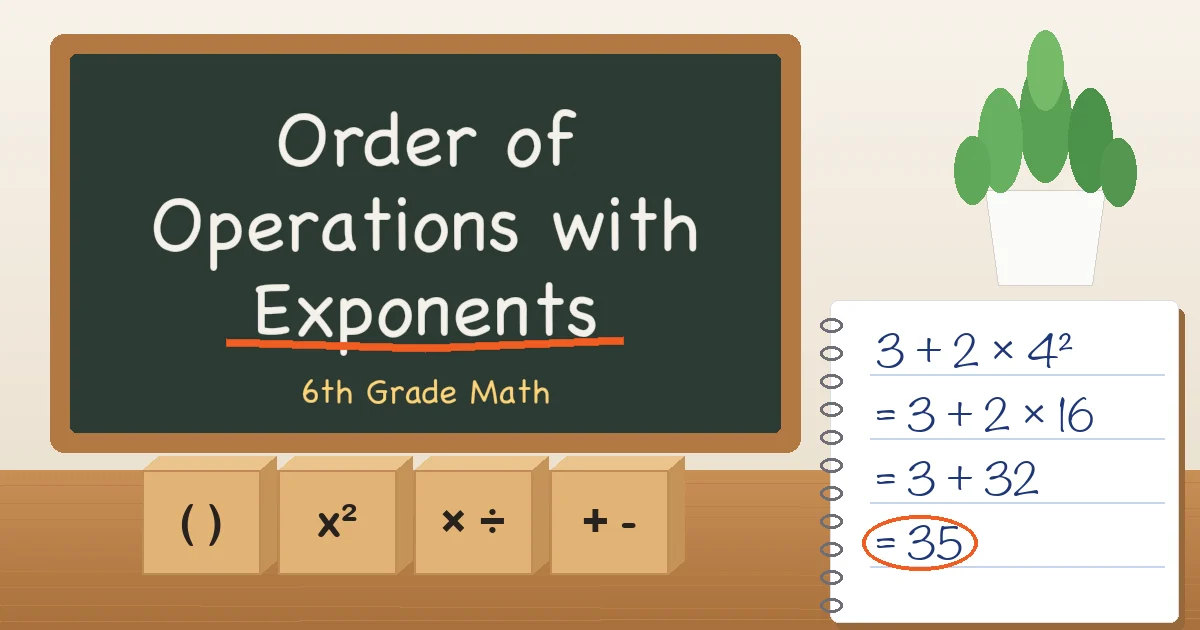
Order of Operations with Exponents: 6th Grade Steps and Examples
math

Part-Part-Whole Ratio Problems: Solve Them With a Tape Diagram

Part-part-whole ratio problems give a ratio of two parts plus one known amount, and you solve them by finding what one equal box is worth. Tape diagrams, ratio tables and six worked examples show how.

6th Grade MathRatiosPart-Part-Whole Ratio Problems
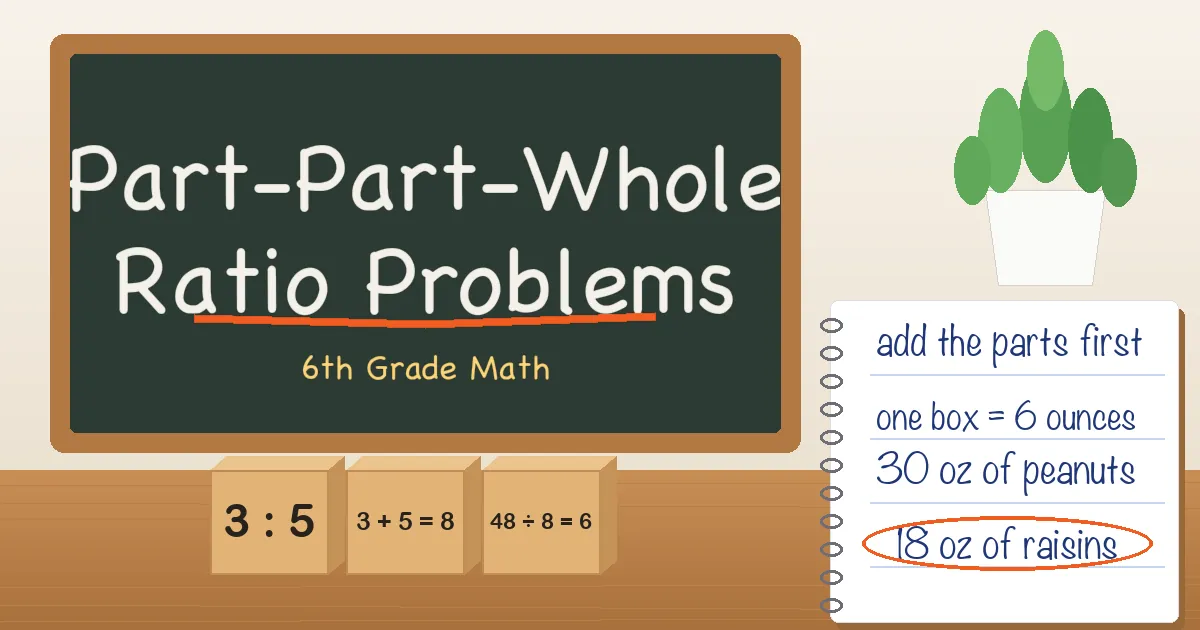
Part-Part-Whole Ratio Problems: Solve Them With a Tape Diagram
math

Properties of Operations for 6th Grade: Rules and Examples

Properties of operations are rules that let you reorder or regroup numbers you add or multiply without changing the answer. Swapping and regrouping fail for subtraction and division, and both moves work on letter expressions.

6th Grade MathExpressions and EquationsProperties of Operations
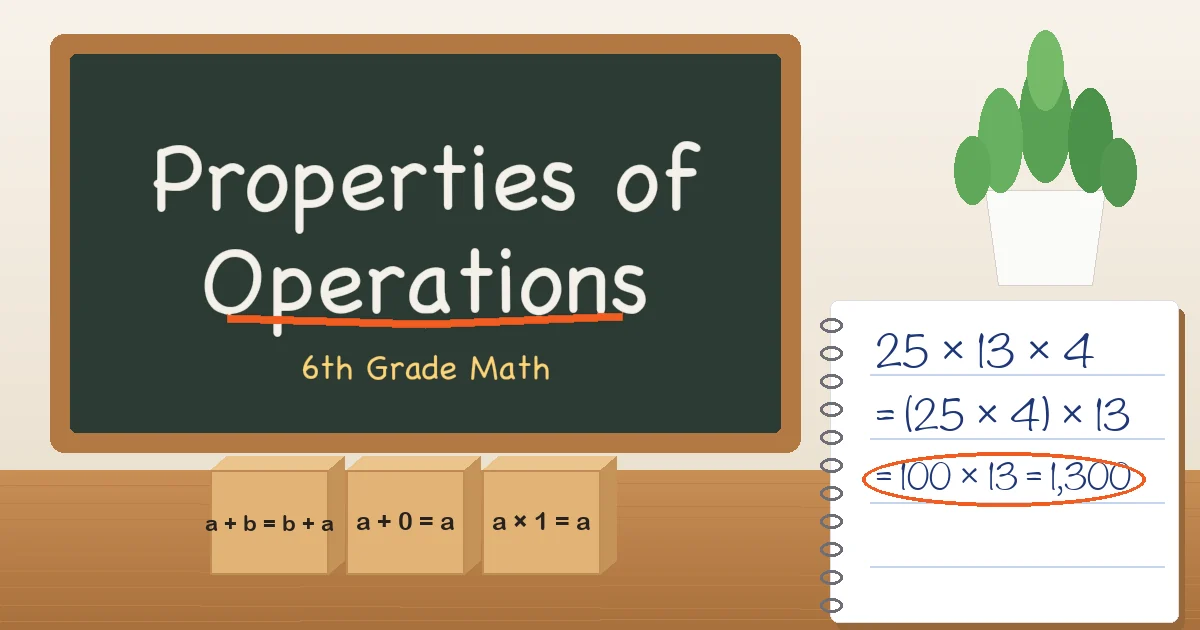
Properties of Operations for 6th Grade: Rules and Examples
math

Polygons on the Coordinate Plane: Side Lengths and 6 Examples

Polygons on the coordinate plane are shapes whose corners are given as ordered pairs, so you can draw them and measure them. A shared coordinate gives a side's length, which leads to perimeter and area.

6th Grade MathGeometryPolygons on the Coordinate Plane
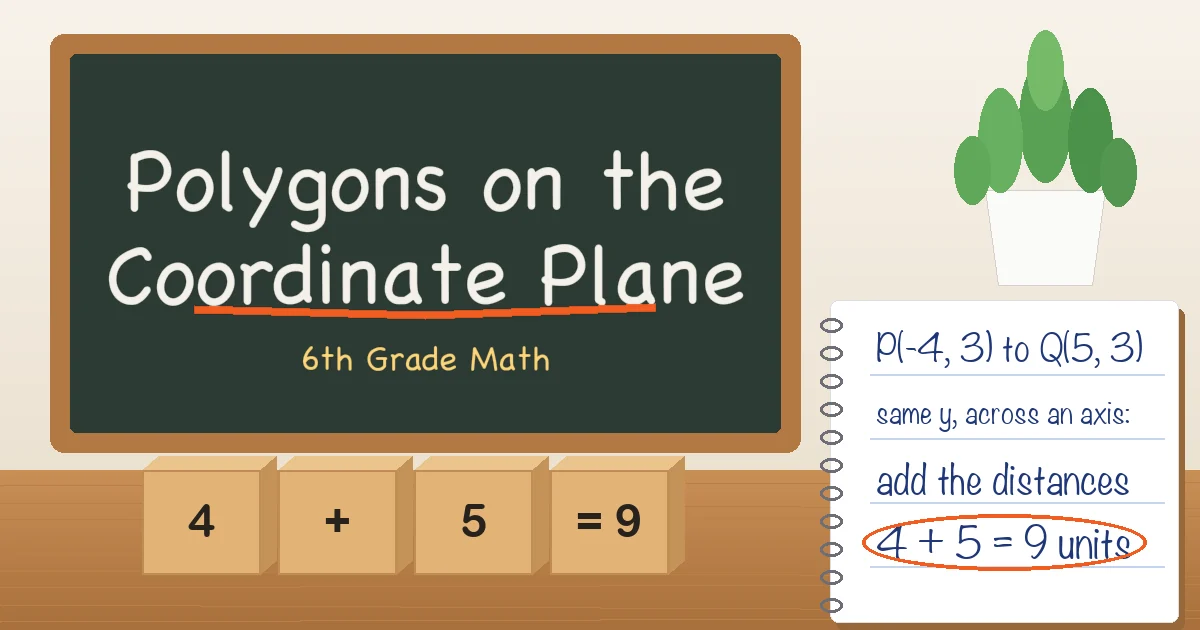
Polygons on the Coordinate Plane: Side Lengths and 6 Examples
math

Ratios on the Coordinate Plane: Plotting Equivalent Ratios

Ratios on the coordinate plane turn each pair in a ratio table into a point, and equivalent ratios land on one straight line through (0, 0). Learn to plot, read and compare them.

6th Grade MathRatiosRatios on the Coordinate Plane
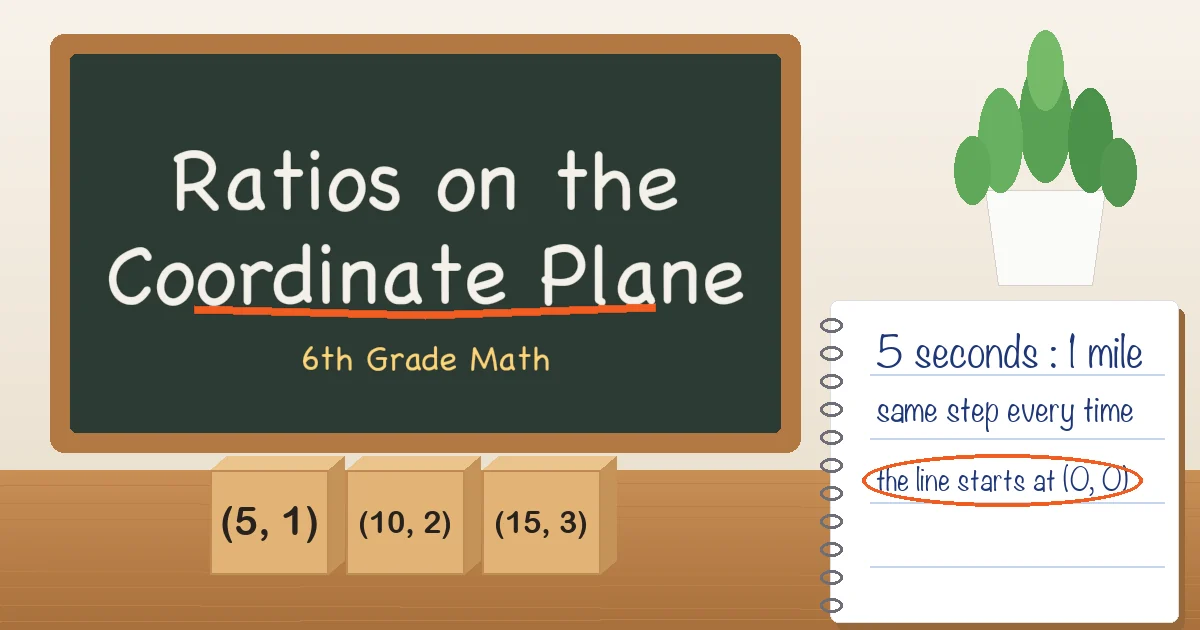
Ratios on the Coordinate Plane: Plotting Equivalent Ratios
math

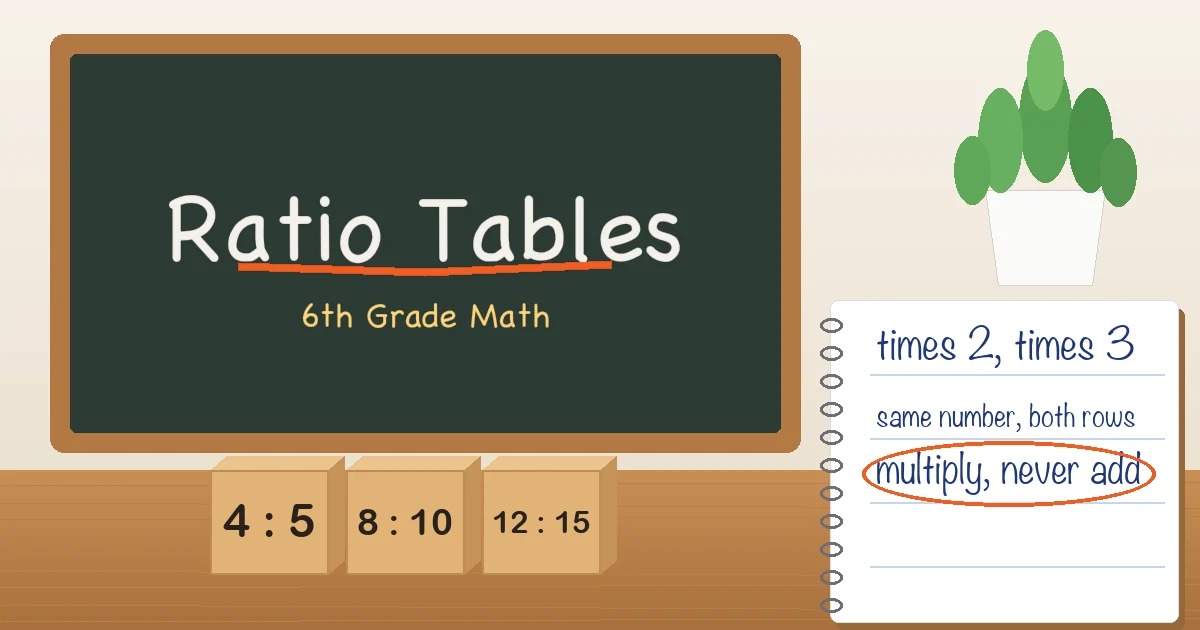
Ratio Tables: How to Find Missing Values and Compare Ratios

Ratio tables line up equivalent ratios in columns, and each column is the first one with both rows multiplied or divided by the same number. Use them to find missing values and compare ratios.

6th Grade MathRatiosRatio Tables
Ratio Tables: How to Find Missing Values and Compare Ratios
math

What Percent One Number Is of Another: Steps and 6 Examples

Finding what percent one number is of another means writing the part over the whole and renaming it out of 100, so 9 out of 20 is 45%. Answers can climb past 100%.

6th Grade MathRatios and Proportional RelationshipsFinding What Percent One Number Is of Another
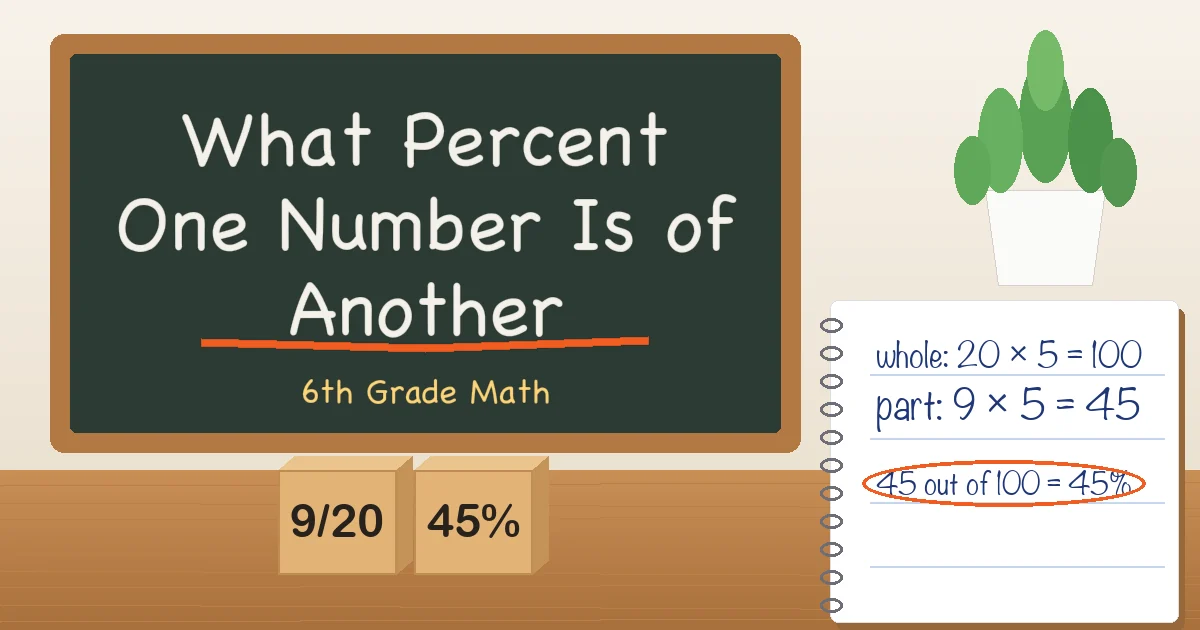
What Percent One Number Is of Another: Steps and 6 Examples
math

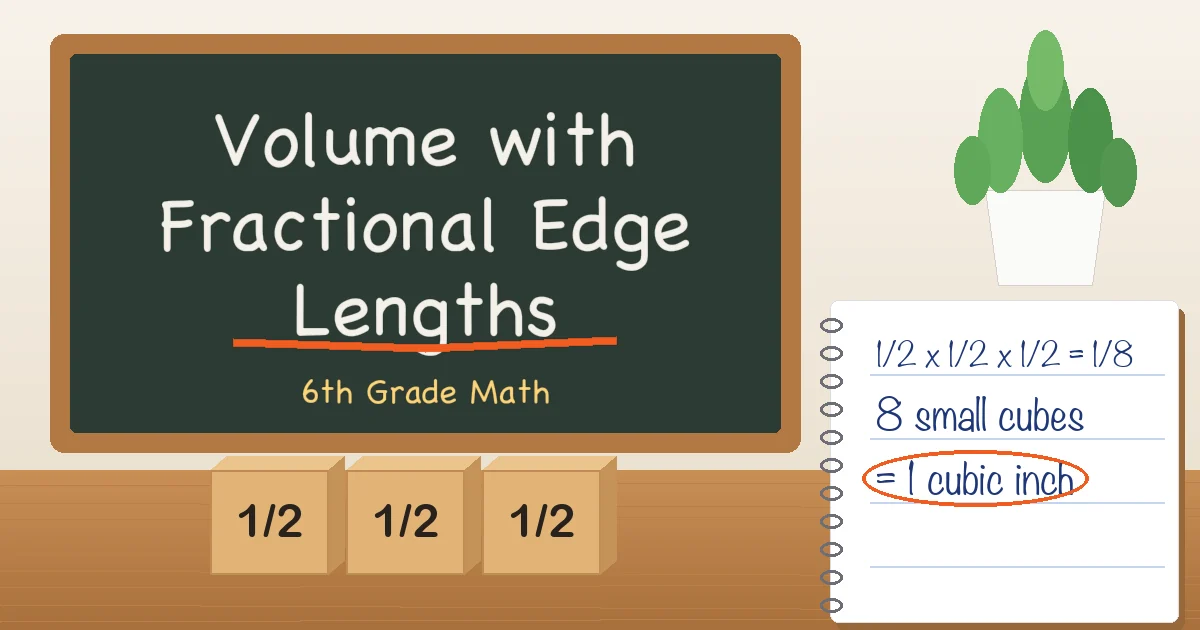
Volume with Fractional Edge Lengths: Unit Cubes and 6 Examples

Volume with fractional edge lengths is the space inside a box with fraction or decimal edges, found by multiplying length, width and height. Packing with small cubes shows why, and six examples follow.

6th Grade Math
Volume with Fractional Edge Lengths: Unit Cubes and 6 Examples
math

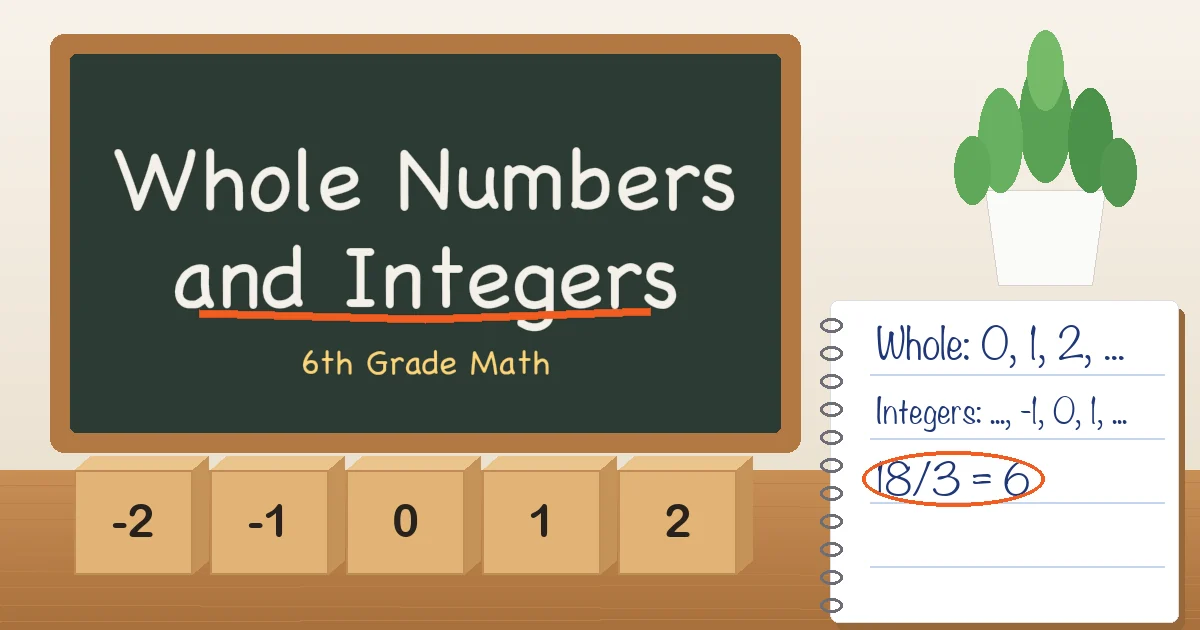
Whole Numbers and Integers: Differences, Examples and Sorting

Whole numbers and integers have no fraction or decimal part, but whole numbers start at 0 and integers add the negatives. Simplify a number before sorting it, so 18/3 counts as 6.

6th Grade Math
Whole Numbers and Integers: Differences, Examples and Sorting