Topic

2nd Grade Math

22 articles
math

Before or After Noon? A 2nd Grade Guide to A.M. and P.M.

A.m. and p.m. tell which half of the day a time is in: a.m. runs from midnight to noon, and p.m. from noon to midnight.

2nd Grade MathTimeA.M. and P.M.
Before or After Noon? A 2nd Grade Guide to A.M. and P.M.
math

Adding and Subtracting 10 and 100 Mentally: 2nd Grade Guide

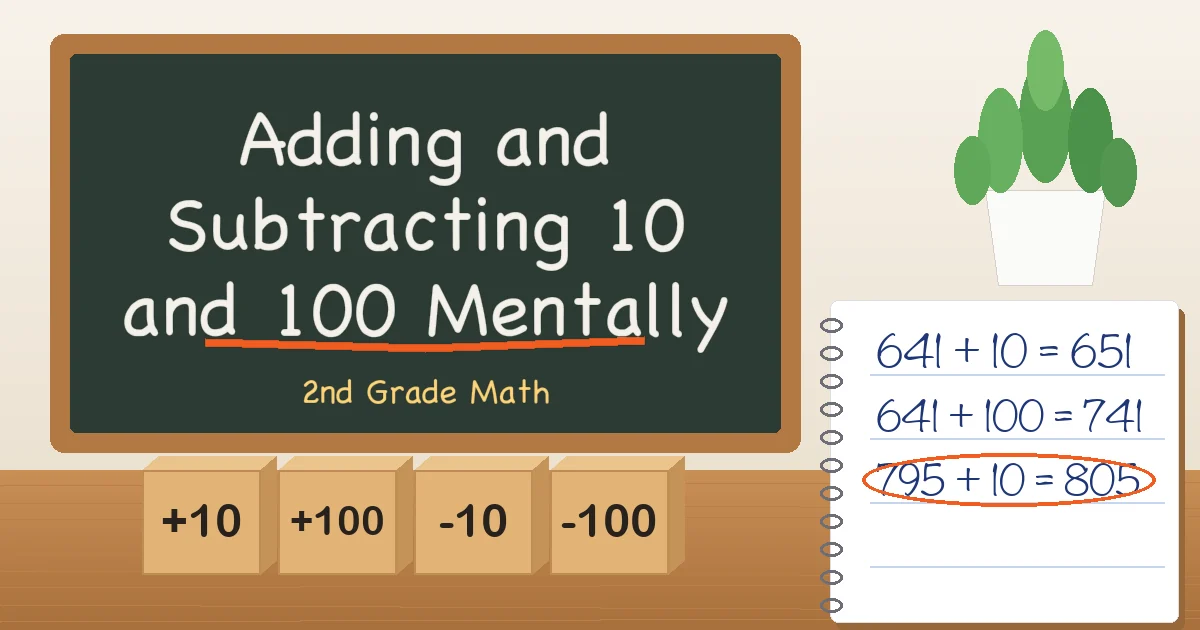
Adding and subtracting 10 and 100 adds or removes one ten or one hundred, so usually only the tens or hundreds digit changes. Here is why, and what happens across a hundred.

2nd Grade MathPlace ValueAdding and Subtracting 10 and 100 Mentally
Adding and Subtracting 10 and 100 Mentally: 2nd Grade Guide
math

Adding and Subtracting on a Number Line in 2nd Grade
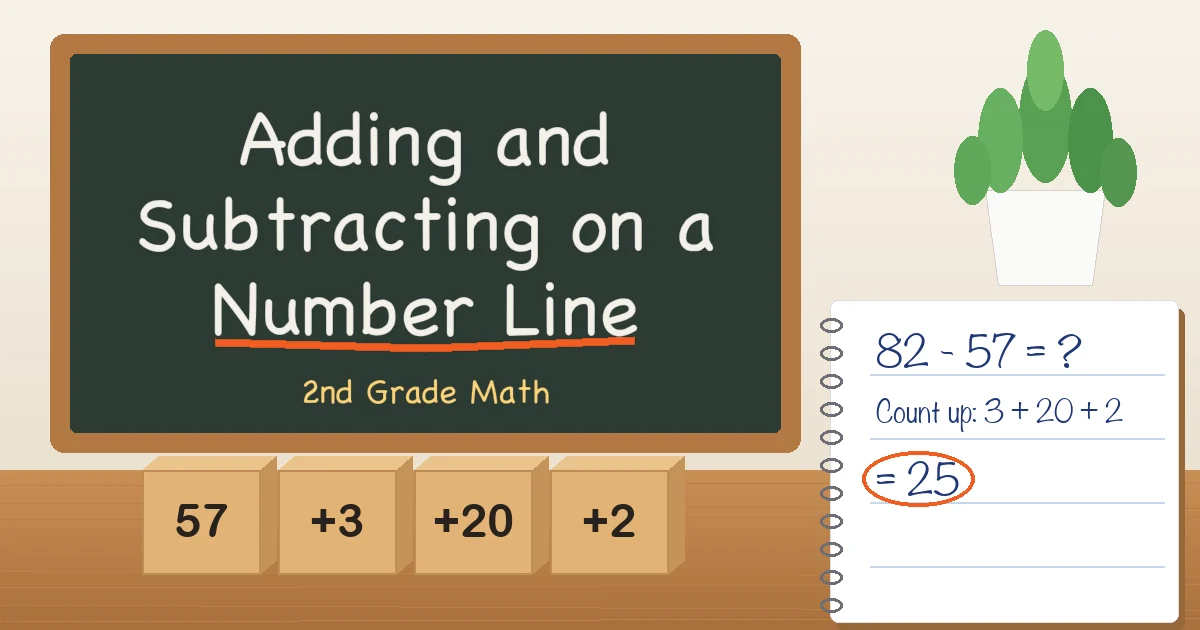
Adding and subtracting on a number line means starting at one number and jumping right to add or left to take away. Tens jumps keep two-digit problems short, and counting up finds differences.

2nd Grade MathMeasurement and DataAdding and Subtracting on a Number Line
Adding and Subtracting on a Number Line in 2nd Grade
math

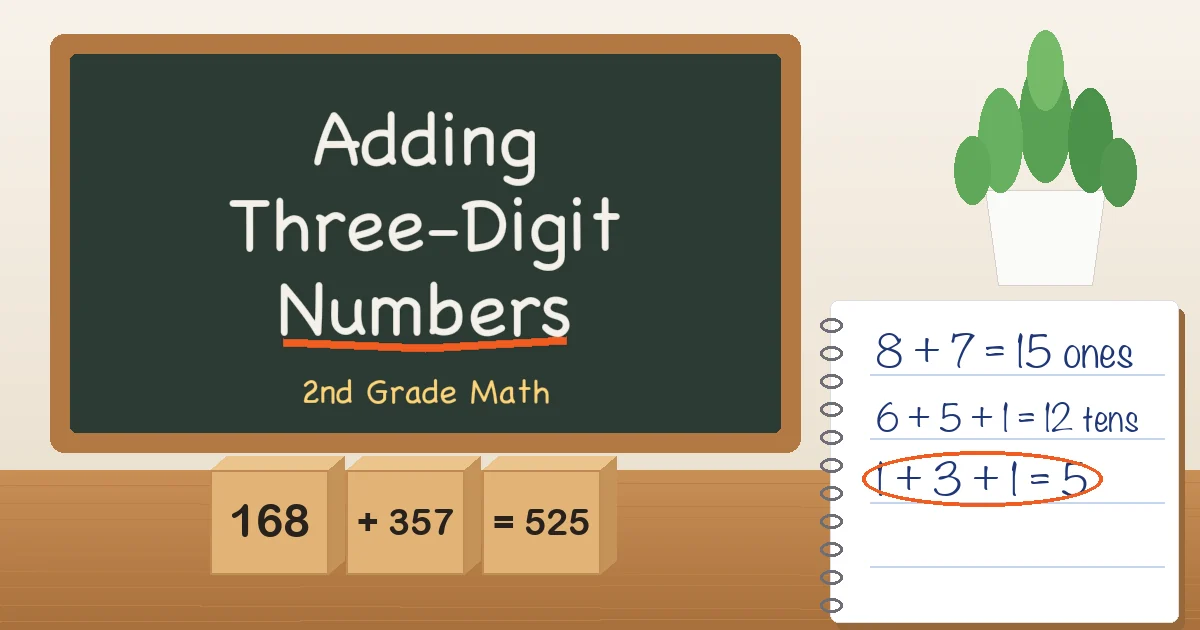
Adding Three-Digit Numbers: 4 Methods and 6 Worked Examples

Adding three-digit numbers means adding hundreds, tens and ones place by place and trading any 10 in a place for 1 of the next. Blocks, expanded form, number lines and columns give the same sum.

2nd Grade MathNumber and Operations in Base TenAdding Three-Digit Numbers
Adding Three-Digit Numbers: 4 Methods and 6 Worked Examples
math

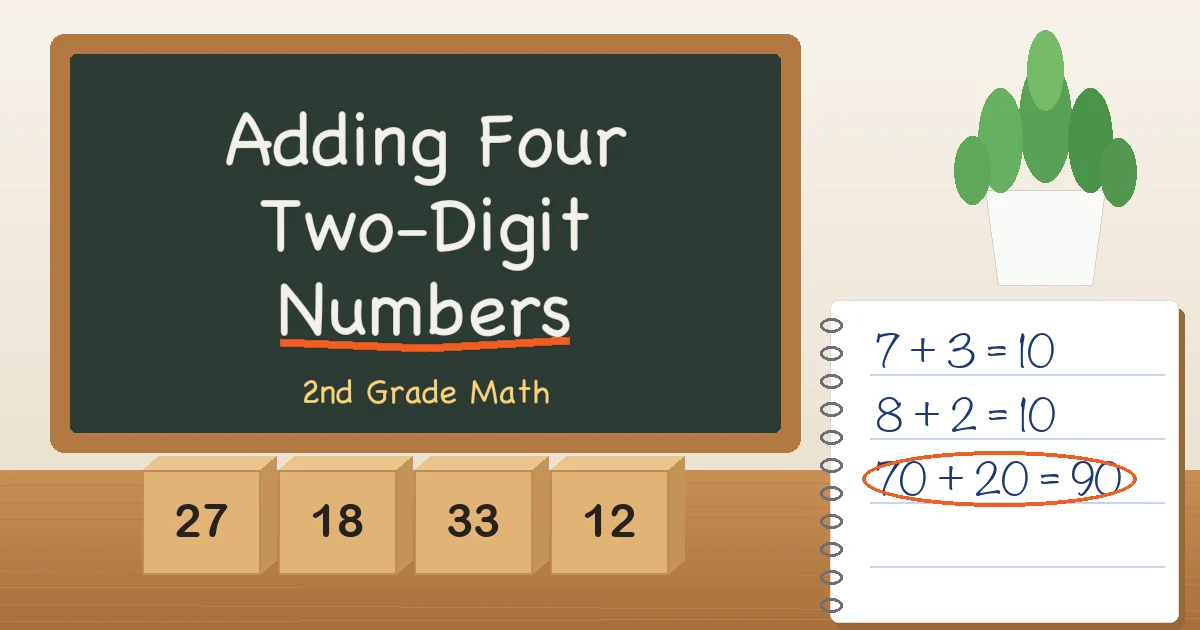
Adding Up to Four Two-Digit Numbers: Grade 2 Steps and Examples

Adding up to four two-digit numbers means adding all the tens, adding all the ones, then trading every 10 ones for a new ten. Friendly pairs, columns and three common mistakes come next.

2nd Grade MathPlace ValueAdding Up to Four Two-Digit Numbers
Adding Up to Four Two-Digit Numbers: Grade 2 Steps and Examples
math

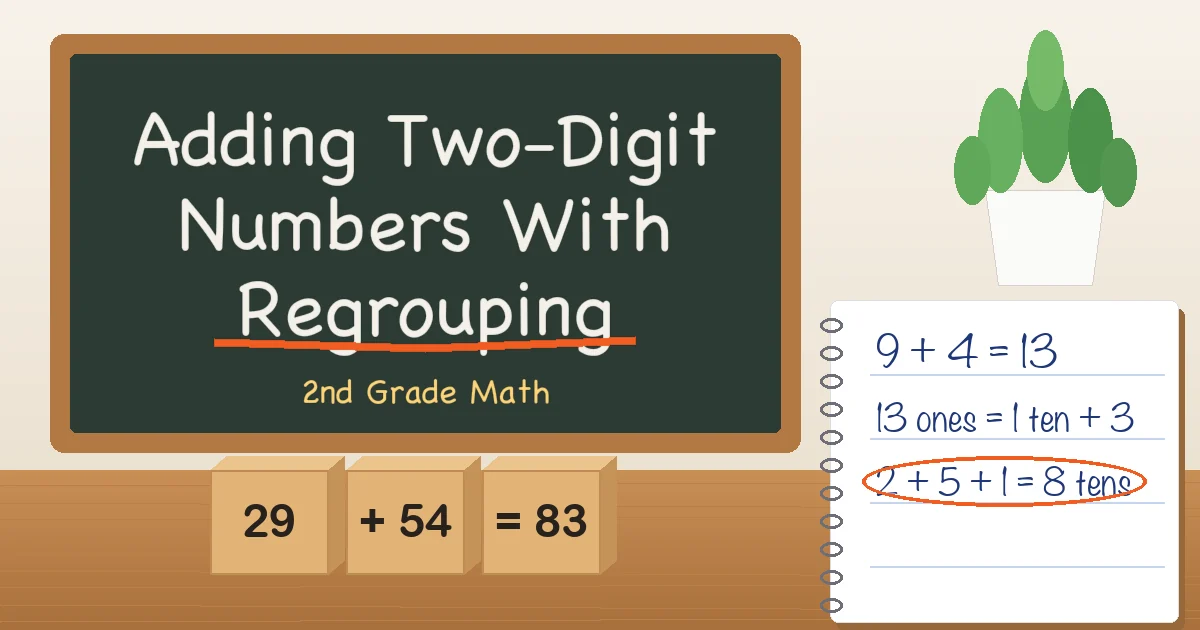
Adding Two-Digit Numbers With Regrouping: Steps and 6 Examples

Adding two-digit numbers with regrouping means adding the ones, trading 10 ones for 1 new ten, then adding the tens. Blocks, columns, six examples and three common errors show how.

2nd Grade MathNumber and Operations in Base TenAdding Two-Digit Numbers With Regrouping
Adding Two-Digit Numbers With Regrouping: Steps and 6 Examples
math

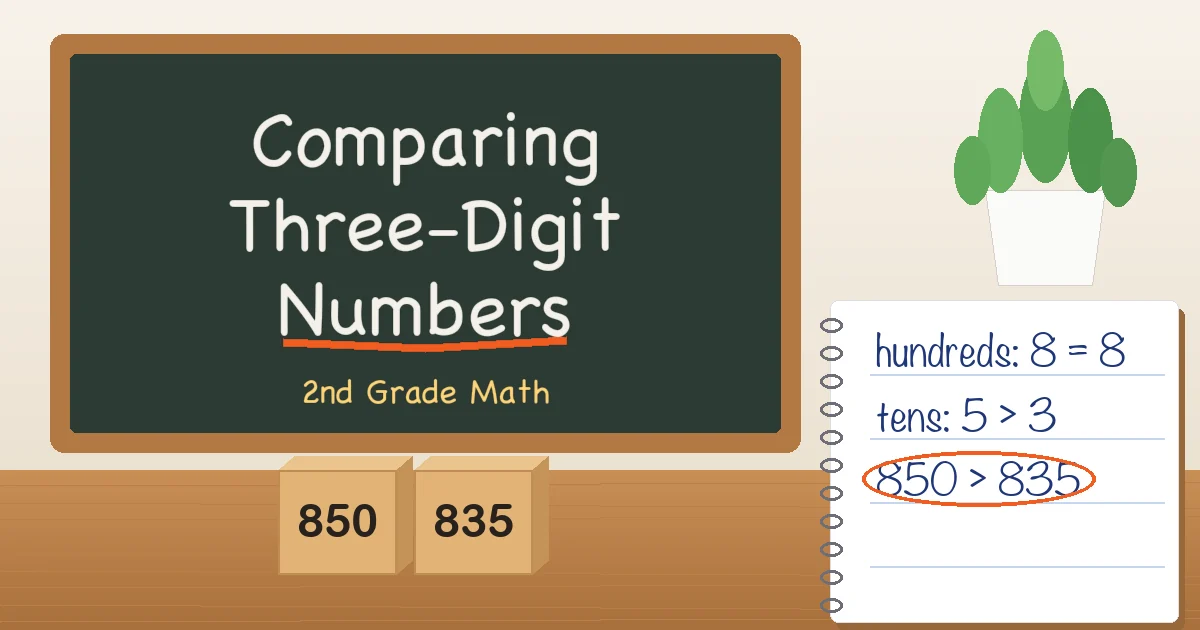
Comparing Three-Digit Numbers and Ordering Them: 6 Examples

Comparing three-digit numbers means checking the hundreds first, then the tens, then the ones, and stopping at the first place that differs. See why it works, how to order a set and the two-digit trap.

2nd Grade MathPlace ValueComparing Three-Digit Numbers
Comparing Three-Digit Numbers and Ordering Them: 6 Examples
math

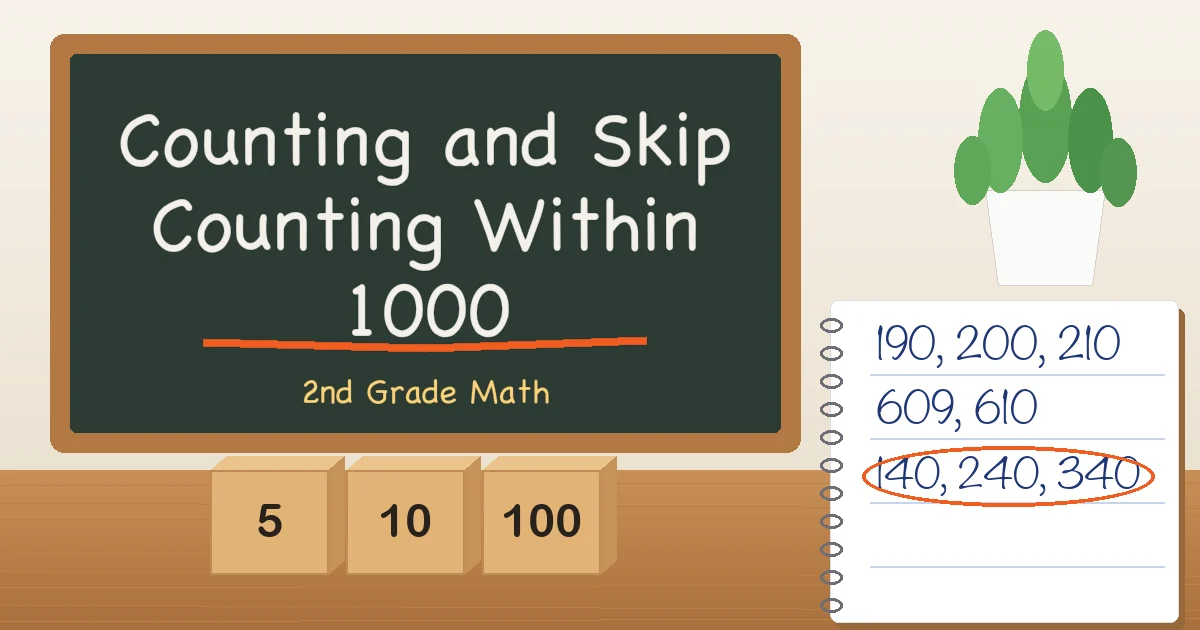
Counting and Skip Counting Within 1000: 2nd Grade Lesson

Skip counting within 1000 means counting forward or back by the same jump, like 5, 10 or 100, up to 1,000. You'll also count by ones past each hundred and fix three mistakes.

2nd Grade MathPlace ValueCounting and Skip Counting Within 1000
Counting and Skip Counting Within 1000: 2nd Grade Lesson
math

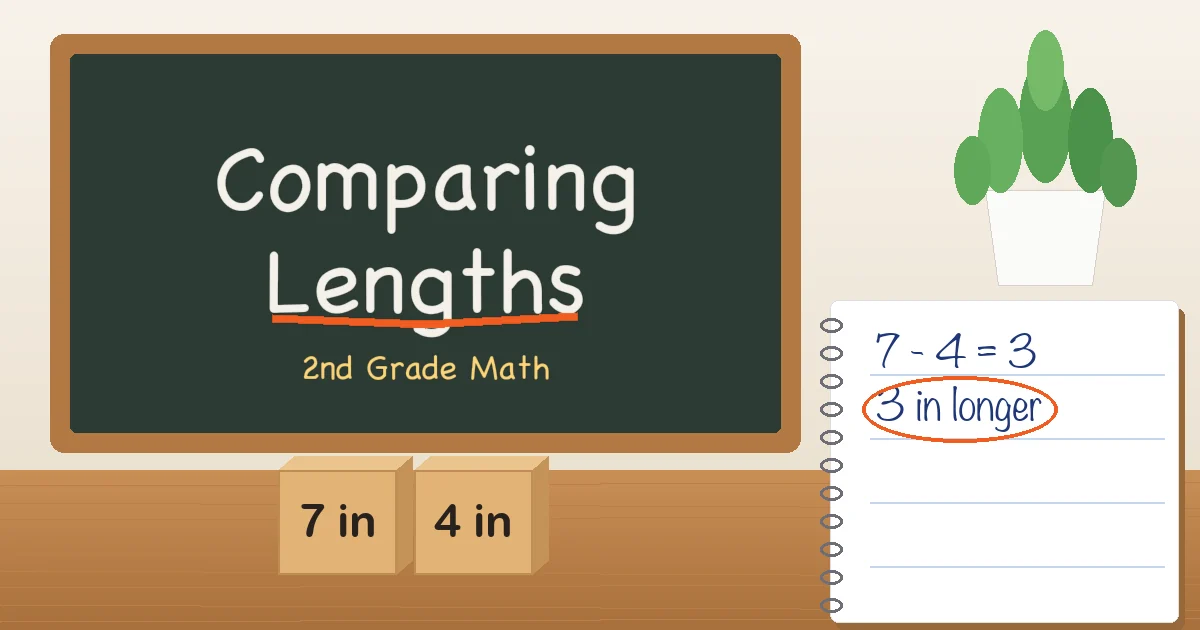
Comparing Lengths in 2nd Grade: How to Find How Much Longer

Comparing lengths means measuring two objects in one unit, like inches, and subtracting the shorter length from the longer one. Counting up works too, and objects starting past 0 need one extra step.

2nd Grade MathMeasurement and DataComparing Lengths
Comparing Lengths in 2nd Grade: How to Find How Much Longer
math

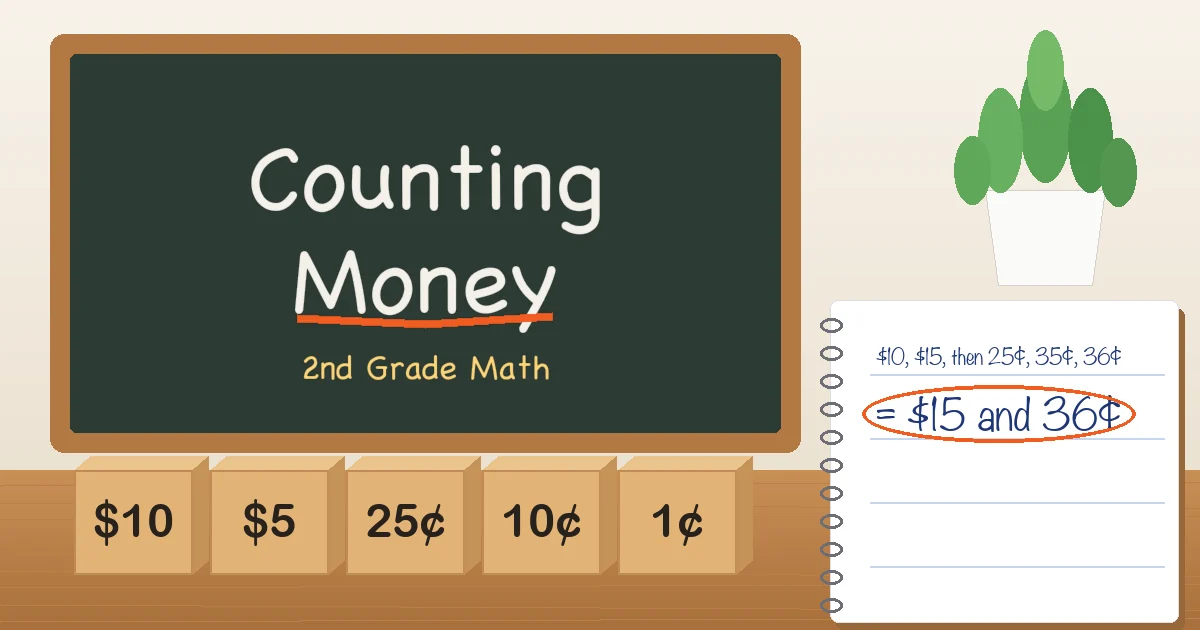
Counting Money and Money Word Problems for 2nd Grade

Counting money means adding up what every bill and coin is worth, bills first and then the coins. You'll also write amounts the 2nd grade way and solve money word problems.

2nd Grade MathMeasurement and DataCounting Money
Counting Money and Money Word Problems for 2nd Grade
math

Estimating to the Nearest Ten and Hundred for 2nd Graders
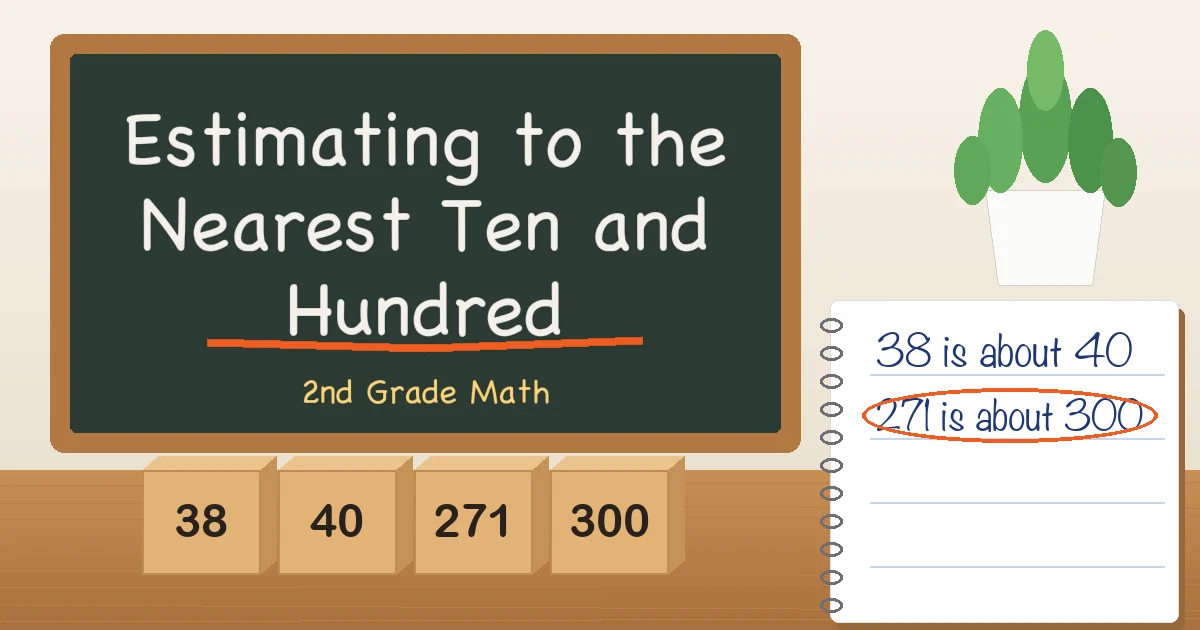
Estimating to the nearest ten and hundred means swapping a number for its closest ten or hundred, so 38 is about 40. Those easy numbers then check sums and differences.

2nd Grade MathPlace ValueEstimating to the Nearest Ten and Hundred
Estimating to the Nearest Ten and Hundred for 2nd Graders
math

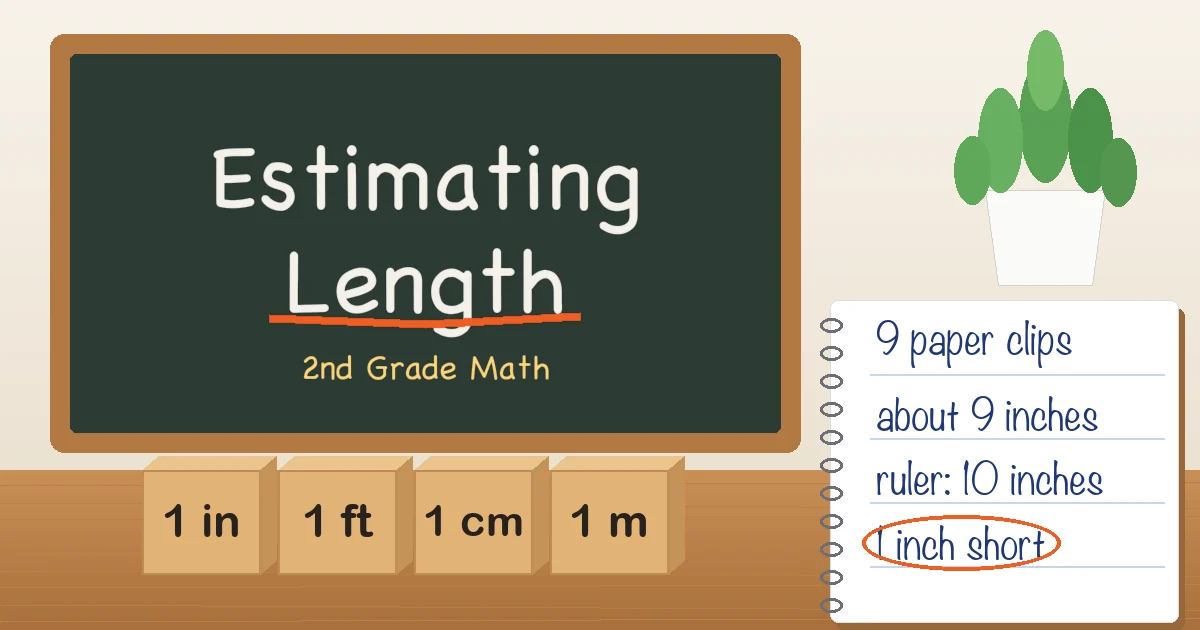
Estimating Length in 2nd Grade: Benchmarks and 5 Examples

Estimating length means saying about how long something is, with a unit, by comparing it to a size you know, like a 12-inch ruler. Four benchmarks and five examples follow.

2nd Grade MathMeasurement and DataEstimating Length
Estimating Length in 2nd Grade: Benchmarks and 5 Examples
math

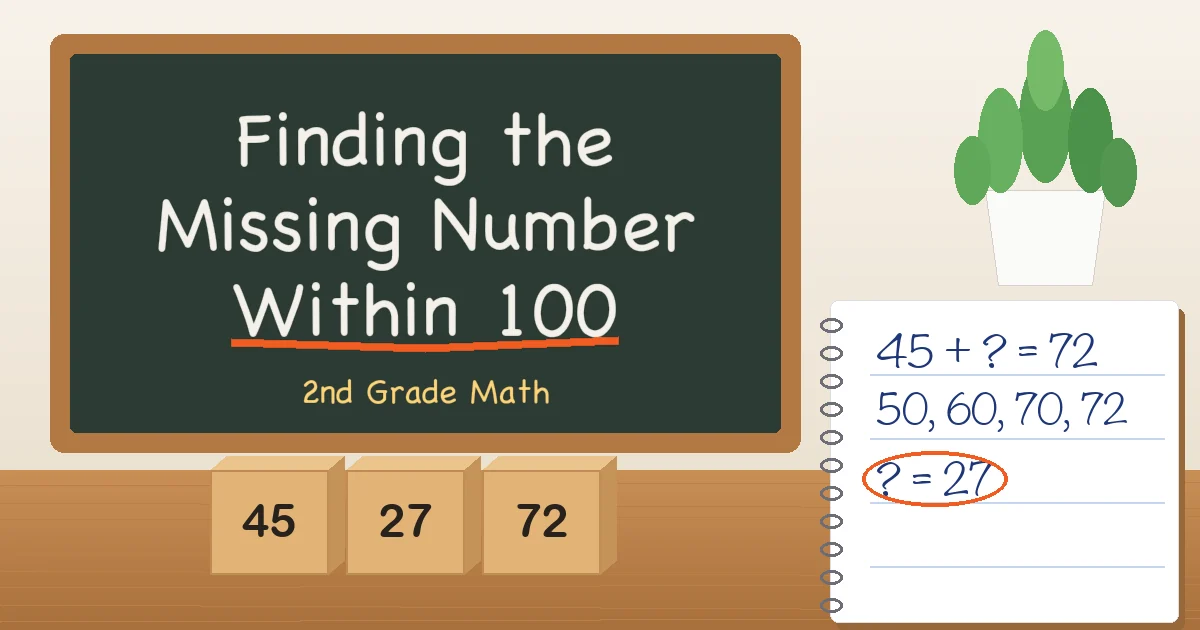
Finding the Missing Number Within 100: 2nd Grade Examples

Finding the missing number within 100 means working out which number makes both sides of an equation equal, like 27 in 45 + ? = 72. Jumps of ten and five examples show how.

2nd Grade MathOperations and Algebraic ThinkingFinding the Missing Number Within 100
Finding the Missing Number Within 100: 2nd Grade Examples
math

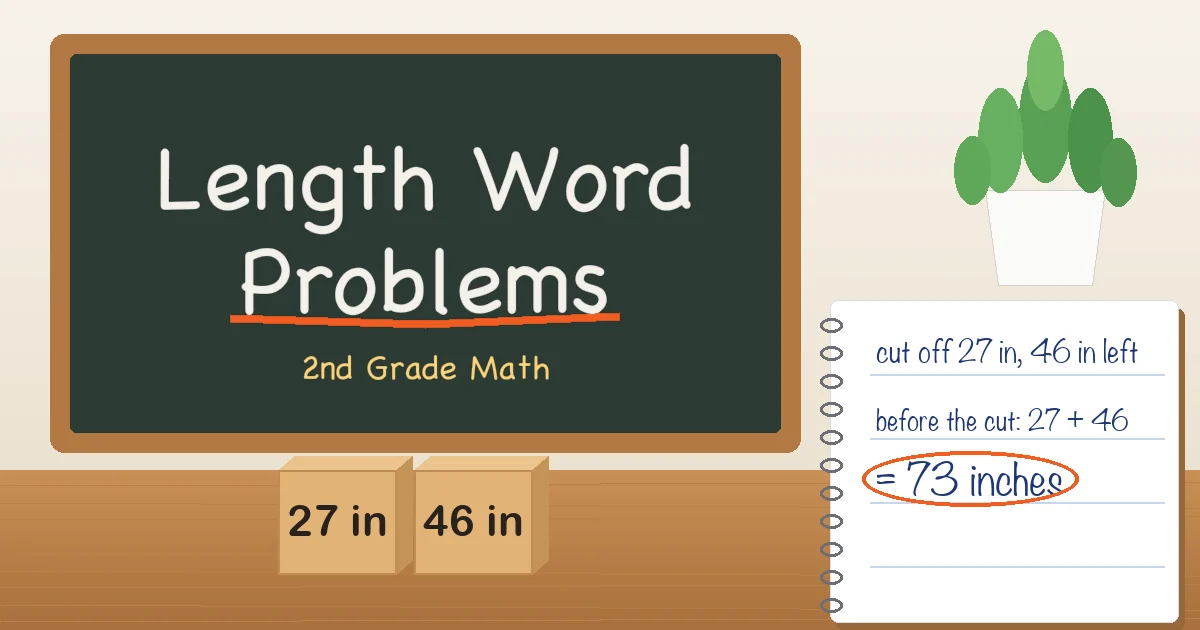
2nd Grade Length Word Problems You Can Draw on a Ruler

Length word problems are story problems where you add or subtract lengths given in the same unit, such as inches or centimeters. A ruler drawing shows whether the story joins, cuts or compares.

2nd Grade MathMeasurement and DataLength Word Problems
2nd Grade Length Word Problems You Can Draw on a Ruler
math

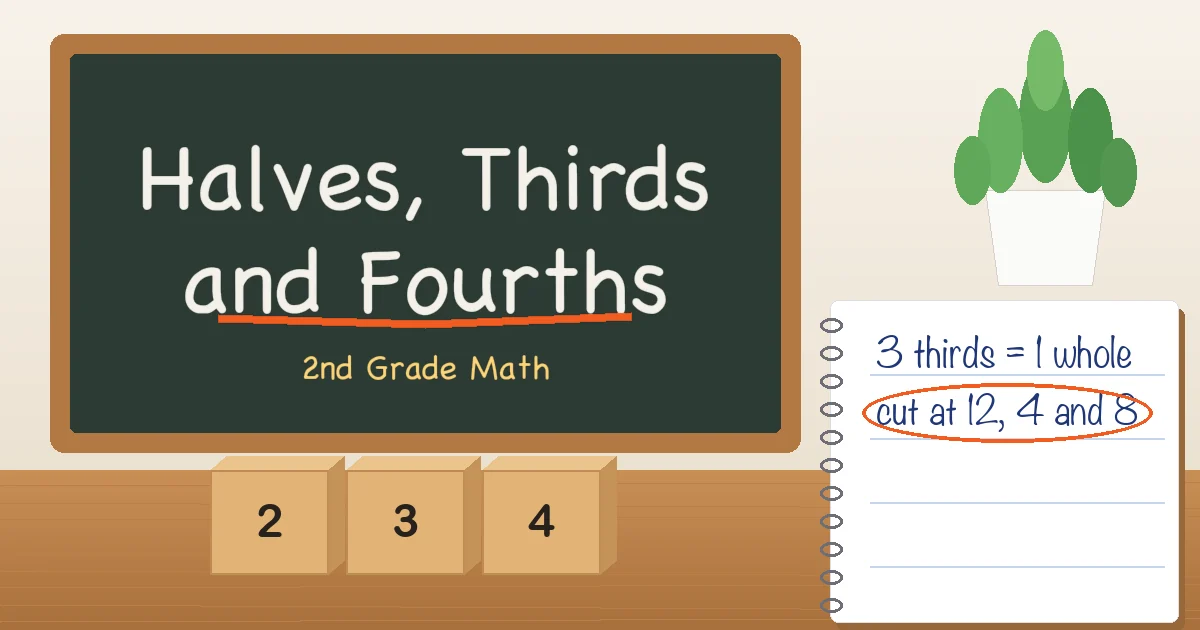
Halves, Thirds and Fourths: Equal Shares of Shapes in 2nd Grade

Halves, thirds and fourths are 2, 3 or 4 equal shares that fill one whole shape. Learn to cut circles and rectangles fairly, check shares that look different, and compare share sizes.

2nd Grade MathGeometryHalves Thirds and Fourths of Shapes
Halves, Thirds and Fourths: Equal Shares of Shapes in 2nd Grade
math

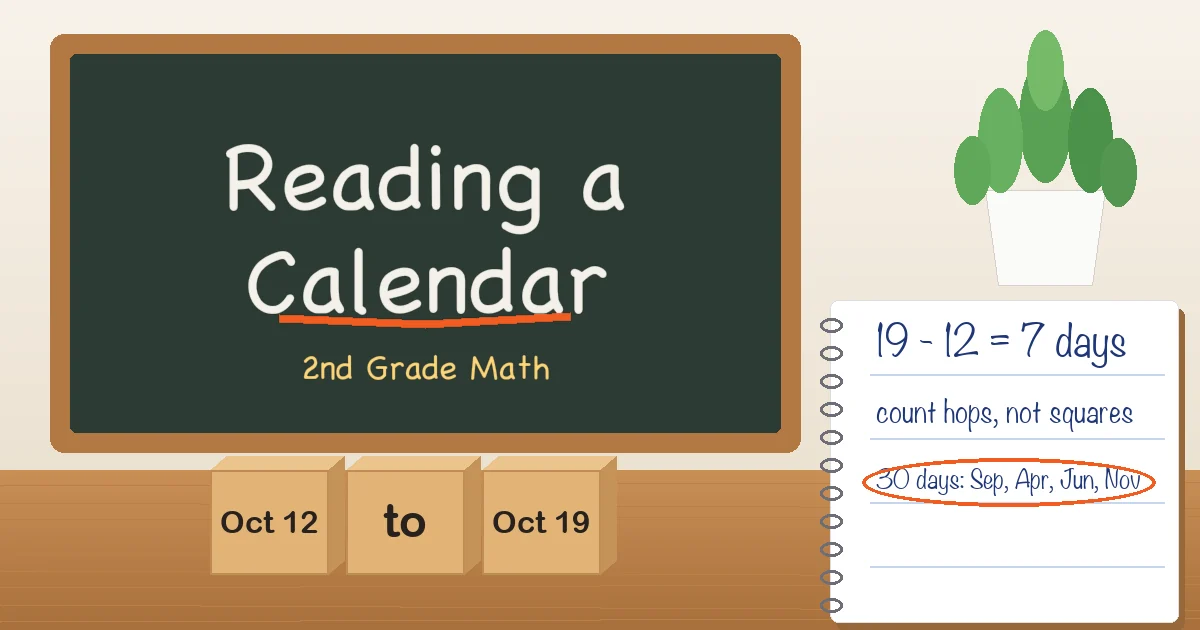
2nd Grade Reading a Calendar Lesson With 6 Worked Examples

Reading a calendar means finding a date on a month's grid, naming its day of the week and counting the days between two dates. Month lengths and month-end counts follow.

2nd Grade MathTime and CalendarReading a Calendar
2nd Grade Reading a Calendar Lesson With 6 Worked Examples
math

Picture Graphs for 2nd Grade: Reading, Making and 6 Examples

In 2nd grade, picture graphs show data with one same-size picture for each thing counted, in rows you can count and compare. You'll make one from a tally and answer how-many-more questions with it.

2nd Grade MathDataPicture Graphs
Picture Graphs for 2nd Grade: Reading, Making and 6 Examples
math

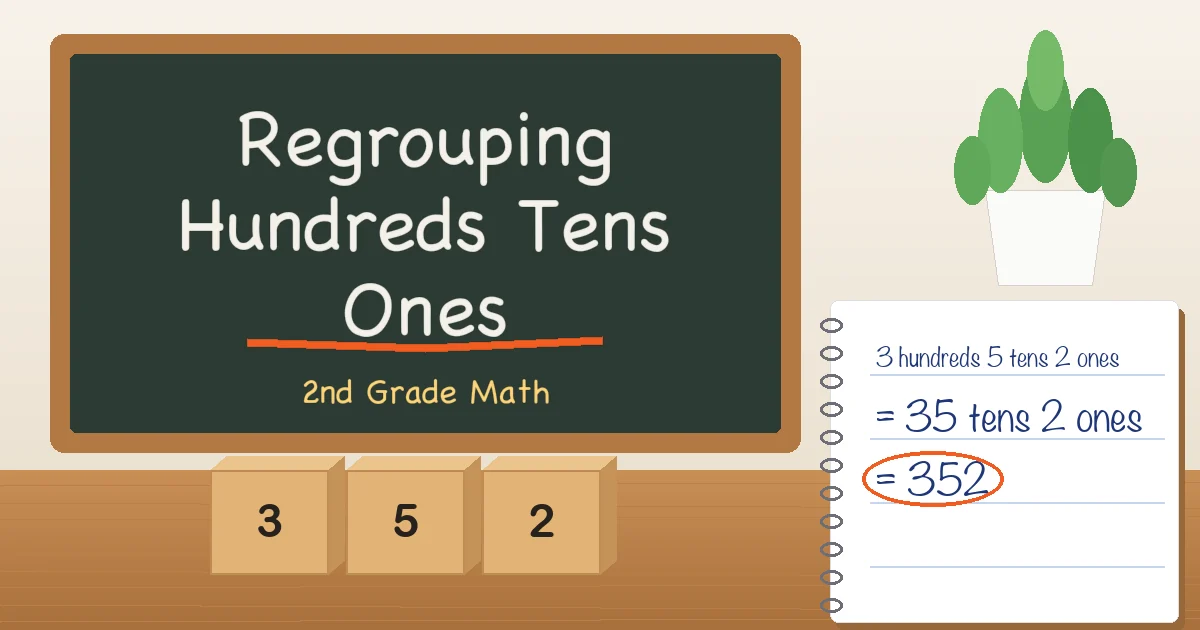
Regrouping Hundreds Tens and Ones in 2nd Grade: 6 Examples

Regrouping hundreds tens and ones means trading 1 hundred for 10 tens, or 1 ten for 10 ones, without changing the number's value. Blocks, examples and three mistakes follow.

2nd Grade MathPlace ValueRegrouping Hundreds Tens and Ones
Regrouping Hundreds Tens and Ones in 2nd Grade: 6 Examples
math

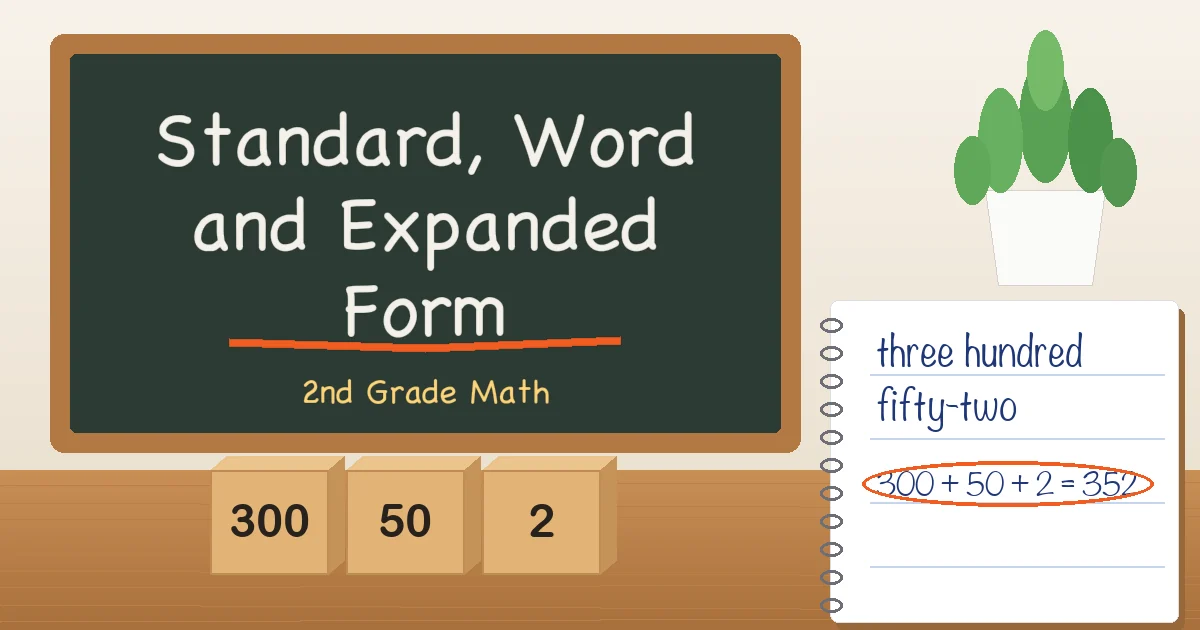
Standard Word and Expanded Form for 2nd Grade (6 Examples)

Standard word and expanded form are three ways to write one number, such as 406, four hundred six, or 400 + 6. Switching between them needs place value, a 0 for each empty place, and hyphens.

2nd Grade MathPlace ValueStandard Word and Expanded Form
Standard Word and Expanded Form for 2nd Grade (6 Examples)
math

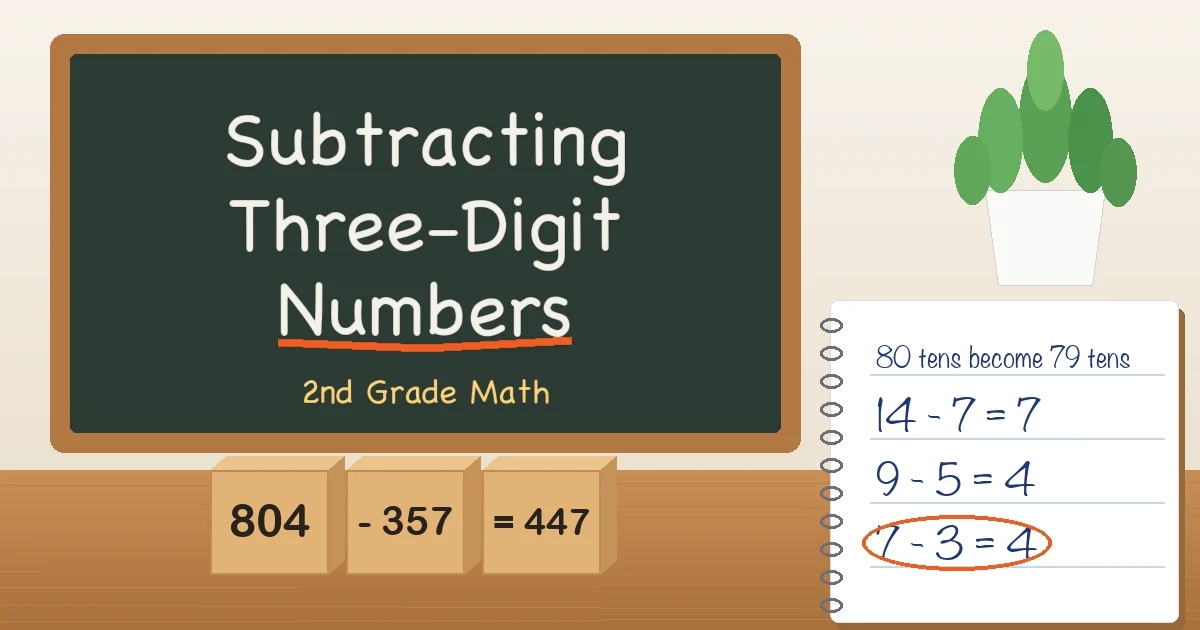
Subtracting Three-Digit Numbers With Regrouping and Zeros

Subtracting three-digit numbers means taking away ones, tens, then hundreds, and opening a ten or a hundred whenever a top digit is too small. Blocks, written steps, zeros and six examples follow.

2nd Grade MathNumber and Operations in Base TenSubtracting Three-Digit Numbers
Subtracting Three-Digit Numbers With Regrouping and Zeros
math

Subtracting Two-Digit Numbers With Regrouping: 2nd Grade Steps

Subtracting two-digit numbers with regrouping means breaking 1 ten into 10 ones when the top number has too few ones, as in 43 - 18. Blocks, steps and checks come next.

2nd Grade MathNumber and Operations in Base TenSubtracting Two-Digit Numbers With Regrouping
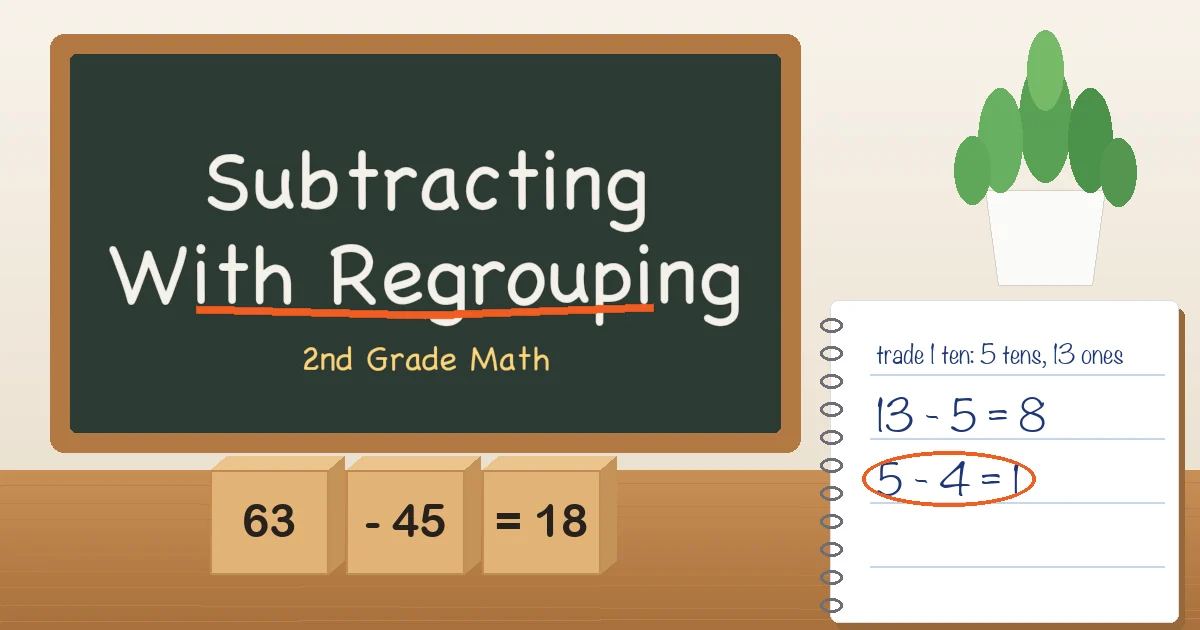
Subtracting Two-Digit Numbers With Regrouping: 2nd Grade Steps
math

How 2nd Graders Solve Two-Step Word Problems Within 100

Two-step word problems within 100 are stories you solve with two adding or subtracting steps, and the first answer starts the second step. Six worked examples show how to plan and check them.

2nd Grade MathOperations and Algebraic ThinkingTwo-Step Word Problems
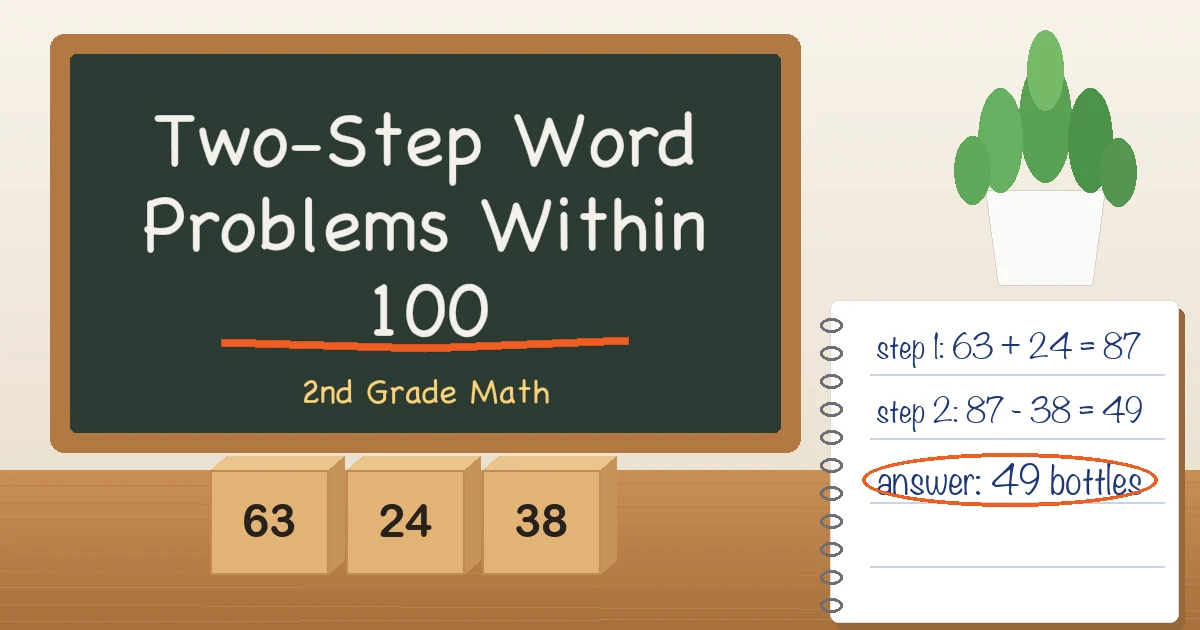
How 2nd Graders Solve Two-Step Word Problems Within 100