Topic

3rd Grade Math

20 articles
math

3rd Grade Adding Within 1000: Strategies, Checks and 6 Examples

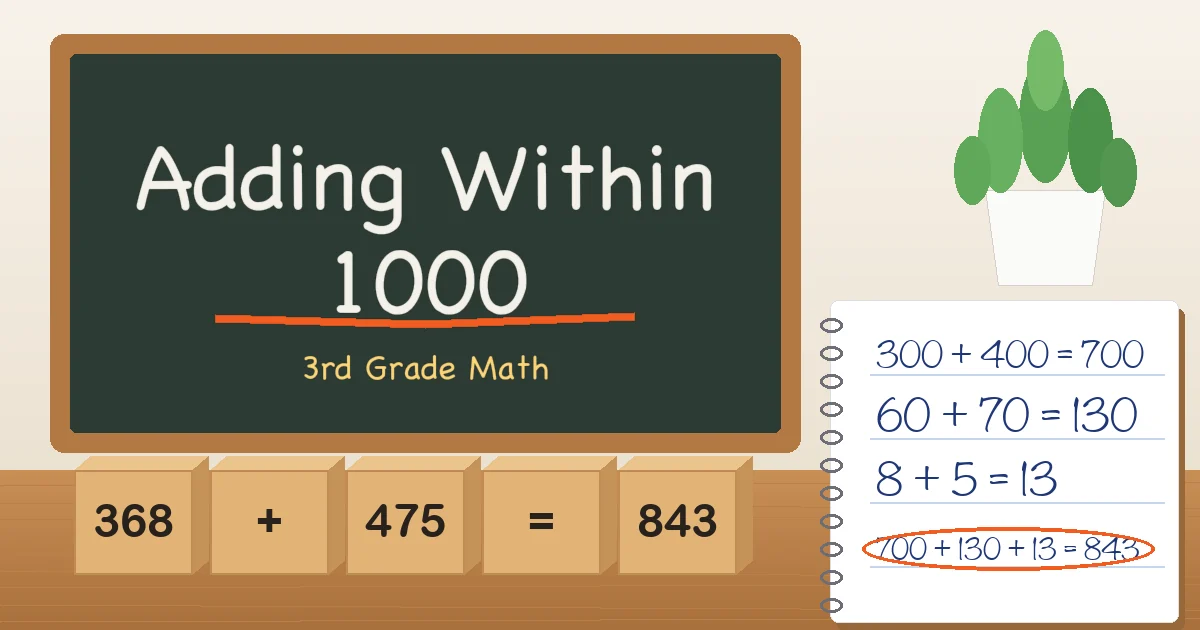
Adding within 1000 means joining hundreds, tens and ones into a sum up to 1,000, trading any 10 for 1 of the next place. Three strategies, two checks and six examples follow.

3rd Grade MathPlace ValueAdding Within 1000
3rd Grade Adding Within 1000: Strategies, Checks and 6 Examples
math

Area and the Distributive Property for 3rd Grade, 6 Examples

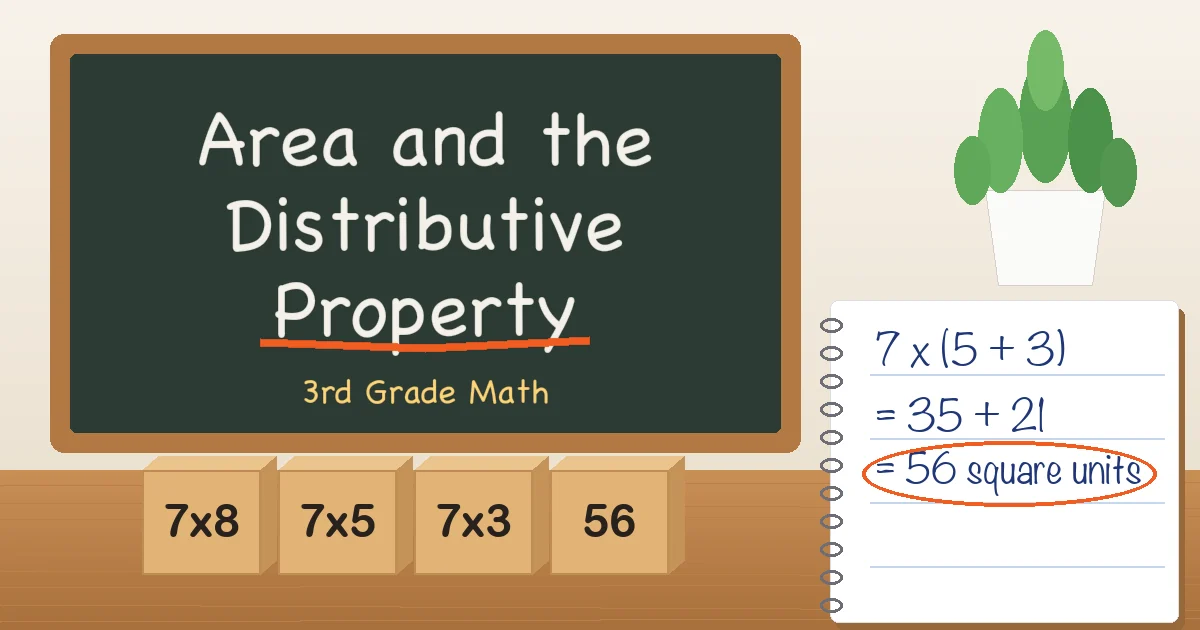
Area and the distributive property let you cut a rectangle in two and add the two areas, so 7 rows of 8 become 35 plus 21. Grids and six examples follow.

3rd Grade MathMeasurement and DataArea and the Distributive Property
Area and the Distributive Property for 3rd Grade, 6 Examples
math

Area of Composite Shapes: Steps and Examples for 3rd Grade

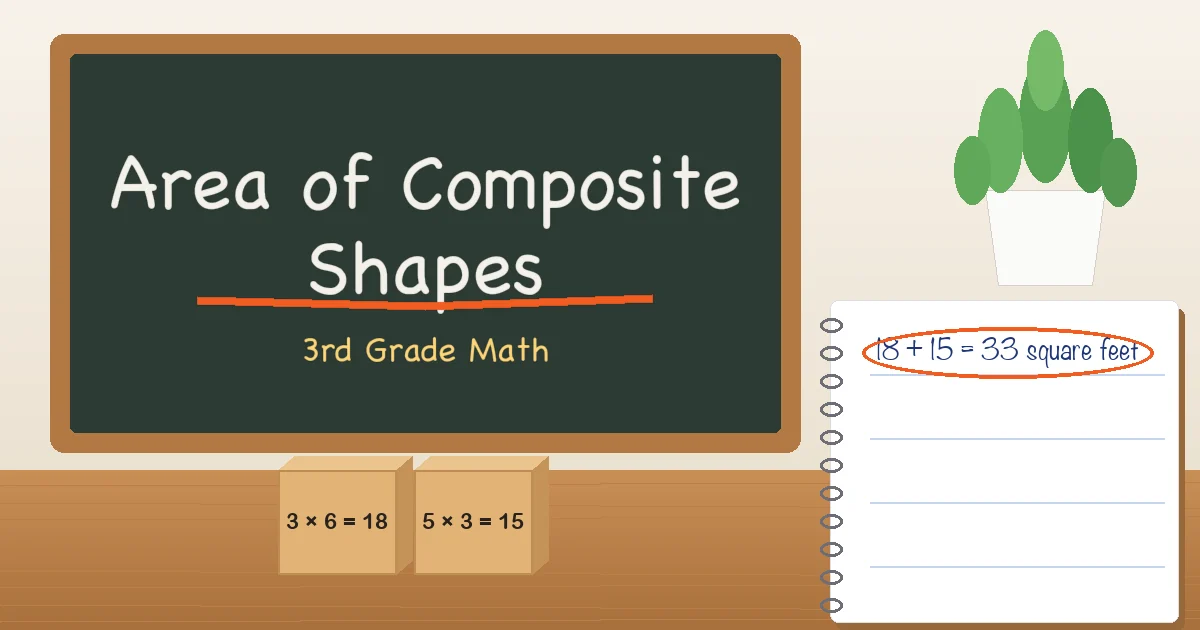
The area of composite shapes counts the unit squares inside them: cut the shape into rectangles that don't overlap, find each area, and add.

3rd Grade MathGeometryArea of Composite Shapes
Area of Composite Shapes: Steps and Examples for 3rd Grade
math

Associative Property of Multiplication: Examples for 3rd Grade

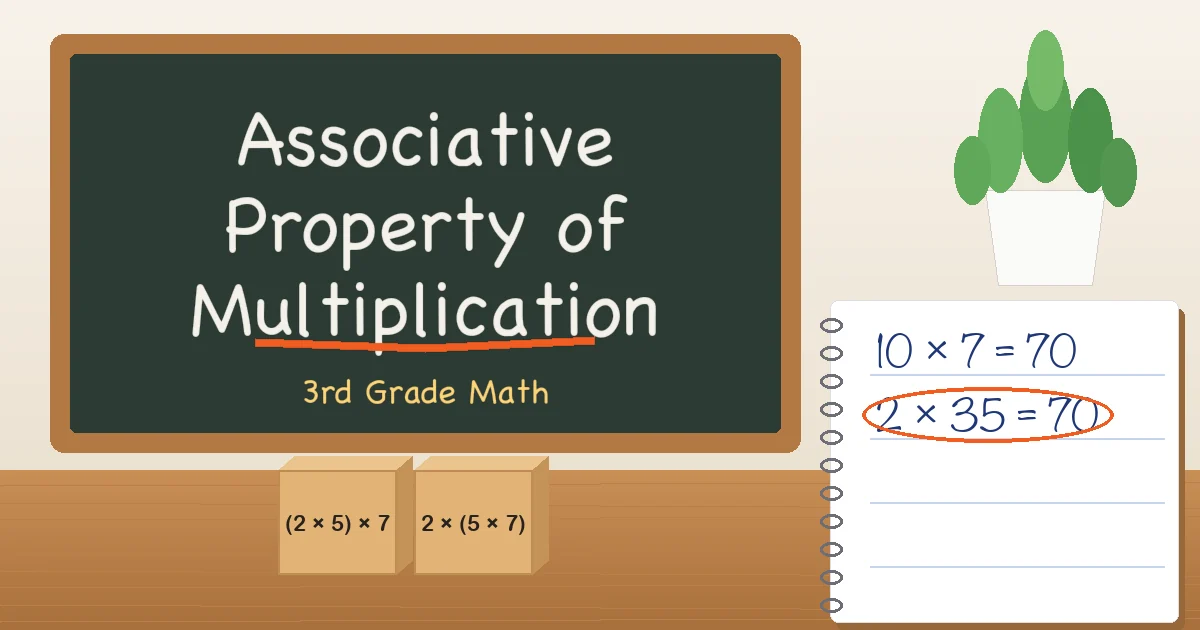
The associative property of multiplication lets you regroup three factors, multiplying either neighboring pair first, without changing the product. You'll see the formula, the make-a-ten move, six examples and the division trap.

3rd Grade MathMultiplicationAssociative Property of Multiplication
Associative Property of Multiplication: Examples for 3rd Grade
math

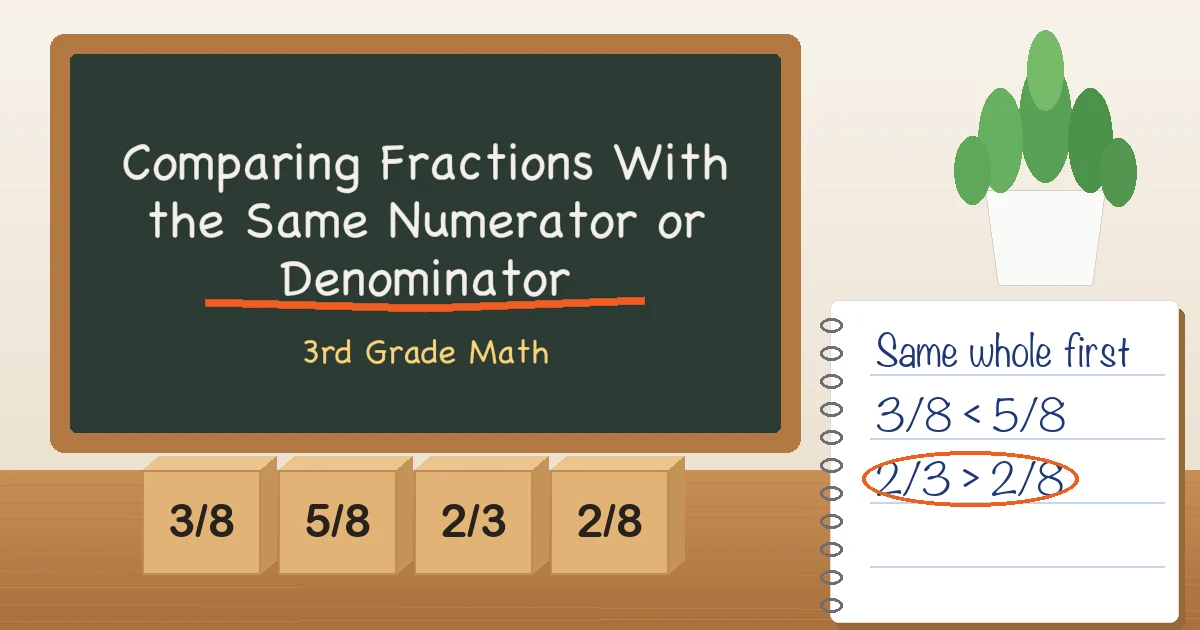
Comparing Fractions With the Same Numerator or Denominator: Examples

Comparing fractions with the same numerator or denominator means spotting the matching number, then counting the pieces or comparing their size. Six worked examples and three common mix-ups show both rules at work.

3rd Grade MathFractionsComparing Fractions
Comparing Fractions With the Same Numerator or Denominator: Examples
math

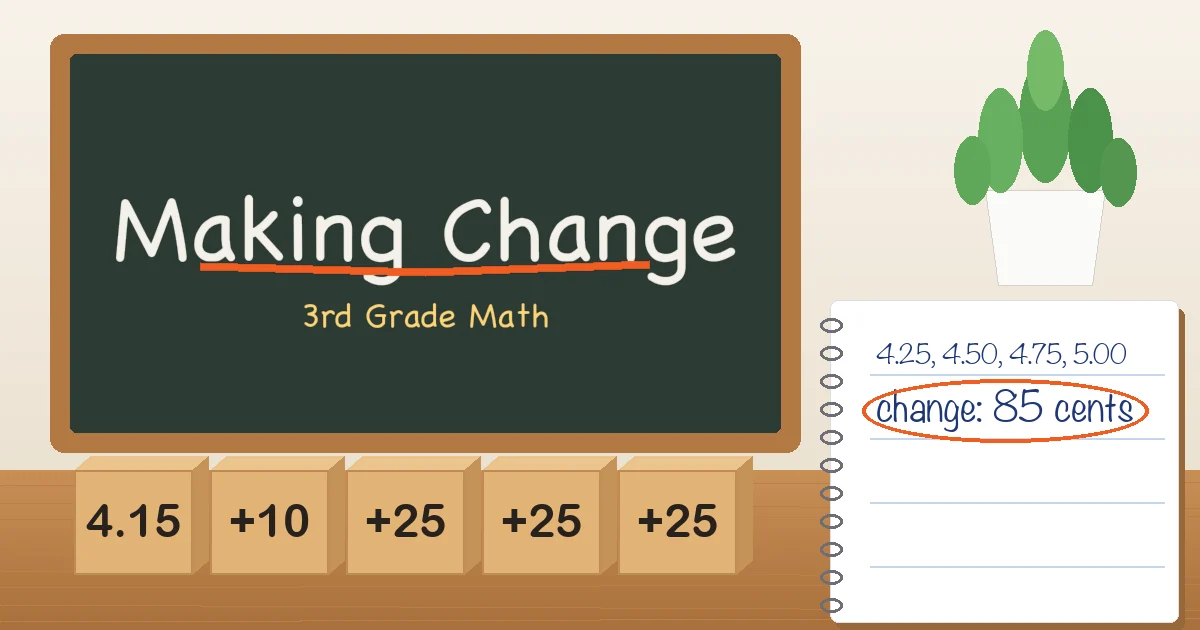
Making Change and Counting Money for 3rd Grade: 6 Examples

Making change means handing back the difference between the money paid and the price, found by counting up from the price. Count bills and coins, compare amounts, then check every answer with addition.

3rd Grade MathMeasurement and DataCounting Money and Making Change
Making Change and Counting Money for 3rd Grade: 6 Examples
math

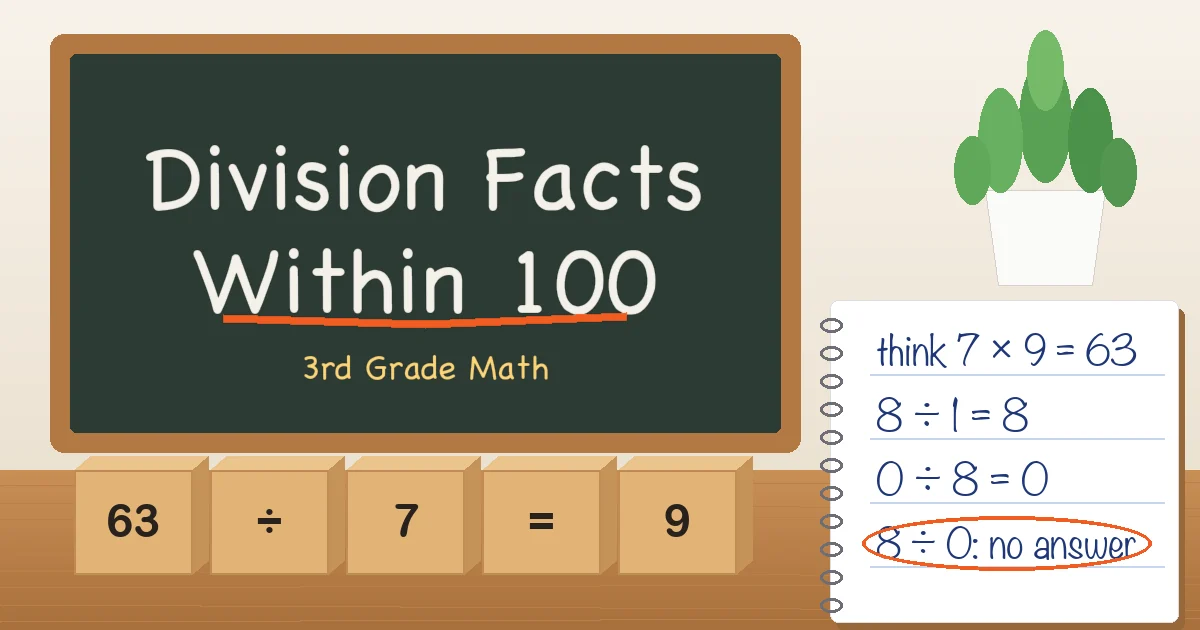
Division Facts Within 100: Strategies, Rules and Examples

Division facts within 100 undo times facts, so 63 divided by 7 is 9 because 7 times 9 is 63. Quick routes for most divisors and the rules for 0 and 1 follow.

3rd Grade MathOperations and Algebraic ThinkingDivisionDivision Facts Within 100
Division Facts Within 100: Strategies, Rules and Examples
math

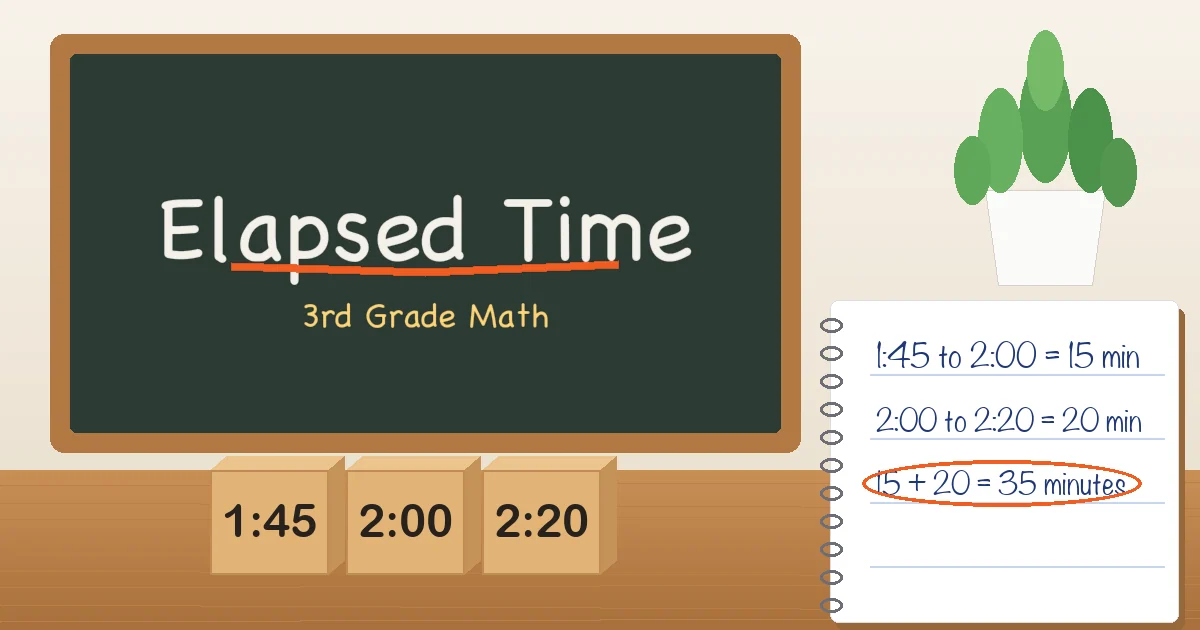
Elapsed Time for 3rd Grade: Number Line Steps and Examples

Elapsed time is the amount of time that passes between a start time and an end time. You'll read clocks to the minute, count jumps on a number line and work five examples.

3rd Grade MathMeasurement and DataElapsed Time
Elapsed Time for 3rd Grade: Number Line Steps and Examples
math

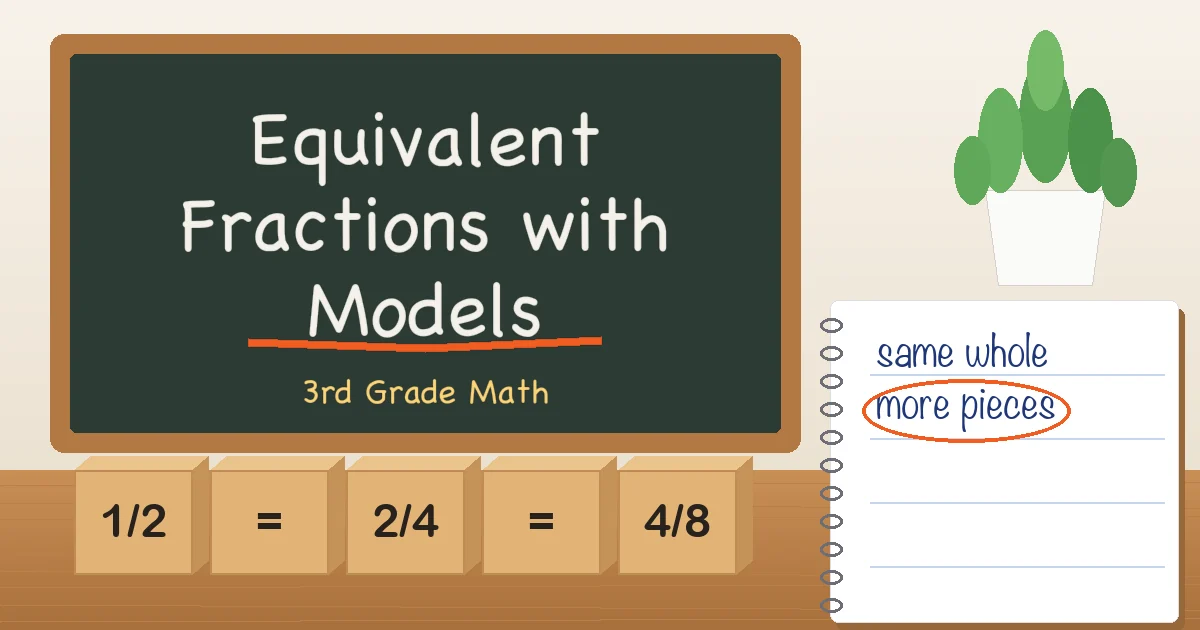
Equivalent Fractions with Models: A 3rd Grade Guide with Examples

Equivalent fractions with models means showing on strips, rectangles or number lines that fractions like 1/2 and 2/4 cover the same amount of one whole. Six worked examples follow.

3rd Grade MathFractionsEquivalent Fractions
Equivalent Fractions with Models: A 3rd Grade Guide with Examples
math

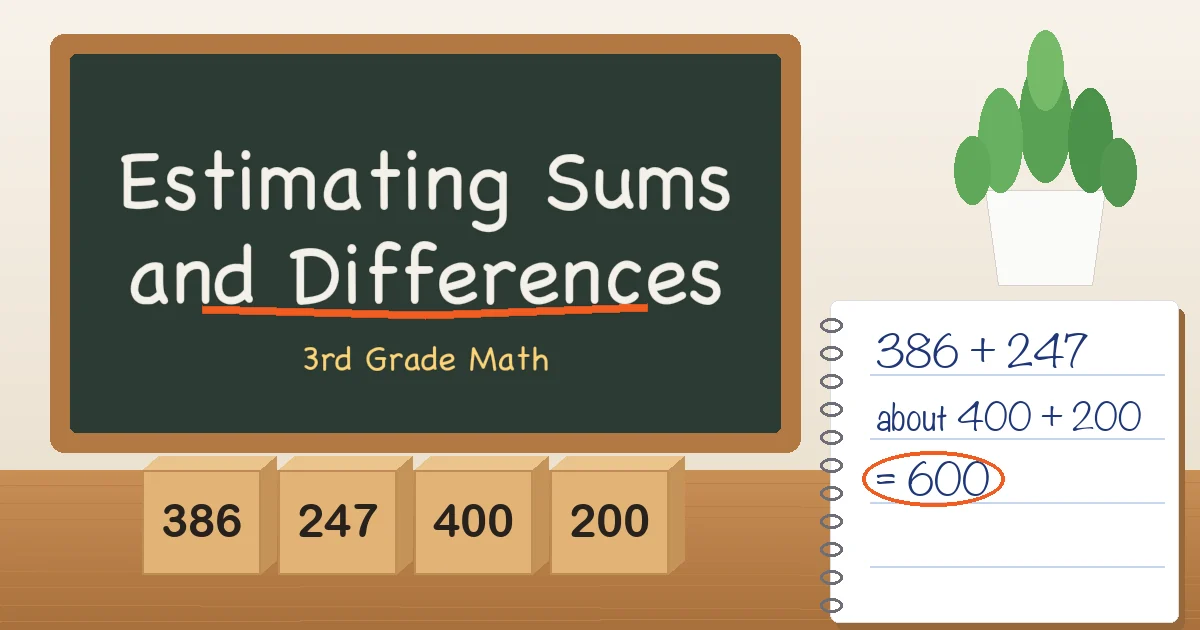
Estimating Sums and Differences With Rounding and 6 Examples

Estimating sums and differences means finding a close, quick answer by swapping each number for an easier one, usually by rounding, then adding or subtracting. Compatible numbers and a check for exact answers follow.

3rd Grade MathNumber and Operations in Base TenEstimating Sums and Differences
Estimating Sums and Differences With Rounding and 6 Examples
math

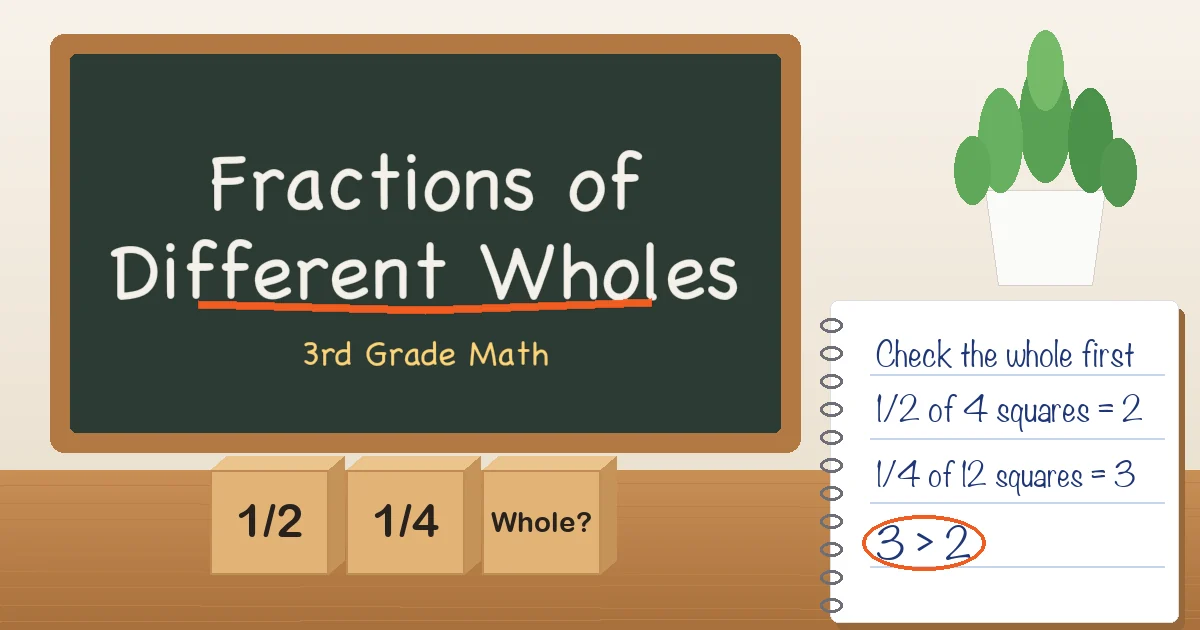
Fractions of Different Wholes: 3rd Grade Practice and Examples

Fractions of different wholes can't be compared by their numbers alone, because each fraction is a share of its own whole. When the wholes differ, the real pieces decide, measured in squares or inches.

3rd Grade MathFractionsFractions of Different Wholes
Fractions of Different Wholes: 3rd Grade Practice and Examples
math

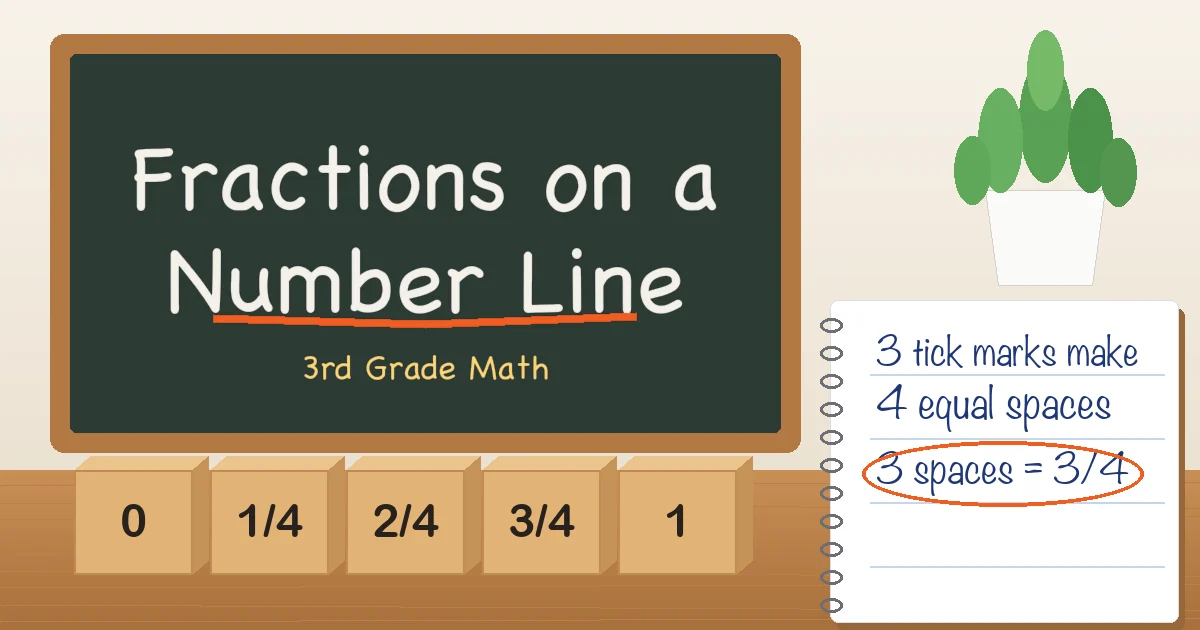
Fractions on a Number Line: 3rd Grade Steps and 6 Examples

Fractions on a number line are points you find by cutting 0 to 1 into equal spaces and counting spaces from 0. Steps, fractions greater than 1 and six worked examples follow.

3rd Grade MathFractionsFractions on a Number Line
Fractions on a Number Line: 3rd Grade Steps and 6 Examples
math

3rd Grade Multiplication and Division Word Problems Within 100
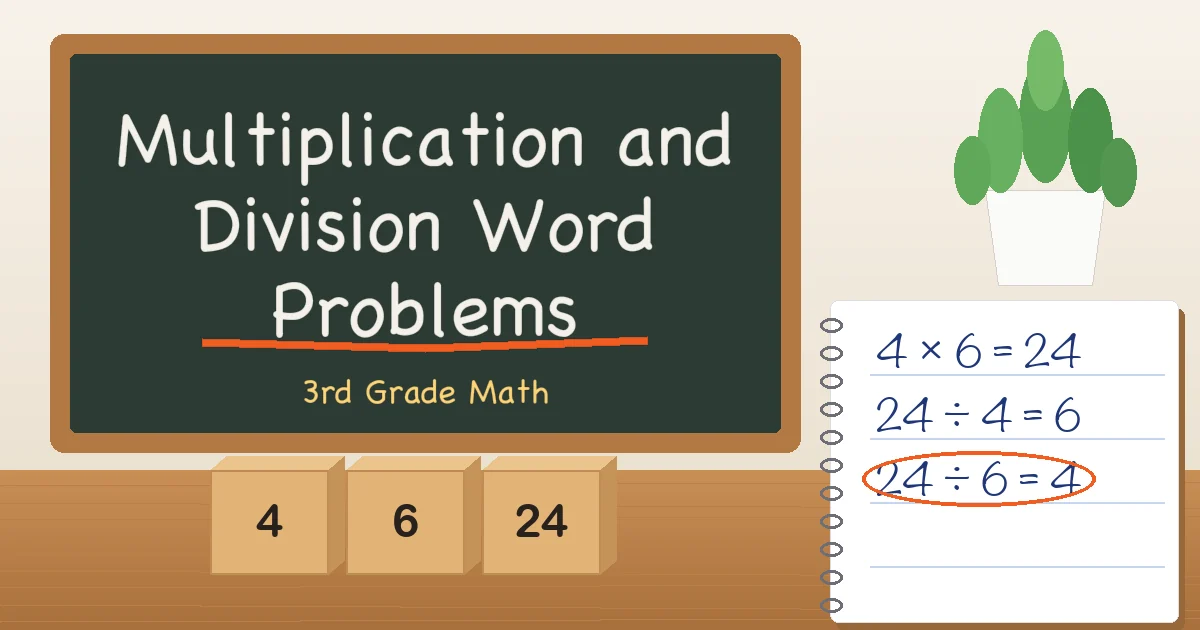
Multiplication and division word problems are equal-groups stories with one number missing, and that missing number tells you to multiply or divide. Six garden examples cover all three cases.

3rd Grade MathOperations and Algebraic ThinkingMultiplication and Division Word Problems
3rd Grade Multiplication and Division Word Problems Within 100
math

Multiplying by Multiples of 10: 3rd Grade Steps and Examples

In 3rd grade, multiplying by multiples of 10 means multiplying by 10, 20, 30 and up to 90, so 7 times 40 is 28 tens, or 280. Ten-rods show why the zero appears.

3rd Grade MathPlace ValueMultiplying by Multiples of 10
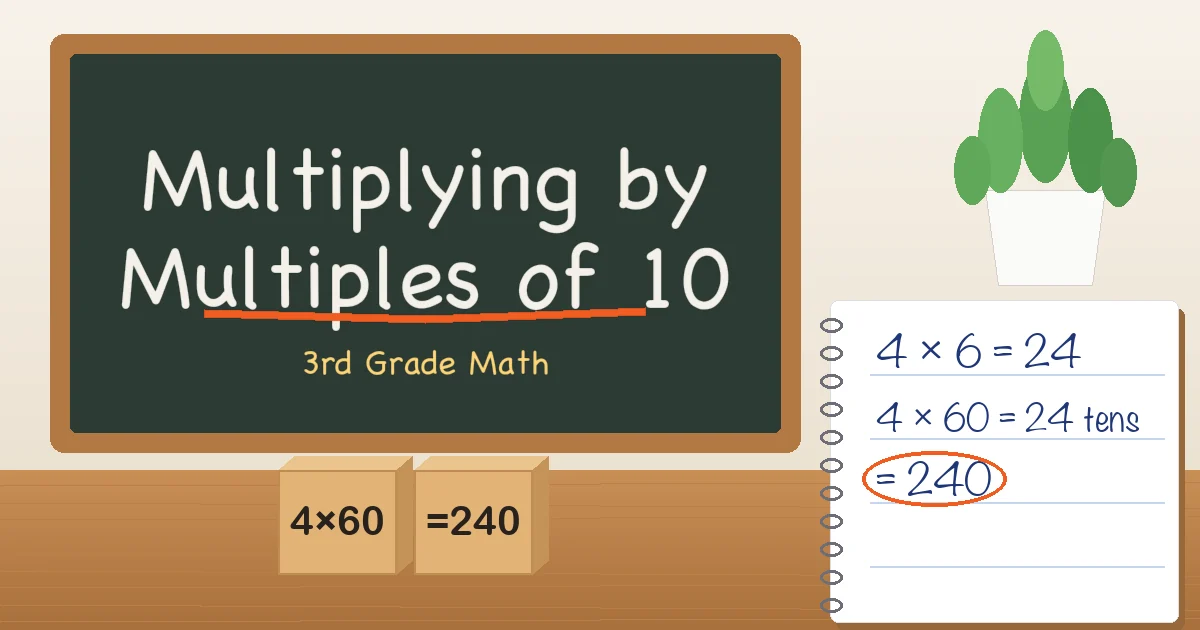
Multiplying by Multiples of 10: 3rd Grade Steps and Examples
math

Order of Operations 3rd Grade: Rules, Parentheses and 6 Examples

The order of operations 3rd grade students use means parentheses first, then multiply or divide, then add or subtract from left to right. A cupcake count and six examples show why.

3rd Grade MathOperations and Algebraic ThinkingOrder of Operations
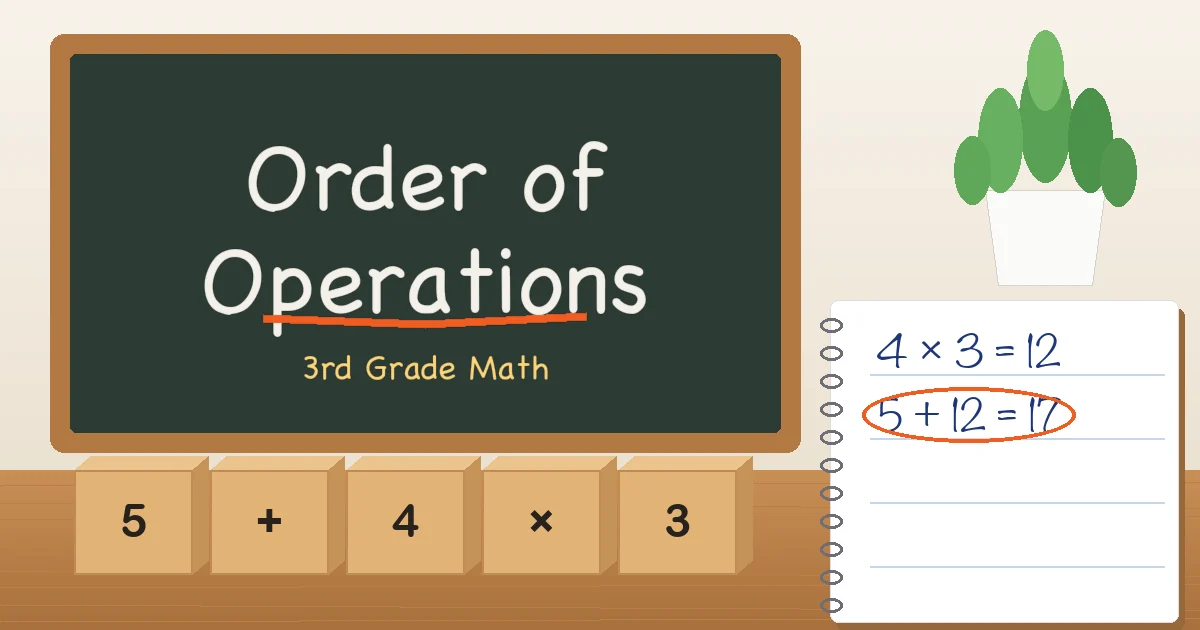
Order of Operations 3rd Grade: Rules, Parentheses and 6 Examples
math

3rd Grade Fact Families: Relating Multiplication and Division

Relating multiplication and division means using a multiplication fact to solve a division, because dividing asks for a missing factor. You'll build fact families from arrays and learn which question each division answers.

3rd Grade MathOperations and Algebraic ThinkingRelating Multiplication and DivisionFact Families
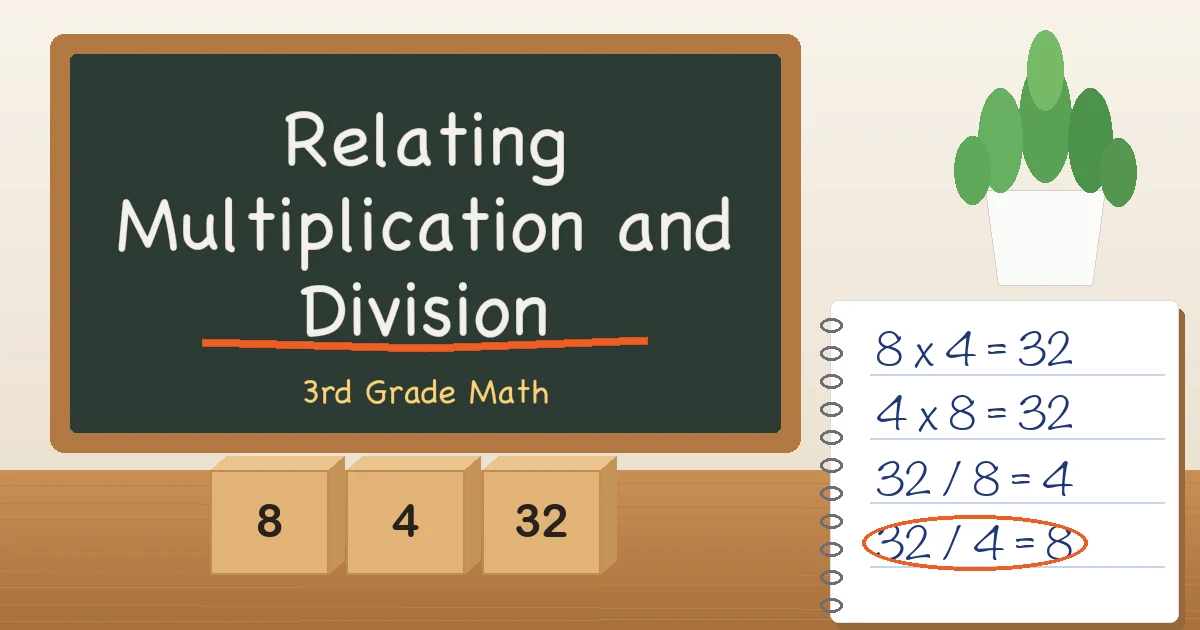
3rd Grade Fact Families: Relating Multiplication and Division
math

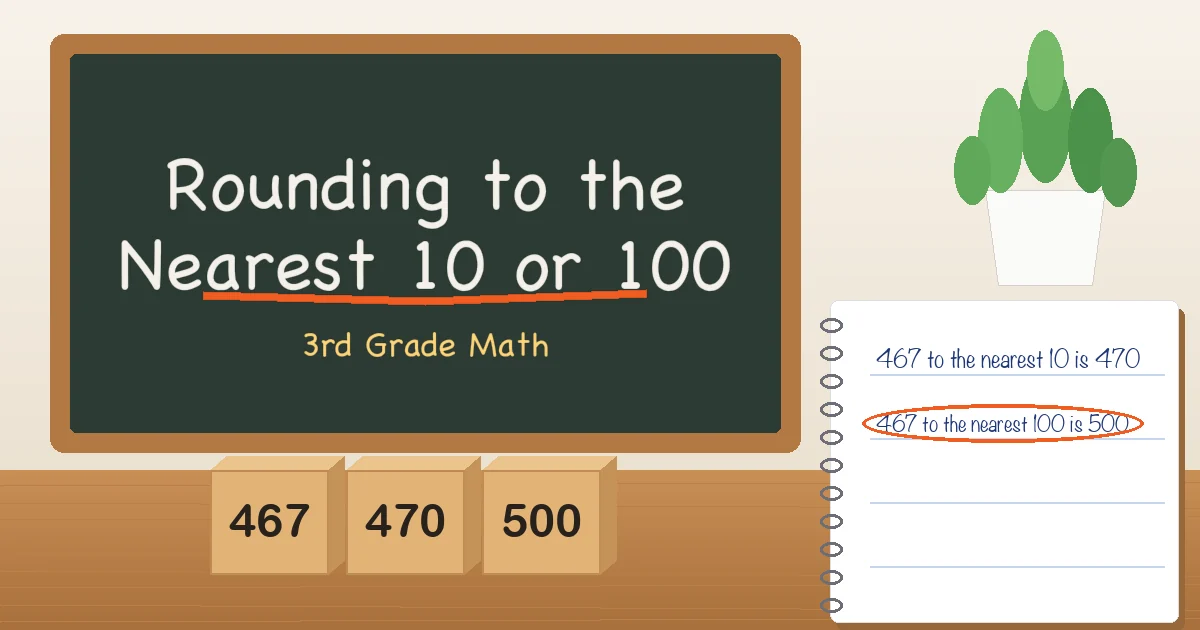
Rounding to the Nearest 10 or 100: A 3rd Grade Math Lesson

Rounding to the nearest 10 or 100 means trading a number for the closest ten or hundred, like 467 to 470 or 500. Place value names the choices, and the halfway rule settles ties.

3rd Grade MathPlace ValueRounding to the Nearest 10 or 100
Rounding to the Nearest 10 or 100: A 3rd Grade Math Lesson
math

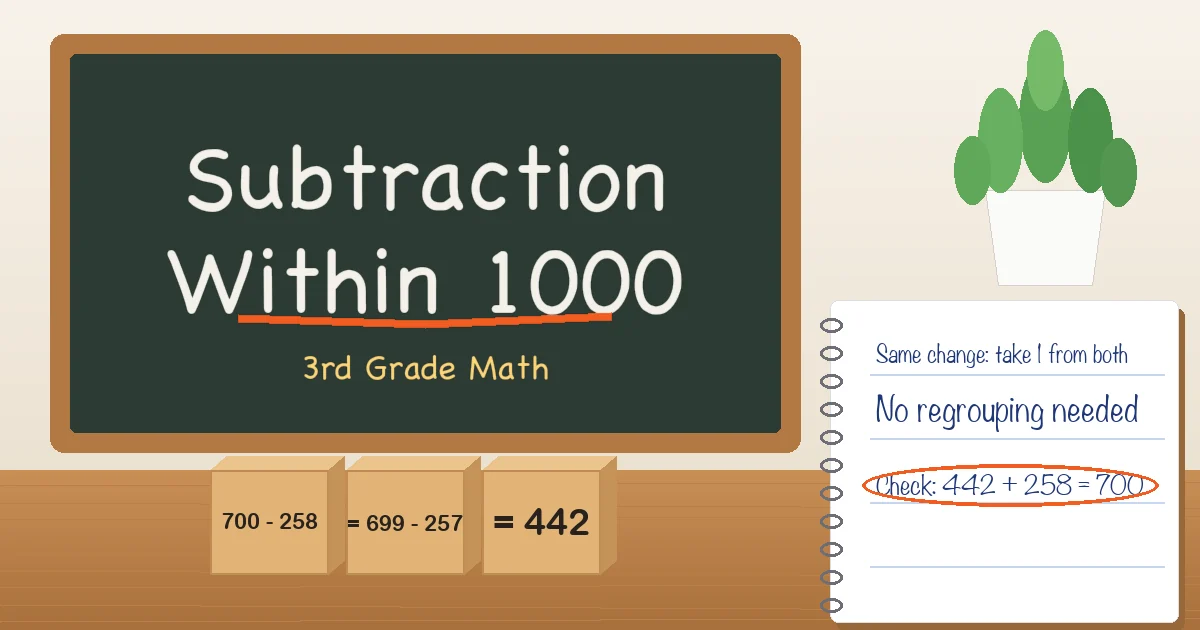
Subtraction Within 1000: 3rd Grade Strategies and Regrouping

Subtraction within 1000 means finding the difference between two numbers up to 1000, with a strategy that fits the numbers or by regrouping. Four methods, the zero case, two checks and six examples follow.

3rd Grade MathNumber and Operations in Base TenSubtraction Within 1000
Subtraction Within 1000: 3rd Grade Strategies and Regrouping
math

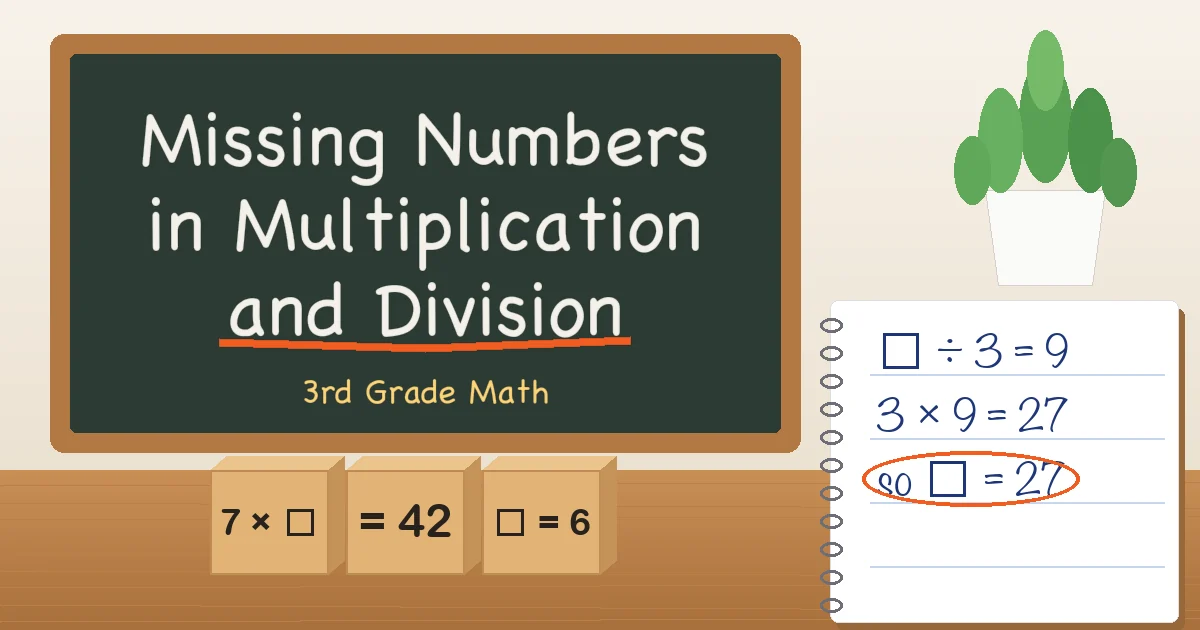
Missing Numbers in Multiplication and Division: A 3rd Grade Guide

Missing numbers in multiplication and division are found with a related fact, so 7 × = 42 becomes 42 ÷ 7, which is 6. A table shows all six places the box can hide.

3rd Grade MathOperations and Algebraic ThinkingMissing Numbers in Multiplication and DivisionMissing Factors
Missing Numbers in Multiplication and Division: A 3rd Grade Guide
math

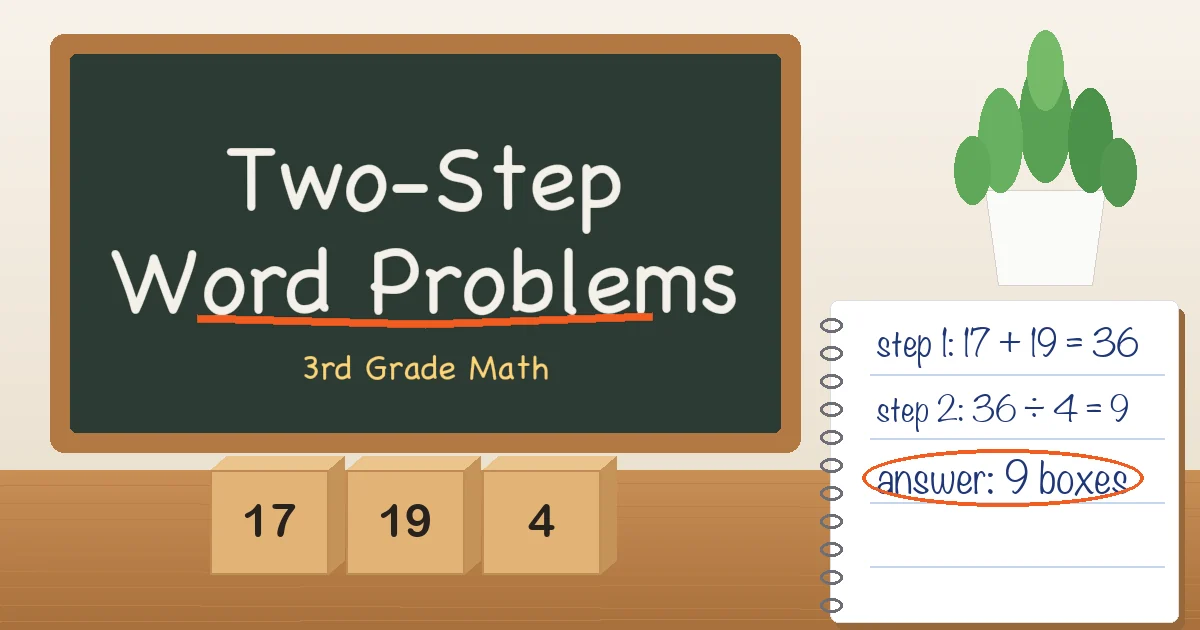
Two-Step Word Problems for 3rd Grade: 6 Worked Examples

Two-step word problems are stories that need two operations, because you must answer a hidden first question before the one the story asks. Six bake sale examples show the plan and the rounding check.

3rd Grade MathOperations and Algebraic ThinkingTwo-Step Word Problems
Two-Step Word Problems for 3rd Grade: 6 Worked Examples