Topic

4th Grade Math

19 articles
math

Common Denominators: How to Find One and Compare Fractions

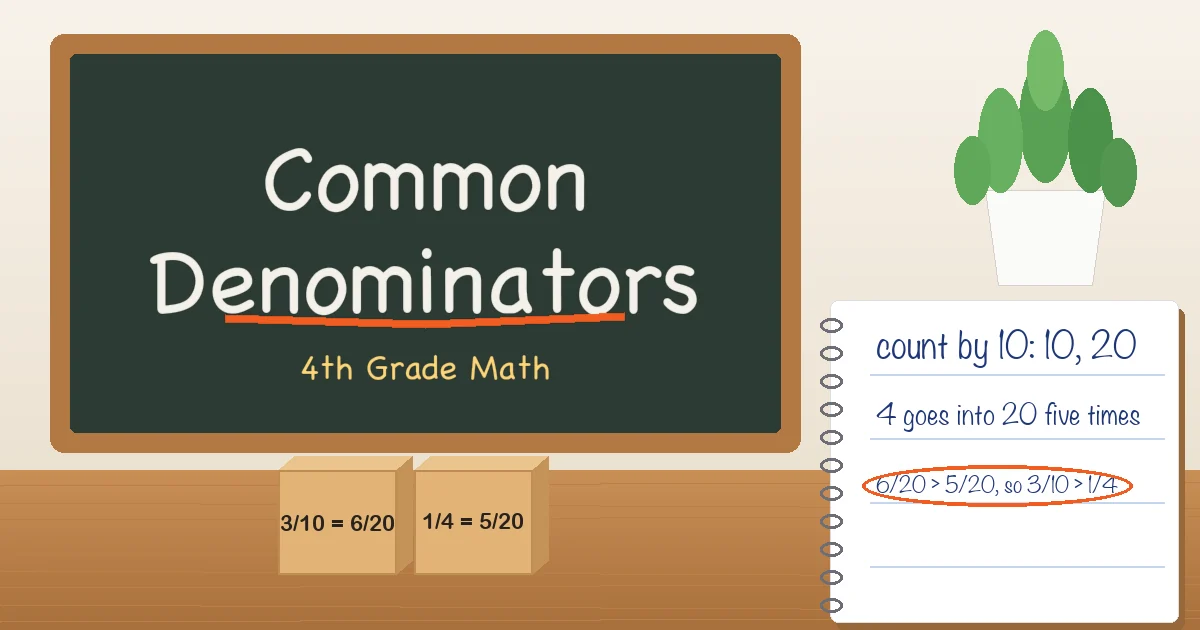
Common denominators let two fractions share one bottom number, so both are cut into same-size pieces and easy to compare. See the three steps that find one and five worked examples.

4th Grade MathFractionsCommon Denominators
Common Denominators: How to Find One and Compare Fractions
math

Dividing Multiples of 10, 100, and 1,000 by 1-Digit Numbers

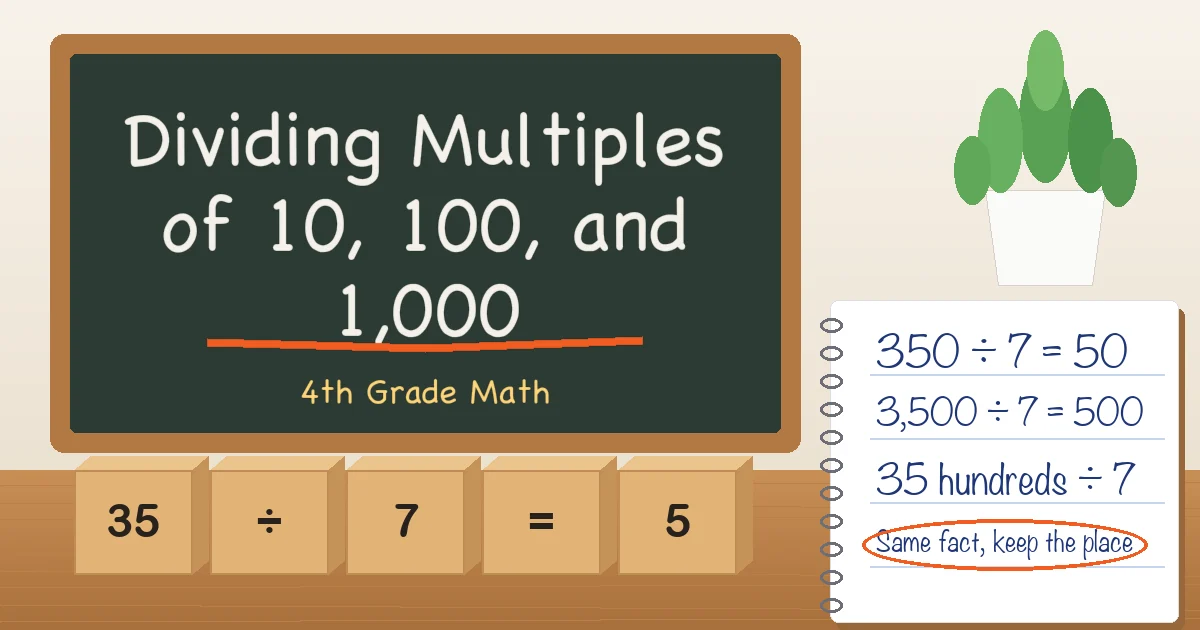
Dividing multiples of 10, 100, and 1,000 means dividing a basic fact and keeping its place: 3,500 divided by 7 is 35 hundreds divided by 7, or 500. Five worked examples follow.

4th Grade MathDivisionDividing Multiples of 10 100 and 1000
Dividing Multiples of 10, 100, and 1,000 by 1-Digit Numbers
math

Estimating Products and Quotients in 4th Grade, With Practice

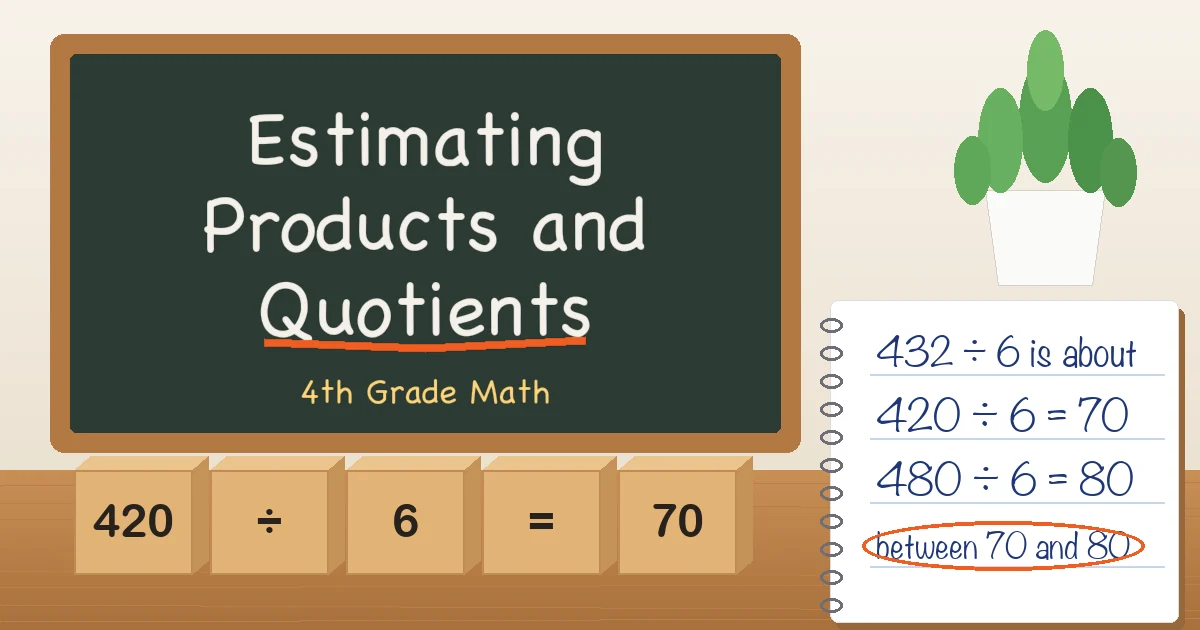
Estimating products and quotients means swapping in nearby friendly numbers, then multiplying or dividing in your head to get a close answer. Rounding, compatible numbers, high-or-low checks and six examples follow.

4th Grade MathMultiplication and DivisionEstimating Products and Quotients
Estimating Products and Quotients in 4th Grade, With Practice
math

Multi-Step Word Problems for 4th Grade: 6 Examples and Practice

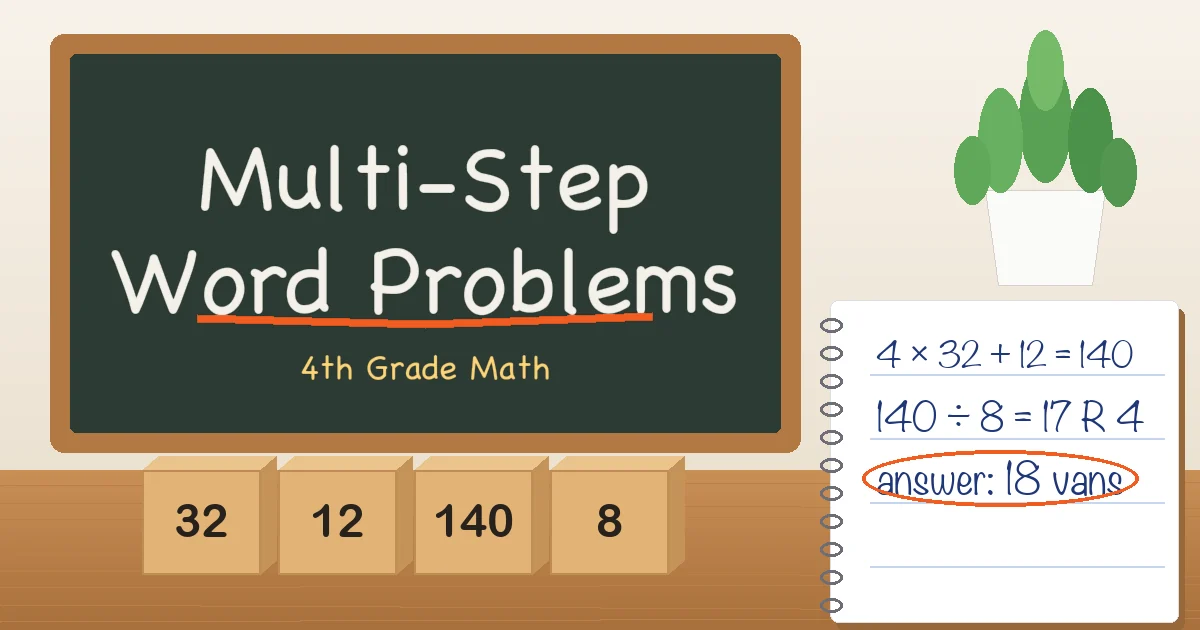
Multi-step word problems chain two or more operations, so each answer feeds the next step, and any remainder must fit the question. Six camp-trip examples show the plan and the check.

4th Grade MathOperations and Algebraic ThinkingMulti-Step Word Problems
Multi-Step Word Problems for 4th Grade: 6 Examples and Practice
math

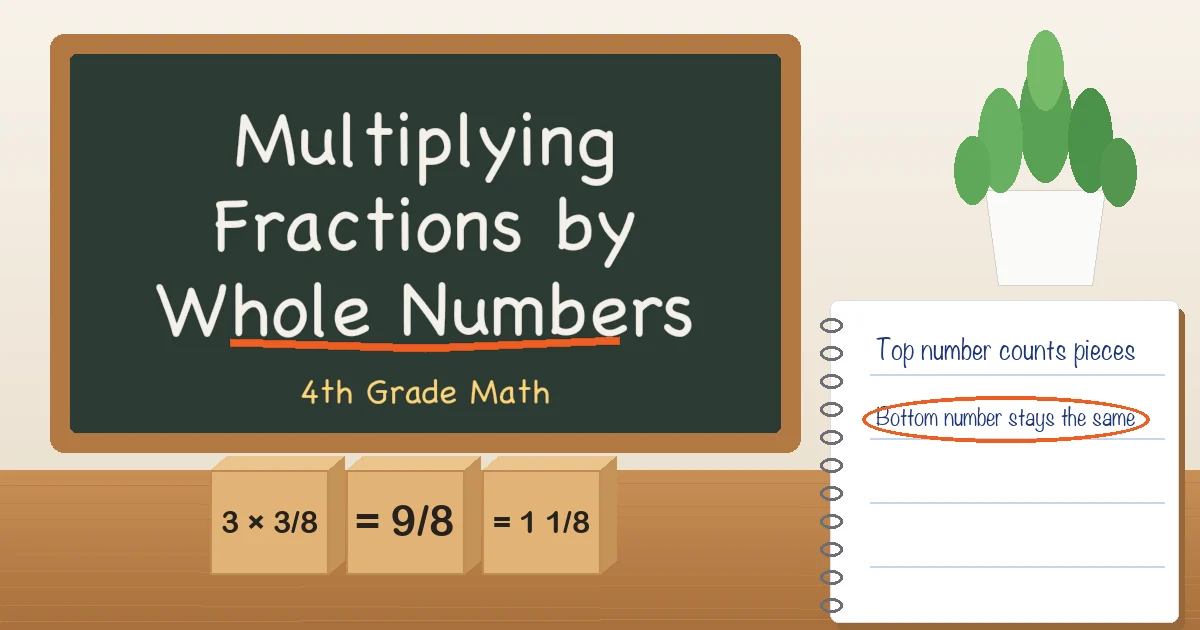
Multiplying Fractions by Whole Numbers: A 4th Grade How-To Guide

Multiplying fractions by whole numbers means making equal groups of a fraction, so you multiply the top number and keep the bottom one. Fraction bars, number-line hops, word problems and six worked examples show how.

4th Grade MathFractionsMultiplying Fractions by Whole Numbers
Multiplying Fractions by Whole Numbers: A 4th Grade How-To Guide
math

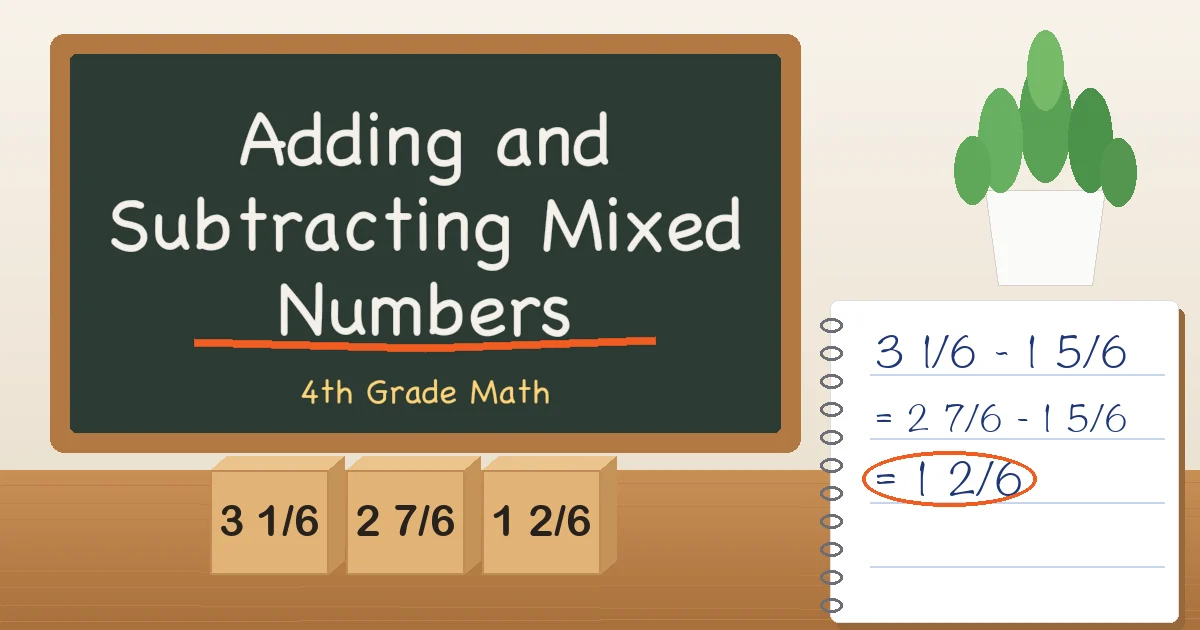
Adding and Subtracting Mixed Numbers: Steps and 5 Examples

Adding and subtracting mixed numbers with the same denominator means working on the whole numbers and the fraction parts separately, trading 1 whole for equal pieces when needed. Five examples and three traps follow.

4th Grade MathFractionsAdding and Subtracting Mixed Numbers
Adding and Subtracting Mixed Numbers: Steps and 5 Examples
math

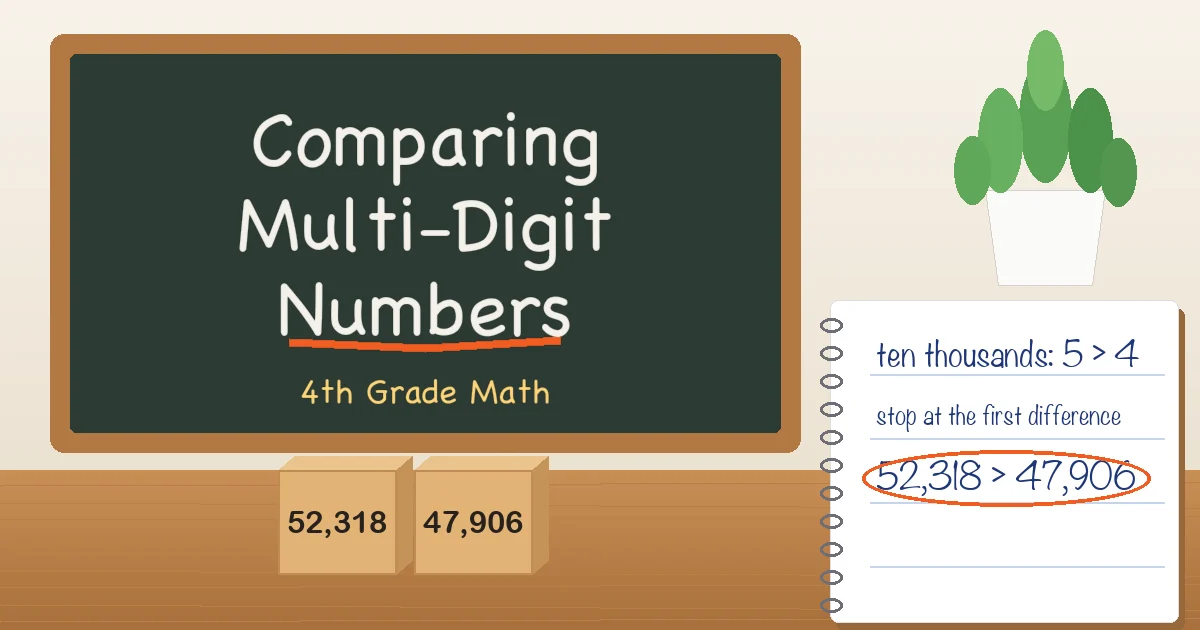
Comparing Multi-Digit Numbers: Place Value Rules and 6 Examples

Comparing multi-digit numbers means reading from the greatest place until two digits differ, and the bigger digit wins. That digit decides because each place is worth 10 times the place to its right.

4th Grade MathPlace ValueComparing Multi-Digit Numbers
Comparing Multi-Digit Numbers: Place Value Rules and 6 Examples
math

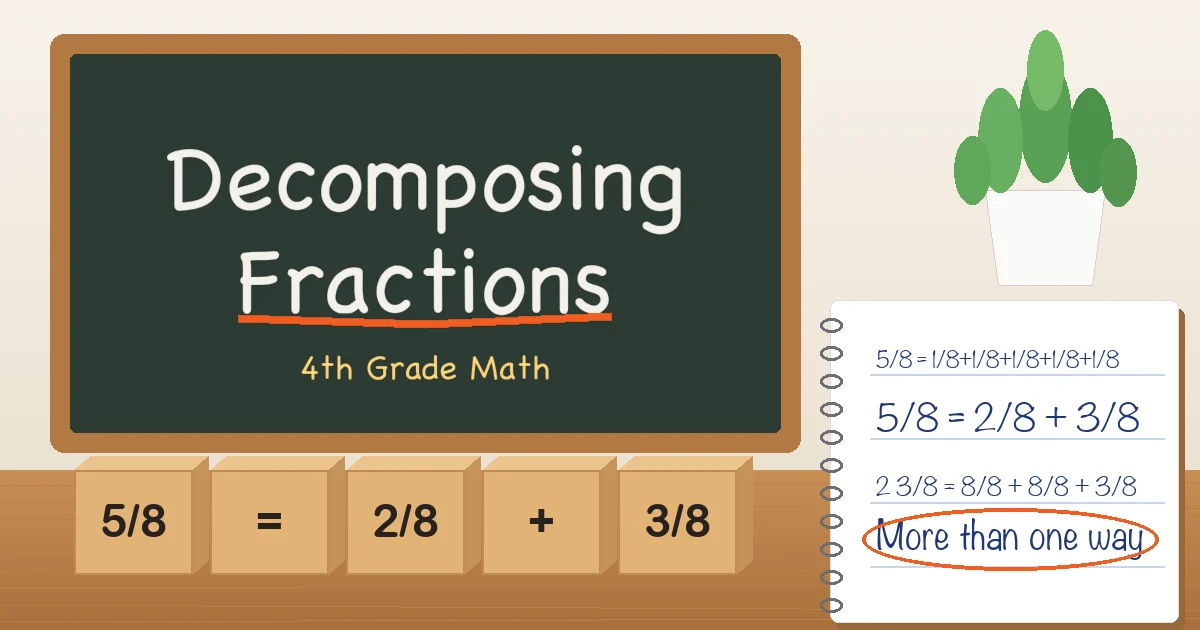
Decomposing Fractions for 4th Grade: Steps and 6 Examples

Decomposing fractions means breaking one fraction into smaller fractions with the same denominator that add back to it, like 5/8 = 2/8 + 3/8. Learn the unit-fraction method, mixed numbers and 6 worked examples.

4th Grade MathFractionsDecomposing Fractions
Decomposing Fractions for 4th Grade: Steps and 6 Examples
math

Equivalent Fractions by Multiplying: 4th Grade Steps and Examples

You make equivalent fractions by multiplying the top and bottom by the same number other than 0, so two thirds equals eight twelfths. You'll also see why that works and how to run it backward.

4th Grade MathFractionsEquivalent Fractions
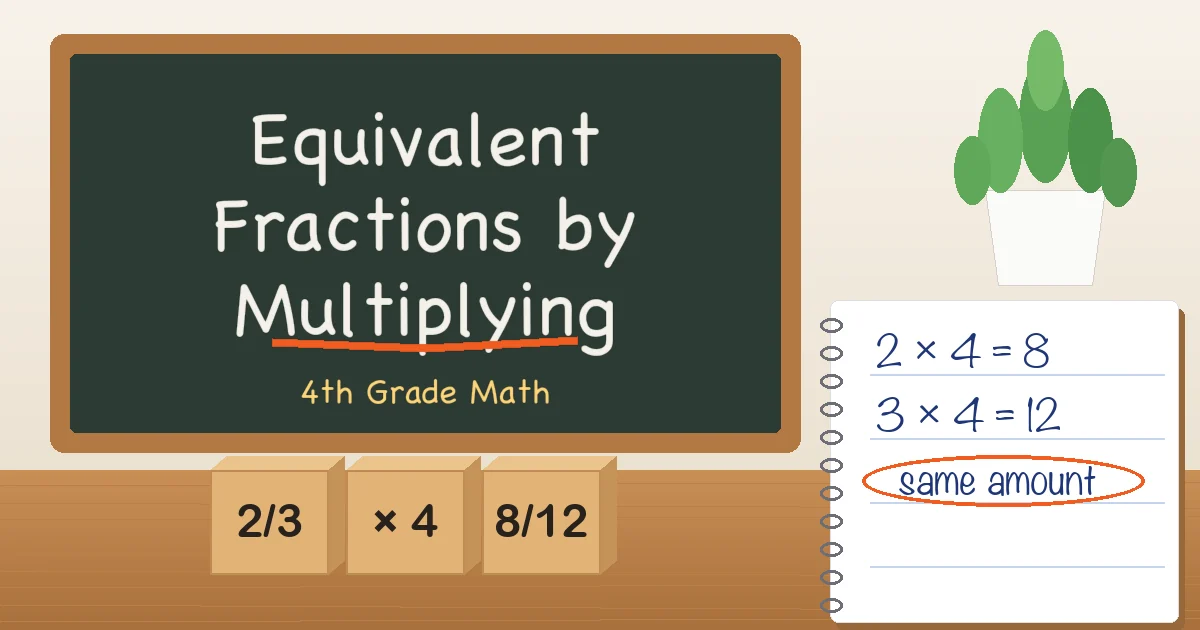
Equivalent Fractions by Multiplying: 4th Grade Steps and Examples
math

Elapsed Time Word Problems for 4th Grade: Steps and Examples

Elapsed time word problems ask how long something lasts from a start time to an end time, or give the length and hide a time. Number lines and six worked examples follow.

4th Grade MathMeasurement and DataElapsed Time Word Problems
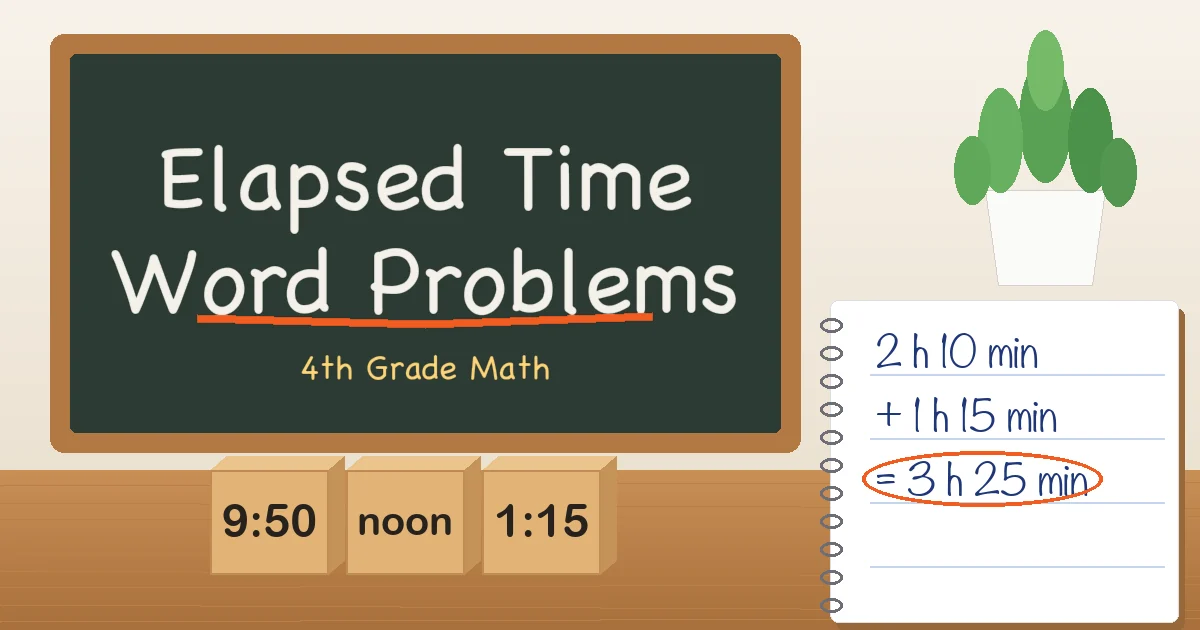
Elapsed Time Word Problems for 4th Grade: Steps and Examples
math

Fractions With Denominators of 10 and 100: Rename and Add

Fractions with denominators of 10 and 100 count tenths and hundredths, and 1 tenth equals 10 hundredths. Rename the tenths as hundredths, then add: 4/10 + 27/100 = 67/100.

4th Grade MathFractionsFractions With Denominators of 10 and 100
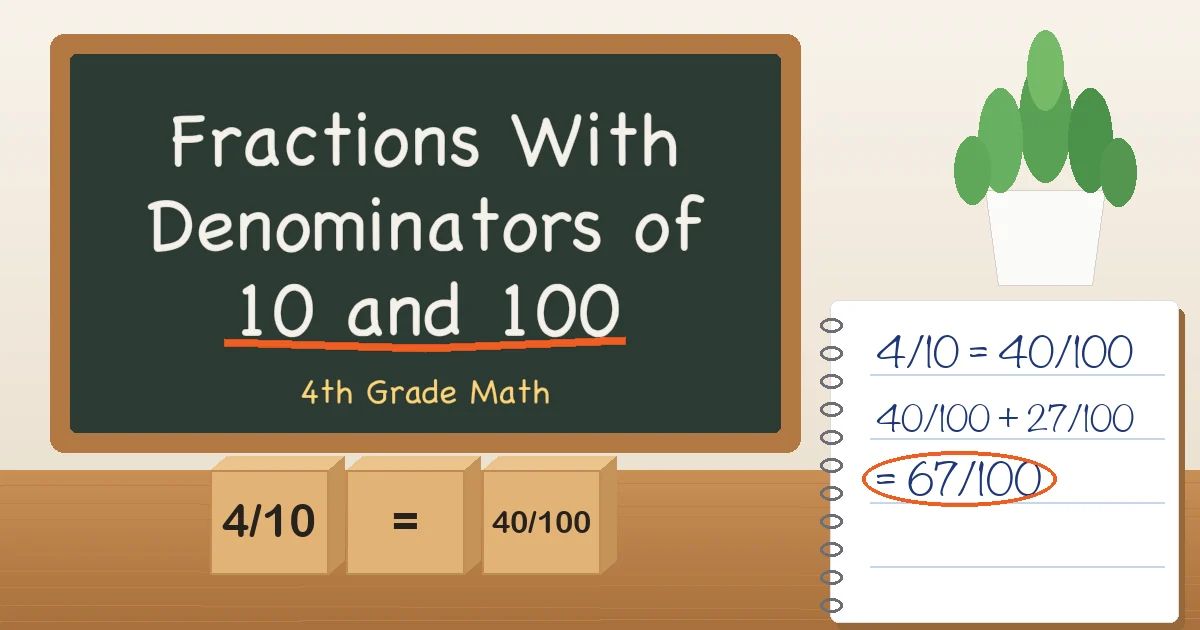
Fractions With Denominators of 10 and 100: Rename and Add
math

Multi-Digit Subtraction: 4th Grade Steps, Zeros and Practice

Multi-digit subtraction means subtracting column by column, starting with the ones, and regrouping whenever a top digit is smaller than the digit under it. Zeros, two ways to check and five examples follow.

4th Grade MathPlace ValueMulti-Digit Subtraction
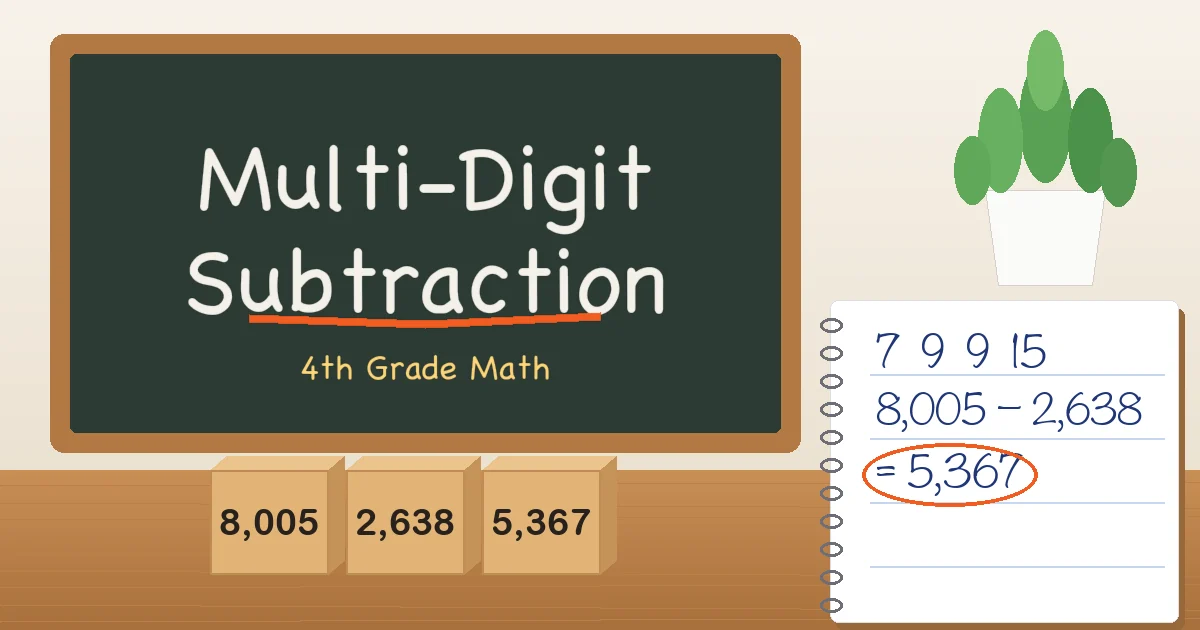
Multi-Digit Subtraction: 4th Grade Steps, Zeros and Practice
math

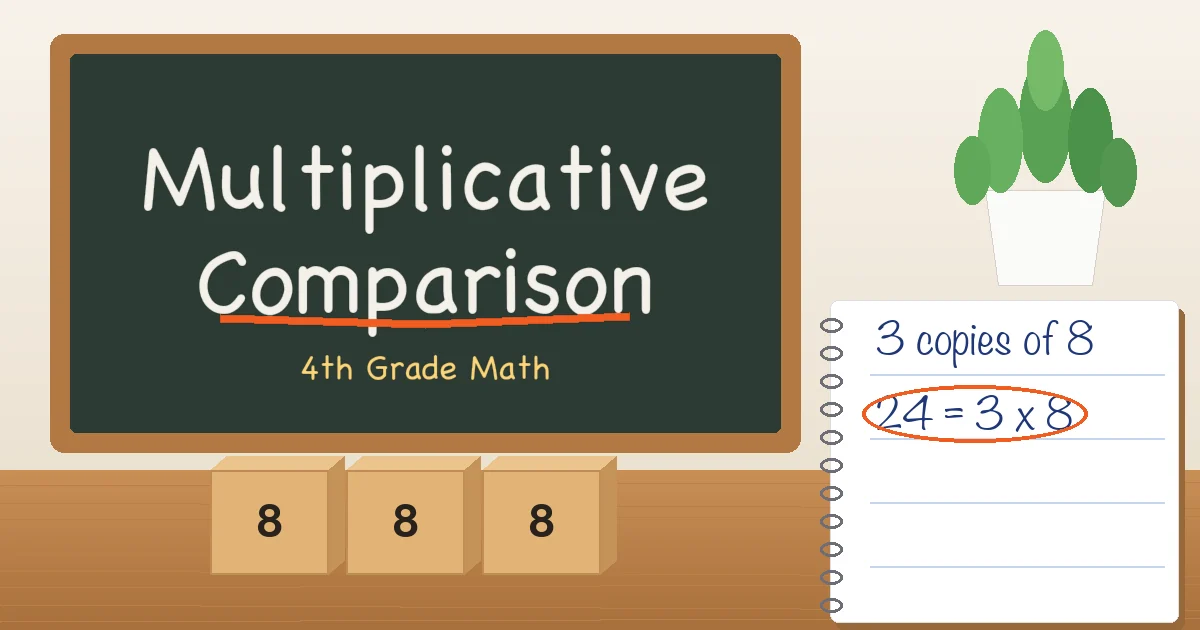
Multiplicative Comparison: Times As Many Explained in 6 Examples

Multiplicative comparison tells how many times as big one amount is as another: 24 is 3 times as many as 8. Bar models, three problem types, six examples and the adding trap are below.

4th Grade MathOperations and Algebraic ThinkingMultiplicative Comparison
Multiplicative Comparison: Times As Many Explained in 6 Examples
math

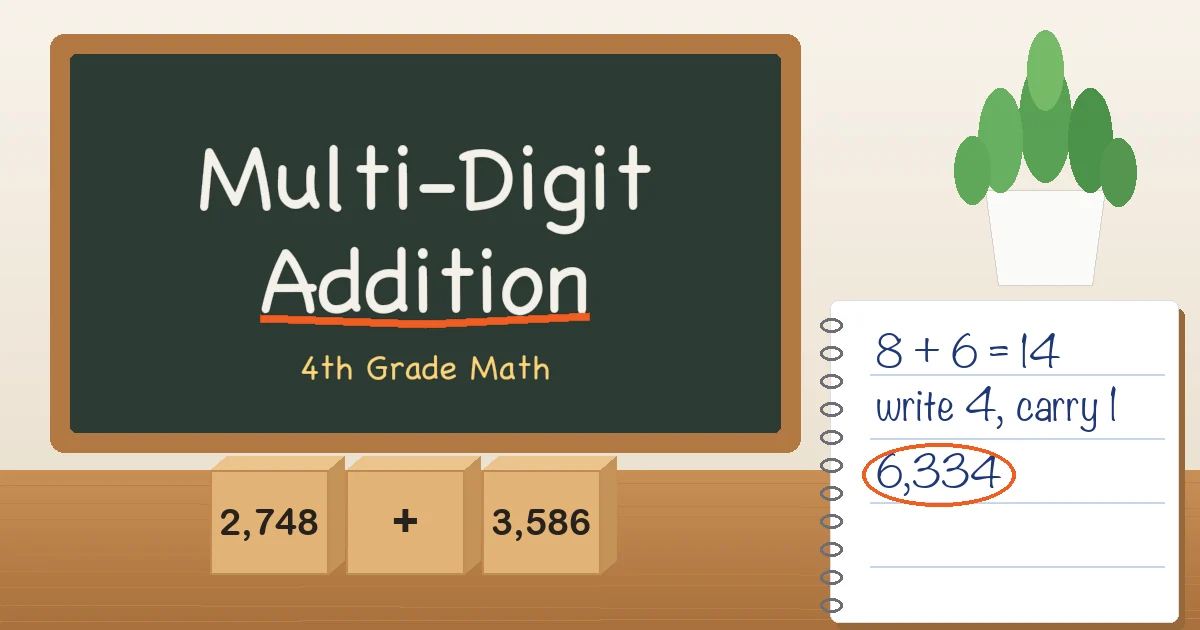
Multi-Digit Addition: 4th Grade Steps and Worked Examples

Multi-digit addition lines up numbers by place value, adds the columns from the ones, and regroups each 10 as 1 in the next place. Two checks and five worked examples follow.

4th Grade MathPlace ValueMulti-Digit Addition
Multi-Digit Addition: 4th Grade Steps and Worked Examples
math

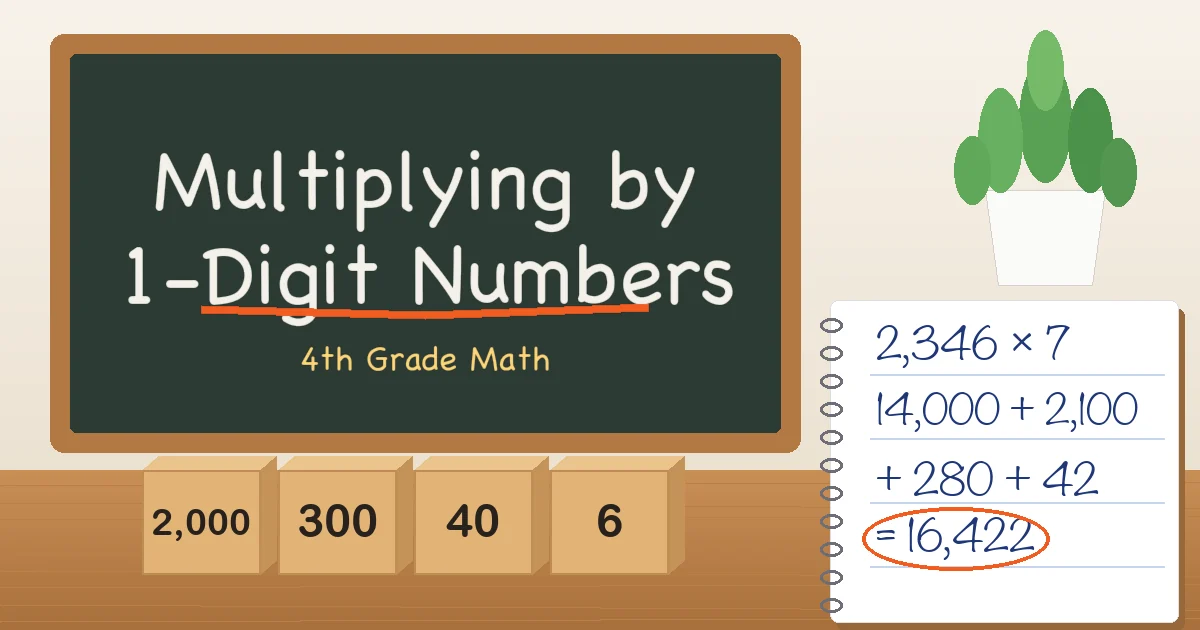
Multiplying by 1-Digit Numbers: 4th Grade Methods and Examples

Multiplying by 1-digit numbers means splitting the bigger number into place values, multiplying each part, then adding, so 7 groups of 2,346 make 16,422. Three methods, six examples and two checks follow.

4th Grade MathPlace ValueMultiplicationMultiplying by 1-Digit Numbers
Multiplying by 1-Digit Numbers: 4th Grade Methods and Examples
math

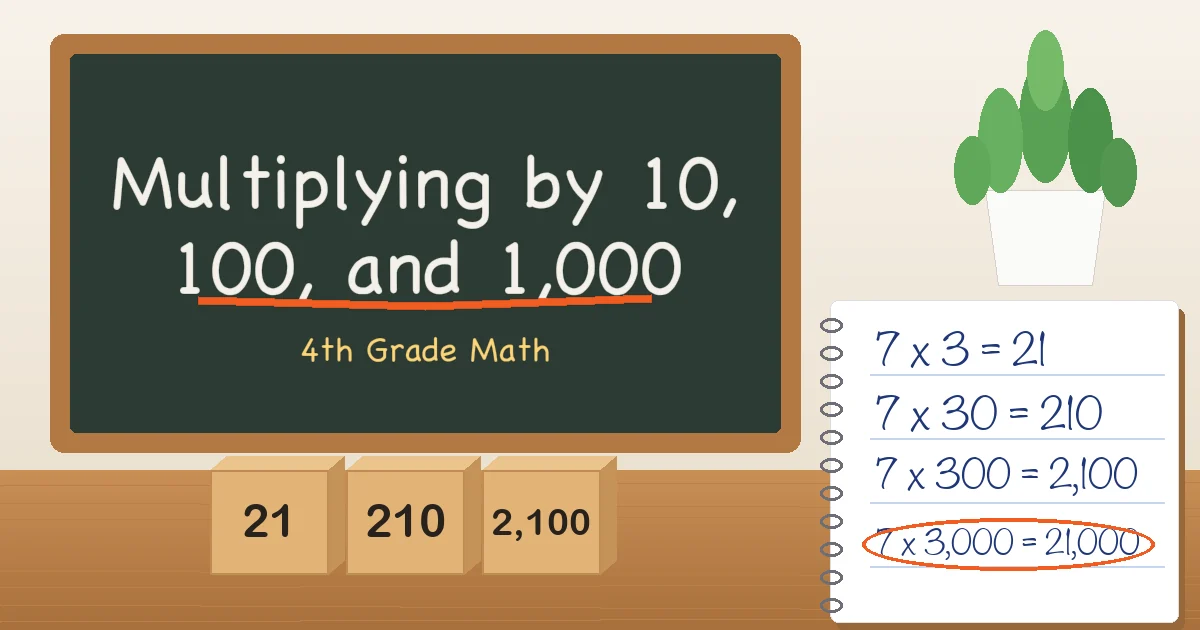
Multiplying by 10, 100, and 1,000: Why the Digits Slide Left

Multiplying by 10, 100, and 1,000 slides each digit of a whole number one, two or three places left, and a 0 fills each empty place. Multiples like 400 need one basic fact first.

4th Grade MathPlace ValueMultiplicationMultiplying by 10 100 and 1000
Multiplying by 10, 100, and 1,000: Why the Digits Slide Left
math

Regrouping Whole Numbers: 4th Grade Place Value Examples

Regrouping whole numbers means trading 1 unit of a place for 10 of the next smaller place, or 10 for 1, without changing the total.

4th Grade MathPlace ValueRegrouping Whole Numbers
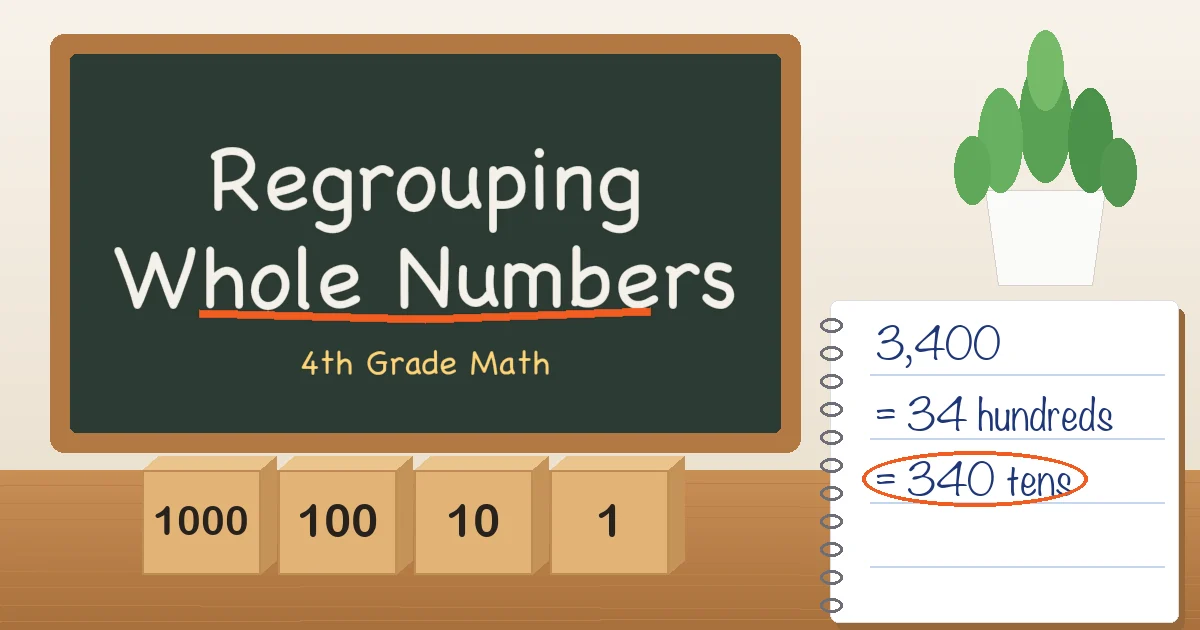
Regrouping Whole Numbers: 4th Grade Place Value Examples
math

Rounding Multi-Digit Numbers to Any Place, With 6 Examples

Rounding multi-digit numbers means replacing a number with the nearest multiple of a place value, so 391,243 becomes 390,000 at the nearest ten thousand. Nines that round up and missing digits follow.

4th Grade MathPlace ValueRounding Multi-Digit Numbers
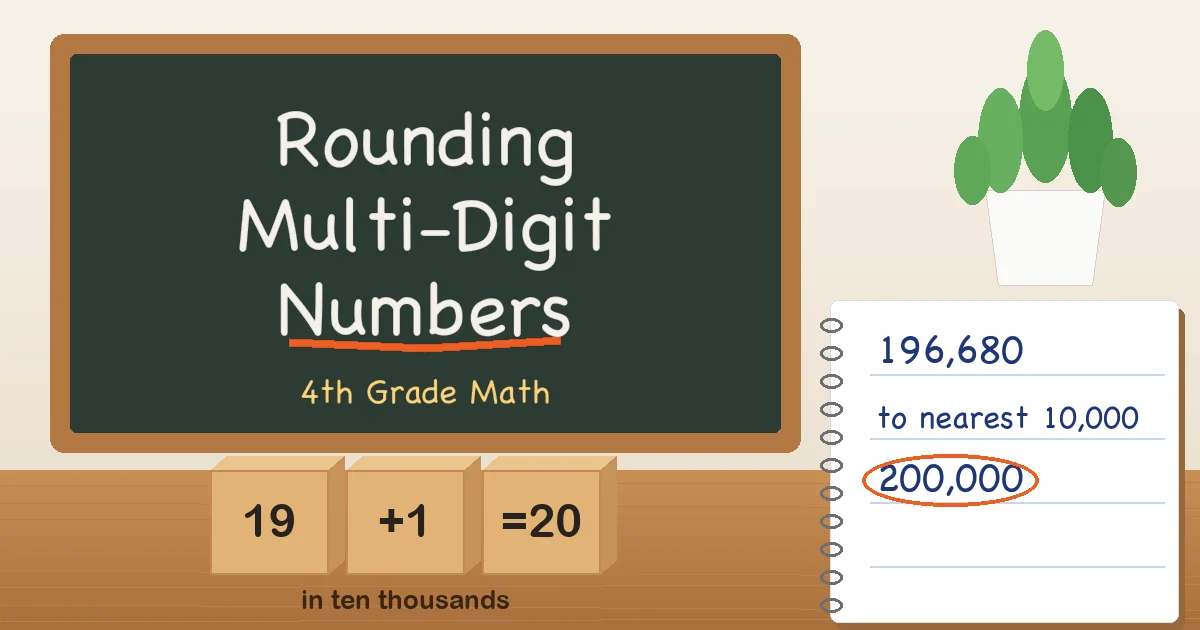
Rounding Multi-Digit Numbers to Any Place, With 6 Examples
math

Reading and Writing Large Numbers: Standard, Word, Expanded Form

Reading and writing large numbers means moving a number like 935,094 between standard, word and expanded form, one three-digit period at a time. Six worked examples and three common traps follow.

4th Grade MathPlace ValueStandard FormWord FormExpanded Form
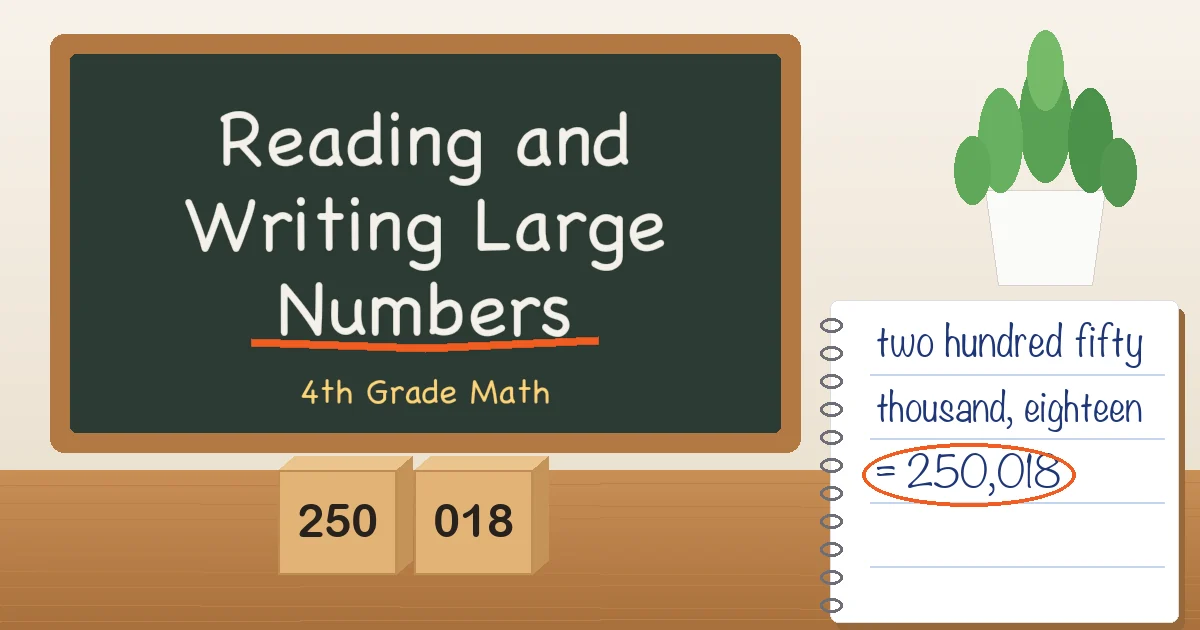
Reading and Writing Large Numbers: Standard, Word, Expanded Form