Topic

1st Grade Math

17 articles
math

10 More and 10 Less in 1st Grade: Blocks, Chart and 6 Examples

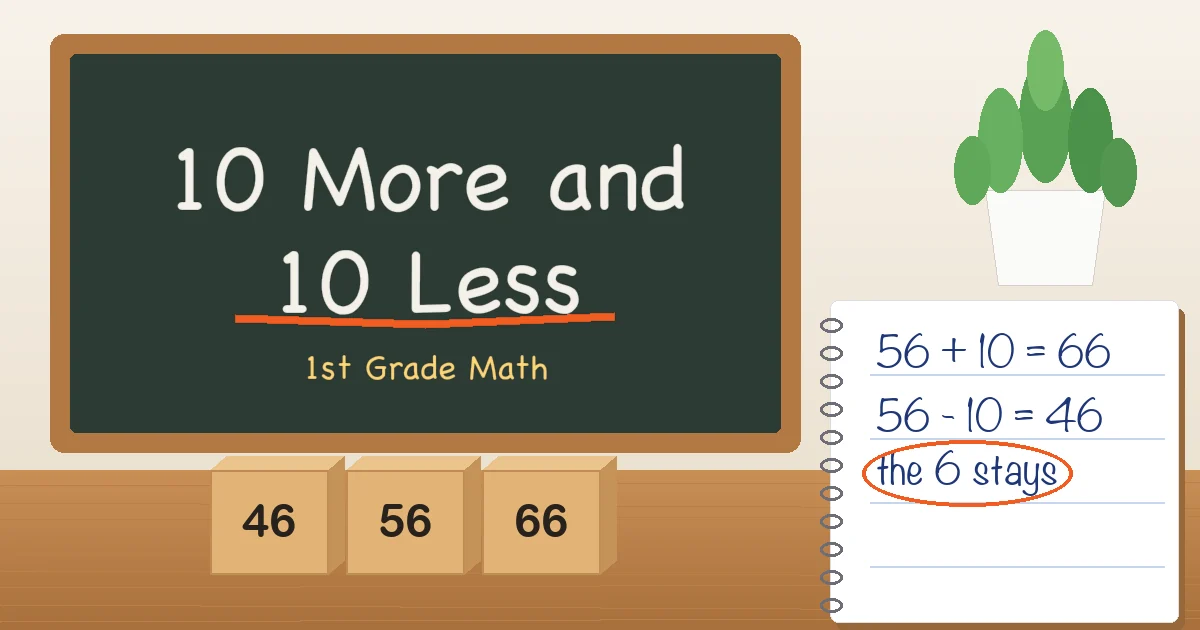
10 more and 10 less means adding or taking away one ten, so the ones digit stays put. A hundred chart and six worked examples show why it works, even past 100.

1st Grade MathPlace Value10 More and 10 Less
10 More and 10 Less in 1st Grade: Blocks, Chart and 6 Examples
math

Adding Tens and Ones Without Regrouping: 6 Examples for 1st Grade

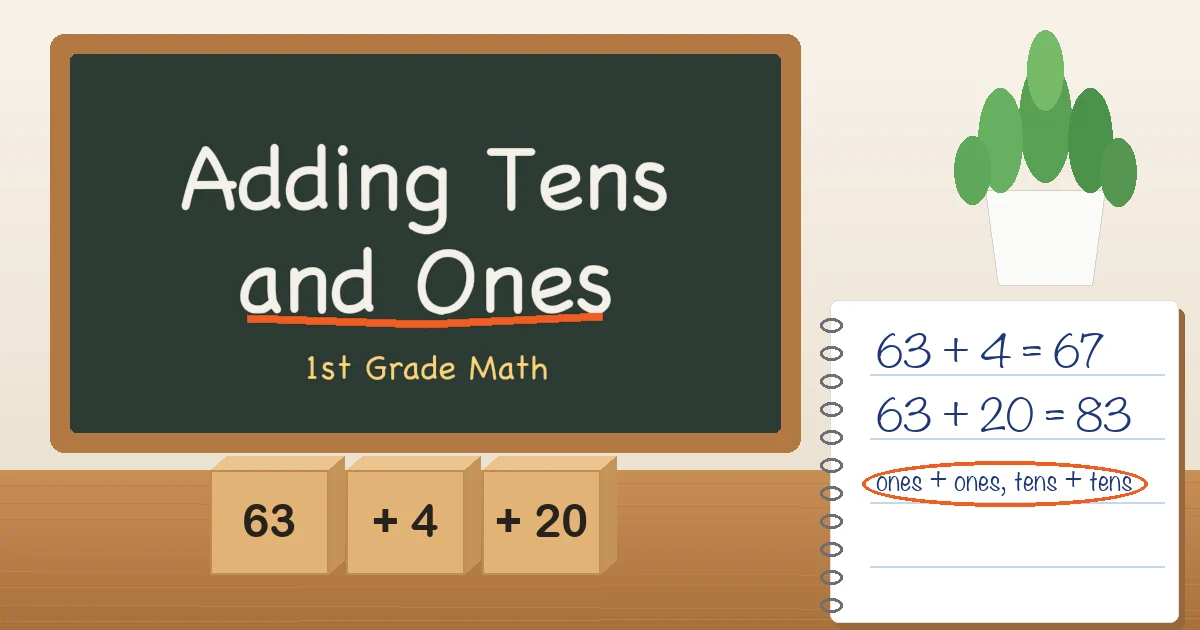
Adding tens and ones means adding ones to ones and tens to tens, so 63 + 4 is 67 and 63 + 20 is 83. Six worked examples and the 9-or-less check come next.

1st Grade MathPlace ValueAdding Tens and Ones
Adding Tens and Ones Without Regrouping: 6 Examples for 1st Grade
math

Adding Multiples of 10 in 1st Grade: Tens in a Row, 6 Examples

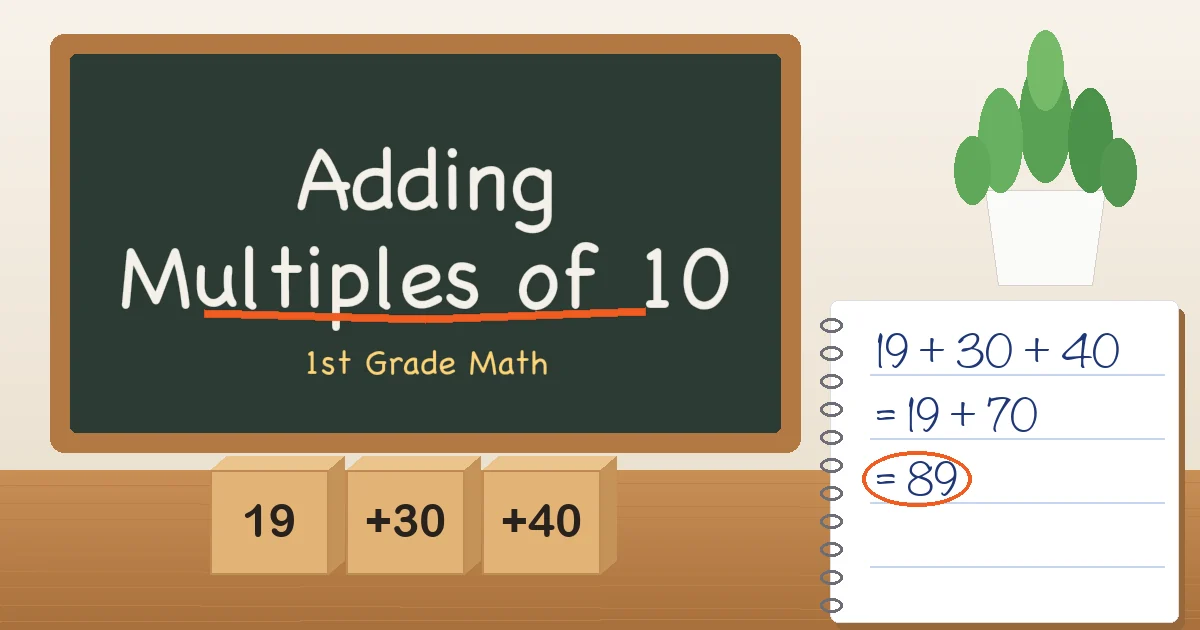
Adding multiples of 10 means adding whole tens, so the number of tens grows and the ones stay the same. See two ways to add several tens and six worked examples.

1st Grade MathPlace ValueAdding Multiples of 10
Adding Multiples of 10 in 1st Grade: Tens in a Row, 6 Examples
math

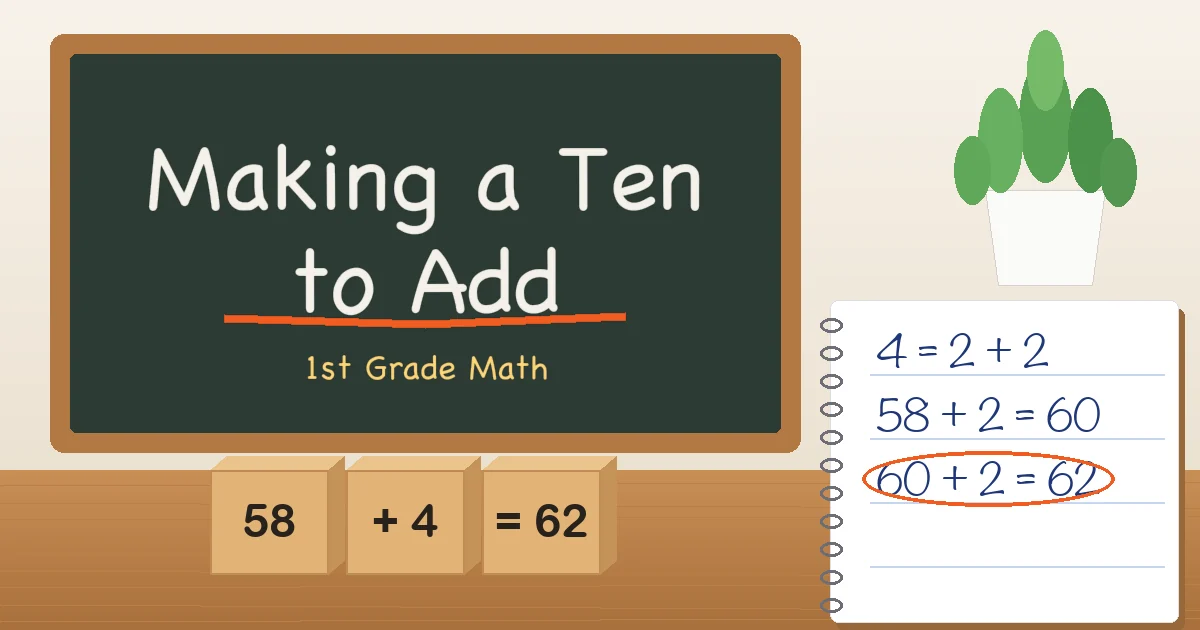
Making a Ten to Add Within 100: 1st Grade Steps and 5 Examples

Making a ten to add means filling the next ten first, so 38 plus 5 becomes 40 plus 3, or 43.

1st Grade MathNumber and Operations in Base TenMaking a Ten to Add
Making a Ten to Add Within 100: 1st Grade Steps and 5 Examples
math

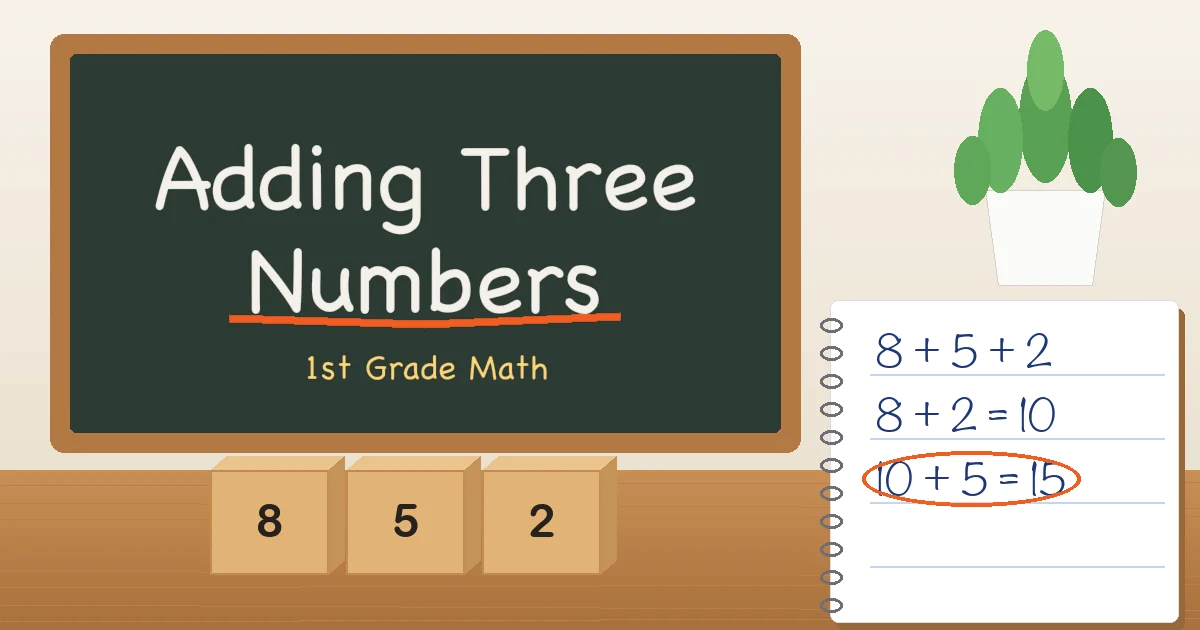
Adding Three Numbers in 1st Grade: Find a Ten or a Double

Adding three numbers means adding any two of them first, then adding the third number to that answer. You'll see which pair to pick and why the total stays the same in any order.

1st Grade MathOperations and Algebraic ThinkingAdding Three Numbers
Adding Three Numbers in 1st Grade: Find a Ten or a Double
math

Counting Coins in 1st Grade: Pennies, Nickels, Dimes and Quarters

Counting coins means adding what each coin is worth, starting with the biggest value and counting on. See the four coin values, how a tiny dime beats a bigger nickel, and five worked examples.

1st Grade MathMoneyCounting Coins
Counting Coins in 1st Grade: Pennies, Nickels, Dimes and Quarters
math

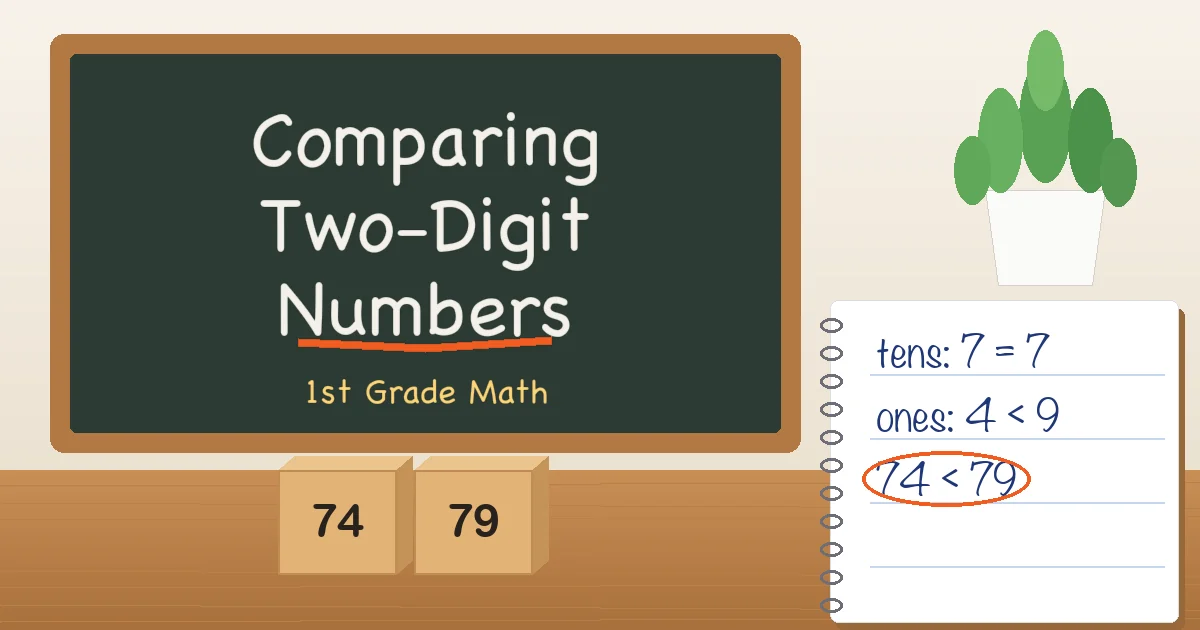
Comparing Two-Digit Numbers in 1st Grade: Tens First, 6 Examples

Comparing two-digit numbers means checking the tens first and using the ones only to break a tie. See why 63 beats 48 and which way the greater than sign points, with six worked examples.

1st Grade MathPlace ValueComparing Two-Digit Numbers
Comparing Two-Digit Numbers in 1st Grade: Tens First, 6 Examples
math

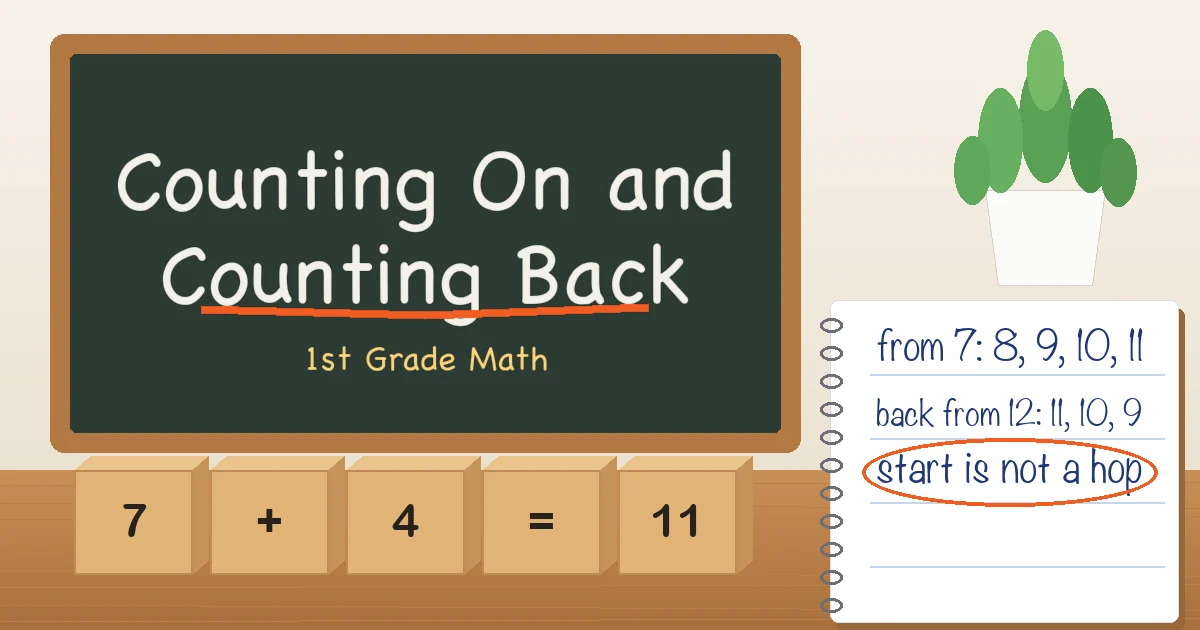
How Counting On and Counting Back Work in 1st Grade Math

Counting on and counting back mean adding or subtracting by saying the numbers after or before your starting number. You'll learn which way to count and why the start number is never a hop.

1st Grade MathOperations and Algebraic ThinkingCounting On and Counting Back
How Counting On and Counting Back Work in 1st Grade Math
math

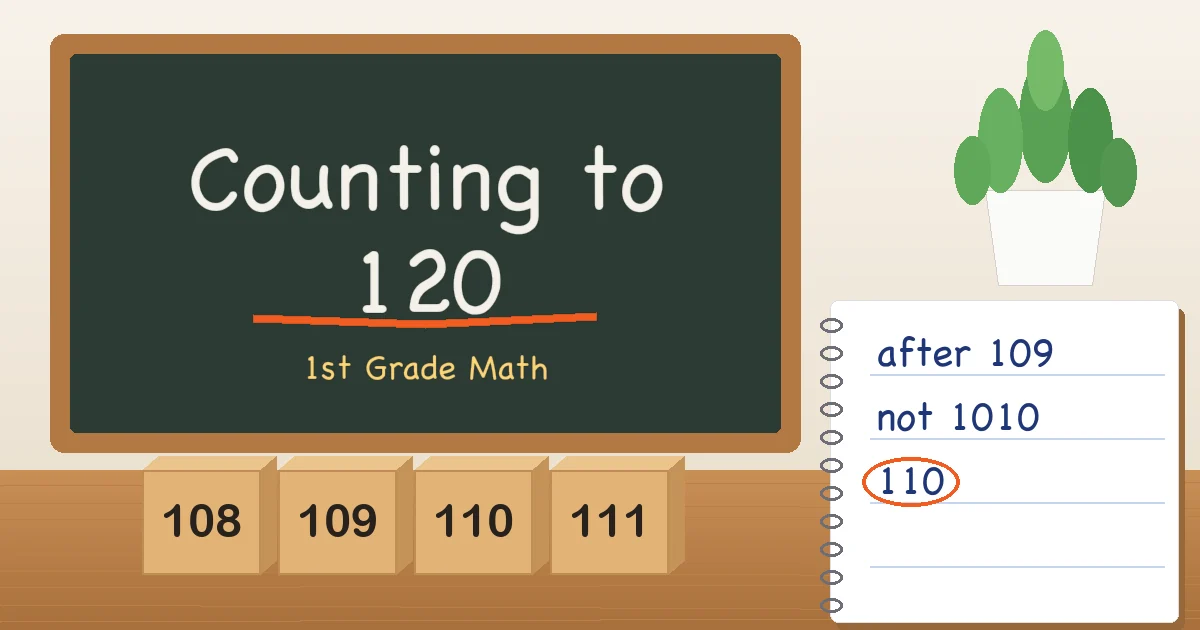
1st Grade Counting to 120: Count Forward, Back and Past 100

Counting to 120 means saying and writing numbers in order up to 120, from any starting number. The tricky crossings are 99 to 100 and 109 to 110, and the five worked examples include both.

1st Grade MathPlace ValueCounting to 120
1st Grade Counting to 120: Count Forward, Back and Past 100
math

Days of the Week and Months of the Year for Kids, With 6 Examples
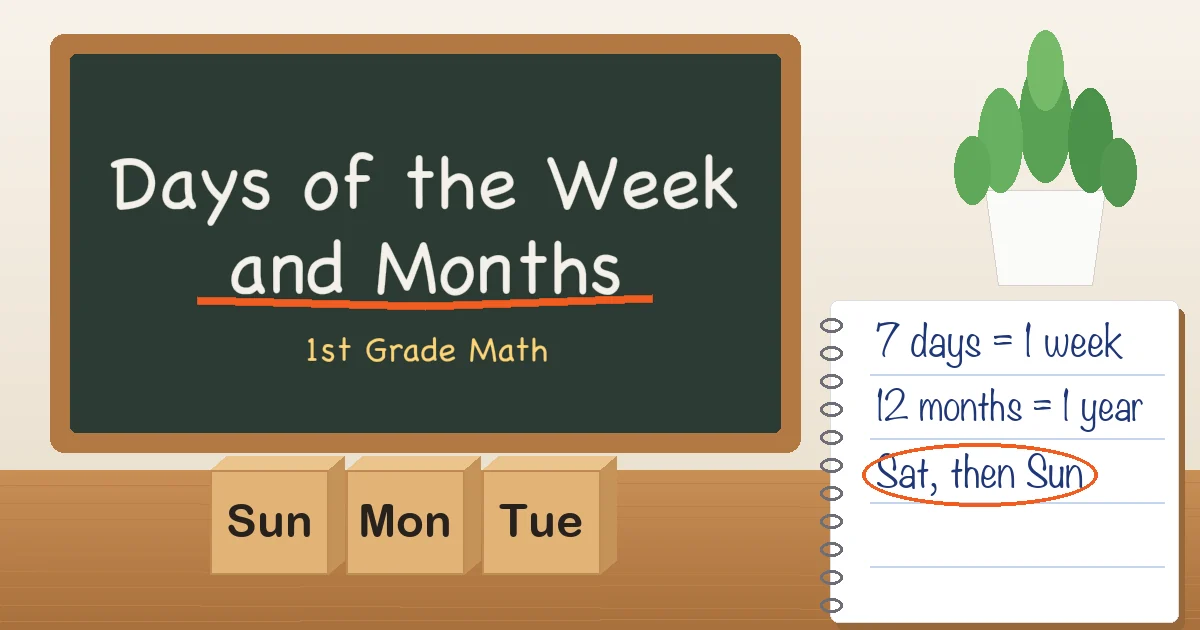
The days of the week and months of the year are names in a set order, Sunday to Saturday and January to December. You'll also meet yesterday, tomorrow, seasons and a real calendar.

1st Grade MathTime and CalendarDays of the Week and Months of the Year
Days of the Week and Months of the Year for Kids, With 6 Examples
math

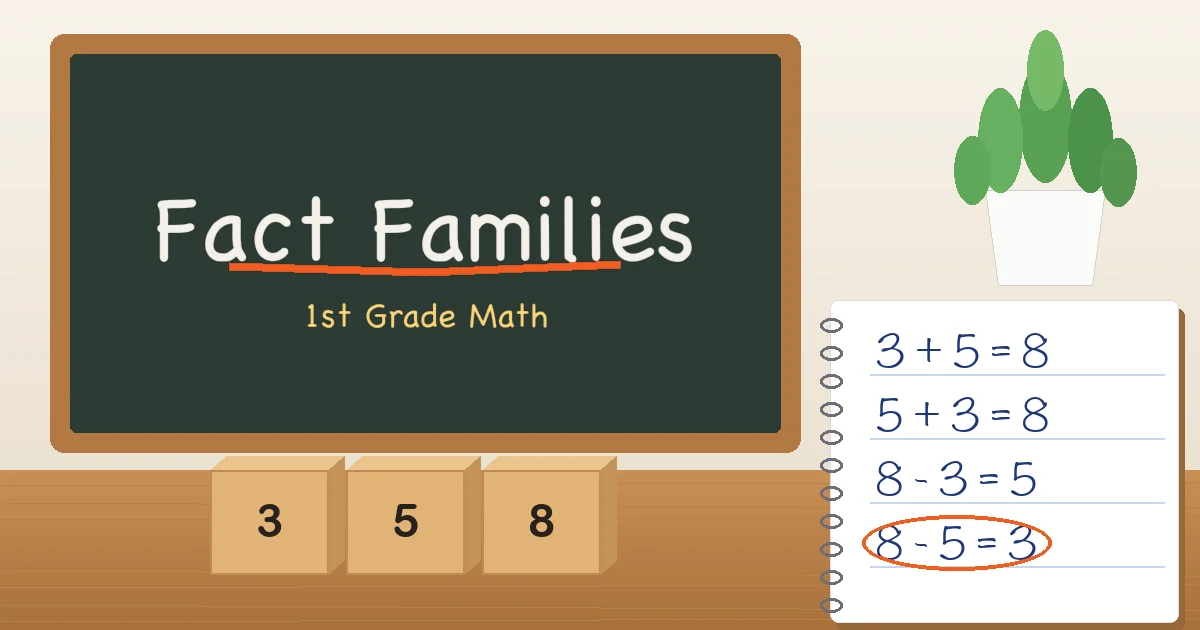
Fact Families in 1st Grade: Addition and Subtraction Examples

Fact families are groups of addition and subtraction facts that share the same three numbers, like 4, 8 and 12. You'll write all of a family's facts and use them to subtract.

1st Grade MathOperations and Algebraic ThinkingFact Families
Fact Families in 1st Grade: Addition and Subtraction Examples
math

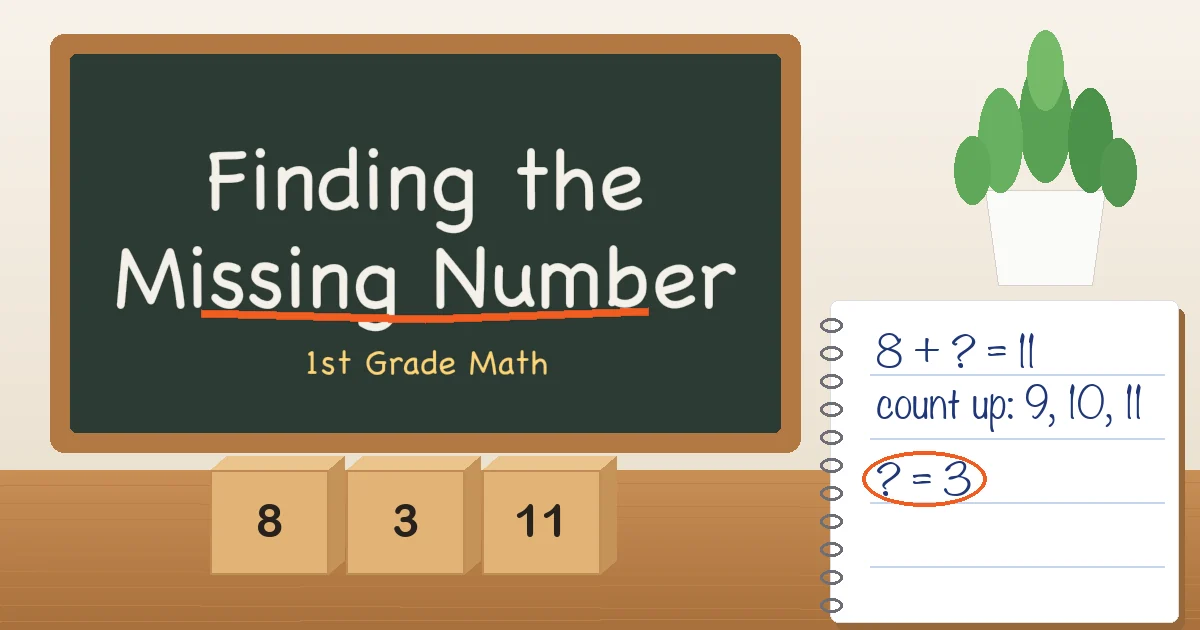
1st Grade Math: Finding the Missing Number in an Equation

Finding the missing number means working out the one number that makes both sides of an equation equal, like the 3 in 8 + ? = 11. Three ways to find it and five worked examples follow.

1st Grade MathOperations and Algebraic ThinkingFinding the Missing Number
1st Grade Math: Finding the Missing Number in an Equation
math

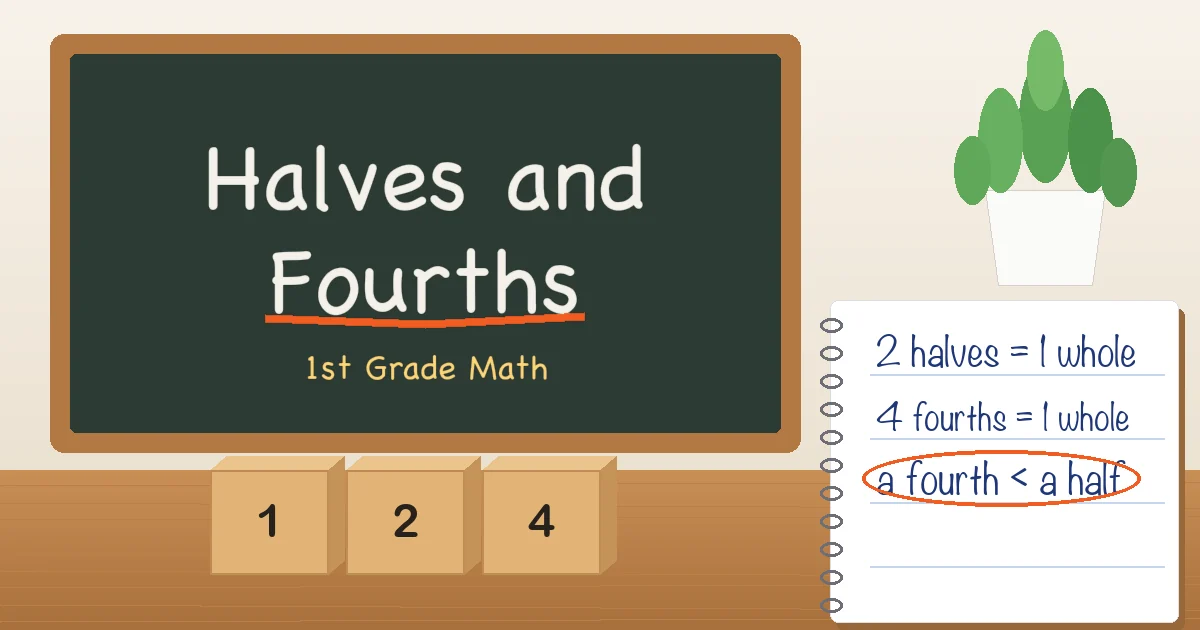
1st Grade Halves and Fourths: Splitting Shapes into Equal Parts

Halves and fourths are the 2 or 4 equal parts made by cutting one whole shape fairly. You'll cut circles and rectangles, check that the parts match, and compare a half with a fourth.

1st Grade MathGeometryHalves and Fourths of Shapes
1st Grade Halves and Fourths: Splitting Shapes into Equal Parts
math

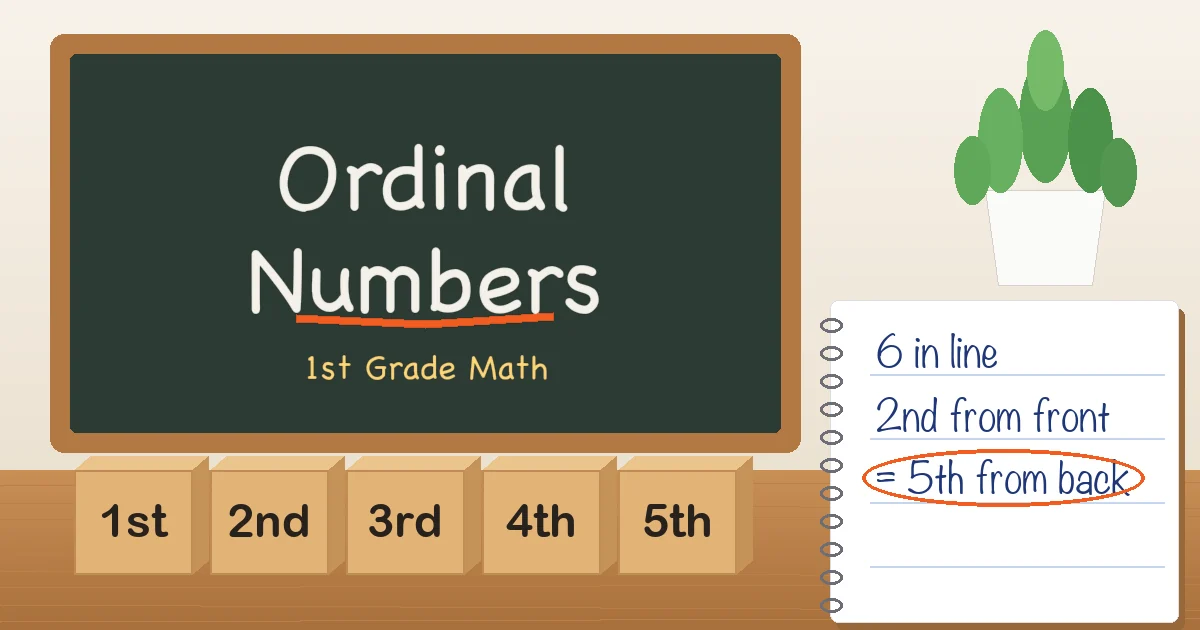
Ordinal Numbers in 1st Grade: Meaning, First to Tenth, Examples

Ordinal numbers tell where something sits in order, like first, second or tenth. You can count places from either end, write them 1st to 10th, and find how many stand ahead.

1st Grade MathCounting and Number SenseOrdinal Numbers
Ordinal Numbers in 1st Grade: Meaning, First to Tenth, Examples
math

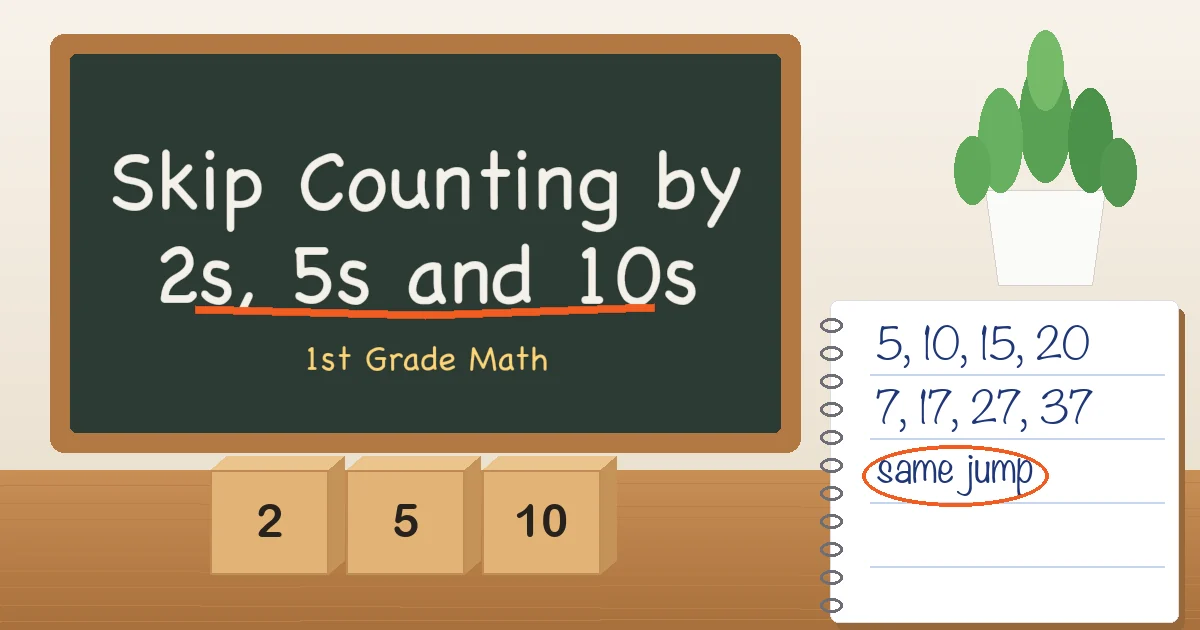
Skip Counting by 2s, 5s and 10s: 1st Grade Patterns and Examples

Skip counting by 2s, 5s and 10s means moving by the same jump each time, like 5, 10, 15, 20. See why the last digits repeat, how to count back and five worked examples.

1st Grade MathCounting and Number PatternsSkip Counting
Skip Counting by 2s, 5s and 10s: 1st Grade Patterns and Examples
math

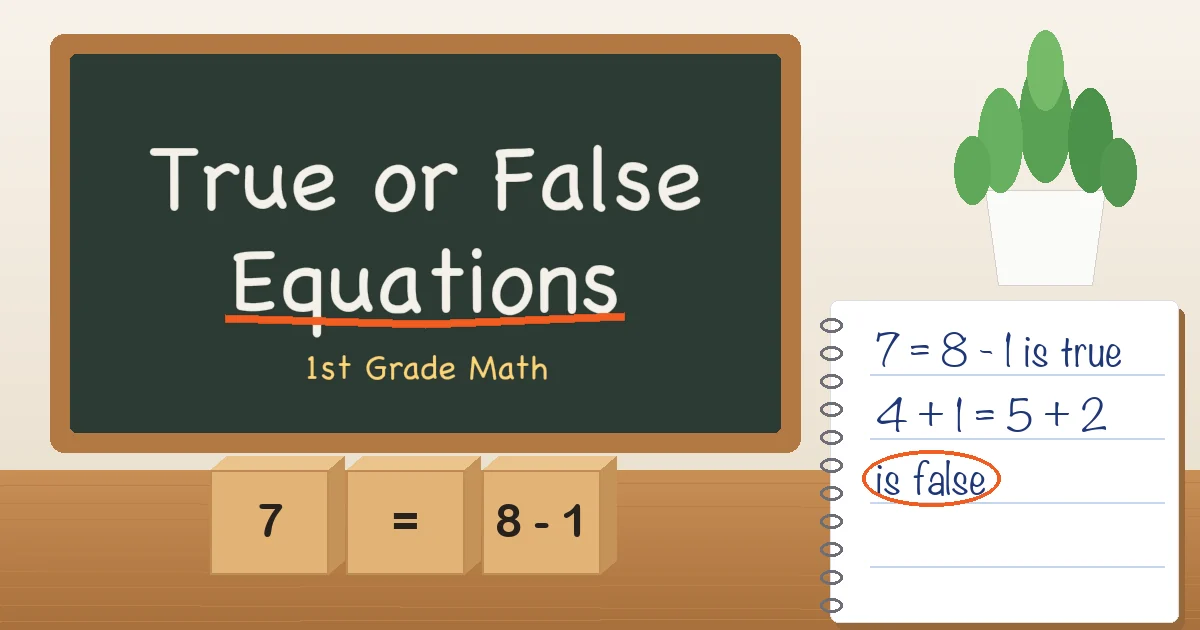
True or False Equations and the Equal Sign for 1st Grade

True or false equations are true when both sides of the equal sign have the same value and false when they do not. You'll find four equation shapes, five worked examples and three common mix-ups.

1st Grade MathOperations and Algebraic ThinkingTrue or False Equations
True or False Equations and the Equal Sign for 1st Grade
math

Subtracting Multiples of Ten: 1st Grade Lesson With 6 Examples

Subtracting multiples of ten means taking whole tens away from whole tens, so 80 minus 50 is 8 tens minus 5 tens, or 30. Ten rods, number line hops and six examples show how.

1st Grade MathPlace ValueSubtracting Multiples of Ten
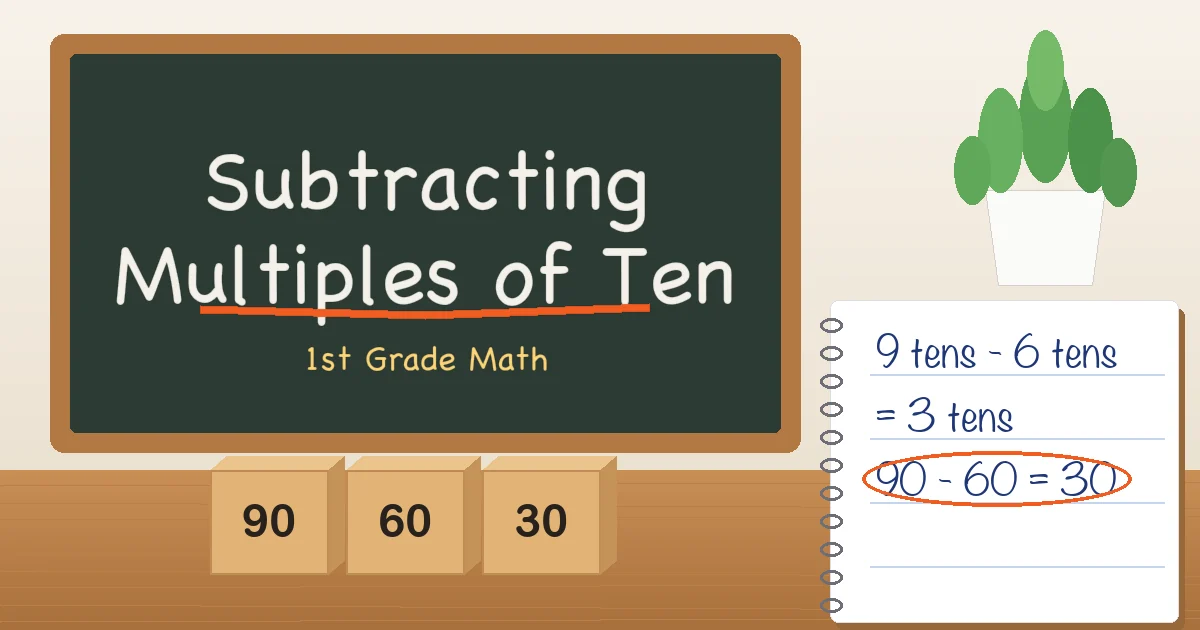
Subtracting Multiples of Ten: 1st Grade Lesson With 6 Examples