Topic

Fractions

15 articles
math

Common Denominators: How to Find One and Compare Fractions

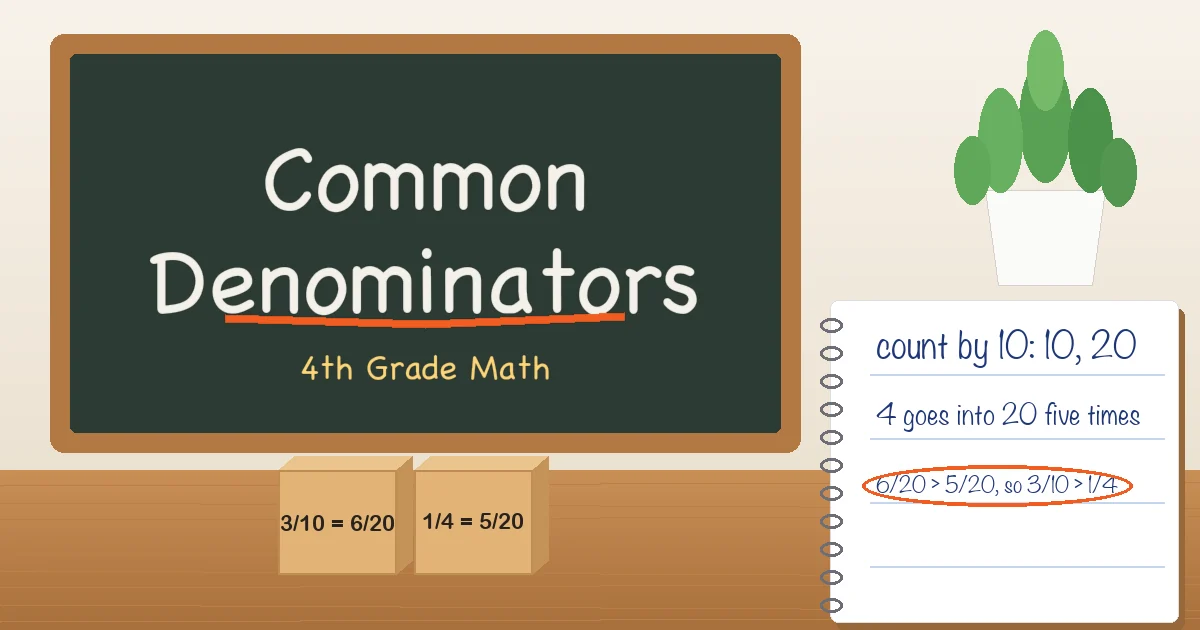
Common denominators let two fractions share one bottom number, so both are cut into same-size pieces and easy to compare. See the three steps that find one and five worked examples.

4th Grade MathFractionsCommon Denominators
Common Denominators: How to Find One and Compare Fractions
math

Multiplying Fractions by Whole Numbers: A 4th Grade How-To Guide

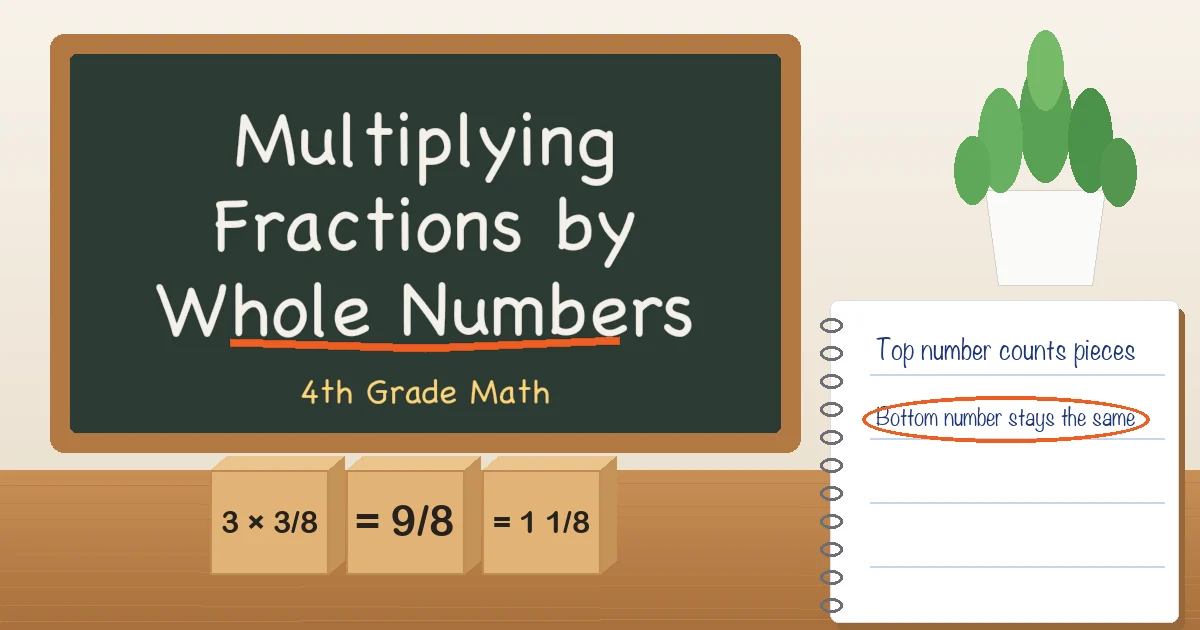
Multiplying fractions by whole numbers means making equal groups of a fraction, so you multiply the top number and keep the bottom one. Fraction bars, number-line hops, word problems and six worked examples show how.

4th Grade MathFractionsMultiplying Fractions by Whole Numbers
Multiplying Fractions by Whole Numbers: A 4th Grade How-To Guide
math

Adding and Subtracting Mixed Numbers: Steps and 5 Examples

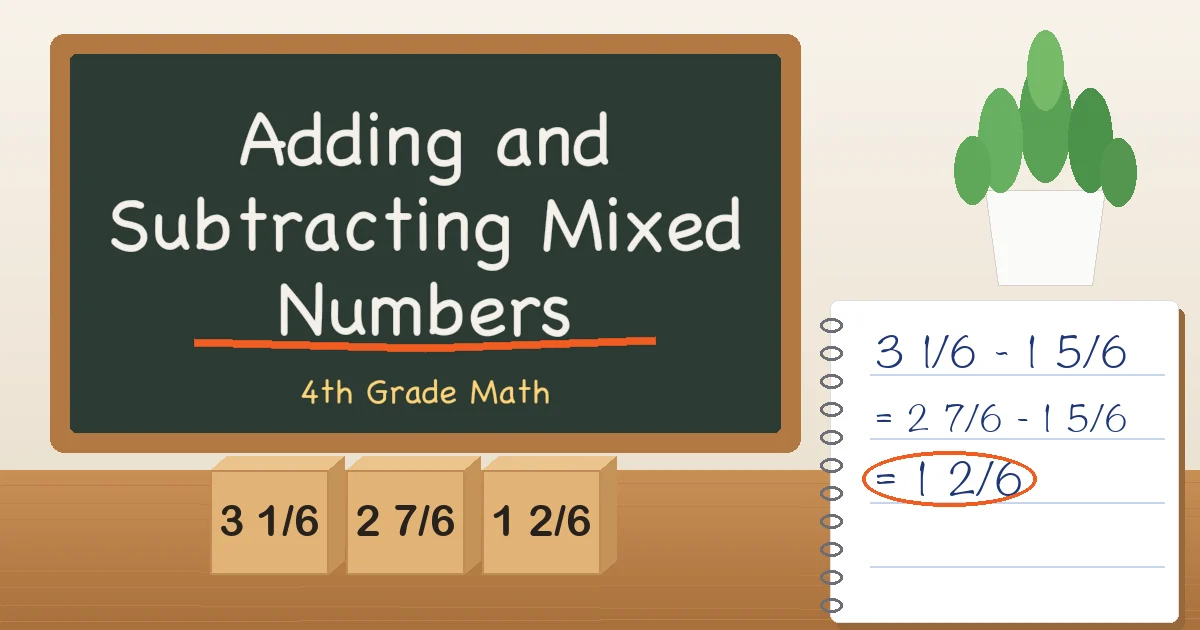
Adding and subtracting mixed numbers with the same denominator means working on the whole numbers and the fraction parts separately, trading 1 whole for equal pieces when needed. Five examples and three traps follow.

4th Grade MathFractionsAdding and Subtracting Mixed Numbers
Adding and Subtracting Mixed Numbers: Steps and 5 Examples
math

Area with Fractional Side Lengths for 5th Grade, With 5 Examples

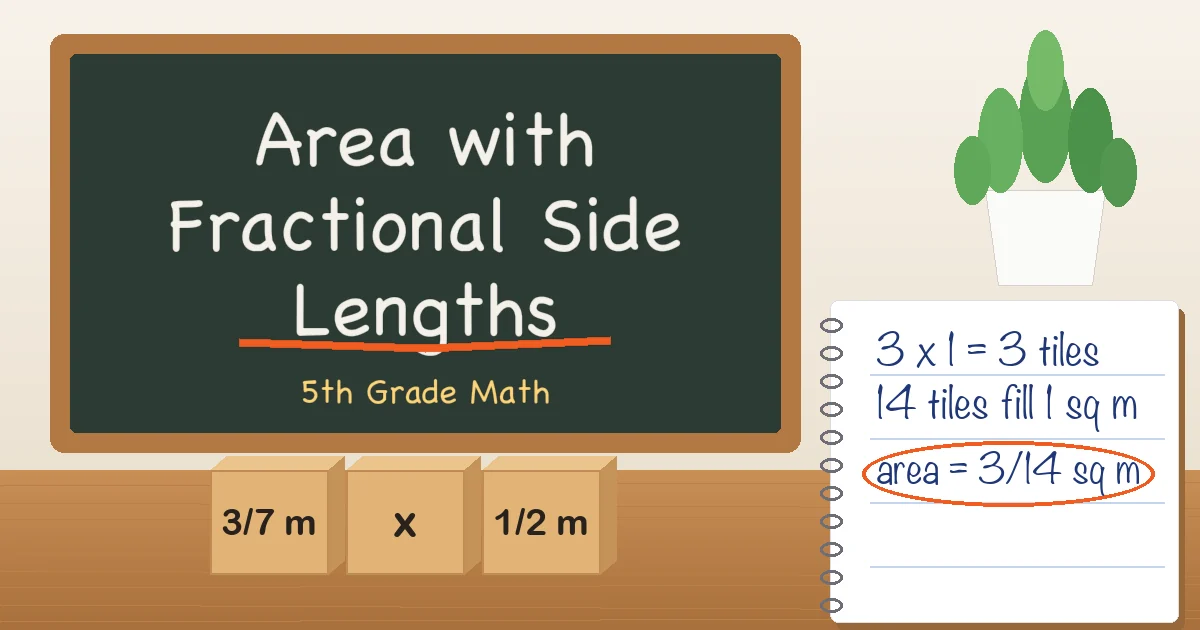
Area with fractional side lengths comes from multiplying the length by the width, and tiling with unit fraction squares shows why the product works.

5th Grade MathFractionsArea with Fractional Side Lengths
Area with Fractional Side Lengths for 5th Grade, With 5 Examples
math

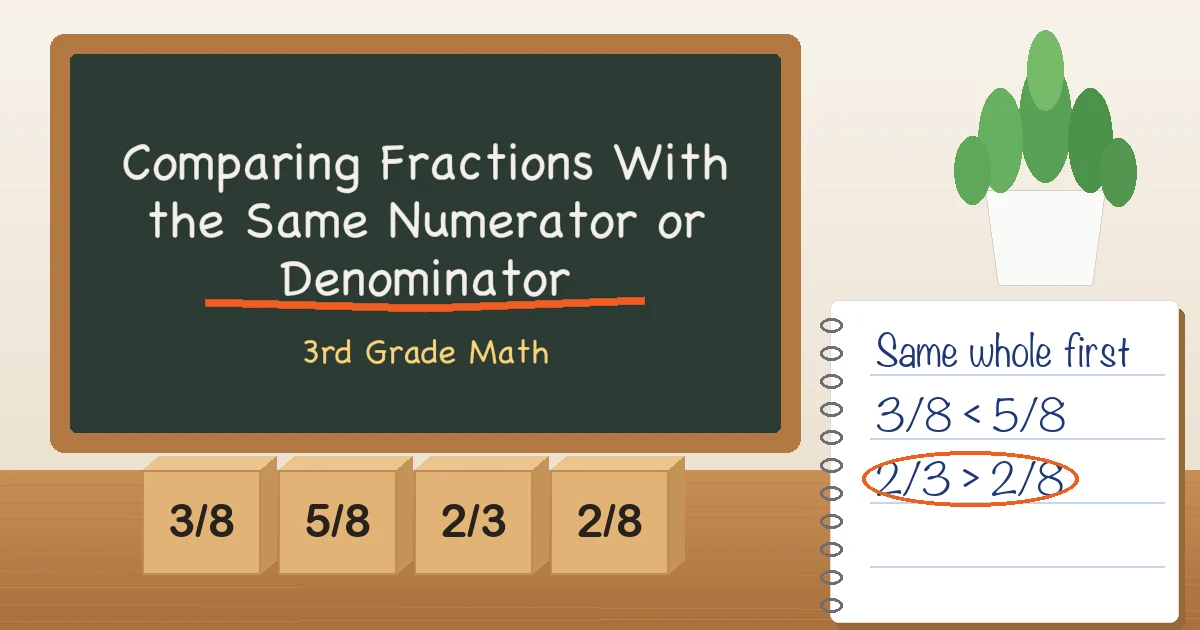
Comparing Fractions With the Same Numerator or Denominator: Examples

Comparing fractions with the same numerator or denominator means spotting the matching number, then counting the pieces or comparing their size. Six worked examples and three common mix-ups show both rules at work.

3rd Grade MathFractionsComparing Fractions
Comparing Fractions With the Same Numerator or Denominator: Examples
math

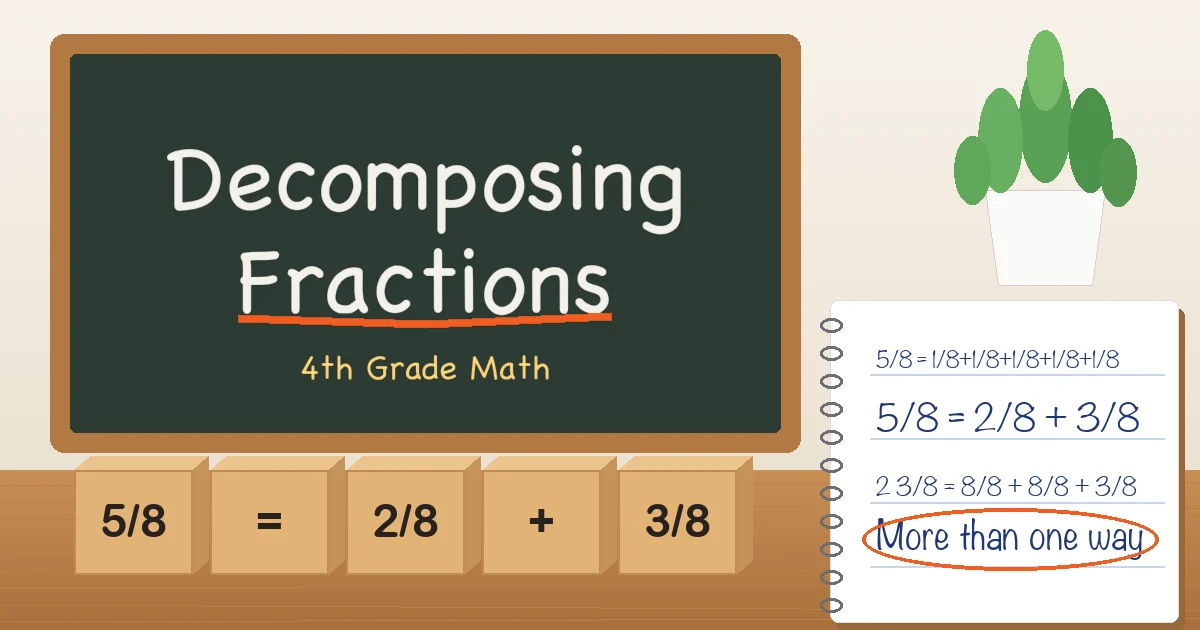
Decomposing Fractions for 4th Grade: Steps and 6 Examples

Decomposing fractions means breaking one fraction into smaller fractions with the same denominator that add back to it, like 5/8 = 2/8 + 3/8. Learn the unit-fraction method, mixed numbers and 6 worked examples.

4th Grade MathFractionsDecomposing Fractions
Decomposing Fractions for 4th Grade: Steps and 6 Examples
math

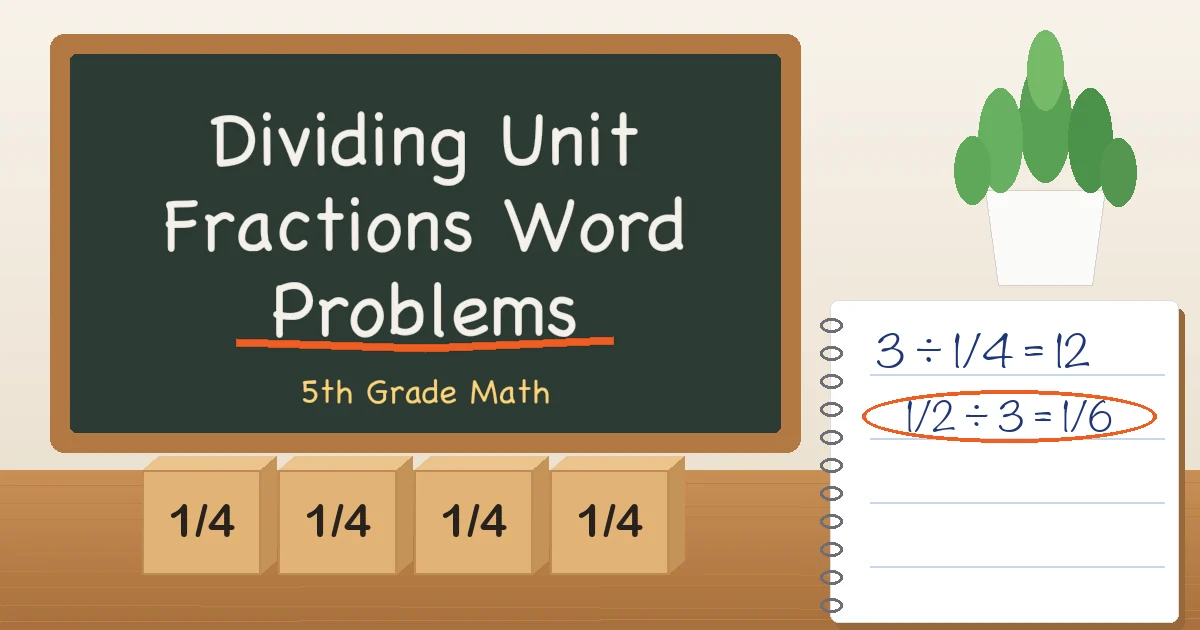
Dividing Unit Fractions Word Problems: How Many or How Much?

Dividing unit fractions word problems ask how many unit-fraction pieces fit in a whole number, or how much is in each share of a unit fraction. A bar drawing and multiplying back settle both.

5th Grade MathFractionsDividing Unit Fractions Word Problems
Dividing Unit Fractions Word Problems: How Many or How Much?
math

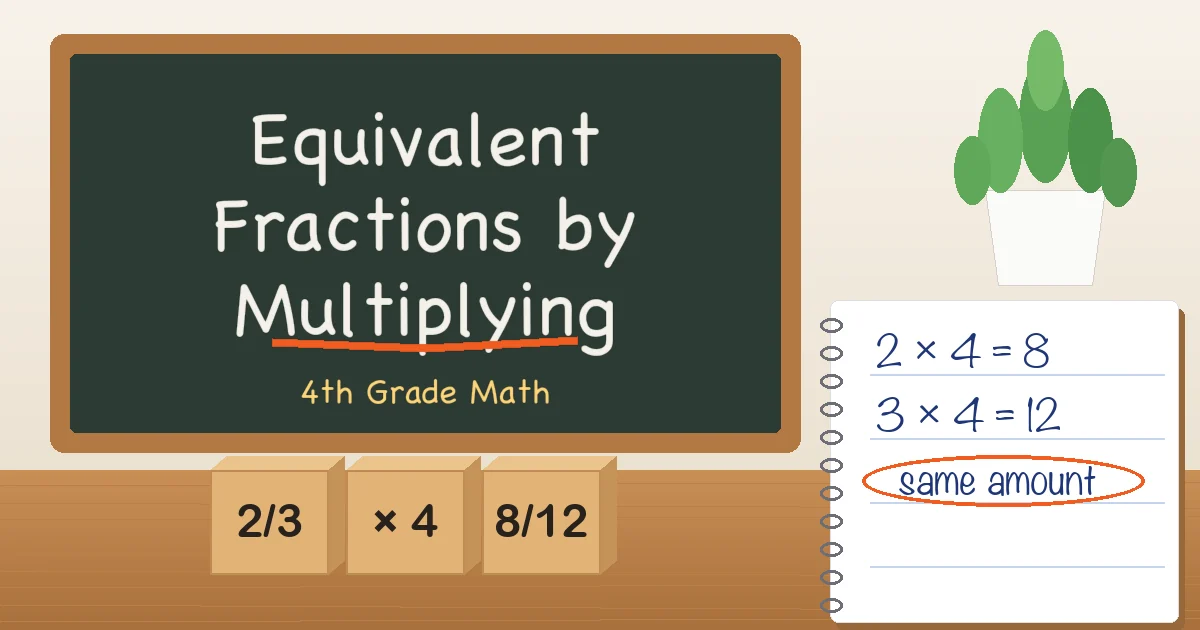
Equivalent Fractions by Multiplying: 4th Grade Steps and Examples

You make equivalent fractions by multiplying the top and bottom by the same number other than 0, so two thirds equals eight twelfths. You'll also see why that works and how to run it backward.

4th Grade MathFractionsEquivalent Fractions
Equivalent Fractions by Multiplying: 4th Grade Steps and Examples
math

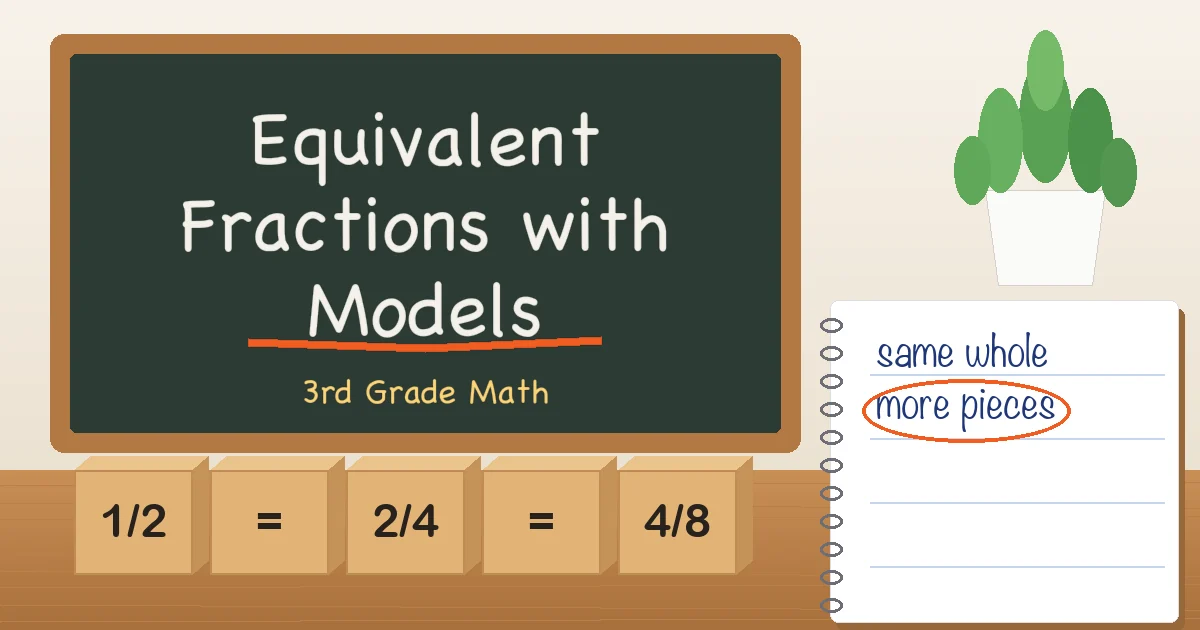
Equivalent Fractions with Models: A 3rd Grade Guide with Examples

Equivalent fractions with models means showing on strips, rectangles or number lines that fractions like 1/2 and 2/4 cover the same amount of one whole. Six worked examples follow.

3rd Grade MathFractionsEquivalent Fractions
Equivalent Fractions with Models: A 3rd Grade Guide with Examples
math

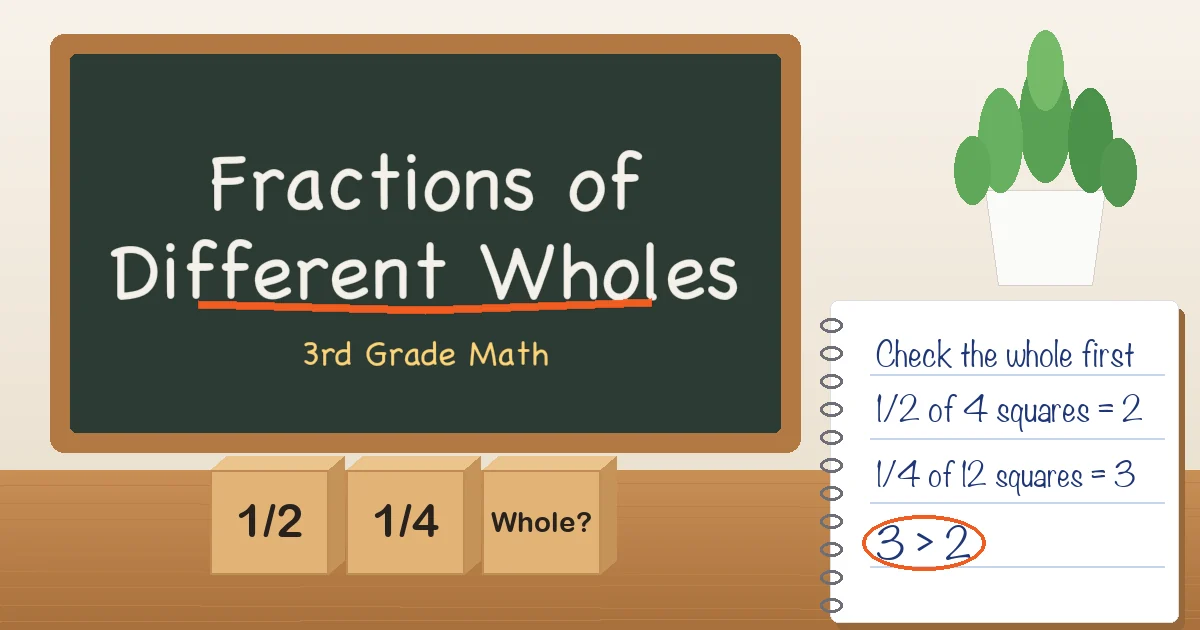
Fractions of Different Wholes: 3rd Grade Practice and Examples

Fractions of different wholes can't be compared by their numbers alone, because each fraction is a share of its own whole. When the wholes differ, the real pieces decide, measured in squares or inches.

3rd Grade MathFractionsFractions of Different Wholes
Fractions of Different Wholes: 3rd Grade Practice and Examples
math

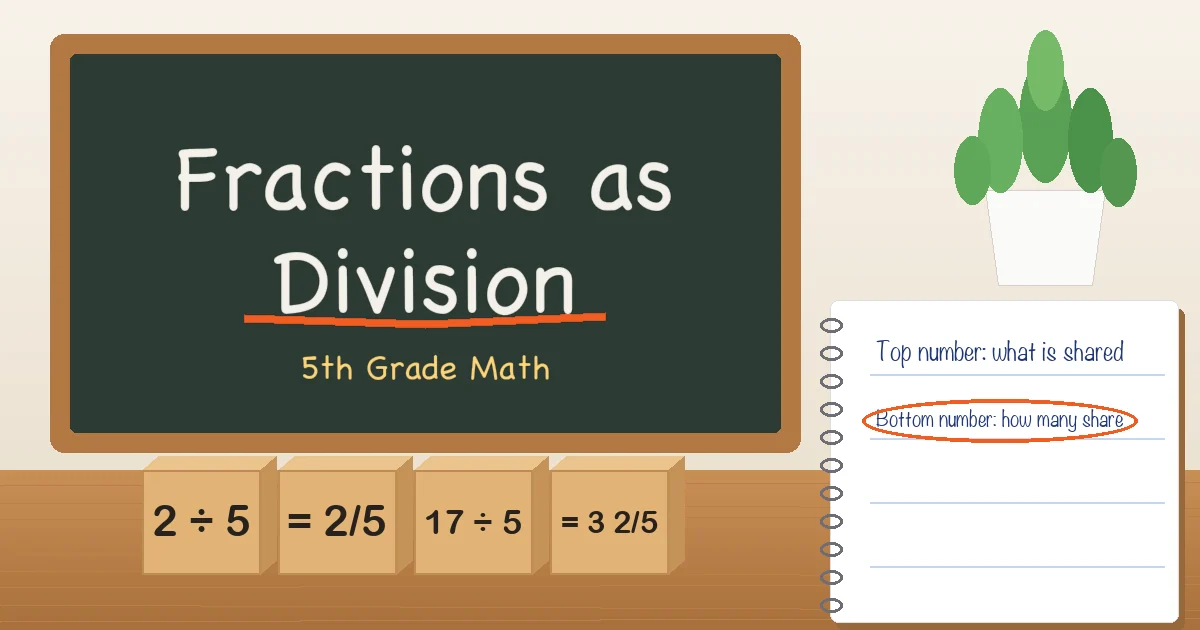
Reading Fractions as Division: Fair Shares and 6 Examples

Fractions as division means a/b = a ÷ b, so when a wholes are shared equally by b people, each person gets a/b. Remainders become mixed numbers, checked by multiplying back.

5th Grade MathFractionsFractions as Division
Reading Fractions as Division: Fair Shares and 6 Examples
math

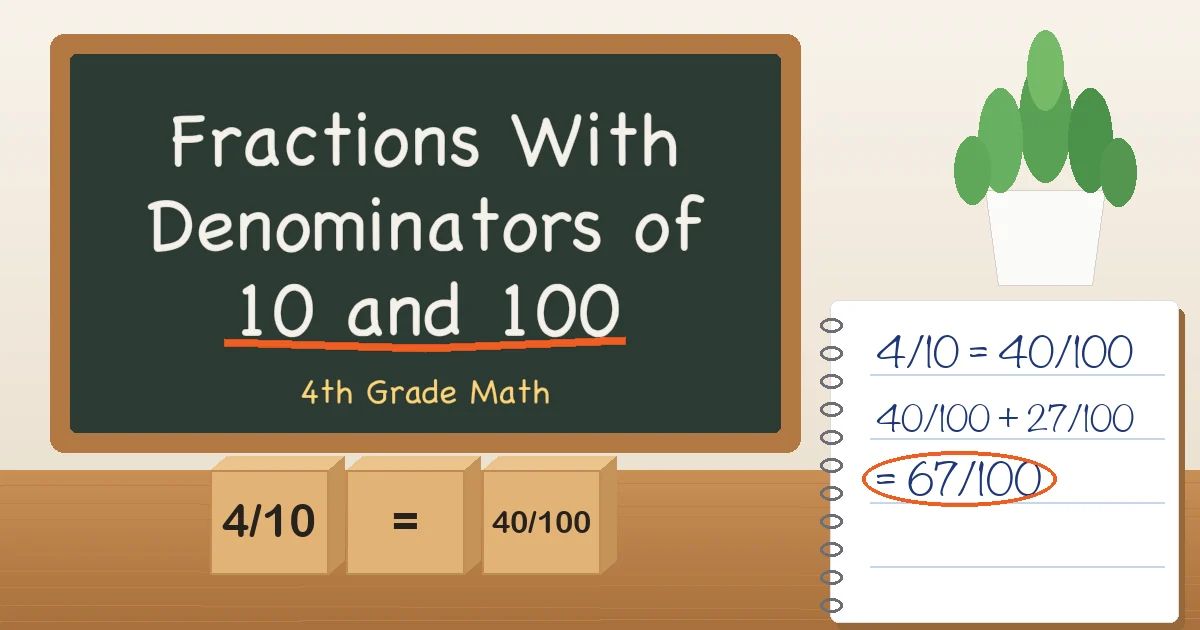
Fractions With Denominators of 10 and 100: Rename and Add

Fractions with denominators of 10 and 100 count tenths and hundredths, and 1 tenth equals 10 hundredths. Rename the tenths as hundredths, then add: 4/10 + 27/100 = 67/100.

4th Grade MathFractionsFractions With Denominators of 10 and 100
Fractions With Denominators of 10 and 100: Rename and Add
math

Fractions on a Number Line: 3rd Grade Steps and 6 Examples

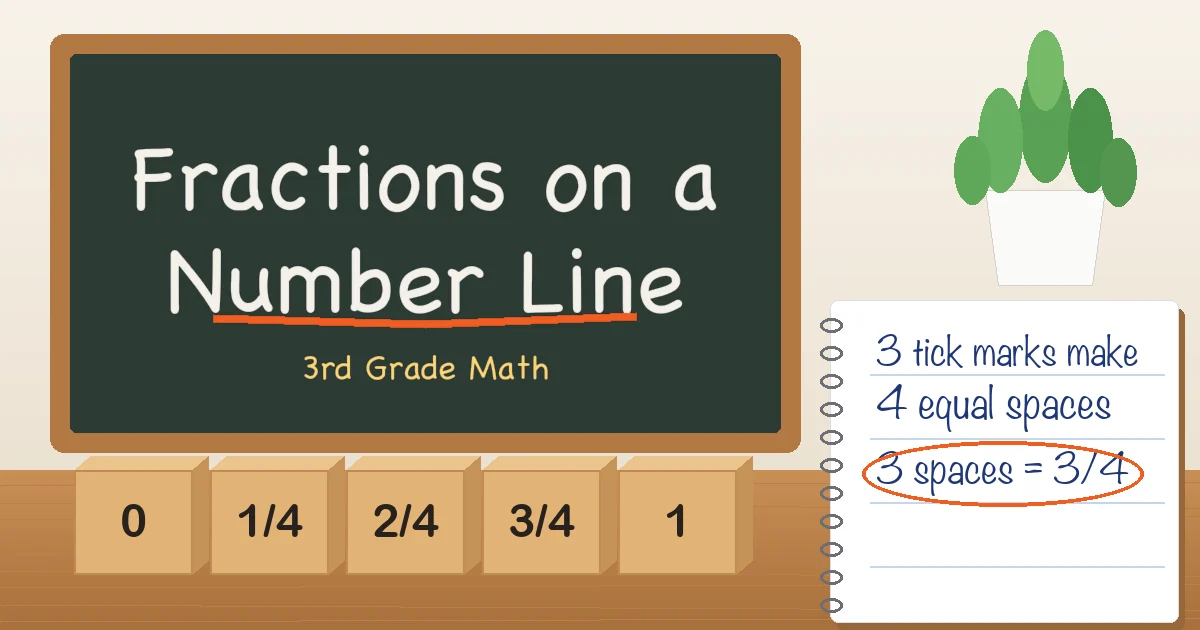
Fractions on a number line are points you find by cutting 0 to 1 into equal spaces and counting spaces from 0. Steps, fractions greater than 1 and six worked examples follow.

3rd Grade MathFractionsFractions on a Number Line
Fractions on a Number Line: 3rd Grade Steps and 6 Examples
math

Multiplying Mixed Numbers: Area Model, Steps and Examples

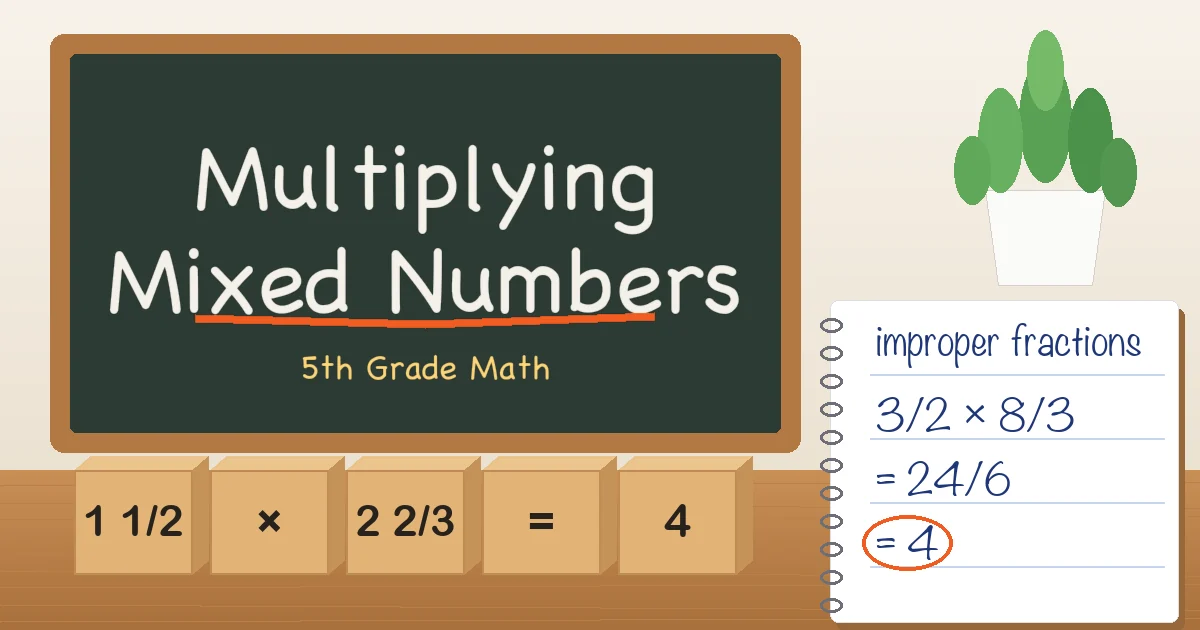
The usual way of multiplying mixed numbers is to change each one into an improper fraction, multiply straight across and simplify. An area model shows why multiplying wholes and fractions separately comes out too small.

5th Grade MathFractionsMultiplying Mixed Numbers
Multiplying Mixed Numbers: Area Model, Steps and Examples
math

Multiplying Fractions Word Problems: Draw the Story, Then Solve

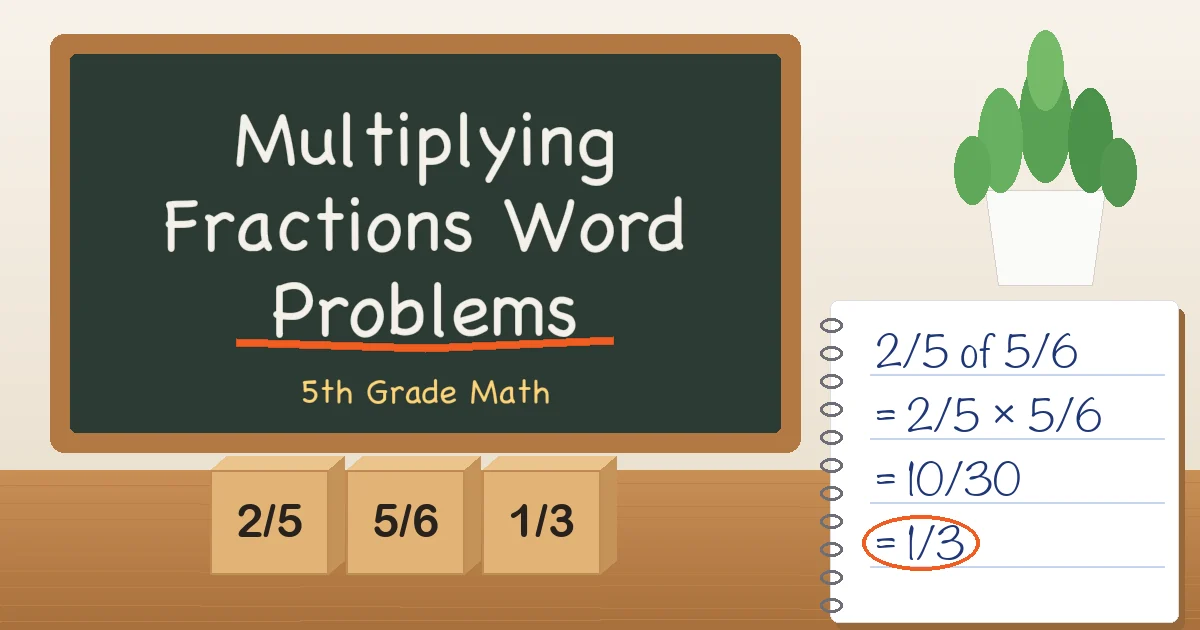
In multiplying fractions word problems, "of" means times, so two fifths of five sixths of a pan is one third of the pan. A quick drawing shows what each fraction is taken of.

5th Grade MathFractionsMultiplying Fractions Word Problems
Multiplying Fractions Word Problems: Draw the Story, Then Solve