Topic

Number And Operations In Base Ten

10 articles
math

Adding Three-Digit Numbers: 4 Methods and 6 Worked Examples

Adding three-digit numbers means adding hundreds, tens and ones place by place and trading any 10 in a place for 1 of the next. Blocks, expanded form, number lines and columns give the same sum.

2nd Grade MathNumber and Operations in Base TenAdding Three-Digit Numbers
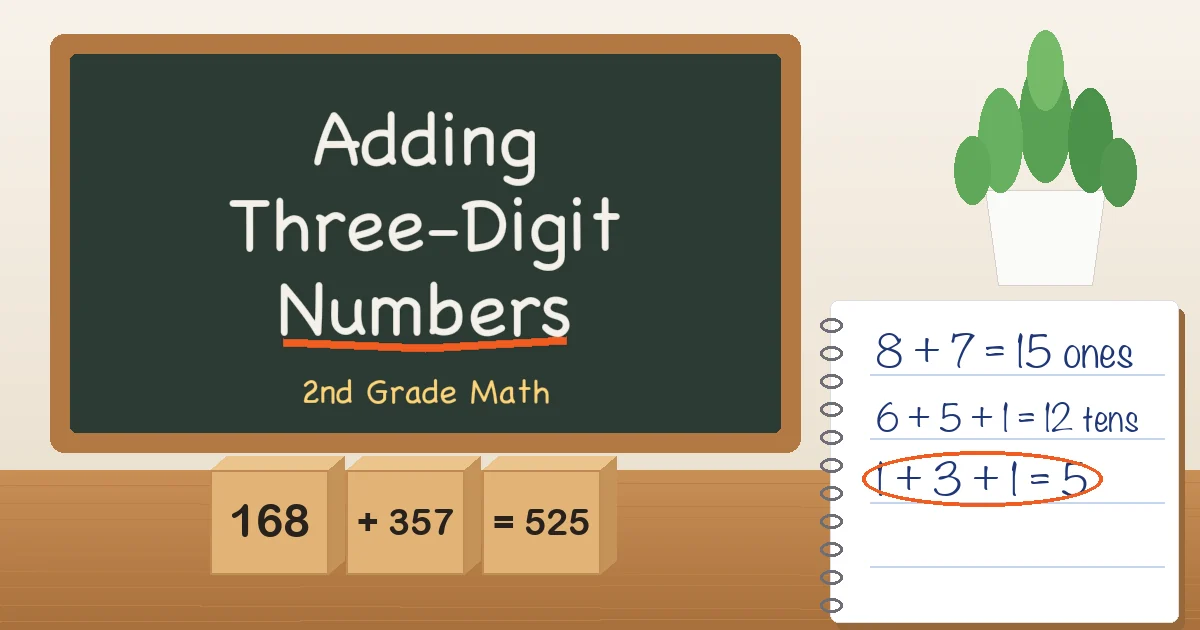
Adding Three-Digit Numbers: 4 Methods and 6 Worked Examples
math

Making a Ten to Add Within 100: 1st Grade Steps and 5 Examples

Making a ten to add means filling the next ten first, so 38 plus 5 becomes 40 plus 3, or 43.

1st Grade MathNumber and Operations in Base TenMaking a Ten to Add
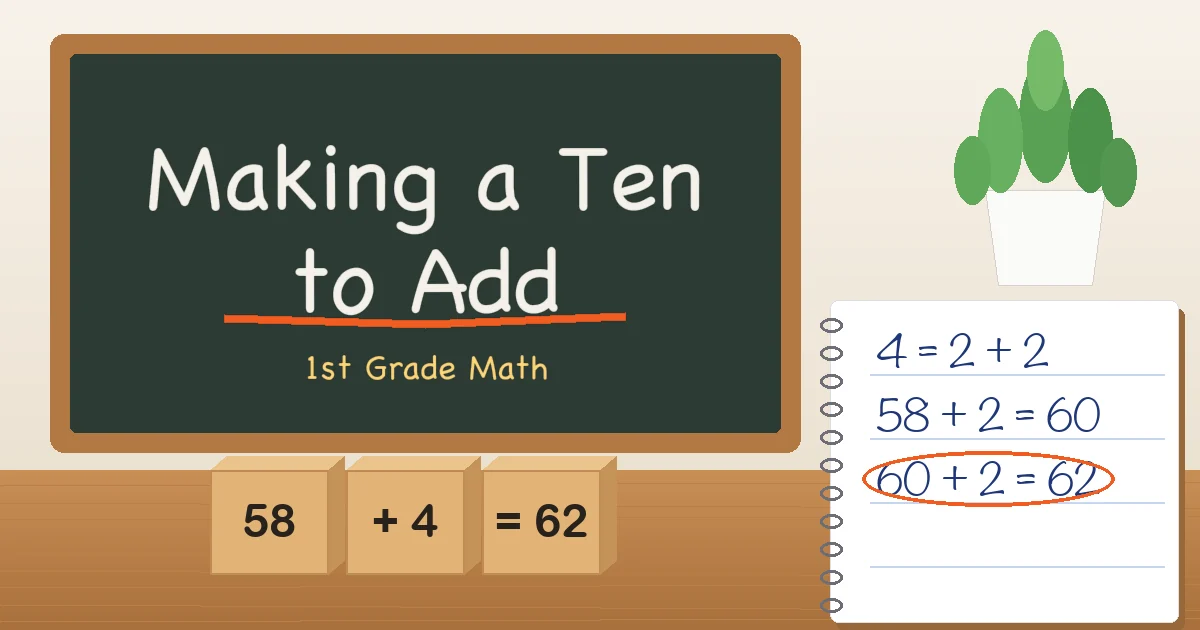
Making a Ten to Add Within 100: 1st Grade Steps and 5 Examples
math

Adding Two-Digit Numbers With Regrouping: Steps and 6 Examples

Adding two-digit numbers with regrouping means adding the ones, trading 10 ones for 1 new ten, then adding the tens. Blocks, columns, six examples and three common errors show how.

2nd Grade MathNumber and Operations in Base TenAdding Two-Digit Numbers With Regrouping
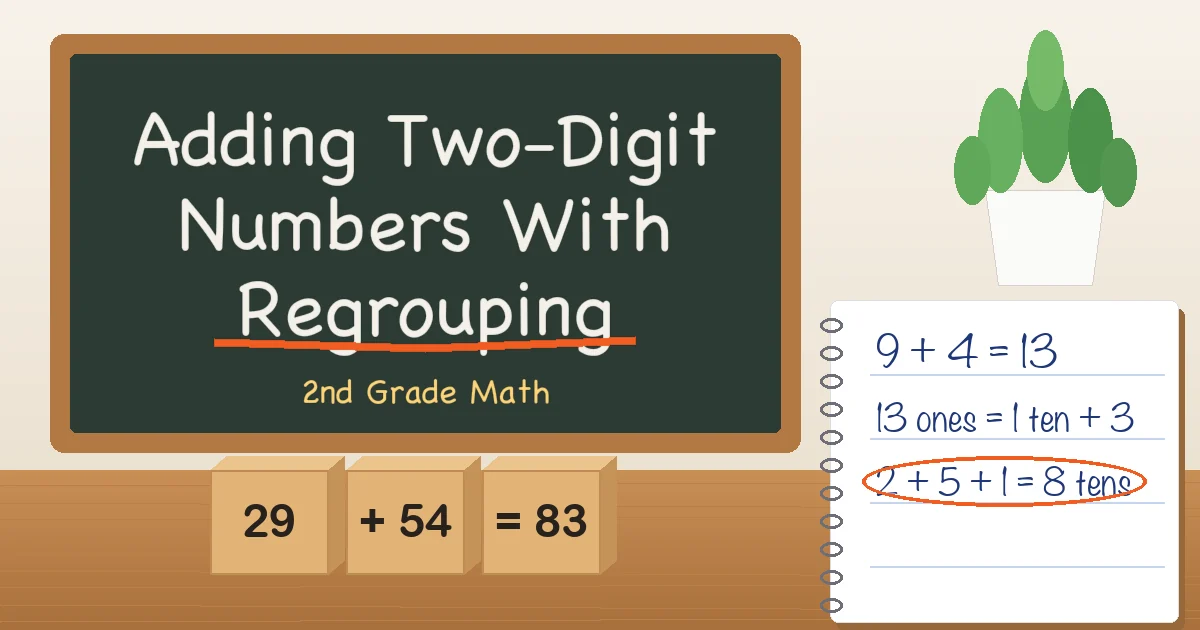
Adding Two-Digit Numbers With Regrouping: Steps and 6 Examples
math

Dividing Whole Numbers to Get a Decimal With 6 Worked Examples
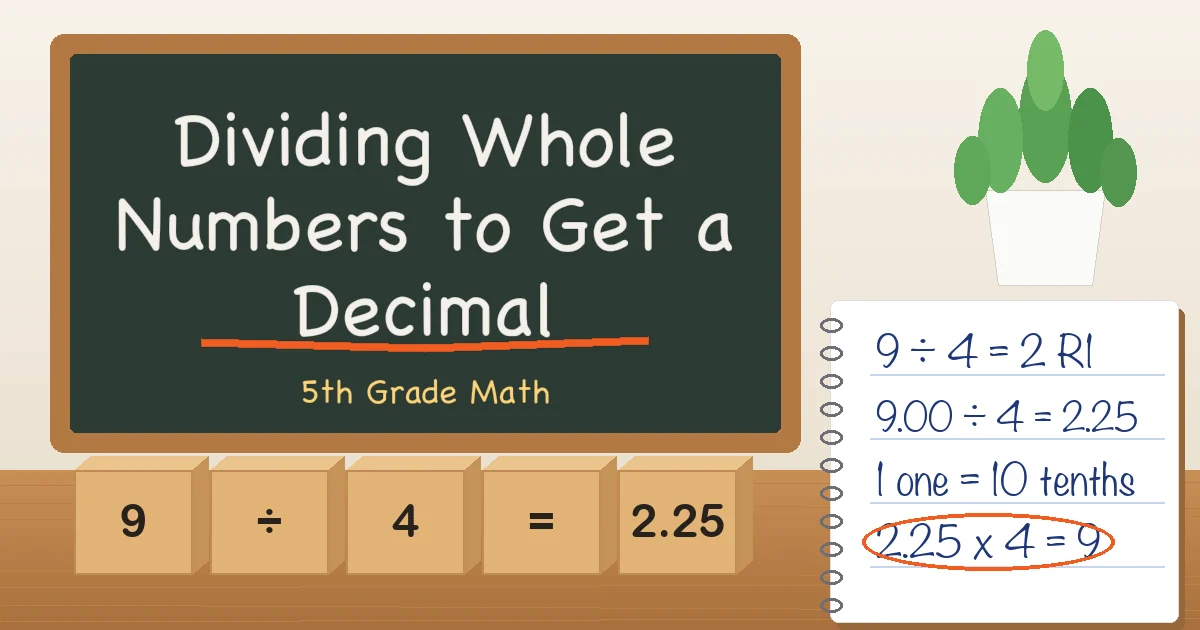
Dividing whole numbers to get a decimal means writing a point and zeros after the dividend and dividing further, so 9 ÷ 4 = 2.25 instead of stopping at 2 R1. Six worked examples follow.

5th Grade MathNumber and Operations in Base TenDecimalsDividing Whole Numbers to Get a Decimal
Dividing Whole Numbers to Get a Decimal With 6 Worked Examples
math

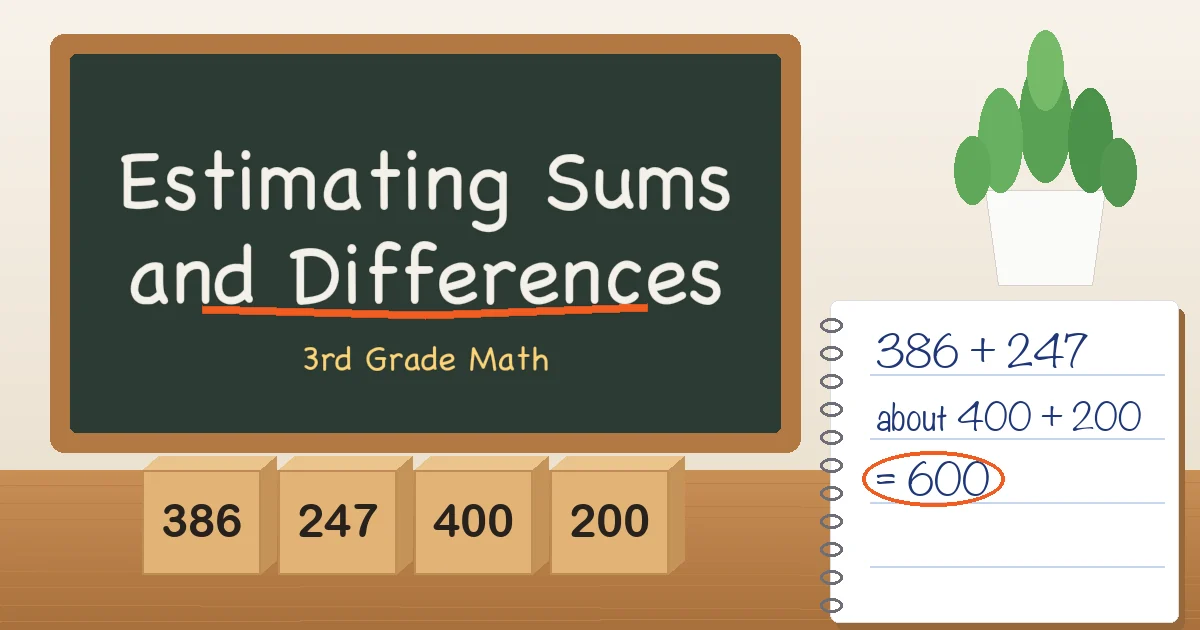
Estimating Sums and Differences With Rounding and 6 Examples

Estimating sums and differences means finding a close, quick answer by swapping each number for an easier one, usually by rounding, then adding or subtracting. Compatible numbers and a check for exact answers follow.

3rd Grade MathNumber and Operations in Base TenEstimating Sums and Differences
Estimating Sums and Differences With Rounding and 6 Examples
math

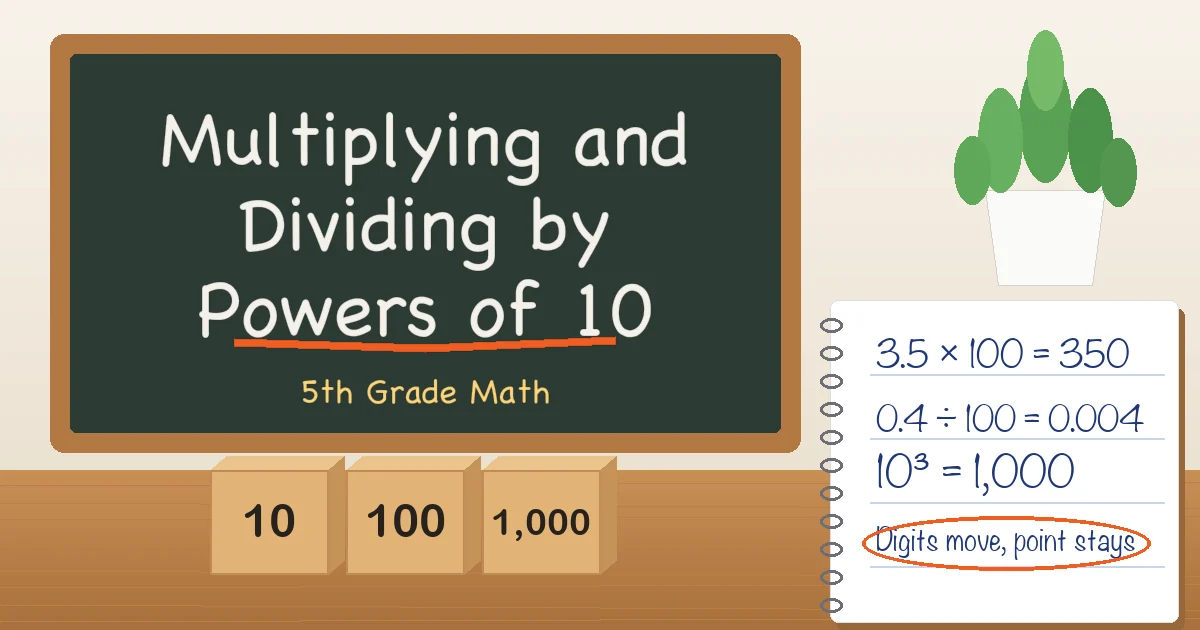
Multiplying and Dividing by Powers of 10: How the Digits Shift

Multiplying and dividing by powers of 10 slides every digit one place for each zero in the power, left to multiply and right to divide. Placeholder zeros, exponents and six worked examples follow.

5th Grade MathNumber and Operations in Base TenPlace ValuePowers of 10
Multiplying and Dividing by Powers of 10: How the Digits Shift
math

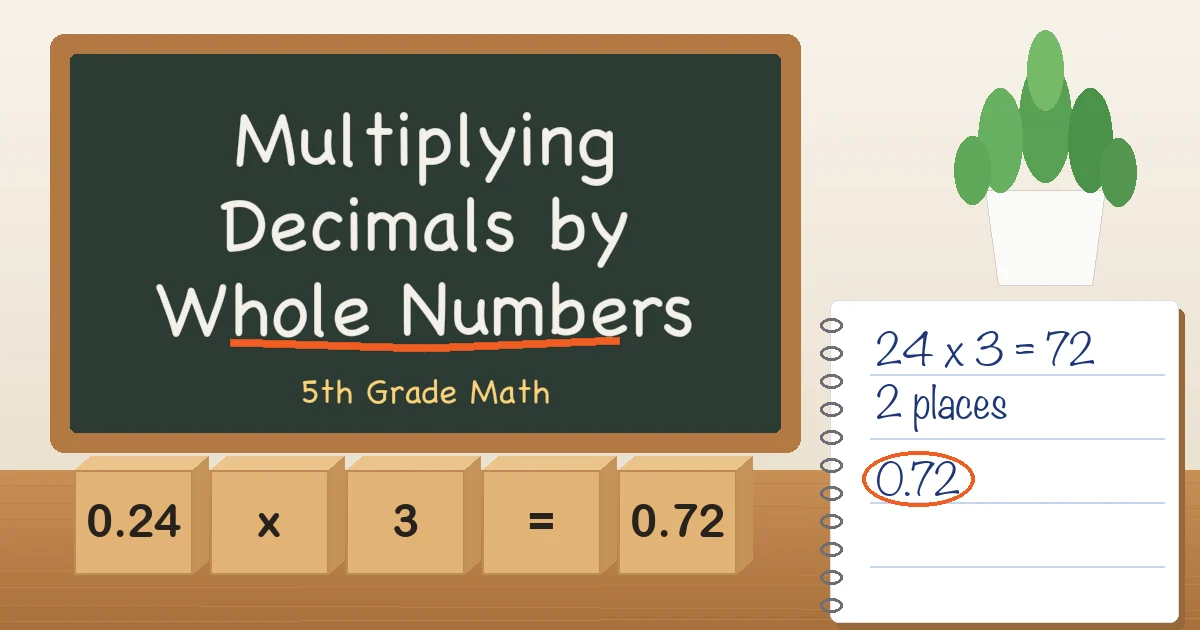
Multiplying Decimals by Whole Numbers With Grids and 6 Examples

Multiplying decimals by whole numbers means multiplying the digits as usual, then giving the product as many decimal places as the decimal. Grids, 0.1 and 0.01, two zero traps and six worked examples follow.

5th Grade MathNumber and Operations in Base TenDecimalsMultiplying Decimals by Whole Numbers
Multiplying Decimals by Whole Numbers With Grids and 6 Examples
math

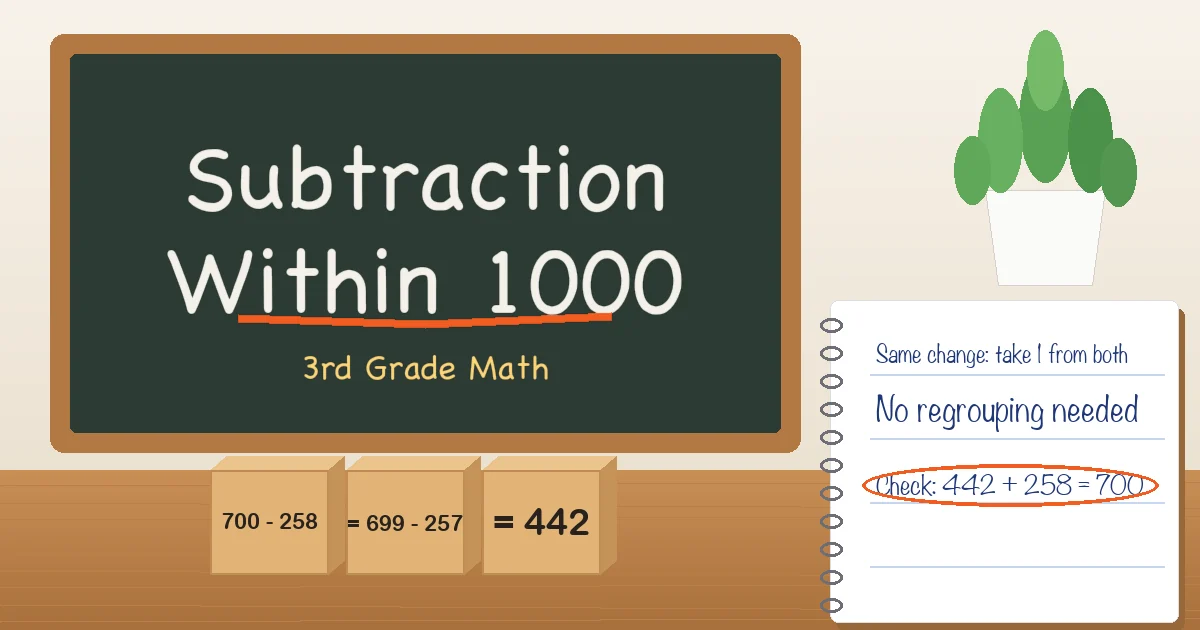
Subtraction Within 1000: 3rd Grade Strategies and Regrouping

Subtraction within 1000 means finding the difference between two numbers up to 1000, with a strategy that fits the numbers or by regrouping. Four methods, the zero case, two checks and six examples follow.

3rd Grade MathNumber and Operations in Base TenSubtraction Within 1000
Subtraction Within 1000: 3rd Grade Strategies and Regrouping
math

Subtracting Three-Digit Numbers With Regrouping and Zeros

Subtracting three-digit numbers means taking away ones, tens, then hundreds, and opening a ten or a hundred whenever a top digit is too small. Blocks, written steps, zeros and six examples follow.

2nd Grade MathNumber and Operations in Base TenSubtracting Three-Digit Numbers
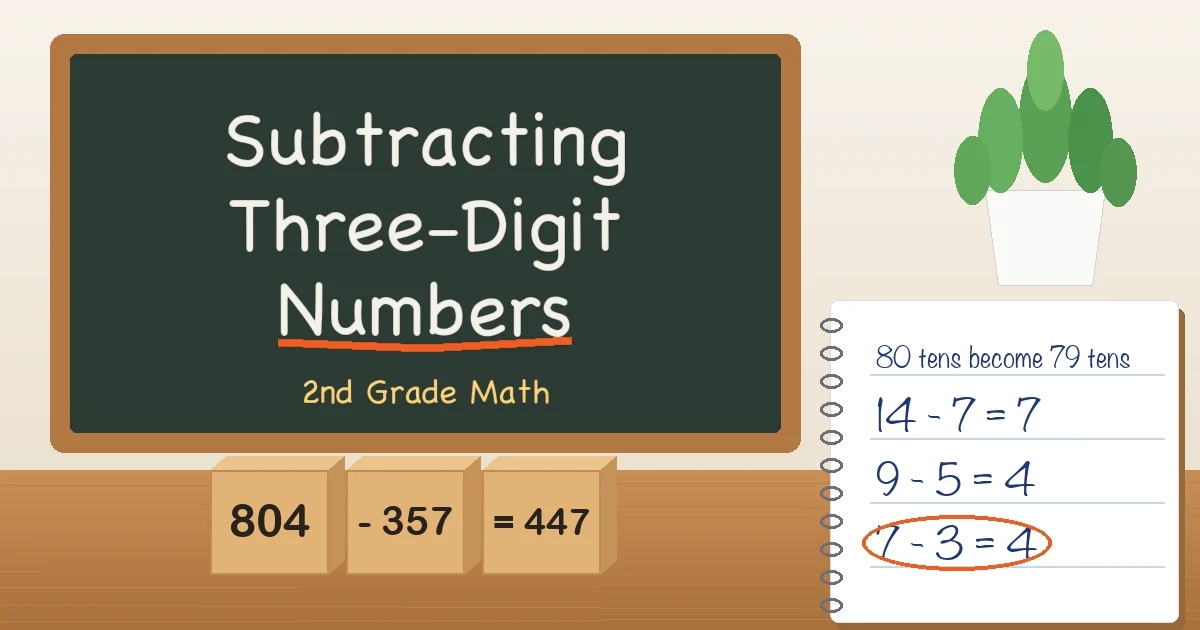
Subtracting Three-Digit Numbers With Regrouping and Zeros
math

Subtracting Two-Digit Numbers With Regrouping: 2nd Grade Steps

Subtracting two-digit numbers with regrouping means breaking 1 ten into 10 ones when the top number has too few ones, as in 43 - 18. Blocks, steps and checks come next.

2nd Grade MathNumber and Operations in Base TenSubtracting Two-Digit Numbers With Regrouping
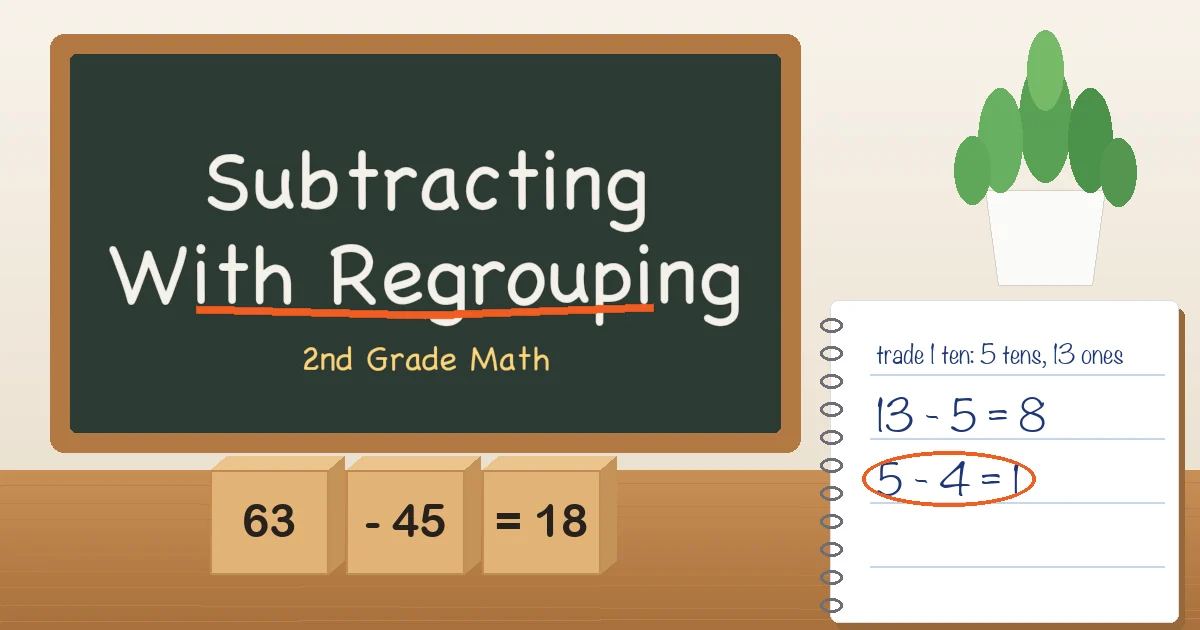
Subtracting Two-Digit Numbers With Regrouping: 2nd Grade Steps