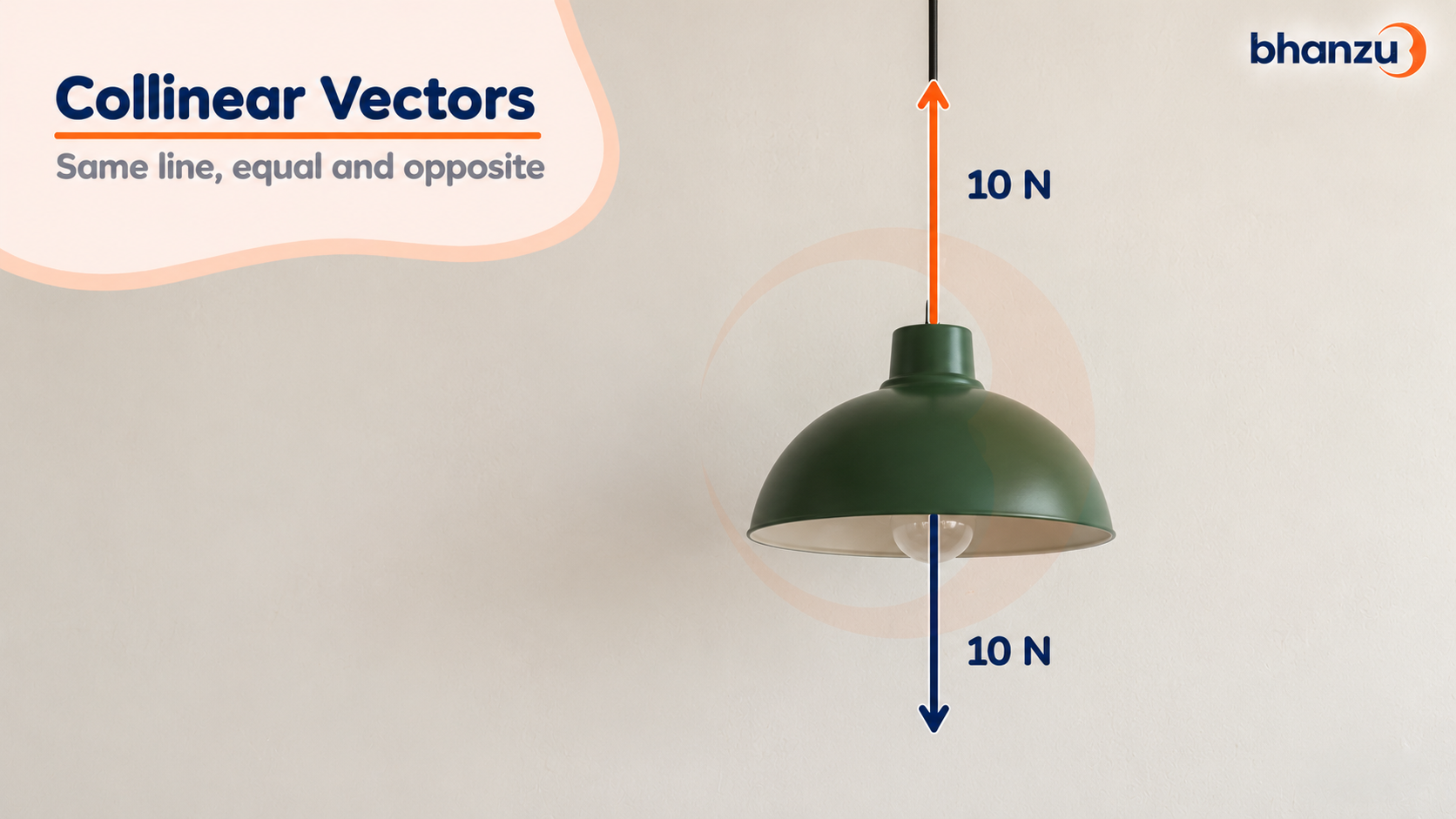
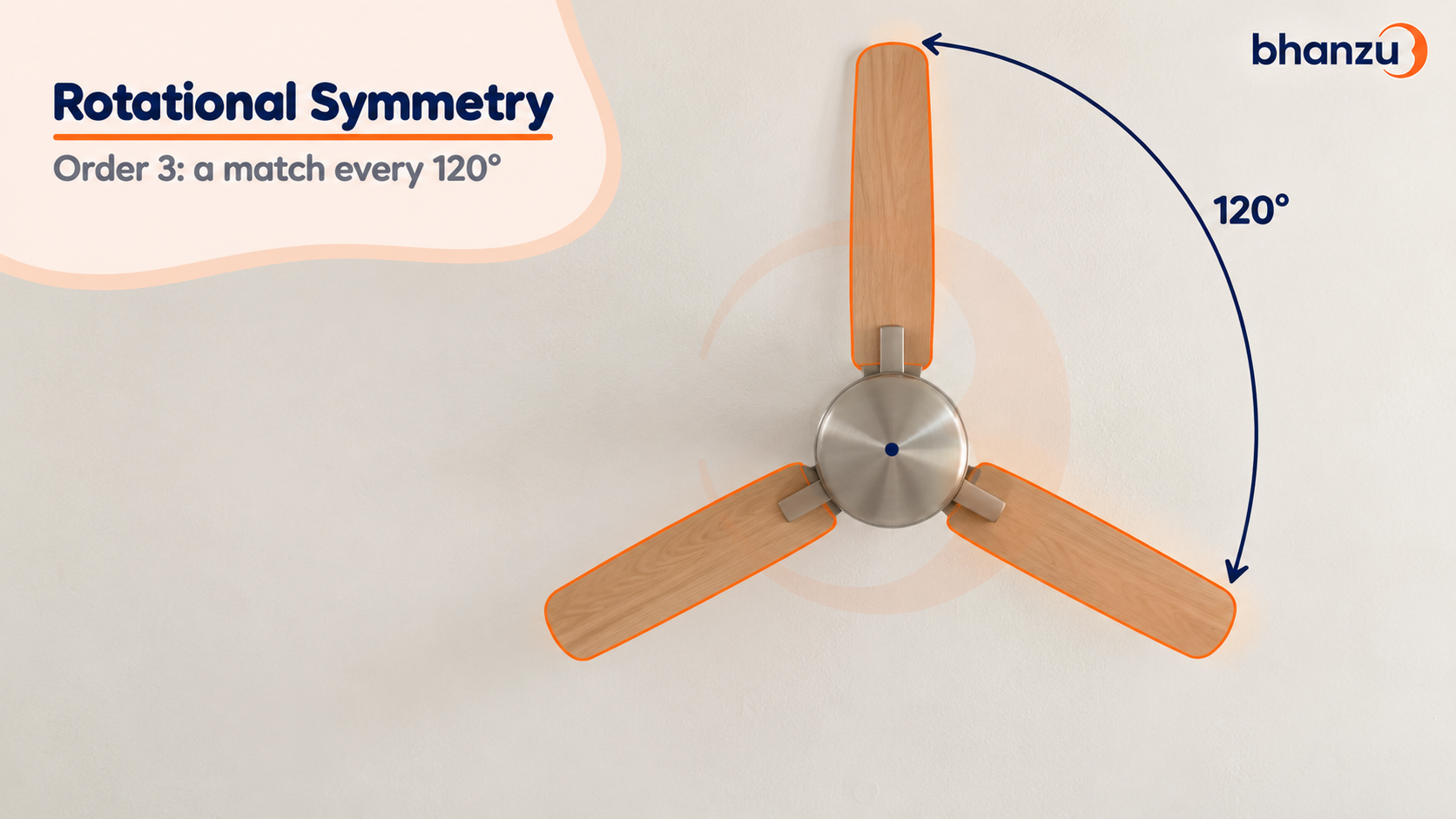
A straight angle is an angle whose measure is exactly 180°. Its two arms (the rays forming the angle) lie in opposite directions from the vertex, so together they make a straight line. In radians, a straight angle equals . It is one entry in the wider family of types of angles, sitting between an obtuse angle (less than 180°) and a reflex angle (more than 180°).
A straight angle is also called a flat angle, and it represents exactly half of a full turn — since a complete revolution is 360°, and half of that is 180°.
Properties of a Straight Angle
A handful of facts cover almost every straight-angle problem.
Measures exactly 180°. No more, no less. An angle of 179° or 181° is not a straight angle.
Forms a straight line. The two arms point in opposite directions, so the angle visually becomes a straight line through the vertex.
Equals two right angles. A right angle is 90°, and , so a straight angle is two right angles joined at the vertex.
Equals half a full turn. A full rotation is 360°; a straight angle is half of it, or .
Equals radians. When angles are measured in radians, a straight angle is .
A Straight Angle is not the Same as a Straight Line
This is the single most common confusion, so it earns its own line. Is a straight line the same as a straight angle? No. A straight line is a geometric object that extends forever in both directions and has no vertex. A straight angle is a measurement of 180°, taken at a specific vertex where two arms meet. The arms of a straight angle happen to lie along a straight line, but the angle is the amount of turn at the vertex, not the line itself.
Think of it this way: every straight angle traces out part of a straight line, but a straight line on its own carries no angle until you mark a vertex on it and look at the two directions leaving that point. The related straight line is the object; the straight angle is the 180° turn measured on it.
Examples of Straight Angle
These move from recognising the angle, through supplementary pairs, to a triangle's angle sum.
Example 1
The hands of a clock at 6:00 point straight up and straight down. What angle do they form?
At 6:00 the minute hand points to 12 and the hour hand points to 6 — exactly opposite directions from the centre.
Opposite directions from one vertex make a straight angle.
Final answer: 180°, a straight angle.
Example 2
Two angles sit on a straight line and a student assumes they must each be 90°. Where does this go wrong?
The intuitive move is to split 180° evenly, so the student writes both angles as 90°.
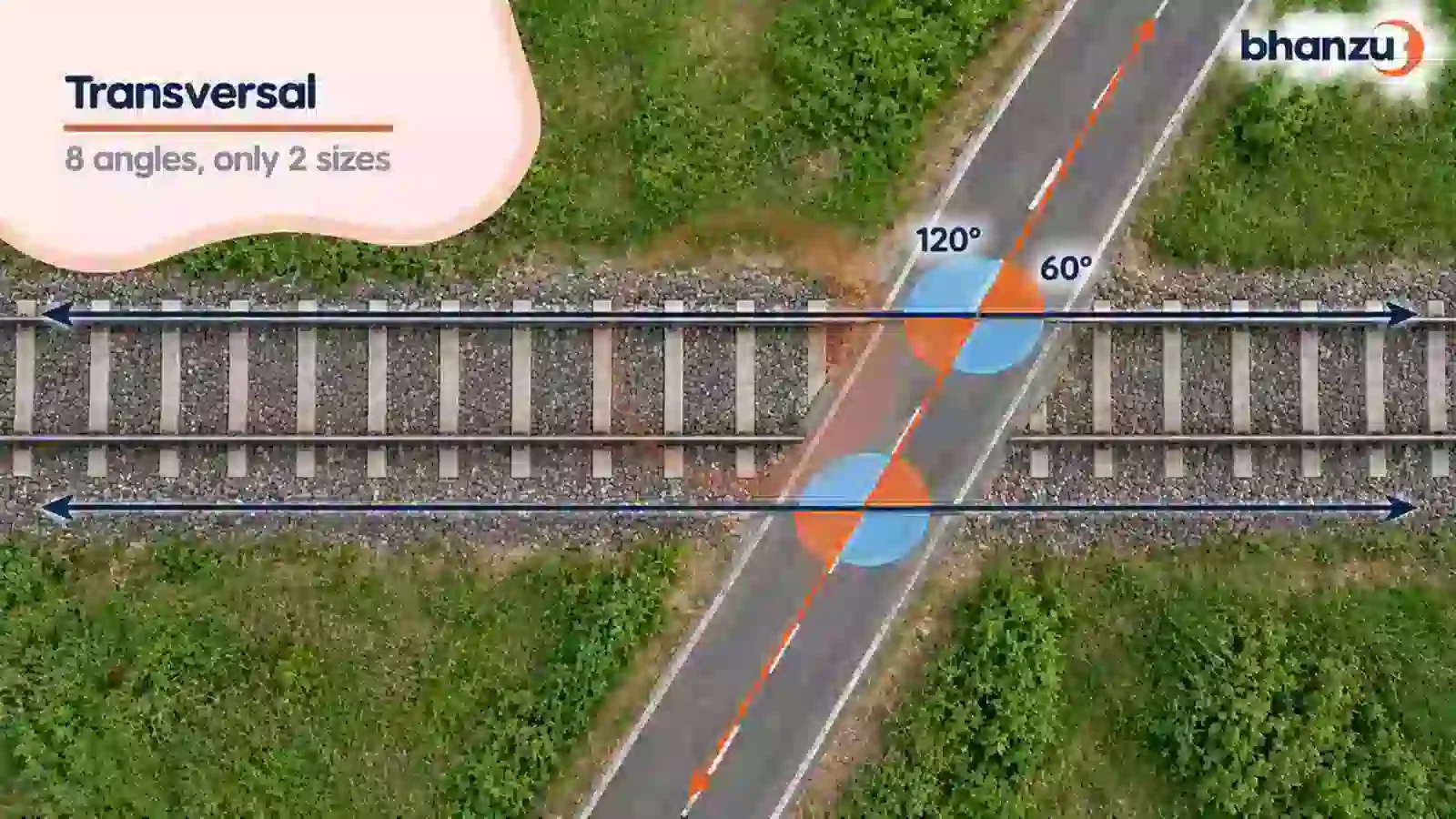
Test it. Angles on a straight line are supplementary, so they add to 180°, but they are not forced to be equal. If one is 120°, the other must be 60°, since . Only when the two are genuinely equal does each become 90°.
The rescue: use the sum, not an assumed split. The two angles on a straight line satisfy ; solve for the unknown using whatever value you are given.
Final answer: They add to 180° but need not each be 90°.
Example 3
A straight angle is split into two parts. One part is 65°. Find the other.
The two parts together form the straight angle, so they sum to 180°.
These two angles form a linear pair of angles — adjacent angles on a straight line.
Final answer: 115°.
Example 4
How many right angles fit inside a straight angle?
A right angle is 90° and a straight angle is 180°.
Final answer: Two right angles.
Example 5
A triangle has two angles measuring 40° and 75°. Use the straight-angle idea to find the third.
The three interior angles of a triangle always sum to 180°, the measure of a straight angle. So the third angle is what remains after subtracting the other two from 180°.
Final answer: 65°.
Example 6
Two supplementary angles are in the ratio 2:3. Find both angles.
Supplementary angles sum to 180°, a straight angle. Let the angles be and .
So the angles are and .
Check: .
Final answer: 72° and 108°.
Why a Name For "Flat" is Useful
"Half a full turn — the flat halfway point."
Naming 180° gives geometry a clean reference for "completely reversed direction," and that reference shows up far beyond worksheets.
Reversing direction. A spacecraft, a robot arm, or a car doing a three-point turn rotates through a straight angle to face the opposite way. Engineers describe that manoeuvre as a 180° turn precisely.
The straight-line angle sum. Angles along a straight line always total 180°, which is why a linear pair is supplementary — a fact used constantly in proofs about parallel lines and transversals.
The triangle angle sum. Tear the three corners off a paper triangle and lay them edge to edge; they fit perfectly along a straight line, totalling 180°. That is the straight angle making the triangle angle-sum theorem visible, a result first set out formally in Euclid's Elements around 300 BCE.
Mistakes With Straight Angles
Mistake 1: Confusing a straight angle with a straight line
Where it slips in: When a figure shows a straight line and the reader is asked whether it is a straight angle.
Don't do this: Call any straight line a straight angle. A line has no vertex; a straight angle is a 180° turn measured at a specific vertex on the line.
The correct way: Look for a marked vertex. The first-instinct error is treating the line and the angle as identical — the angle exists only once you fix a vertex and measure the turn between the two directions.
Mistake 2: Assuming angles on a straight line are always equal
Where it slips in: On linear-pair problems where one angle is given.
Don't do this: Split 180° into two 90° halves by default. The two angles on a line are supplementary, not necessarily equal.
The correct way: Use and solve. The rusher who splits evenly without reading the given value gets the wrong partner angle.
Mistake 3: Mixing up a straight angle with a full angle
Where it slips in: When converting between halves and whole turns.
Don't do this: Treat 180° and 360° as interchangeable. A straight angle is half a turn (180°); a full angle is a complete turn (360°).
The correct way: Anchor on the fraction — a straight angle is half of a 360 degree angle. The memorizer who recalls "straight = a whole turn" doubles every answer; remember it is half.
Conclusion
A straight angle measures exactly 180° and forms a straight line through its vertex.
It equals two right angles, half a full turn, and radians.
A straight angle is a measurement at a vertex; a straight line is the object — they are not the same.
Angles on a straight line are supplementary (sum to 180°) but need not be equal.
A triangle's three interior angles always sum to a straight angle, 180°.
To take angle work further with a teacher, explore Bhanzu's geometry tutor sessions or a middle school math tutor, and the structured math classes online cover angles step by step.
Practice these to solidify your understanding
Work through these, then check against the examples above.
Two angles on a straight line are supplementary; one is 53°. Find the other. (Answer to Question 1: 127°.)
A triangle has angles 90° and 35°. Find the third using the straight-angle idea. (Answer to Question 2: 55°.)
Two supplementary angles are in the ratio 1:2. Find both. (Answer to Question 3: 60° and 120°.)
If you get stuck on Question 3, return to Example 6 and set the parts as and .
Want a live Bhanzu trainer to walk through angle problems with you? Book a free demo class.
Read More
180 degree angle — the same measure, with construction and the radian link.
Supplementary angles — pairs that sum to a straight angle.
Complementary angles — pairs that sum to a right angle.
Vertical angles — equal angles formed by two crossing lines.
Adjacent angles — angles sharing a vertex and arm.
Triangle sum theorem — why a triangle's angles total a straight angle.
Was this article helpful?
Your feedback helps us write better content
Frequently Asked Questions
What is a straight angle in math?
What is half of a straight angle?
Can we say a straight line is a straight angle?
What is greater than a right angle and less than a straight angle?
How many right angles are there in a straight angle?