
Work Done by a Force: Integral Formula and Examples
Read ArticleVolumes by Slicing: Cross Sections and Examples
Volumes by slicing finds any solid's volume by integrating its cross-section area: V = ∫ₐ b A(x),dx. This guide covers square, triangle and semicircle slices, Cavalieri's principle, and six worked examples.
Read moreSurface Area of Revolution: Formula and Examples
Surface area of revolution is circumference times arc length, added along the curve: S = 2π∫ₐ b y,ds. This guide derives it, covers both axes and parametric curves, and handles integrals with no closed form.
Read moreSum and Difference Rule for Derivatives and Integrals
The sum and difference rule says the derivative of a sum is the sum of the derivatives. This guide proves it, extends it to integrals, works six examples, and shows where products break it.
Read moreQuadratic Approximation: Formula, Error, Examples
Quadratic approximation swaps a curve near x = a for the parabola matching its value, slope and bend. Inside: the formula, the reason for the 1/2, error size, and six checked examples.
Read moreOne-Sided Limits: Left-Hand and Right-Hand Limits
A one-sided limit tracks f(x) from one side only, and the full limit exists exactly when the left and right values match. This guide covers one-sided limits notation, piecewise, absolute value and floor cases.
Read moreNotation for Differentiation: Leibniz, Lagrange, Newton
One derivative, four ways to write it. This guide to notation for differentiation compares Leibniz, Lagrange, Newton and Euler notation, with higher orders, partials, conversions and worked examples.
Read more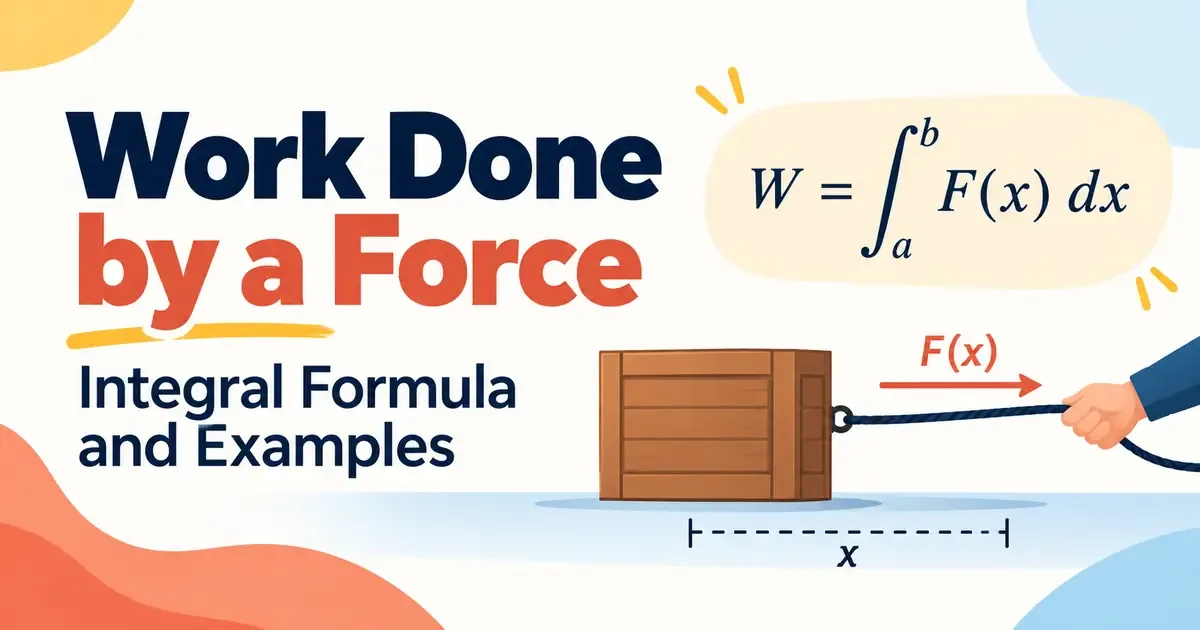
Get the best of Bhanzu Blogs
delivered to your inbox.
Weekly math tips, parent guides & more. No spam, ever.