What Is a Rhomboid?
A rhomboid is a parallelogram in which the opposite sides are equal and parallel, the opposite angles are equal, but the adjacent sides are of unequal length and the angles are not right angles. In short, it is a parallelogram that is neither a rhombus nor a rectangle.
The name comes from "rhombus-like," and the two are easy to confuse. A rhombus has all four sides equal; a rhomboid has only its opposite sides equal. This is why the family relationship runs one way: every rhombus fits the looser definition, but a rhomboid - with its unequal adjacent sides - is never a rhombus. As a member of the wider family of parallelograms, it inherits every general parallelogram property while adding the two "not equal, not square" restrictions.
What Makes a Rhomboid Different From Every Other Parallelogram?
Tilt a rectangle sideways so its corners are no longer square, then stretch it so its long and short sides stay different - what you have is a rhomboid.
A rhomboid is the "plain" parallelogram: it has the two pairs of parallel sides every parallelogram has, but it deliberately lacks the two special features that would make it a rhombus or a rectangle. Its adjacent sides are unequal (ruling out the rhombus) and its angles are oblique, not 90° (ruling out the rectangle). Getting this placement right is the whole point of the word - it names the parallelogram that is only a parallelogram.
How Is a Rhomboid Different From a Rhombus, a Rectangle, and a Parallelogram?
This distinction is the most-searched question about the shape, so it is worth a direct table.
Feature | Parallelogram | Rhomboid | Rhombus | Rectangle |
|---|---|---|---|---|
Opposite sides equal and parallel | Yes | Yes | Yes | Yes |
All four sides equal | Sometimes | No | Yes | No |
All angles 90° | Sometimes | No | No | Yes |
Adjacent sides unequal | Sometimes | Yes | No | Yes |
Read the table this way: "parallelogram" is the broad category; a rhomboid is the parallelogram that has neither equal sides nor right angles; a rhombus adds equal sides; and a rectangle adds right angles. The clean contrast between equal-sided and unequal-angled figures is spelled out further in the difference between rhombus and rectangle.
What Are the Properties of a Rhomboid?
A rhomboid carries all the general parallelogram properties, restricted by its two defining conditions:
Opposite sides equal and parallel. If the sides are and , then both pairs satisfy and , with .
Opposite angles equal. and ; one pair is acute, the other obtuse.
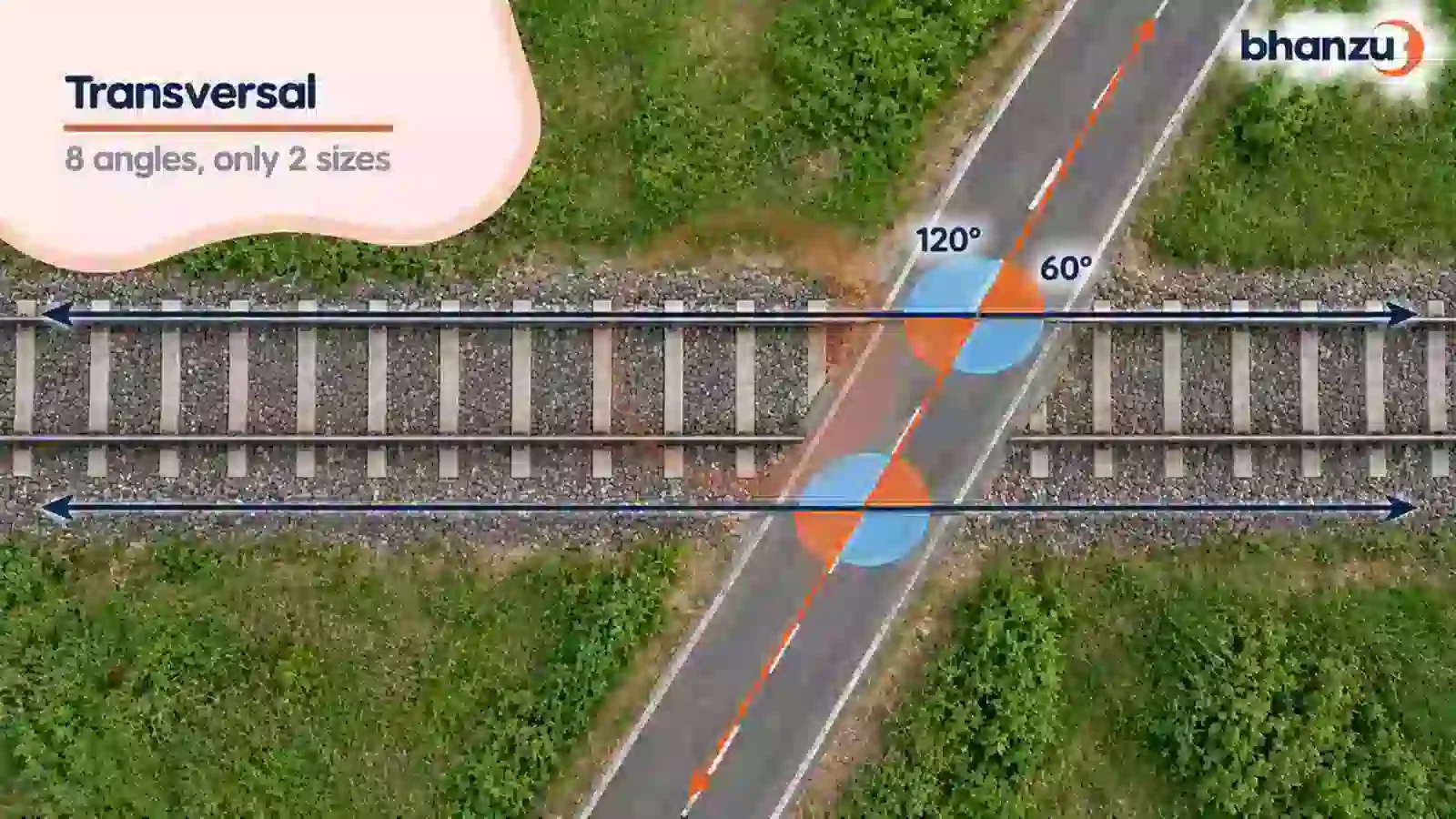
Adjacent angles supplementary. Any two neighbouring angles add to , so .
No right angles. Every angle is oblique, which is what separates a rhomboid from a rectangle.
Diagonals bisect each other. The two diagonals cut each other in half, but they are not equal in length and do not meet at right angles.
Angle sum is 360°. As a quadrilateral, its four interior angles total , consistent with the angles of a parallelogram.
These follow from the general properties of parallelograms, with the "unequal sides, no right angles" clauses layered on top.
What Are the Area and Perimeter Formulas for a Rhomboid?
Area. The area of a rhomboid is base multiplied by perpendicular height:
- the area of the rhomboid.
- the length of the base (the side you measure the height to).
- the perpendicular height, the straight-line distance from the base to the opposite side.
The height is not the slanted side. This is the key subtlety: because a rhomboid leans, its perpendicular height is shorter than its slanted side, and using the slant instead of the height is the most common area mistake. The formula comes straight from the parallelogram area rule - slide the leaning triangle from one end to the other and the rhomboid rearranges into a rectangle of base and height .
Perimeter. Add all four sides. With adjacent sides and :
- the perimeter (total boundary length).
, - the two unequal adjacent side lengths.
Where Do You See Rhomboids in Real Life?
The oblique parallelogram shows up wherever a shape leans by design:
Structural bracing. Diagonal braces and scissor mechanisms form rhomboids that flex predictably because opposite sides stay parallel.
Optics and crystals. Certain crystal faces and prism cross-sections are rhomboidal, with unequal edges meeting at oblique angles.
Design and tiling. Slanted parallelogram tiles and parquet patterns are rhomboids; they tessellate because opposite edges match.
Physics diagrams. A parallelogram of forces is drawn as a rhomboid when the two forces differ in size and direction, connecting the shape to the broader set of quadrilaterals used to model vectors.
Examples of a Rhomboid
Example 1
A rhomboid has base 9 cm and perpendicular height 4 cm. Find its area.
Use with and .
Final answer: the area is .
Example 2
A rhomboid has slanted side 5 cm, base 9 cm, and perpendicular height 4 cm. A student computes the area as cm². Where did it go wrong?
Wrong path. The student multiplies the base by the slanted side (5 cm), treating the leaning side as if it were the height.
Why it breaks. The area formula uses the perpendicular height, the straight up-and-down distance between the two parallel sides - not the slant. Because the rhomboid leans, the slant (5 cm) is always longer than the true height (4 cm), so overstates the area.
Correct. Use the perpendicular height: .
Final answer: , not 45 cm².
Example 3
Find the perimeter of a rhomboid with adjacent sides 5 cm and 9 cm.
Use with and .
Final answer: the perimeter is 28 cm.
Example 4
One angle of a rhomboid is 70°. Find the other three angles.
Opposite angles are equal and adjacent angles are supplementary. The opposite angle is also . Each adjacent angle is , and its opposite is .
Final answer: the angles are 70°, 110°, 70°, 110°.
Example 5
A rhomboid has area 60 cm² and base 12 cm. Find its perpendicular height.
Rearrange to .
Final answer: the height is 5 cm.
Example 6
Is a square a rhomboid? Explain.
A square has all four sides equal and all angles 90°. A rhomboid requires unequal adjacent sides and no right angles. A square fails both conditions, so it is not a rhomboid.
Final answer: no, a square is not a rhomboid.
Where Do Students Trip Up on the Rhomboid?
The two recurring errors are calling a rhomboid a rhombus (mixing up "opposite sides equal" with "all sides equal") and using the slanted side as the height. Both are fixed by holding the definition in mind: a rhomboid has unequal adjacent sides, and its height is always the perpendicular distance, never the slant.
Mistake 1: Confusing a rhomboid with a rhombus
Where it slips in: Reading "sides are equal" too loosely.
Don't do this: Assuming a rhomboid has all four sides equal like a rhombus.
The correct way: Only opposite sides of a rhomboid are equal; the adjacent sides differ. If all four sides were equal, the shape would be a rhombus, not a rhomboid.
Mistake 2: Using the slanted side as the height
Where it slips in: Computing the area of a leaning figure.
Don't do this: Multiplying base by the slant side in .
The correct way: Use the perpendicular height - the straight-line distance between the two parallel sides. The slant is always longer, so it overstates the area.
Mistake 3: Expecting equal or perpendicular diagonals
Where it slips in: Carrying rectangle or rhombus intuition over.
Don't do this: Assuming a rhomboid's diagonals are equal (rectangle) or meet at 90° (rhombus).
The correct way: A rhomboid's diagonals only bisect each other. They are neither equal nor perpendicular, which is exactly what marks it out from the special parallelograms.
Conclusion
A rhomboid is a parallelogram with unequal adjacent sides and no right angles - neither a rhombus nor a rectangle.
Its opposite sides are equal and parallel, its opposite angles are equal, and adjacent angles are supplementary.
Its area is , using the perpendicular height, and its perimeter is .
Its diagonals bisect each other but are not equal and not perpendicular.
Every rhombus meets the parallelogram definition, but a rhomboid - with unequal adjacent sides - is never a rhombus.
To take this further with a teacher, explore Bhanzu's geometry tutor or middle school math tutor sessions, or browse math classes online for structured quadrilateral practice.
Read More
Practice These to Solidify Your Understanding
Work through these problems in order:
Find the area of a rhomboid with base 11 cm and perpendicular height 6 cm.
A rhomboid has adjacent sides 7 cm and 10 cm. Find its perimeter.
One angle of a rhomboid is 115°. Find the remaining three angles.
Answer to Question 1: . Answer to Question 2: . Answer to Question 3: 115°, 65°, 115°, 65°.
Want a live Bhanzu trainer to work through more quadrilateral problems with you? Book a free demo class.
Was this article helpful?
Your feedback helps us write better content