
Learn math through
stories & curiosity
Expert guides for parents, students and math enthusiasts. Algebra to Olympiads — we've got you covered.
Trending Articles
Most-read posts on the blog
160+ Awesome Math Riddles for Kids [With Answers]
(a + b)² Formula — a²+2ab+b², Proof, Examples
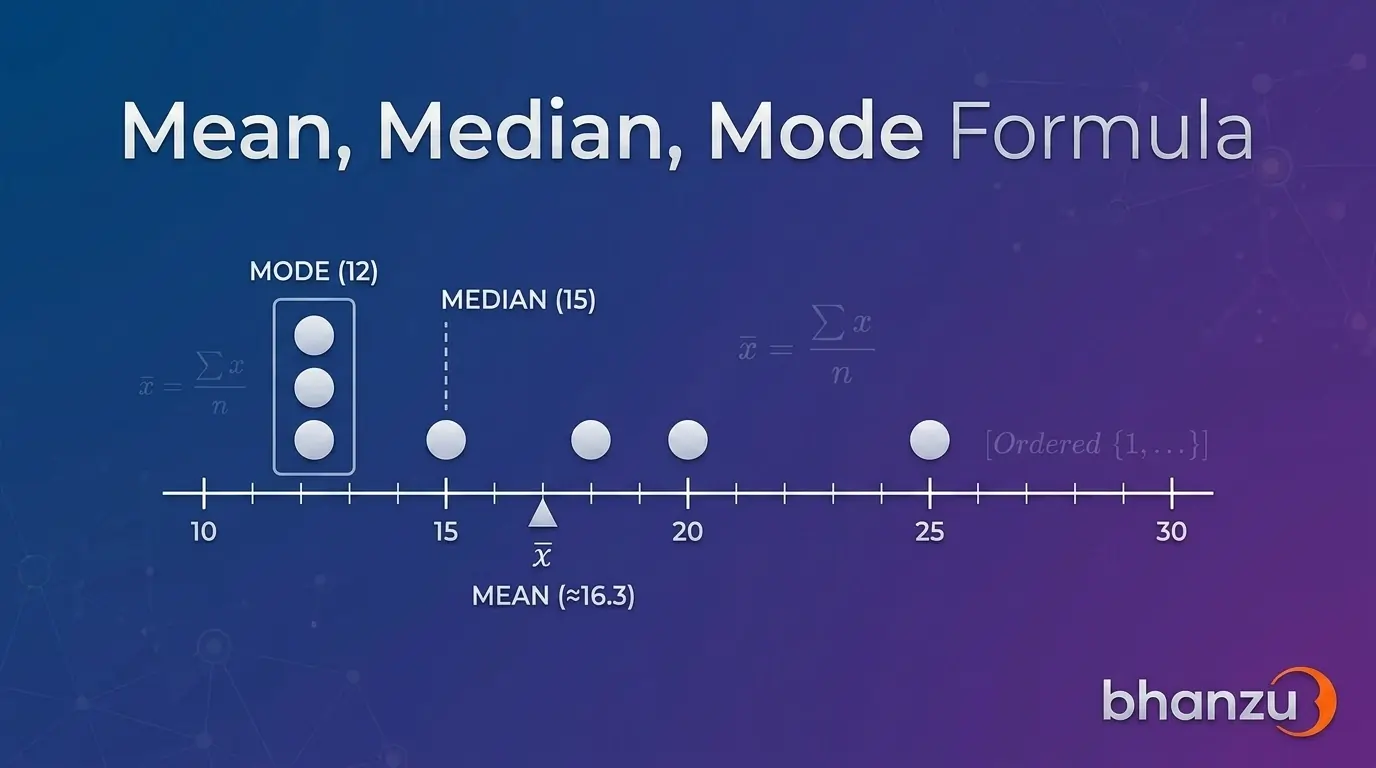
Mean, Median, Mode Formula - Differences, Use, and Examples
a³ - b³ Formula — Difference of Cubes, Proof
Trigonometry Formulas - Full list
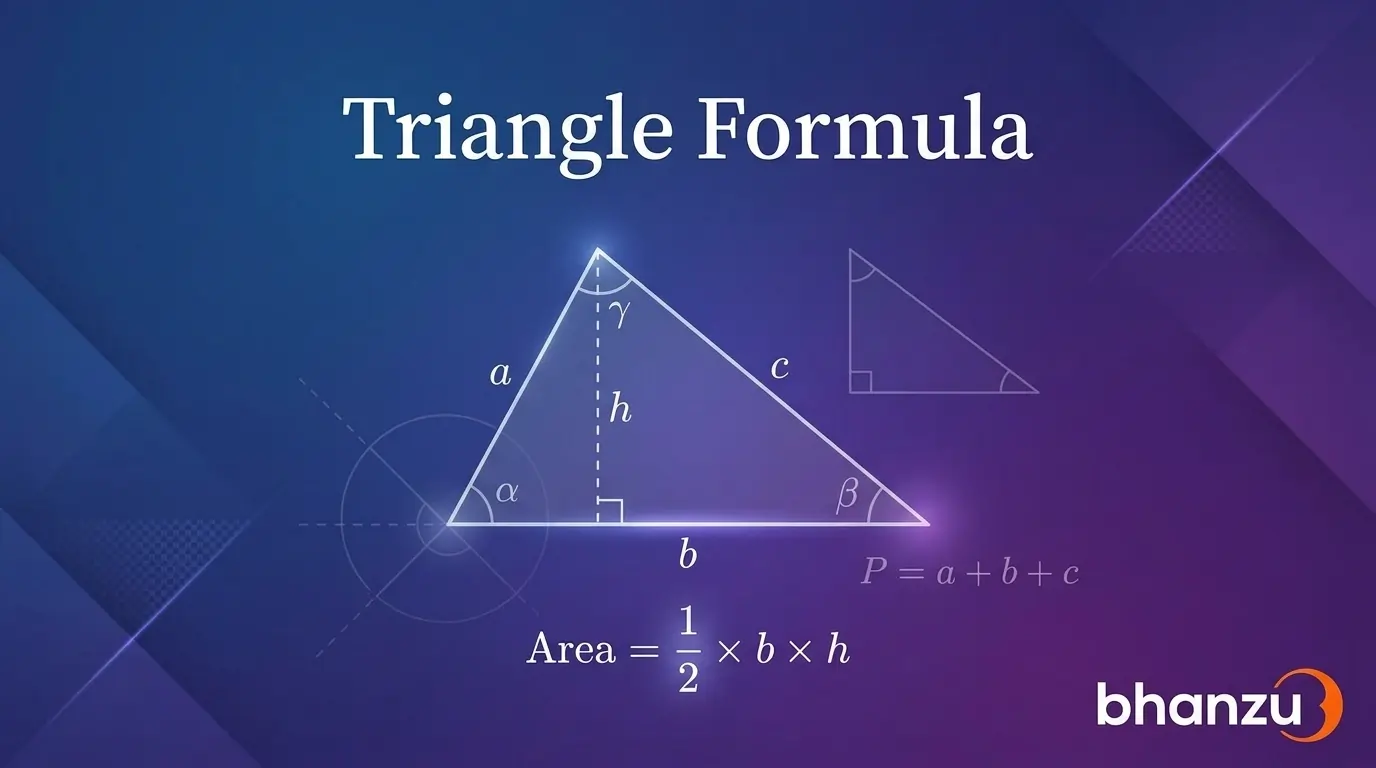
Triangle Formula: Area, Perimeter, and All Types Explained
Trigonometric Table - Sin Cos Tan Values 0-90°
Math Tricks: 20 Shortcuts Every Kids Should Know

a² + b² Formula — Proof, Expansion, Examples
Tables From 12 To 20 : Charts, Patterns, and How To Learn Them
Maths Formulas for Class 10 — Chapter-Wise List
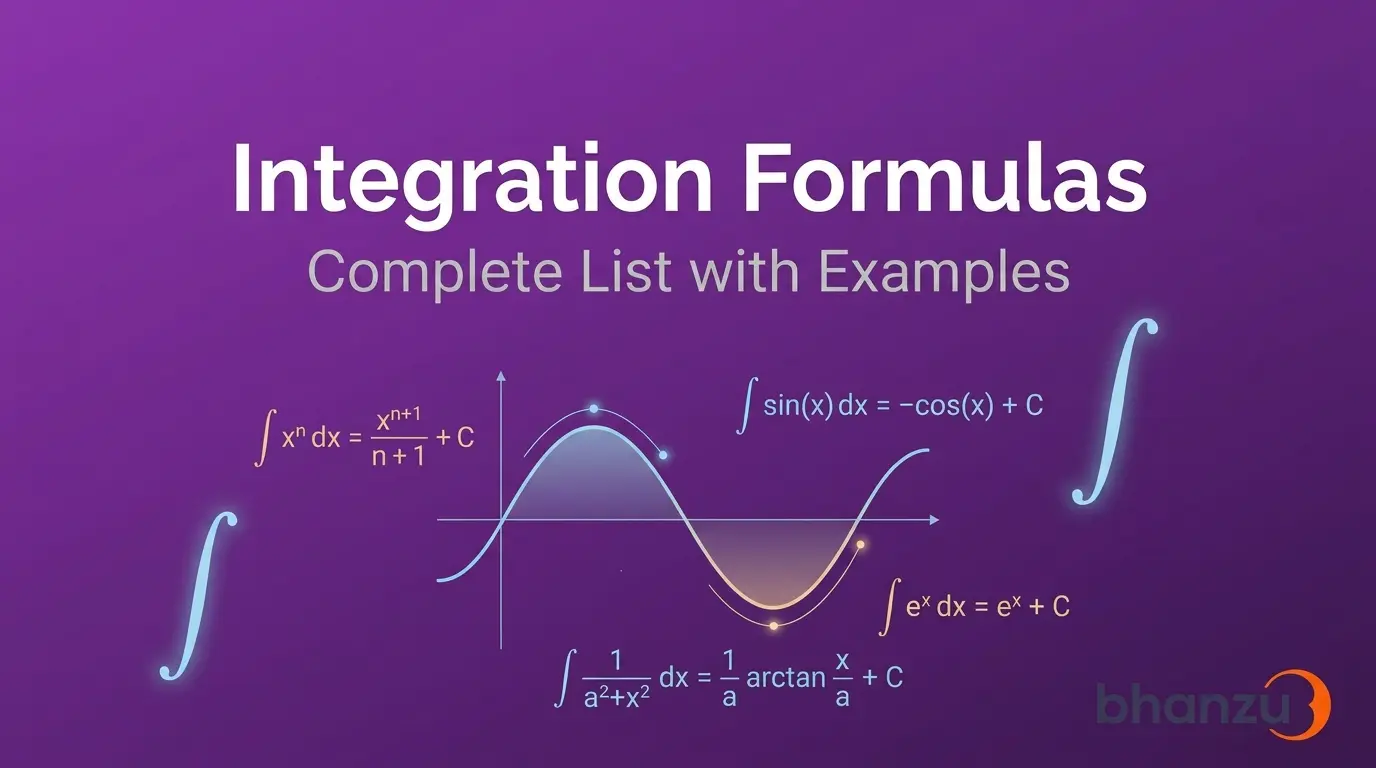
Integration Formulas: Complete List with Examples
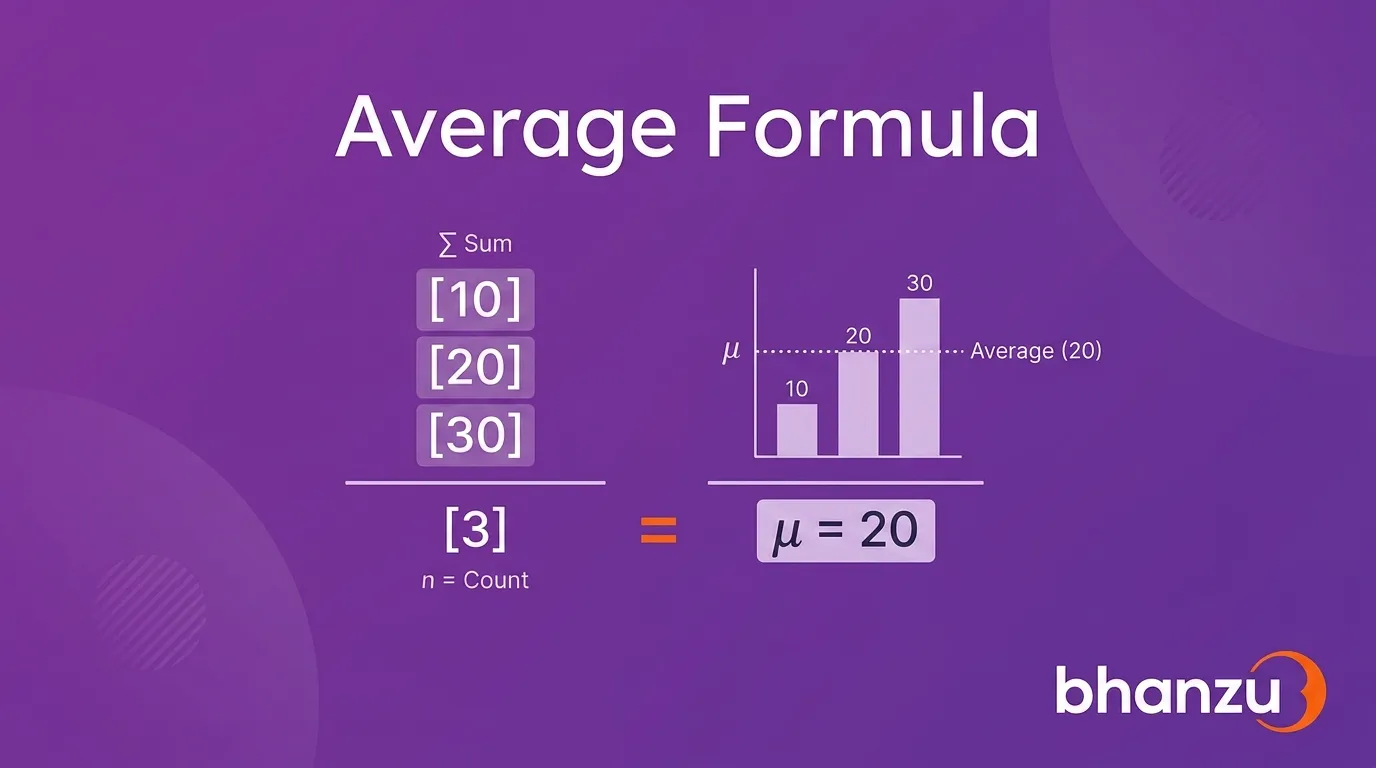
Average Formula: Mean Calculation & Examples
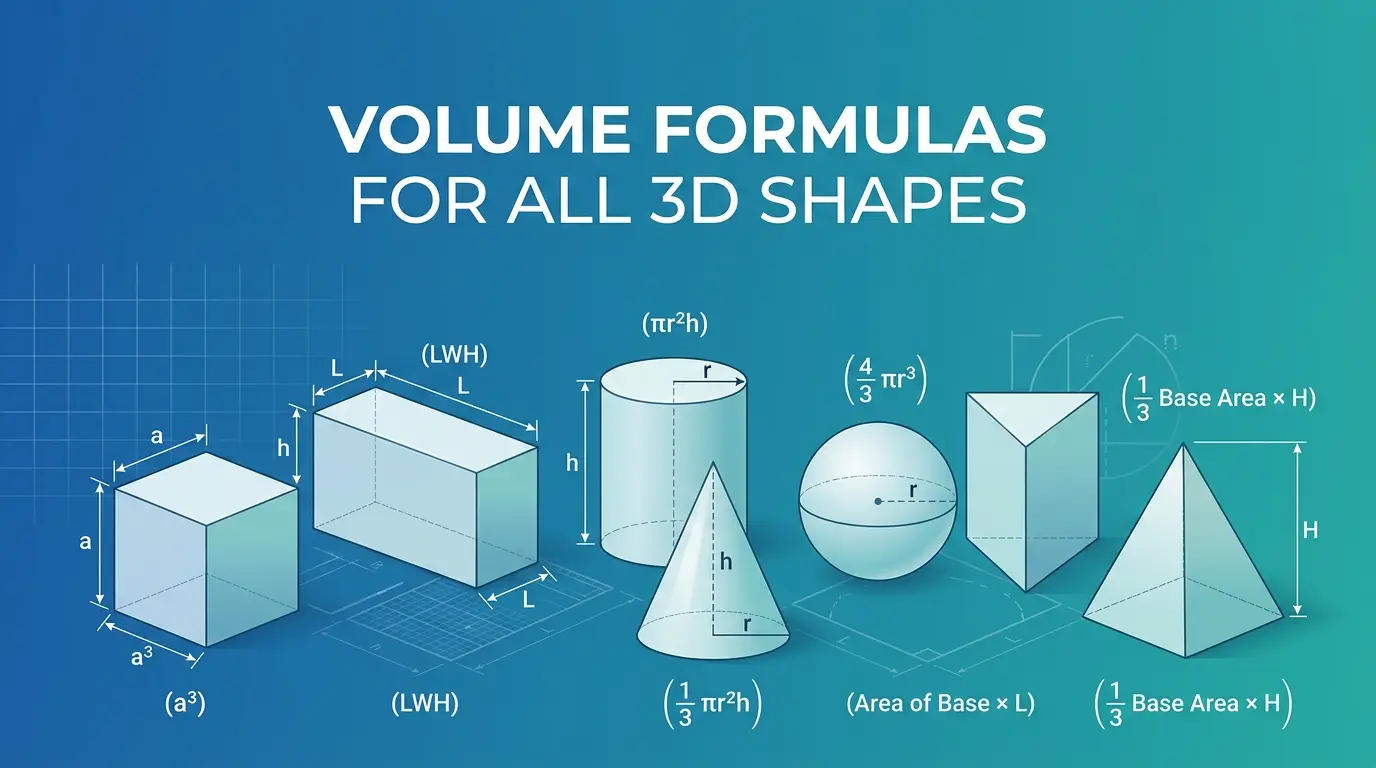
Volume Formulas for All 3D Shapes
Quadrilaterals — Types, Properties, and Formulas
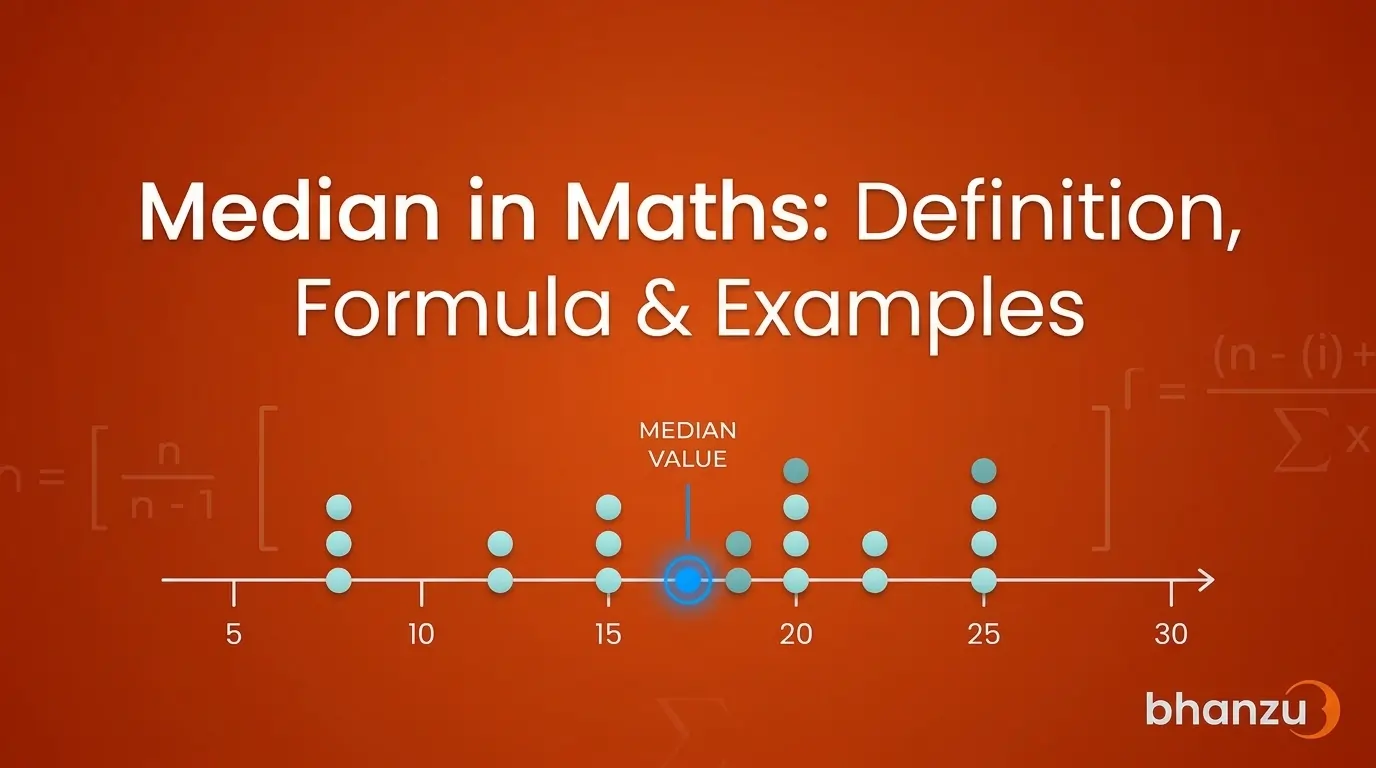
Median in Maths: Definition, Formula & Examples
160+ Awesome Math Riddles for Kids [With Answers]
(a + b)² Formula — a²+2ab+b², Proof, Examples
Mean, Median, Mode Formula - Differences, Use, and Examples
a³ - b³ Formula — Difference of Cubes, Proof
Trigonometry Formulas - Full list
Triangle Formula: Area, Perimeter, and All Types Explained
Trigonometric Table - Sin Cos Tan Values 0-90°
Math Tricks: 20 Shortcuts Every Kids Should Know
a² + b² Formula — Proof, Expansion, Examples
Tables From 12 To 20 : Charts, Patterns, and How To Learn Them
Maths Formulas for Class 10 — Chapter-Wise List
Integration Formulas: Complete List with Examples
Average Formula: Mean Calculation & Examples
Volume Formulas for All 3D Shapes
Quadrilaterals — Types, Properties, and Formulas
Median in Maths: Definition, Formula & Examples
The goal was never to make kids faster at math — it was to make them fall in love with it. Speed is a byproduct of genuine understanding.

Explore by Topic
Dive into the subject you love most
Algebra
Variables, equations, and the language of math
Square Root Of 361: Value 19, Methods And Worked Examples
The square root of 361 is exactly 19 (19.0000), because 19 × 19 = 361. Below: four ways to find it, a ten-second check, and where 361 shows up.
Square Root Of 144: Value , Methods and Examples
The square root of 144 is 12 (12.0000 as a decimal), since 12 × 12 = 144. Inside: four ways to find it, why 144 is called a gross, and worked examples.
Square Root Of 324: Value, Methods And Worked Examples
The square root of 324 is 18 (18.0000 as a decimal), because 18 × 18 = 324. Below: three ways to find it, the negative root, and worked examples.
Geometry
Shapes, proofs, and spatial thinking
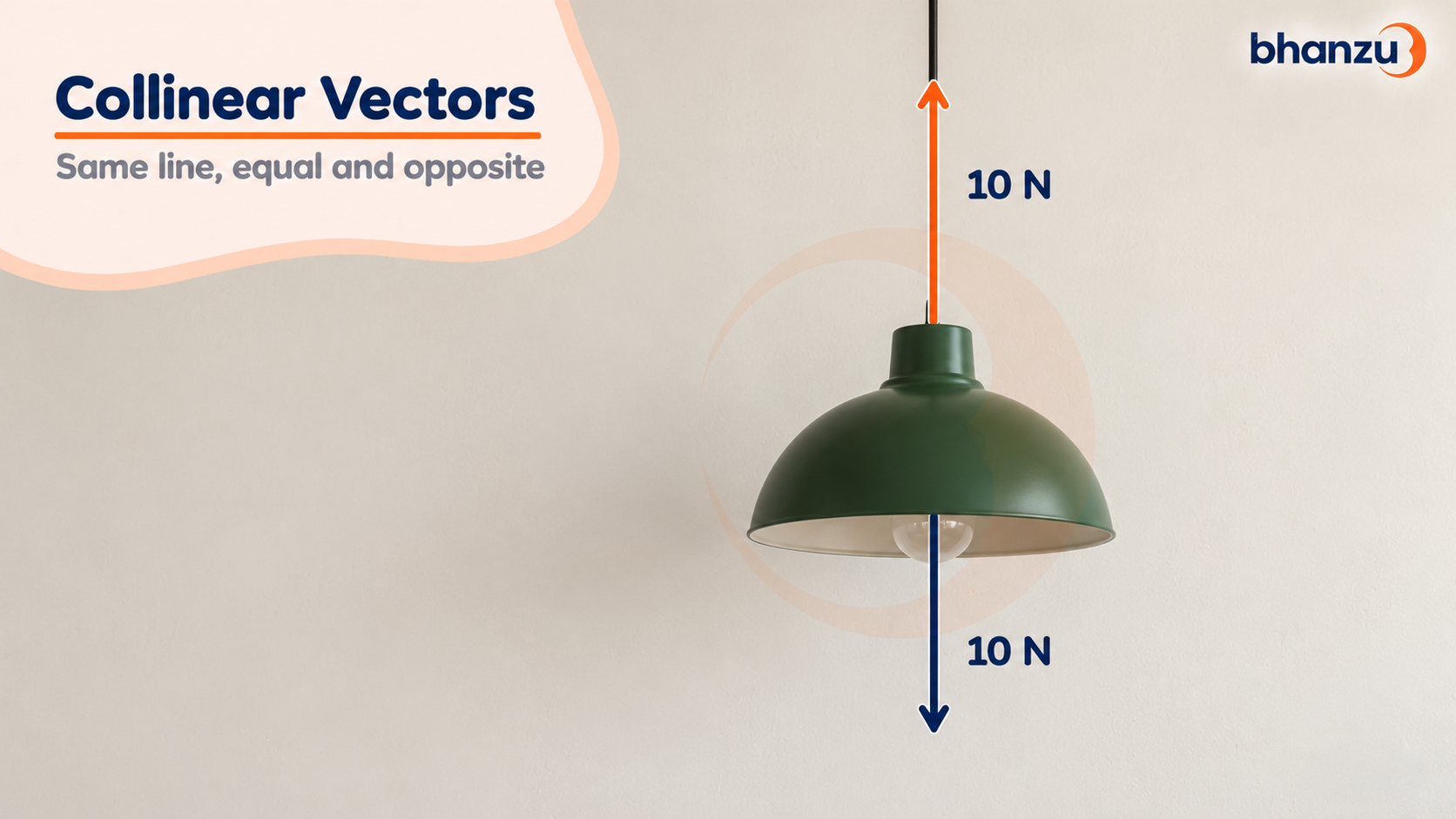
Collinear Vectors — Definition, Conditions, Examples
Collinear vectors are vectors that lie along the same line — which means one is always a scalar multiple of the other, a = k,b. This article covers the three tests for collinearity (scalar multiple, equal coordinate ratios, zero cross product), how collinear differs from parallel and coplanar, and worked examples.
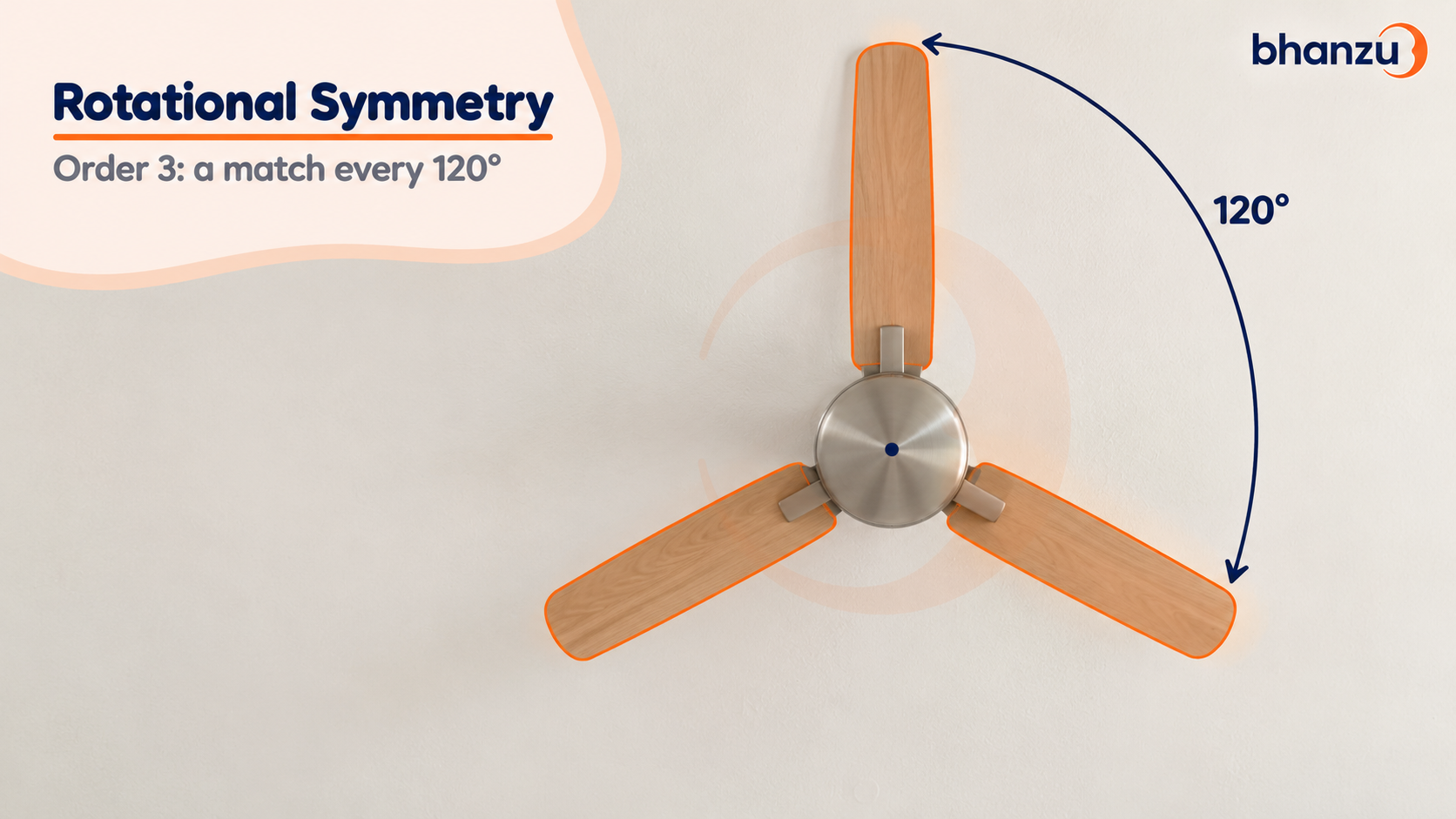
Rotational Symmetry - Order & Angle of Rotation
Rotational symmetry means a shape maps exactly onto itself when turned about its centre by some angle smaller than a full turn. The order counts how many times it matches in one 360° rotation, and the angle of rotation is 360°/(order); this guide gives the definitions, six worked examples, and the traps that produce a wrong order.
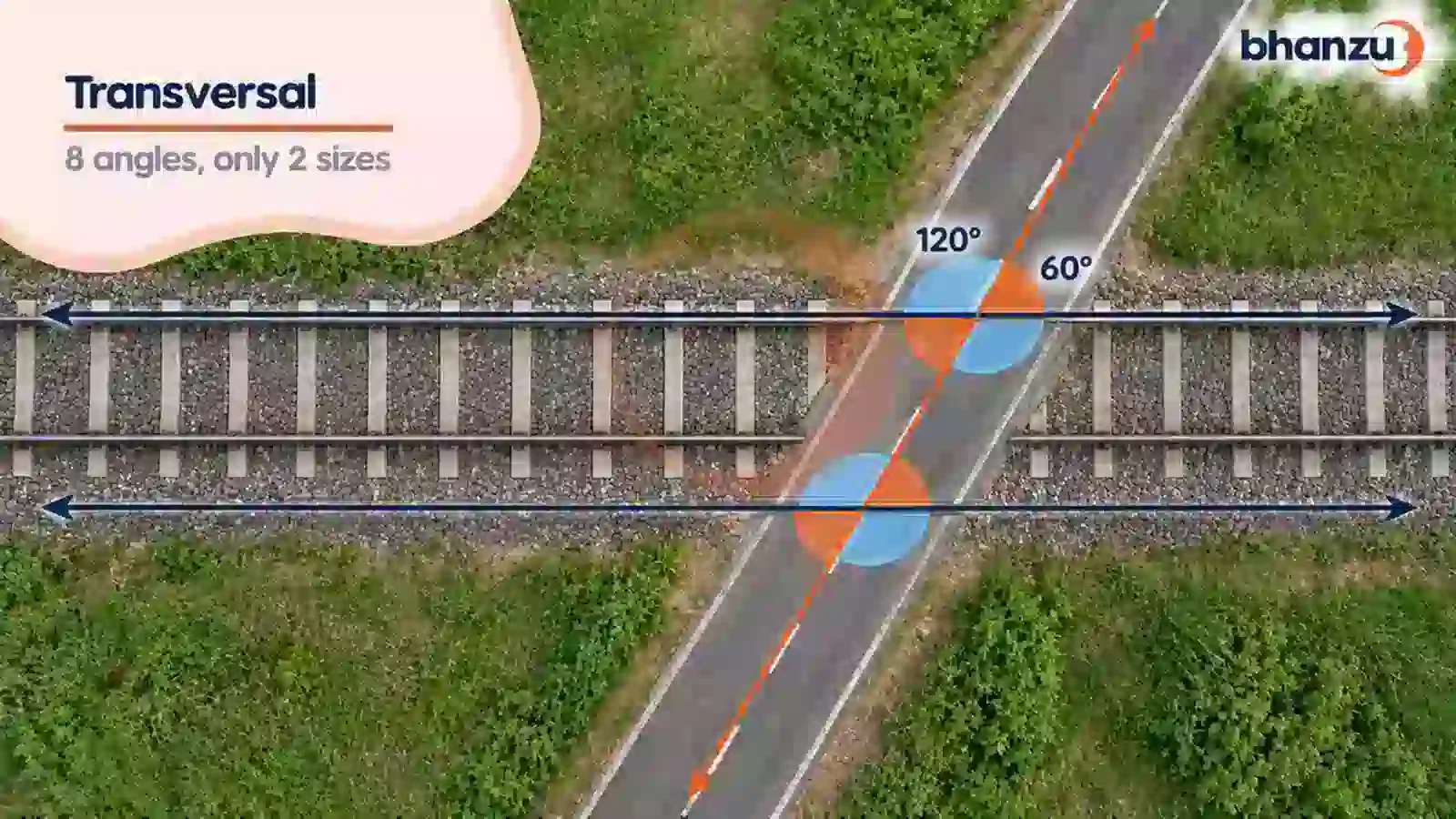
What Is a Transversal - All 8 Angles and Pair Relationships
A transversal is a line that crosses two or more other lines at distinct points. When the transversal crosses two parallel lines, exactly 8 angles form — grouped into four named pair-relationships (corresponding, alternate interior, alternate exterior, co-interior).
Trigonometry
Angles, waves, and circular harmony
Cot 270 Degrees: Value 0, Unit Circle And Proof
Cot 270 degrees = 0 exactly (decimal 0.0000), since cos 270° is 0 and sin 270° is −1. Covers the proof, why tan 270° is undefined instead, calculator quirks and six examples.
Cot 180 Degrees: Why It Is Undefined, Graph, Examples
Cot 180 degrees is undefined, so it has no exact value and no decimal, because sin 180^° = 0. This guide shows why, what happens just either side of 180^°, and the calculator traps.
Cot 5pi/4: Exact Value, Unit Circle, Graph And Examples
Cot 5pi/4 equals exactly 1, or 1.0000 to four decimal places. The angle lies in Quadrant III, where cosine and sine share a sign; six methods, a graph and calculator traps follow.
Parenting
Raising confident, curious young mathematicians
Math Formulas
Every essential formula, explained and derived
Semicircle Formulas — Area, Perimeter, Diameter
The semicircle formulas are: area = 1/2π r², arc length = π r, perimeter = π r + 2r = r(π + 2), and diameter = 2r. This article gives every semicircle formula, why each comes from the full-circle analogue, three worked examples spanning Quick to Stretch, and the single most common mistake students make — forgetting the diameter when computing perimeter.
Mean, Median, Mode Formula - Differences, Use, and Examples
The mean is the average of all values (Σx / n), the median is the middle value when data is ordered, and the mode is the value that appears most often. Use the mean for symmetric data, the median for skewed data with outliers, and the mode for categorical data. For moderately skewed distributions, the three are linked by Karl Pearson's empirical relation: Mode = 3 Median − 2 Mean.
Percentile Formula – Definition, Calculation, Examples
The percentile formula tells you where a value stands in a dataset: P = (number of values below x)/N × 100. This article covers both directions — finding the percentile of a value, and finding the value at a given percentile — with worked examples, the percentile-versus-percentage distinction, and the mistakes that trip students up.
Math Terms
Crystal-clear definitions with worked examples
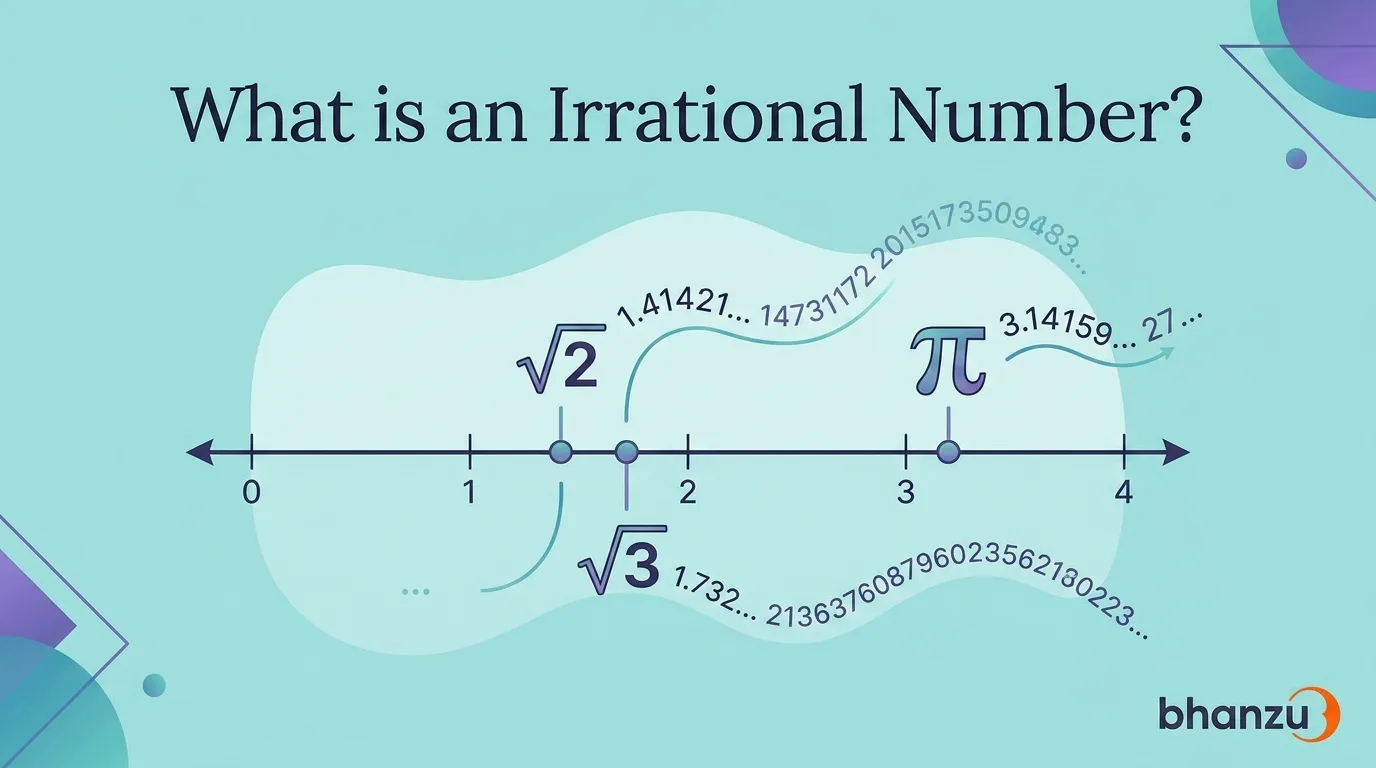
What is an Irrational Number? Examples & Properties
An irrational number is a real number that cannot be written as a ratio of two integers (p/q form), and its decimal expansion never terminates and never repeats. Common examples include √2, π, e, and the golden ratio φ.
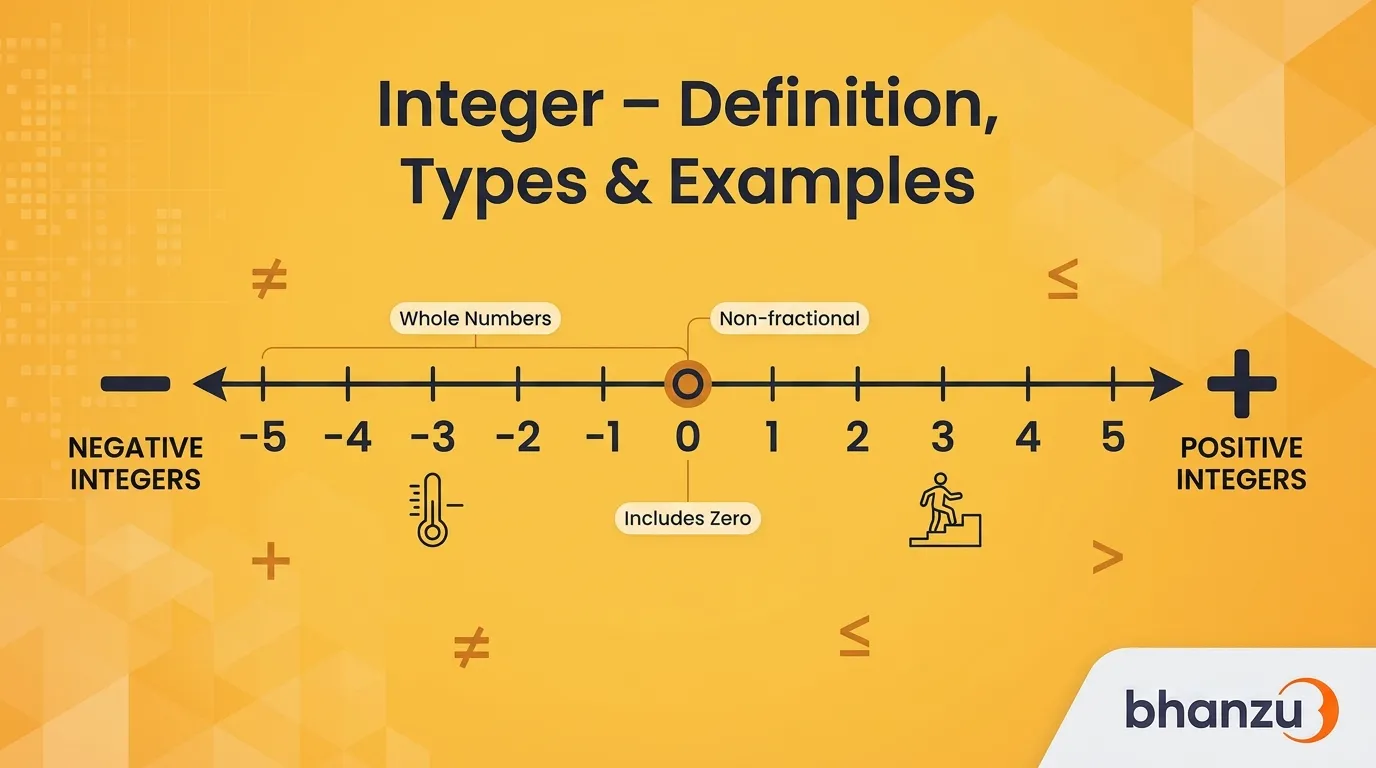
What is An Integer – Types, Examples & Properties
An integer is a whole number - positive, negative, or zero - with no fractional or decimal part, written as the set ℤ = {..., −3, −2, −1, 0, 1, 2, 3, ...}. Integers follow closure, commutative, associative, distributive, identity, and additive inverse properties, and form the foundation for arithmetic, the number line, and all rational numbers.
Radius of a Circle: Definition, Formula, Examples
The radius of a circle is the distance from its centre to any point on the boundary, and it is exactly half the diameter. This article covers the definition, the three formulas for finding the radius, how it ties to the circle equation, six worked examples, and the common mistakes.
Help your child go from fearing math to loving it
Live, personalized classes from instructors trained by the World's Fastest Human Calculator. Join 70,000+ students who learn math the curious way.