Topic

Math Formula

69 articles
math

Percentile Formula – Definition, Calculation, Examples

The percentile formula tells you where a value stands in a dataset: P = (number of values below x)/N × 100. This article covers both directions — finding the percentile of a value, and finding the value at a given percentile — with worked examples, the percentile-versus-percentage distinction, and the mistakes that trip students up.

Math Formula
math

Maths Formulas for Class 10 — Chapter-Wise List

The maths formulas for class 10 span the full board syllabus — real numbers, polynomials, linear and quadratic equations, arithmetic progressions, triangles, coordinate geometry, trigonometry, circles, mensuration, statistics, and probability. This hub lists every formula by chapter, explains where each one comes from, and works one example per cluster so the formulas connect instead of floating loose.

Math Formula
math

nPr Formula — Permutations, Derivation, Examples

The nPr formula counts how many ordered arrangements of r objects you can make from n distinct objects: ⁿP r = (n!)/((n-r)!). This article derives that formula from the counting principle, defines every symbol, shows where order makes a permutation different from a combination, and works six examples from a simple line-up to a locked-position arrangement.

Math Formula
math

Sum of Arithmetic Sequence Formula — Proof, Examples

The sum of arithmetic sequence formula adds the first n terms of an arithmetic progression: Sₙ = n/2(2a + (n-1)d) = n/2(a + l). This article derives both forms by the pairing trick, defines every variable, works through six examples from one-step sums to finding n from a known total, and clears up the mistakes that cost the most marks.

Math Formula
math

(a + b)² Formula — a²+2ab+b², Proof, Examples

The a plus b whole square formula is (a + b)² = a² + 2ab + b² — the square of a binomial expands to the two squares plus twice their product. This article gives the formula, both an algebraic and a geometric (area) proof of where the 2ab comes from, six worked examples, the sharp difference between (a+b)² and a²+b², and the mistakes that cost the most marks.

Math Formula
math

Integration of UV Formula — ∫u dv = uv − ∫v du

The integration of uv formula — integration by parts — is ∫ u,dv = uv - ∫ v,du, the integration counterpart of the product rule for derivatives. This article derives it from the product rule, explains the ILATE rule for choosing u, works six examples in increasing difficulty (including the ∫ ln x,dx trick), and shows the mistakes that turn a one-line problem into an endless loop.

Math Formula
math

Sin Cos Formulas — Full List, Identities, Examples

The sin cos formulas are the family of trigonometric identities relating sine and cosine — the Pythagorean identity, the sum and difference formulas, the double-angle and half-angle identities, and the product-to-sum conversions. This article organises all of them into one map, proves the ones the others are built from, works six examples in degrees and radians, and shows which two formulas you actually have to memorise.

Math Formula
math

Tan2x Formula — 2tanx/(1−tan²x), Proof, Examples

The tan2x formula is tan 2x = (2tan x)/(1 - tan² x) — the double-angle identity for tangent, expressing the tangent of a doubled angle in terms of tan x alone. This article gives the formula, two derivations (angle-addition and the sin 2x / cos 2x route), six worked examples in degrees and radians, the angles where it is undefined, and the mistakes that cost marks.

Math Formula
math

Half Angle Formula — Sin, Cos, Tan, Proof

The half angle formula expresses sin(θ)/2, cos(θ)/2, and tan(θ)/2 using cosθ, with a ± sign fixed by the quadrant the half-angle lands in. This article gives all three identities, the double-angle proof, the quadrant sign rule, six worked examples in degrees and radians (including 15°, 22.5°, and π/12), and the mistakes that cost marks.

Math Formula
math

Diagonal of Square Formula — d = s√2

The diagonal of square formula is d = s√2, where s is the side length — the diagonal of any square is always its side times the square root of 2. This article derives the formula from the Pythagorean theorem, shows how to find the diagonal from the side, the area, or the perimeter, works six examples from a one-step computation to a real-world problem, and clears up the mistakes that cost the most marks.

Math Formula
math

Diameter Formula — d = 2r, d = C/π, d = 2√(A/π)

The diameter formula has three forms depending on what you already know: d = 2r from the radius, d = C/(π) from the circumference, and d = 2√(A/(π)) from the area. This article gives all three, shows where each comes from, works six examples from a one-step doubling to a real-world measurement problem, and clears up the radius-versus-diameter mix-ups that trip most students.

Math Formula
math

Right Triangle Formulas — Sides, Area, Trig Ratios

The right triangle formulas are the Pythagorean theorem a² + b² = c², area = 1/2bh, perimeter = a + b + c, and the three trigonometric ratios sin, cos, tan built from opposite, adjacent, and hypotenuse. This article gives each formula with a short derivation, six worked examples from one-step to multi-step, the 45-45-90 and 30-60-90 special-triangle ratios, and the mistakes that cost the most marks.

Math Formula
math

Euclidean Distance Formula — 2D, 3D & nD

The euclidean distance formula measures the straight-line distance between two points: in 2D it is d = √((x₂ - x₁)² + (y₂ - y₁)²), a direct consequence of the Pythagorean theorem. This article derives it from a right triangle, extends it to 3D and any number of dimensions, works through examples, and flags the mistakes that cost marks.

Math Formula
math

Temperature Conversion Formulas — C, F, K

The temperature conversion formulas translate between Celsius, Fahrenheit, and Kelvin using just two ideas — a degree-size ratio of 9/5 between Fahrenheit and the other two, and a 273.15 shift between Celsius and Kelvin. This article gives all six directional formulas, a master conversion table, derivations, worked examples, and the mistakes that cost marks.

Math Formula
math

Celsius to Kelvin Formula – Steps, Table, Examples

The celsius to kelvin formula is K = °C + 273.15 — add 273.15 to the celsius reading to get the kelvin value. This article gives the one-step formula, worked conversions, a reference table, why kelvin can never go negative, the mistakes to watch for, and where the conversion is used.

Math Formula
math

Kelvin to Celsius Formula — Steps & Examples

The kelvin to celsius formula is °C = K - 273.15 — subtract 273.15 from the kelvin reading and you have the celsius value. This article gives the one-step formula, worked conversions, a reference table from absolute zero to the Sun's surface, the mistakes that trip students up, and where the conversion actually shows up.

Math Formula
math

a³ + b³ Formula — Sum of Cubes, Proof, Examples

The a cube plus b cube formula — a³ + b³ = (a + b)(a² - ab + b²) — factors the sum of two cubes into a binomial times a trinomial. This article gives the formula, its algebraic proof, three worked examples at three difficulty tiers, a side-by-side with a³ - b³, the common factoring slips, and where the identity shows up in engineering and physics.

Math Formula
math

Diagonal of Parallelogram Formula — p = √(x² + y² − 2xy·cos A)

The diagonal of parallelogram formula computes a diagonal's length from the two adjacent sides and the included angle: p = √(x² + y² - 2xy cos A). This article gives the formula, derives it from the law of cosines, gives the companion parallelogram law p² + q² = 2(x² + y²), and walks through three worked examples and the most common student mistake.

Math Formula
math

Lateral Area Formula — All Shapes in One Place

The lateral area formula measures the surface area of a solid's side faces only — excluding the top and bottom bases. This article gives the lateral area formula for every standard solid (cube, cuboid, cylinder, cone, pyramid, hemisphere), the one rule that unifies them (LSA = perimeter × height for prisms), three worked examples across difficulty tiers, and the single mistake that catches most students.

Math Formula
math

Lateral Area of a Cube Formula — LSA = 4a²

The lateral area of a cube formula equals four times the square of the side length: LSA = 4a². This article gives the formula, the one-line derivation, three worked examples, the side-by-side with total surface area TSA = 6a², and the most common mistake — including the top-and-bottom faces when "lateral" means side faces only.

Math Formula
math

Foot to Meters Formula — Convert ft to m (×0.3048)

The foot to meters formula multiplies the length in feet by exactly 0.3048 to give the length in metres. This article gives the formula, the 1959 international yard-and-pound agreement that fixed the conversion factor, three worked examples, the reverse direction (metres → feet), and the common mistake of using 0.3 as a shortcut.

Math Formula
math

UV Differentiation Formula — Product Rule Proof

The uv differentiation formula — also called the product rule — states that d/dx(uv) = u' v + u v'. This article gives the formula, its first-principles proof, three worked examples at three difficulty tiers, the side-by-side trap with the false rule (uv)' = u' v', and the history of how Leibniz wrote down the rule in 1684.

Math Formula
math

cm² to m² Formula — Convert Square cm to Square m

The cm² to m² formula divides the area in square centimetres by 10,000 — because 1 m² equals 10,000 cm². This article gives the formula, the two-line derivation, a conversion table from 1 cm² to 1,000,000 cm², three worked examples, and the single mistake that catches almost every student on this conversion.

Math Formula
math

Maths Formulas for Class 7 — Chapter-Wise List

The maths formulas for class 7 span ten core chapters — integers, fractions, rational numbers, simple equations, lines and angles, triangles, comparing quantities, perimeter and area, algebraic expressions, and exponents. This hub article lists every formula by chapter, explains where each one comes from, and walks through three worked examples that tie the most-tested formulas together.

Math Formula
math

A Union B Formula — A∪B, Set Theory, Examples

The A union B formula comes in two forms: as a set, A ∪ B = x : x ∈ A or x ∈ B; and as a count, n(A ∪ B) = n(A) + n(B) - n(A ∩ B). This article gives both, explains why the count subtracts the intersection (the inclusion-exclusion principle), walks through three worked examples spanning Quick to Stretch, covers De Morgan's law for the complement, and lists the most common slips.

Math Formula
math

Dividend Divisor Quotient Remainder Formula

The dividend divisor quotient remainder formula — known formally as the Division Algorithm — says Dividend = Divisor × Quotient + Remainder, with 0 ≤ Remainder < Divisor. This article gives the formula, the four reverse formulas (find each term given the other three), three worked examples spanning Quick to Stretch, and the most common slips students make on division-with-remainder problems.

Math Formula
math

Simpson's Rule Formula — Numerical Integration Steps

The Simpson's rule formula approximates a definite integral by fitting parabolas to consecutive pairs of strips: ∫ₐ b f(x),dx ≈ h/3[f(x₀) + 4f(x₁) + 2f(x₂) + 4f(x₃) + … + f(xₙ)] where n is even and h = (b-a)/n. This article gives the formula, its derivation from a quadratic fit, three worked examples, the error bound, and the most common slips students make.

Math Formula
math

Semicircle Formulas — Area, Perimeter, Diameter

The semicircle formulas are: area = 1/2π r², arc length = π r, perimeter = π r + 2r = r(π + 2), and diameter = 2r. This article gives every semicircle formula, why each comes from the full-circle analogue, three worked examples spanning Quick to Stretch, and the single most common mistake students make — forgetting the diameter when computing perimeter.

Math Formula
math

Sum of Natural Numbers Formula — Proof & Examples

The sum of natural numbers formula is ∑ k=1 ⁿ k = (n(n+1))/2 — the cleanest closed-form result in elementary mathematics, discovered by an eight-year-old in his school classroom. This article gives the formula, two proofs (pairing and induction), three worked examples spanning Quick to Stretch, the related sum-of-squares and sum-of-cubes identities, and the most common slip-ups.

Math Formula
math

a² + b² Formula — Proof, Expansion, Examples

The a square plus b square formula says a² + b² = (a + b)² - 2ab or equivalently a² + b² = (a - b)² + 2ab. This article gives the formula, both proofs, three worked examples spanning Quick to Stretch, the direct link to the Pythagorean theorem, and the common mistakes students make when handling sums of two squares.

Math Formula
math

Miles to Km Formula — Conversion, Steps, Examples

The miles to km formula is km = miles × 1.609344 — one mile equals exactly 1.609344 kilometres by international definition. This article gives the formula, where the factor comes from, three worked examples spanning Quick to Stretch, a conversion table, and the common slips students make when converting in both directions.

Math Formula
math

a³ - b³ Formula — Difference of Cubes, Proof

The a cube minus b cube formula says a³ - b³ = (a - b)(a² + ab + b²) — a difference of two cubes factors into a binomial and a trinomial. This article gives the formula, its expansion proof, three worked examples spanning Quick to Stretch, the sign-contrast with the sum-of-cubes identity, common slip-ups, and where the identity appears in volume problems and physics.

Math Formula
math

a²+b²+c² Formula — Expansion, Proof, Examples

The a²+b²+c² formula says a² + b² + c² = (a + b + c)² - 2(ab + bc + ca) — it rewrites a sum of three squares using the square of their sum and the sum of their pairwise products. This article gives the formula, its two-line proof, three worked examples at increasing difficulty, the connection to the Pythagorean theorem in 3D, and the most common slip-ups.

Math Formula
math

Kelvin to Fahrenheit Formula — Steps, Examples

The kelvin to fahrenheit formula is °F = (K - 273.15) × 9/5 + 32 — two steps: shift kelvin to celsius by subtracting 273.15, then scale-and-offset celsius to fahrenheit. This article gives the formula, its derivation from the two scale definitions, three worked examples, a quick-reference conversion table, and the most common mistakes — including the one that helped crash a Mars probe.

Math Formula
math

Sum of Even Numbers Formula — Proof & Examples

The sum of even numbers formula says the first n positive even integers — 2 + 4 + 6 + … + 2n — total n(n+1). This article gives the formula, two proofs (one algebraic, one visual), three worked examples spanning Quick to Stretch difficulty, the contrast with the sum of odd integers, and the most common slip-ups.

Math Formula
math

Integers Formula — Rules, Properties, Examples

The integers formula is the set of sign rules that govern arithmetic on Z = …, -2, -1, 0, 1, 2, … — same signs add, opposite signs subtract, like signs multiply to positive, unlike signs multiply to negative. This article covers the rules, the closure and associative properties, three worked examples at three difficulty tiers, the Gauss sum-of-first-n-integers identity, and the most common sign slips.

Math Formula
math

Interest Formula – Simple & Compound Interest Explained

This article derives and applies both the simple and compound interest formula, walking through every variable, showing worked examples, and explaining when each formula applies in real financial contexts. You will leave able to calculate interest on savings, loans, and investments — and to spot which formula a problem is actually asking for.

Math Formula
math

Circle Area Formulas – Class 10 Complete Guide

This reference guide collects every circle area formula you need for Class 10 — full circle, semicircle, sector, ring, and segment — with derivations, variable keys, and fully worked examples for each. You will have a single reliable source to consult before any exam that tests circular mensuration.

Math Formula
math

Correlation Coefficient Formula & Calculation

This article explains the correlation coefficient formula — Pearson's r — from its definition through the step-by-step calculation, with a worked numerical example and guidance on interpreting the result. You will understand what r measures, how to compute it by hand, and how to avoid the most common misreading of correlation as causation.

Math Formula
math

Time Formula – Speed, Distance & Time Explained

This article explains the time formula — Time = Distance ÷ Speed — alongside its speed and distance variants, with a worked-example bank covering unit conversions, average speed, and multi-stage journey problems. You will leave confident applying all three forms of the speed-distance-time relationship in any exam or real-life scenario.

Math Formula
math

Profit Formula – How to Calculate Profit Easily

This article explains the profit formula — Profit = Selling Price − Cost Price — alongside gross profit, net profit, and profit percentage, with clear worked examples for each variation. You will learn how to calculate profit easily for both straightforward transactions and multi-cost business scenarios.

Math Formula
math

Perimeter of a Circle Formula – Circumference Guide

The perimeter of a circle formula (circumference) explained — derivation, the role of π, variable key, worked examples, and the difference between diameter and radius forms.

Math Formula
math

Sin 2x Formula – Derivation, Values & Examples

This article derives the sin 2x formula — sin 2x = 2 sin x cos x — from the angle addition identity, tabulates key values, and works through exam-style problems that use the double-angle identity to simplify expressions and solve equations. You will understand where the formula comes from and when to apply it.

Math Formula
math

Profit and Loss Formula – Calculation & Examples

This guide covers the profit and loss formula in full — profit, loss, profit percentage, loss percentage, cost price, and selling price — with step-by-step worked examples drawn from realistic retail and exam contexts. By the end you will be able to calculate any profit-and-loss problem accurately and identify which formula a question is testing.

Math Formula
math

Cube Formula – Volume, Surface Area & Diagonal

This guide covers every cube formula you need — volume, total surface area, lateral surface area, face diagonal, and space diagonal — each derived from first principles and illustrated with a worked example. After reading you will be able to solve any standard exam question on cubes without looking up a formula sheet.

Math Formula
math

Celsius to Fahrenheit Formula – Quick Conversion

Math Formula
math

Work Formula – Physics & Math Definition

Math Formula
math

Average Speed Formula: Calculation & Examples

Average speed formula is not the simple average of two speeds, except when each speed is travelled for the same time. For two equal distances at speeds v₁ and v₂, average speed is the harmonic mean: (2 v₁ v₂)/(v₁ + v₂).

Math Formula
Average Speed Formula: Calculation & Examples
math

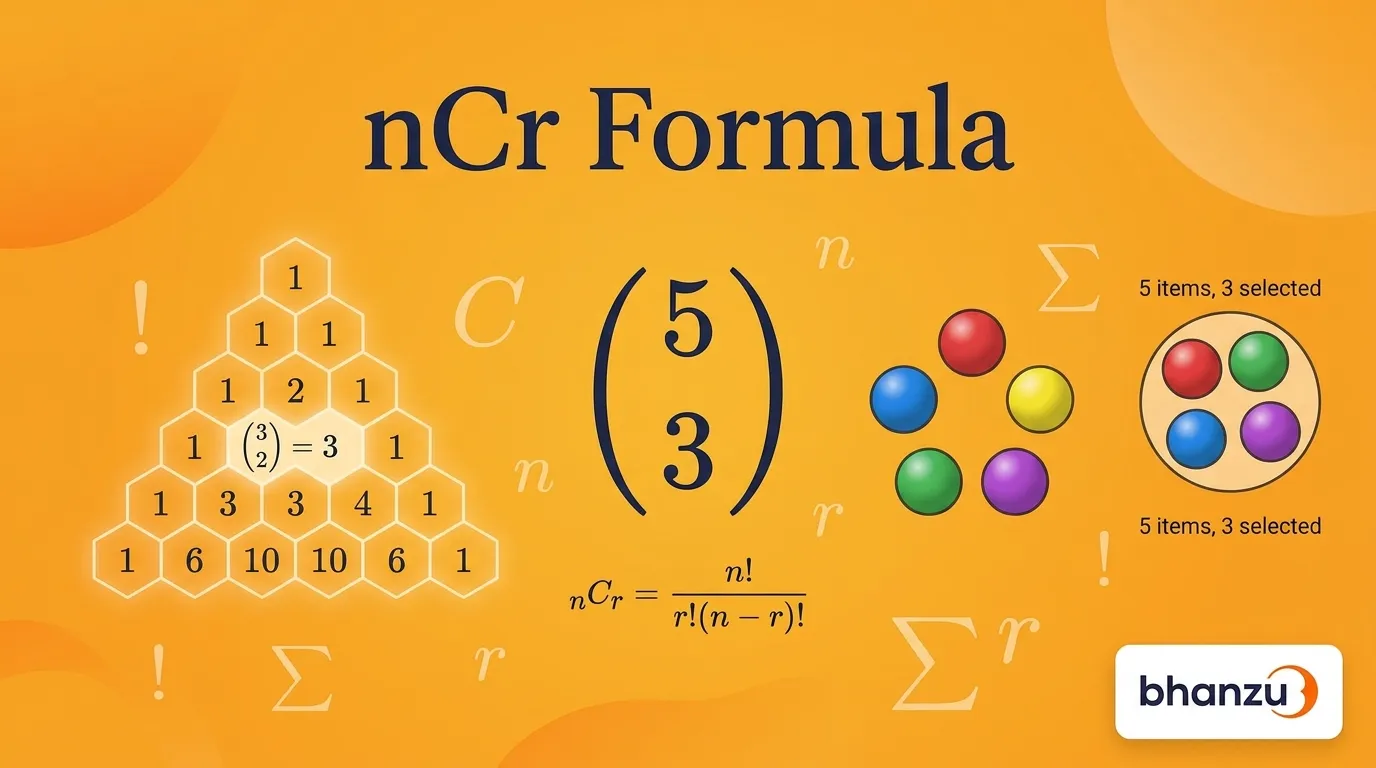
nCr Formula – Combinations, Proof & Examples

The nCr formula gives the number of ways to choose r items from n when order does not matter. Use it for committees, lottery tickets, card hands, lineup picks - any pick where rearranging the chosen items does not create a new pick.

Math Formula
nCr Formula – Combinations, Proof & Examples
math

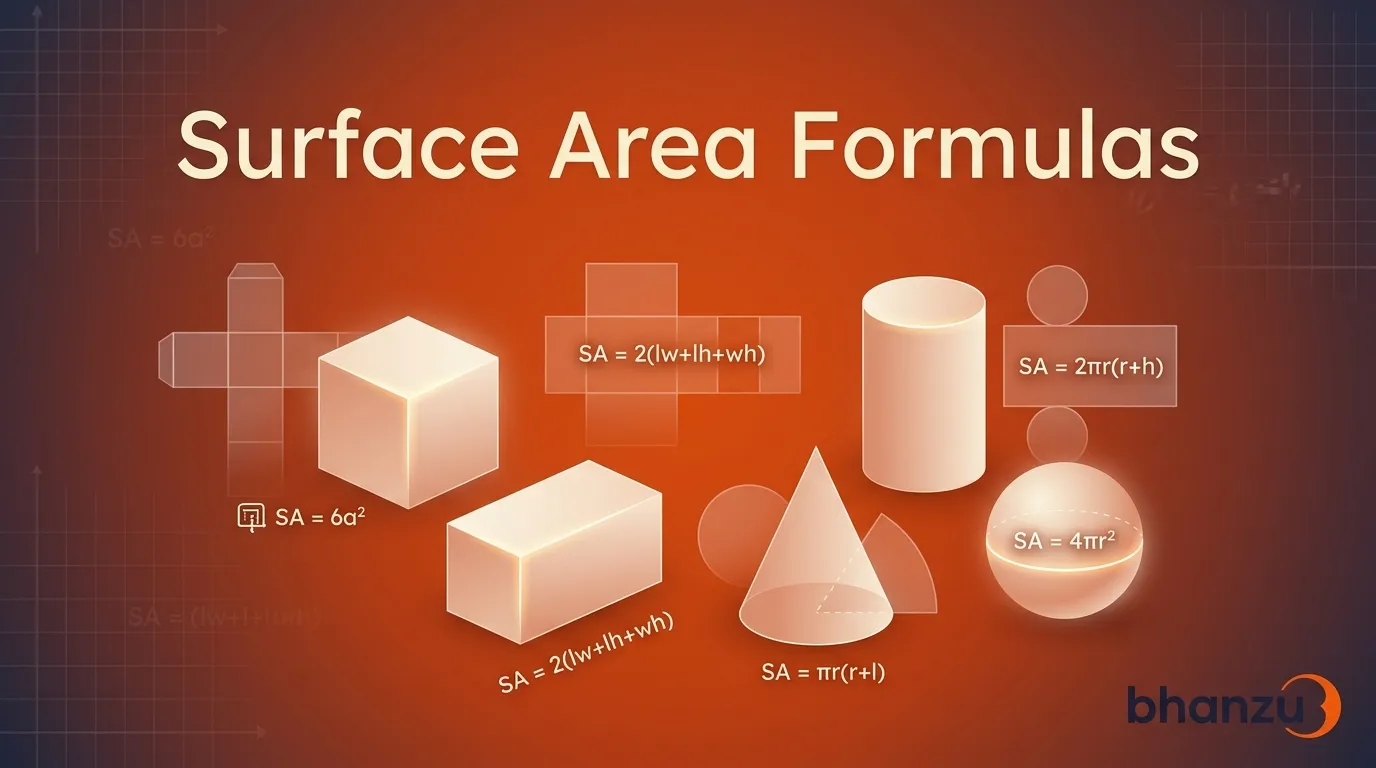
Surface Area Formulas: All 3D Shapes Covered

Surface area is the total area covering the outside of a 3D shape, measured in square units. Each 3D shape has its own formula, but they all come from the same idea - unfold the shape into flat pieces, find each piece's area, and add them up.

Math Formula
Surface Area Formulas: All 3D Shapes Covered
math

Frequency Formula: Definition, Units, and Examples

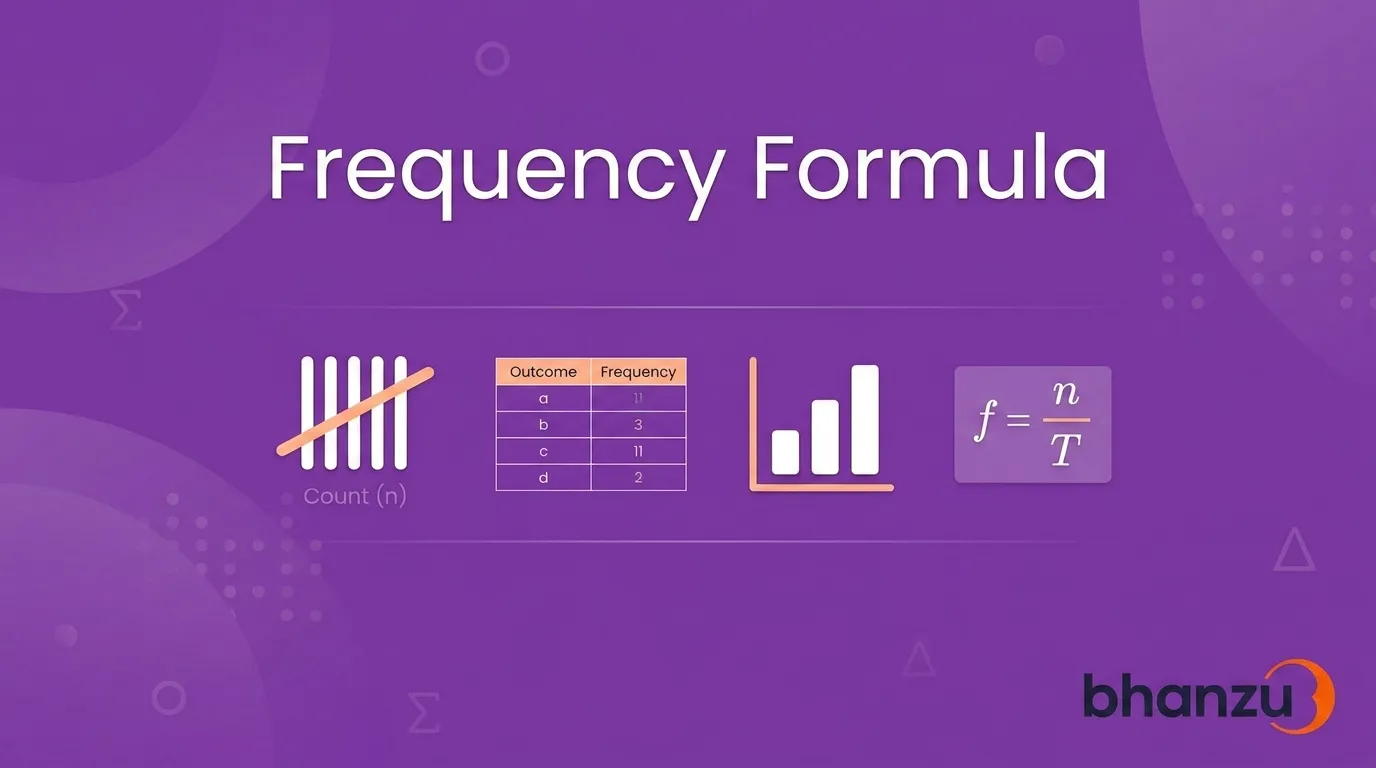
*Frequency** is the number of complete cycles that happen in one unit of time. **The formula:** f = 1/T, where T is the time for one cycle (the period). **SI unit:** hertz (Hz). One hertz = one cycle per second.

Math Formula
Frequency Formula: Definition, Units, and Examples
math

Derivative Formula: Rules, List & Examples

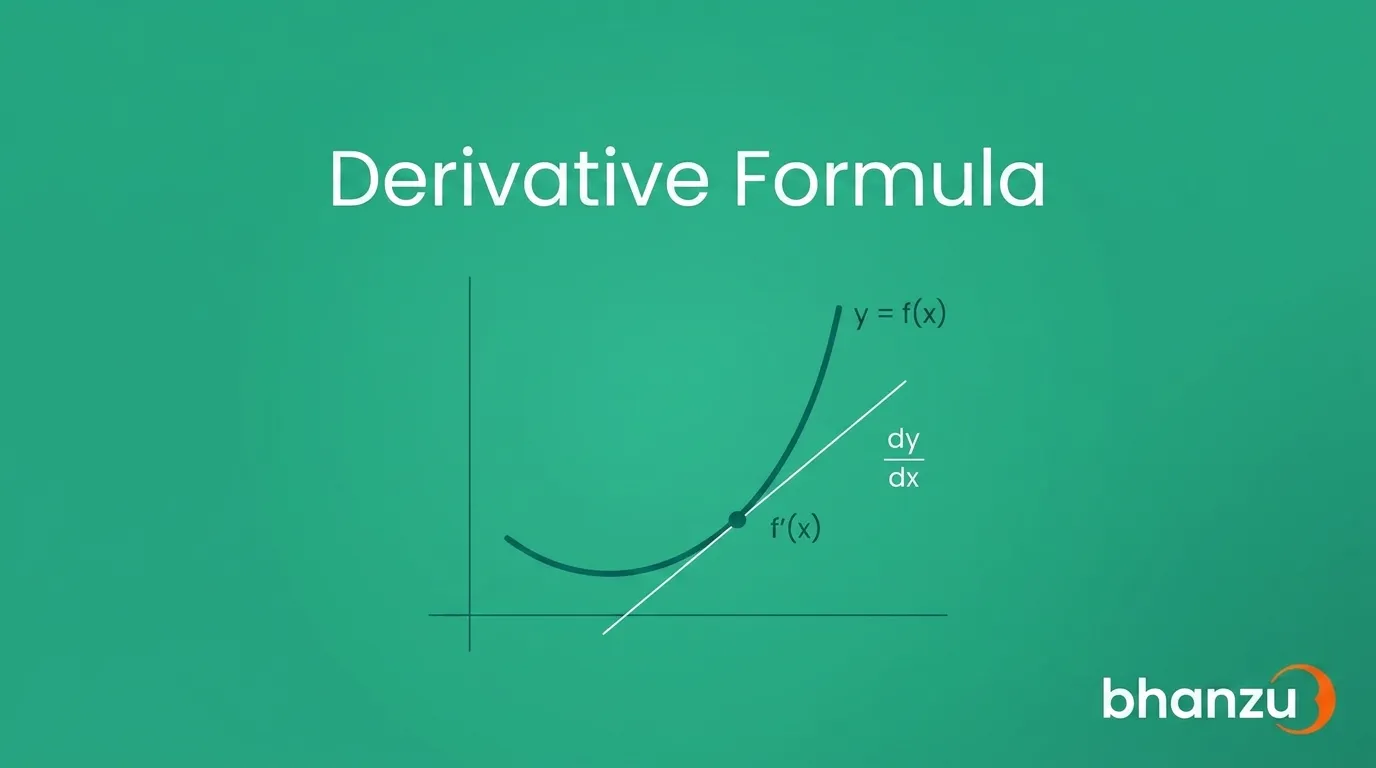
The **derivative formula**, f'(x) = lim h → 0 (f(x+h) - f(x))/h, measures a function's instantaneous rate of change at a single point, applied through standard rules — power, sum, product, quotient, and chain — together with the derivatives of trig, exponential, logarithmic, and inverse trig functions, with the chain rule and the product rule causing most student errors.

Math Formula
Derivative Formula: Rules, List & Examples
math

Tangent Formulas: All Tan Identities & Values

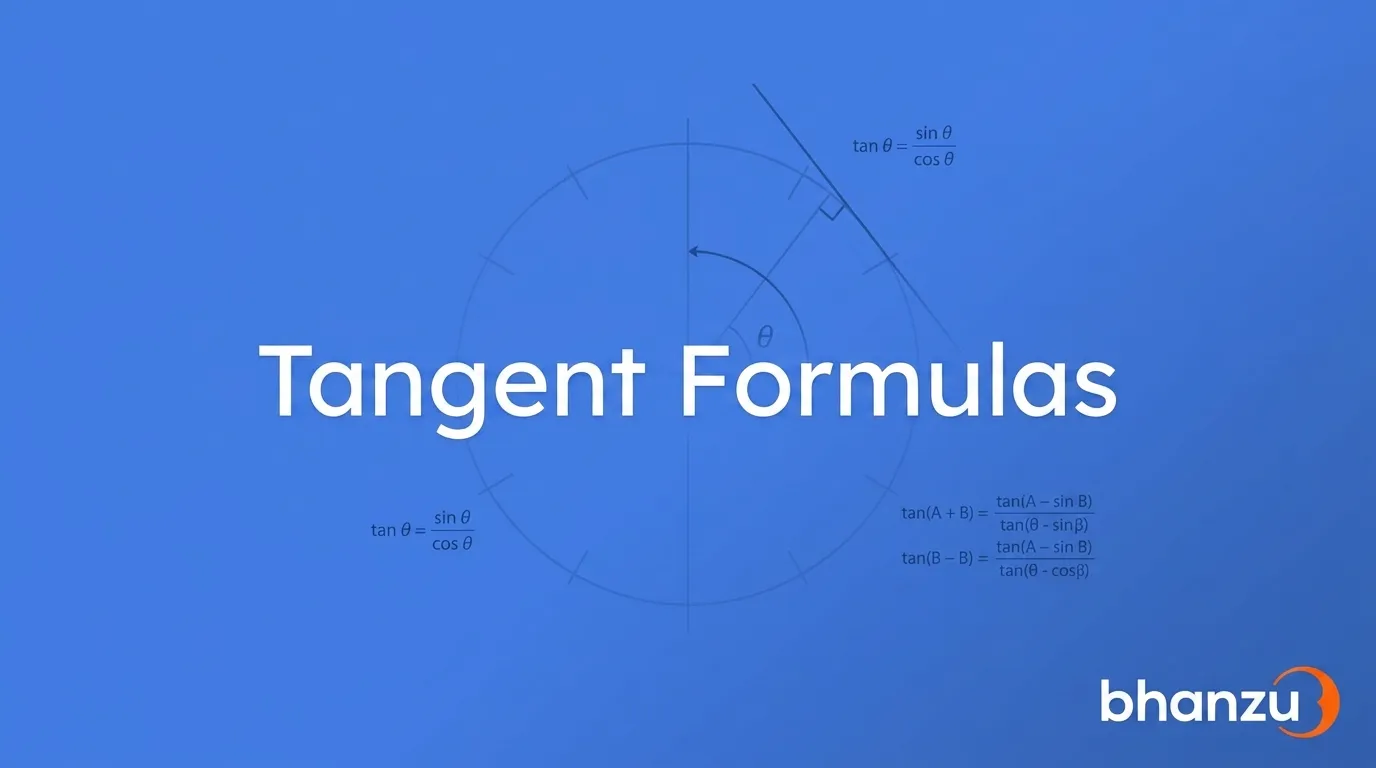
The tangent formula defines tan(θ) as the ratio of the opposite side to the adjacent side in a right triangle, equivalently sin(θ) / cos(θ) on the unit circle. Every other tangent identity — sum, double, half, reciprocal, Pythagorean — is built from that single ratio with a small amount of algebra.

Math Formula
Tangent Formulas: All Tan Identities & Values
math

Sin Cos Tan Formula: Ratios, Values & Examples

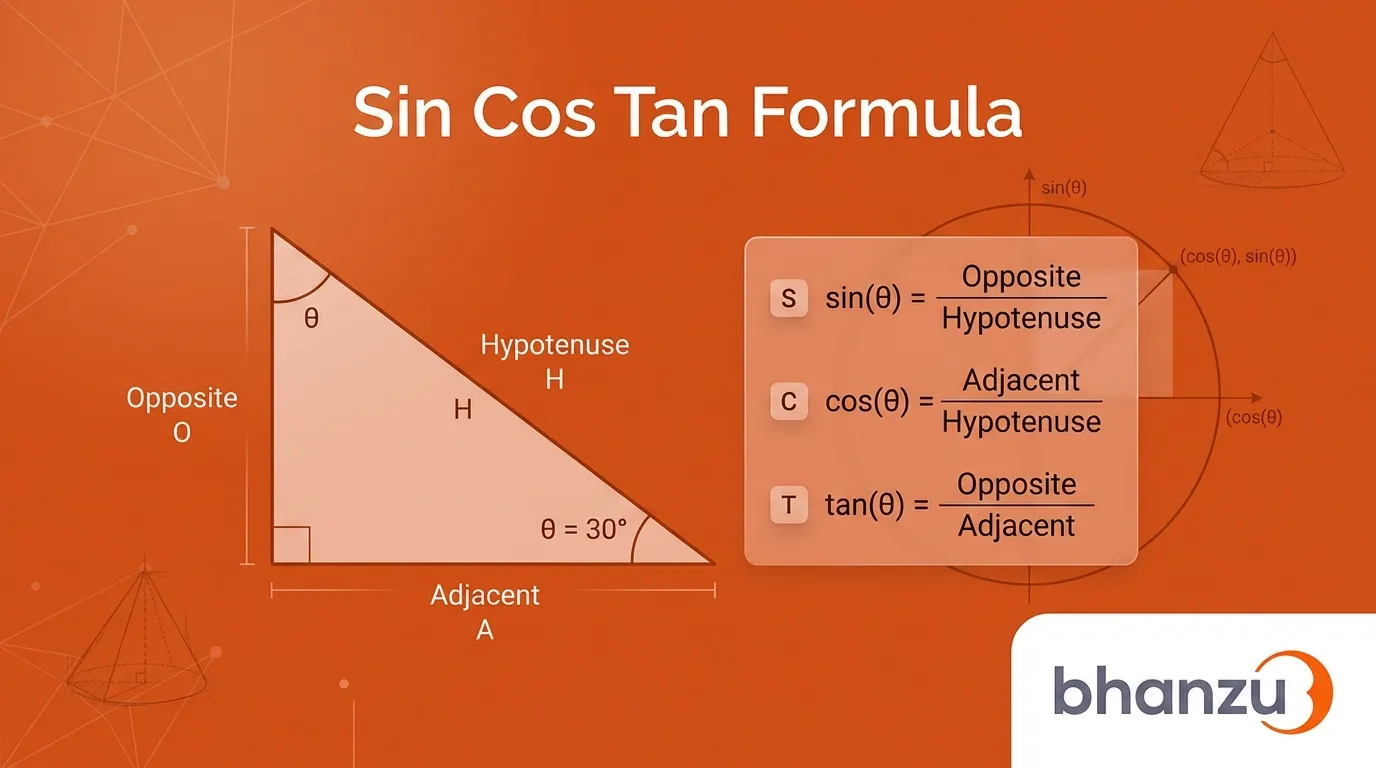
The sin cos tan formula describes three ratios of sides in a right triangle, one for each acute angle. The mnemonic SOH-CAH-TOA captures all three. Standard values at 0°, 30°, 45°, 60°, and 90° are memorised once and reused everywhere - from solving triangles to satellite navigation to music synthesis.

Math Formula
Sin Cos Tan Formula: Ratios, Values & Examples
math

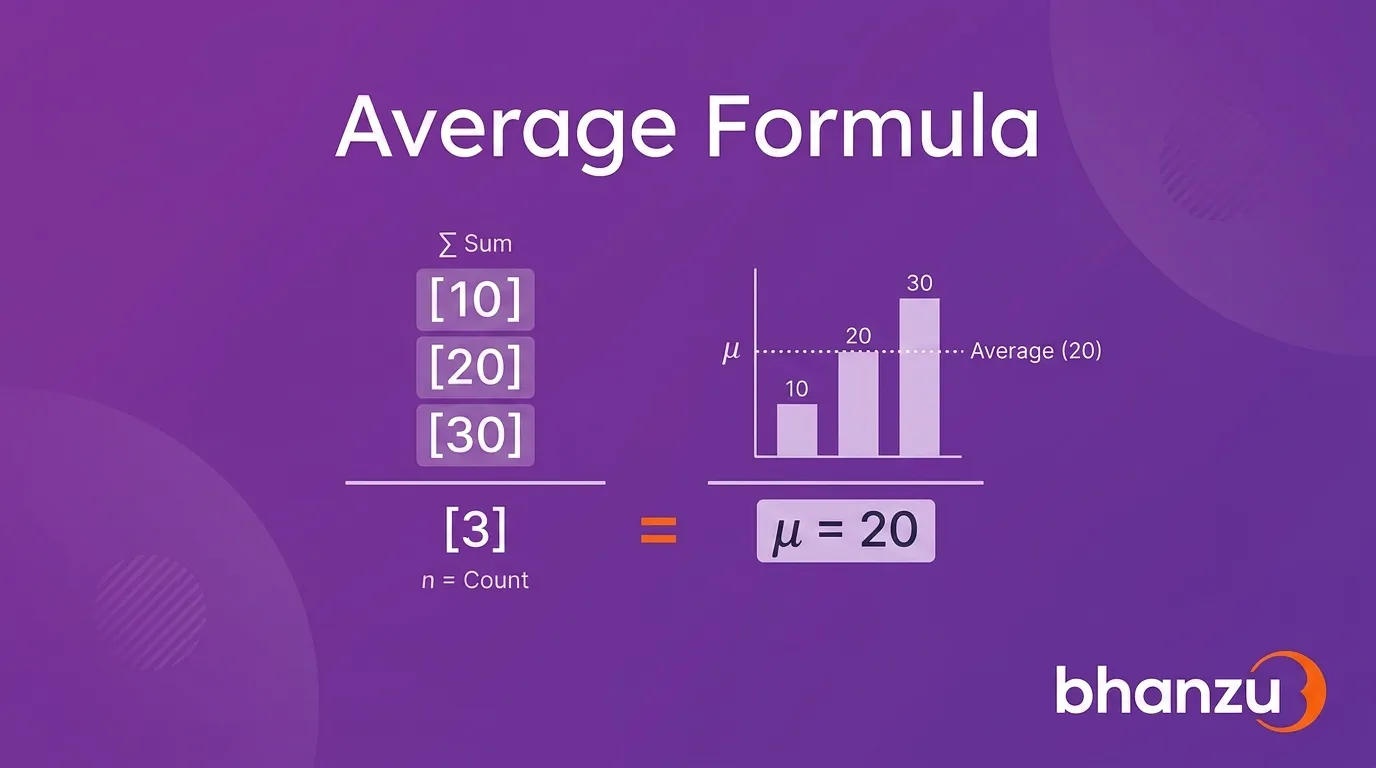
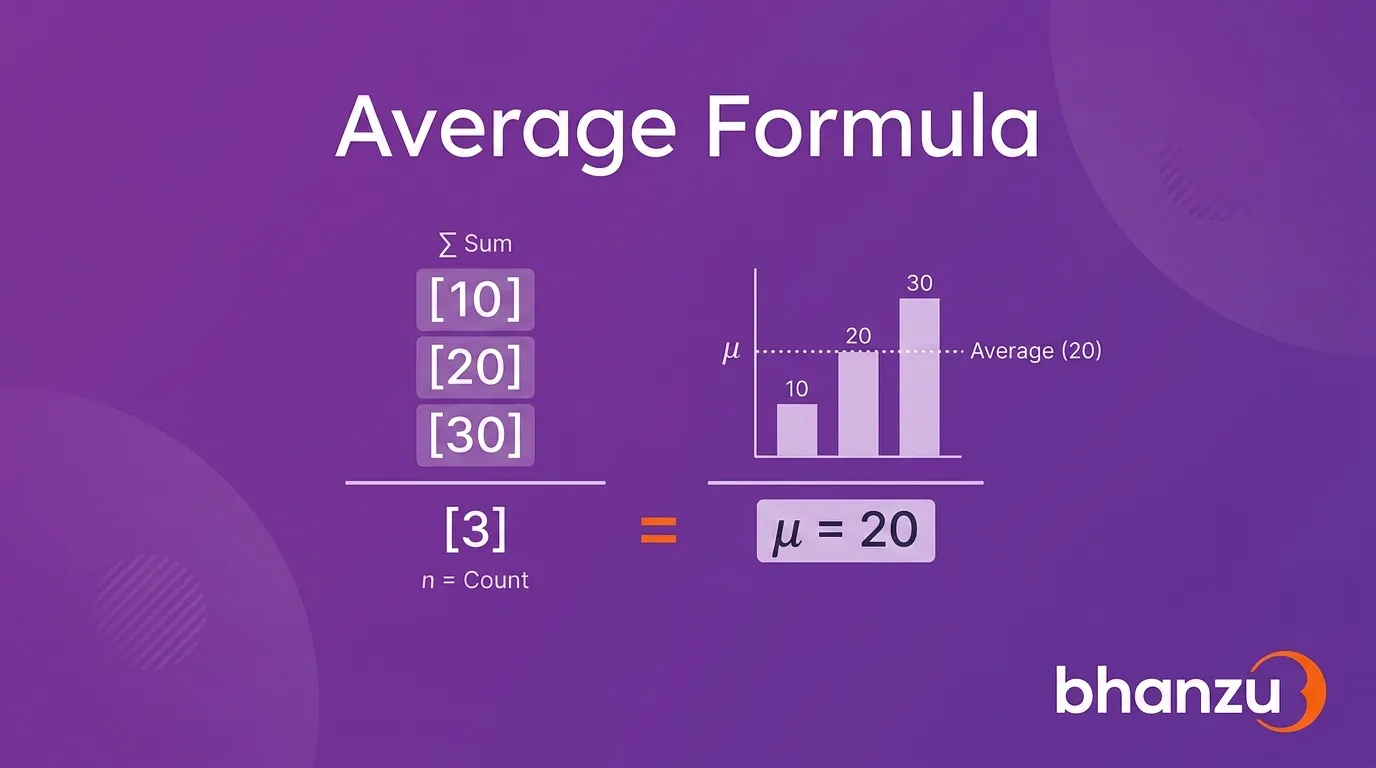
Average Formula: Mean Calculation & Examples

The average formula is Average = Sum of all values ÷ Number of values, which collapses a list of numbers into one representative number called the mean. Add every value, divide by how many values you added, and the result is the average.

Math Formula
Average Formula: Mean Calculation & Examples
math

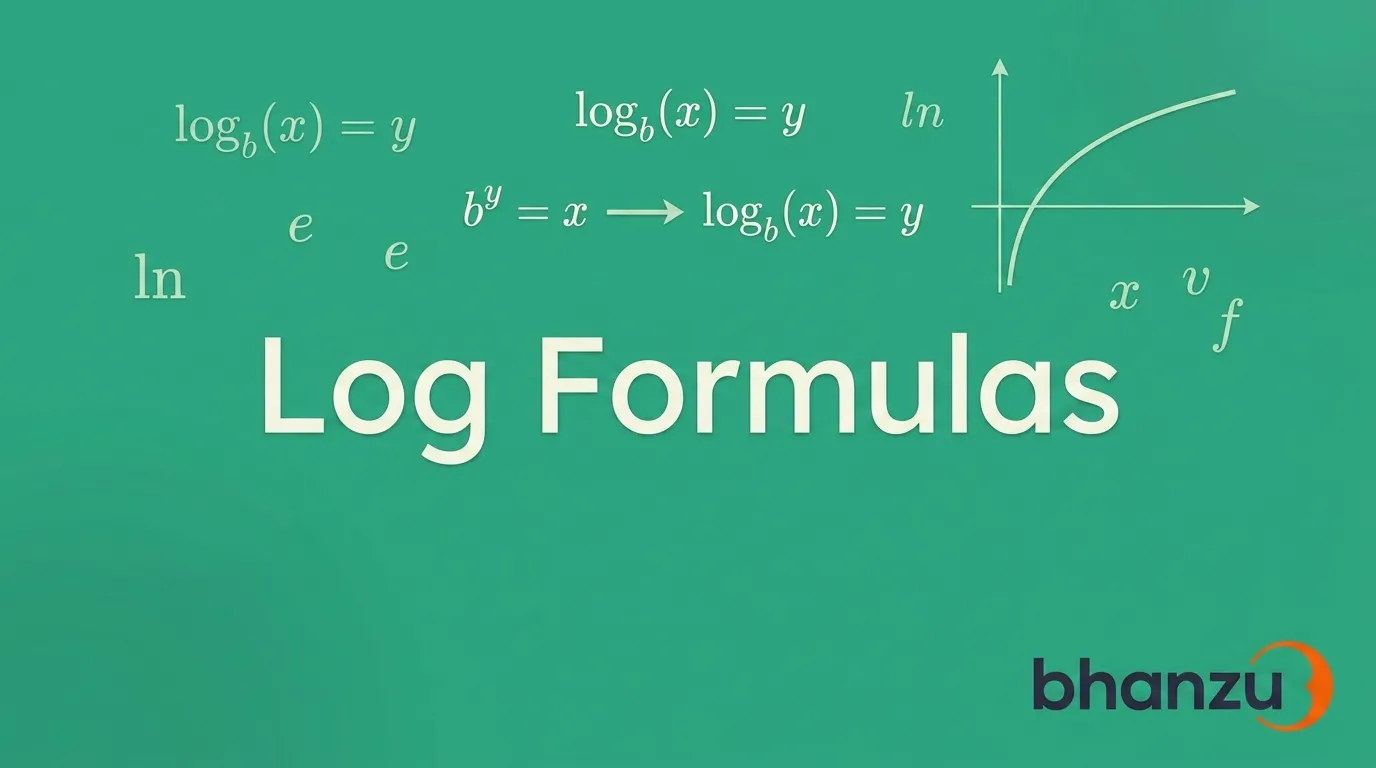
Log Formulas: All Logarithm Rules & Examples

A logarithm answers one question: what power do I raise the base to in order to get this number? Every log formula on this page comes from rewriting that question.

Math Formula
Log Formulas: All Logarithm Rules & Examples
math

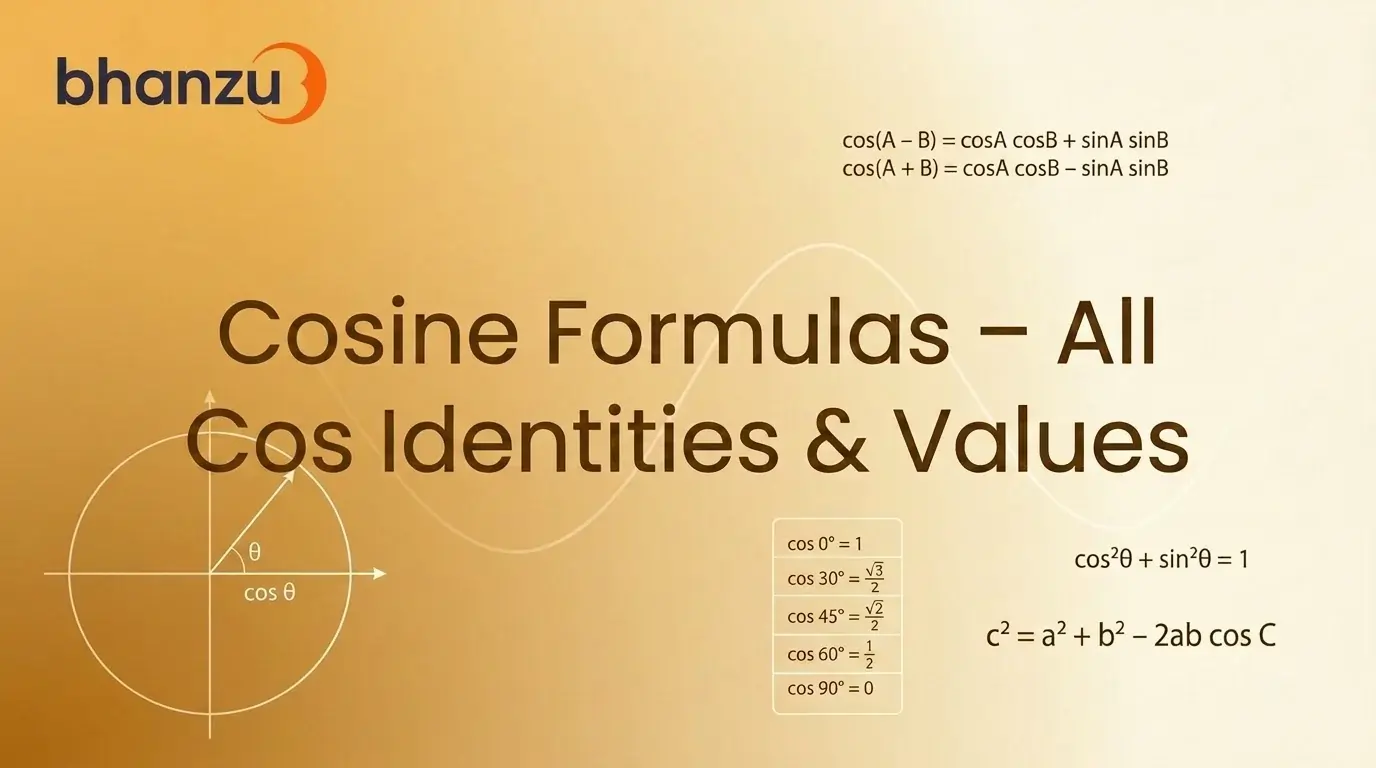
Cosine Formulas: All Cos Identities & Values

Cosine formulas come from one definition (cosθ = adjacent/hypotenuse) and one parent identity (cos(A+B) = cos A cos B - sin A sin B). Every other cosine formula — difference, double angle, half angle, product-to-sum, law of cosines — is one substitution away.

Math Formula
Cosine Formulas: All Cos Identities & Values
math

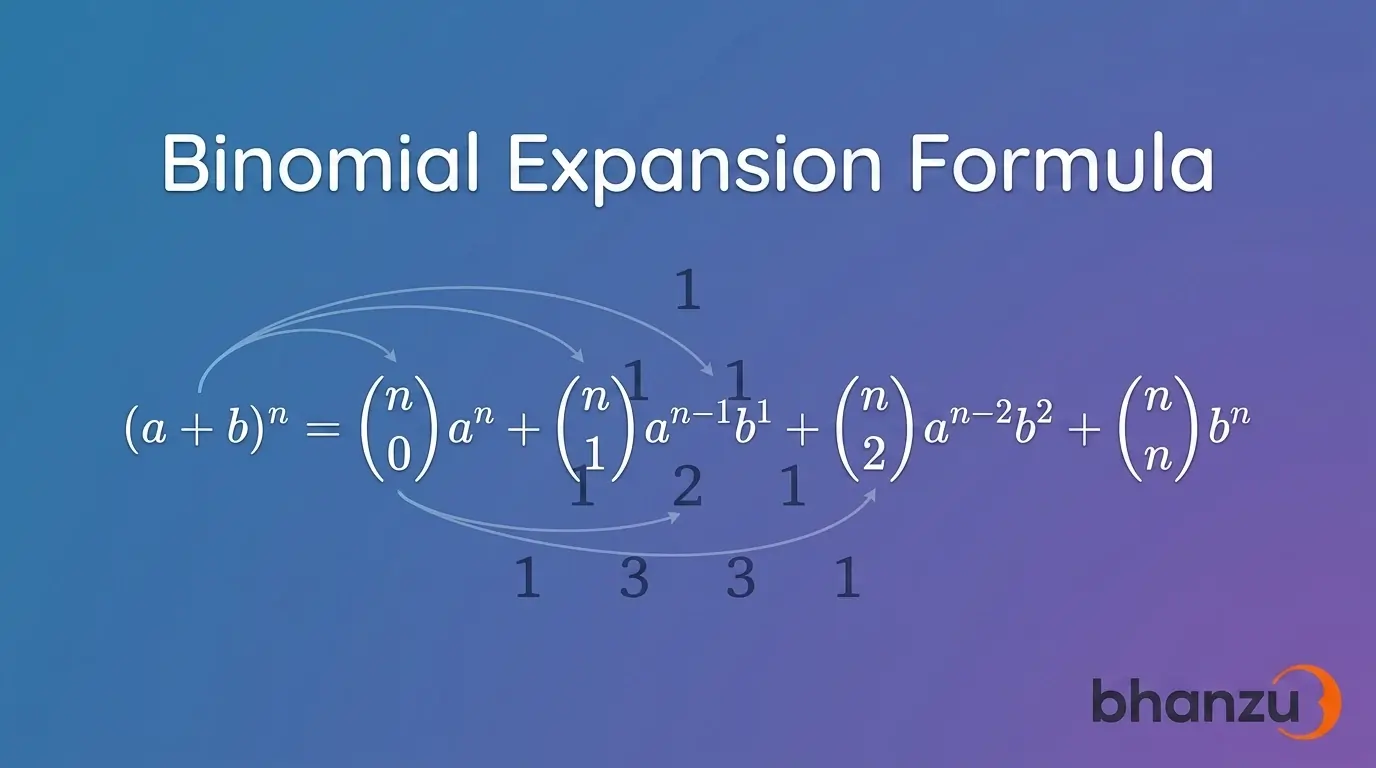
Binomial Expansion Formula: Theorem, Examples & Solved Problems

The binomial expansion formula gives the expanded form of (x + y)ⁿ as a sum of n + 1 terms involving binomial coefficients. The general formula is (x + y)ⁿ = Σ ⁿCₖ xⁿ⁻ᵏ yᵏ, where ⁿCₖ = n! / [k!(n − k)!]. It is used to expand any binomial raised to a positive integer, fractional, or negative power without multiplying the binomial by itself n times.

Math Formula
Binomial Expansion Formula: Theorem, Examples & Solved Problems
math

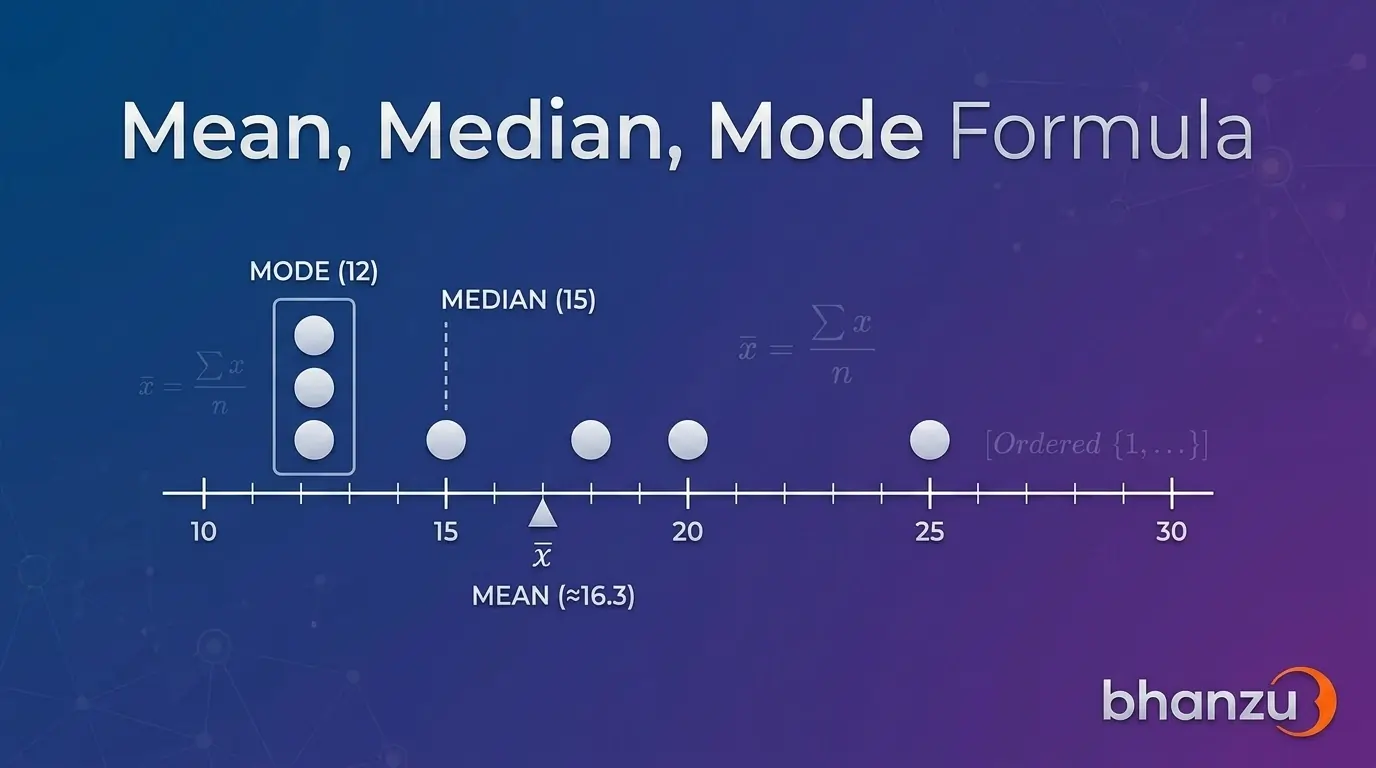
Mean, Median, Mode Formula - Differences, Use, and Examples

The mean is the average of all values (Σx / n), the median is the middle value when data is ordered, and the mode is the value that appears most often. Use the mean for symmetric data, the median for skewed data with outliers, and the mode for categorical data. For moderately skewed distributions, the three are linked by Karl Pearson's empirical relation: Mode = 3 Median − 2 Mean.

Math Formula
Mean, Median, Mode Formula - Differences, Use, and Examples
math

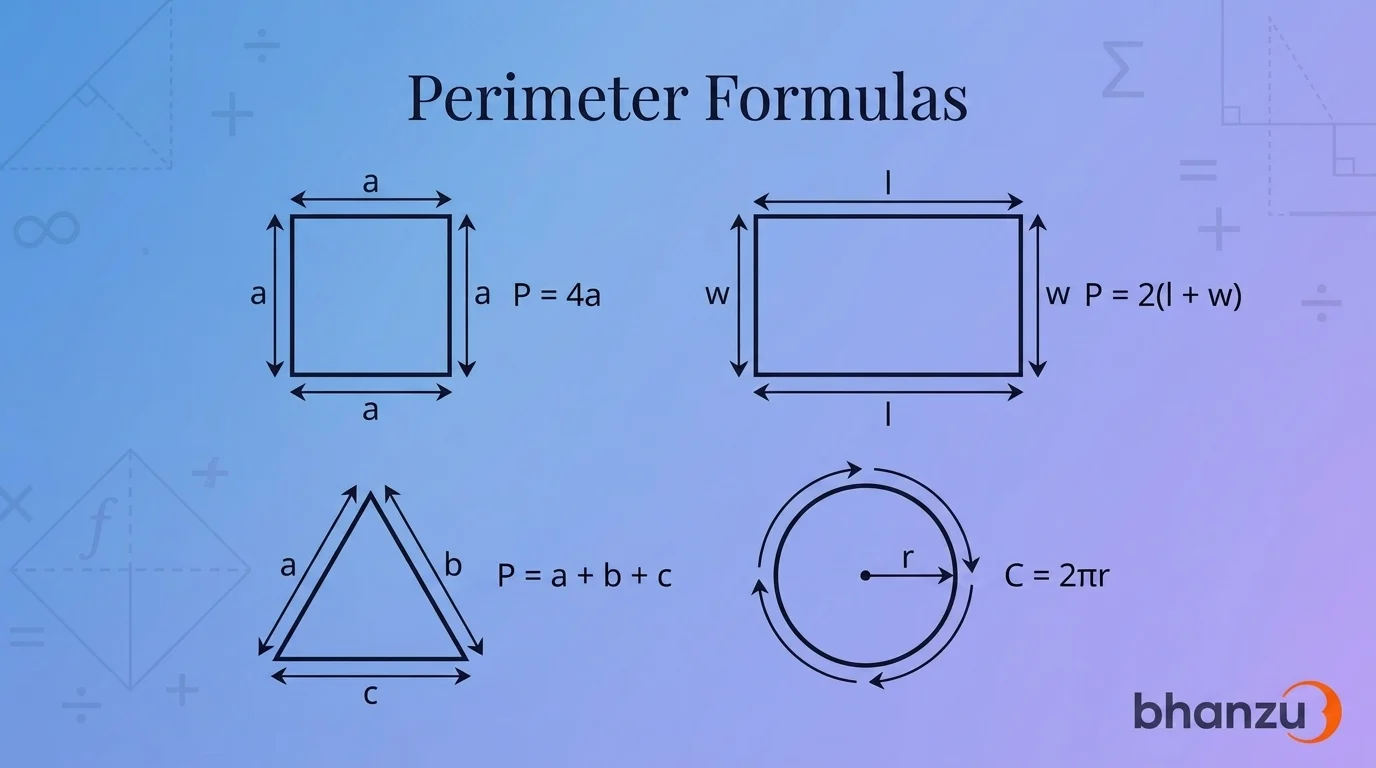
Perimeter Formulas: All Shapes with Variables and Worked Examples

The perimeter of a 2D shape is the total length of its boundary — found by adding the lengths of all its sides. Common shortcuts include P = 4a (square), P = 2(l + w) (rectangle), and C = 2πr (circle).

Math Formula
Perimeter Formulas: All Shapes with Variables and Worked Examples
math

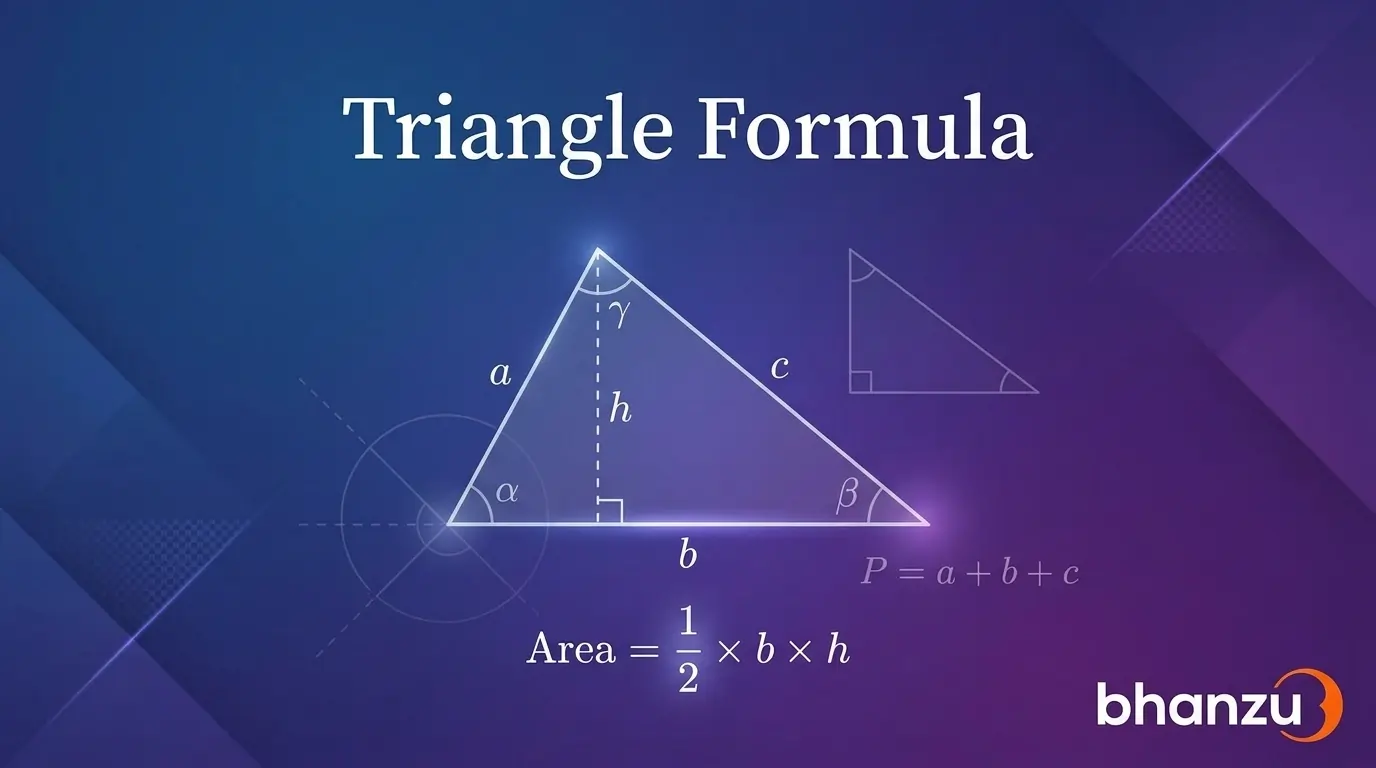
Triangle Formula: Area, Perimeter, and All Types Explained

The most common triangle formulas are A = ½ × base × height for area and P = a + b + c for perimeter. Other formulas - Heron's formula, the trigonometric area formula, and per-type formulas for equilateral, isosceles, and right triangles - apply depending on what information you have. The decision table further down shows which formula to use in which case.

Math Formula
Triangle Formula: Area, Perimeter, and All Types Explained
math

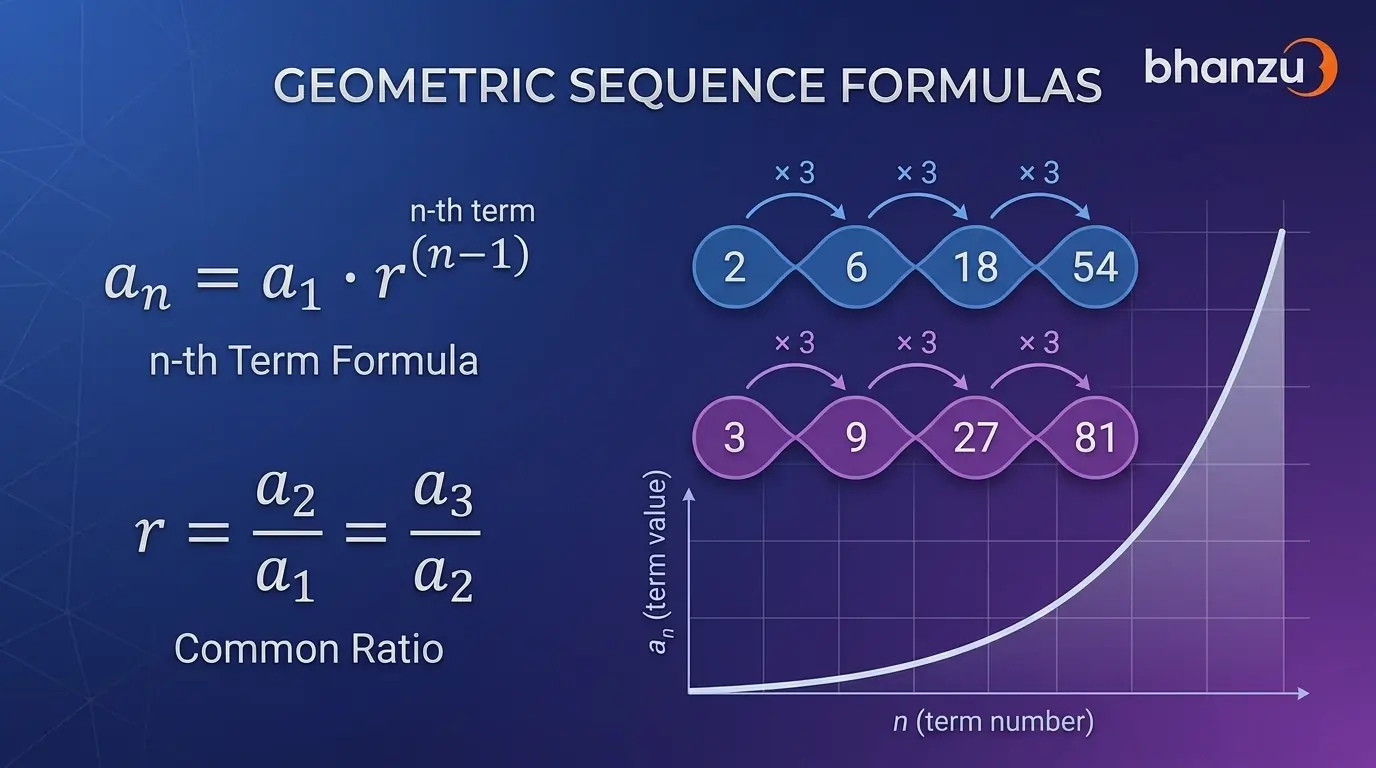
Geometric Sequence Formulas: nth Term, Sum, and Examples

The geometric sequence formulas cover three things: the nth term aₙ = a · r^(n−1), the sum of the first n terms Sₙ = a(1 − rⁿ)/(1 − r) for r ≠ 1, and the infinite sum S∞ = a/(1 − r) when |r| < 1. The first formula finds any single term; the other two add up multiple terms.

Math Formula
Geometric Sequence Formulas: nth Term, Sum, and Examples
math

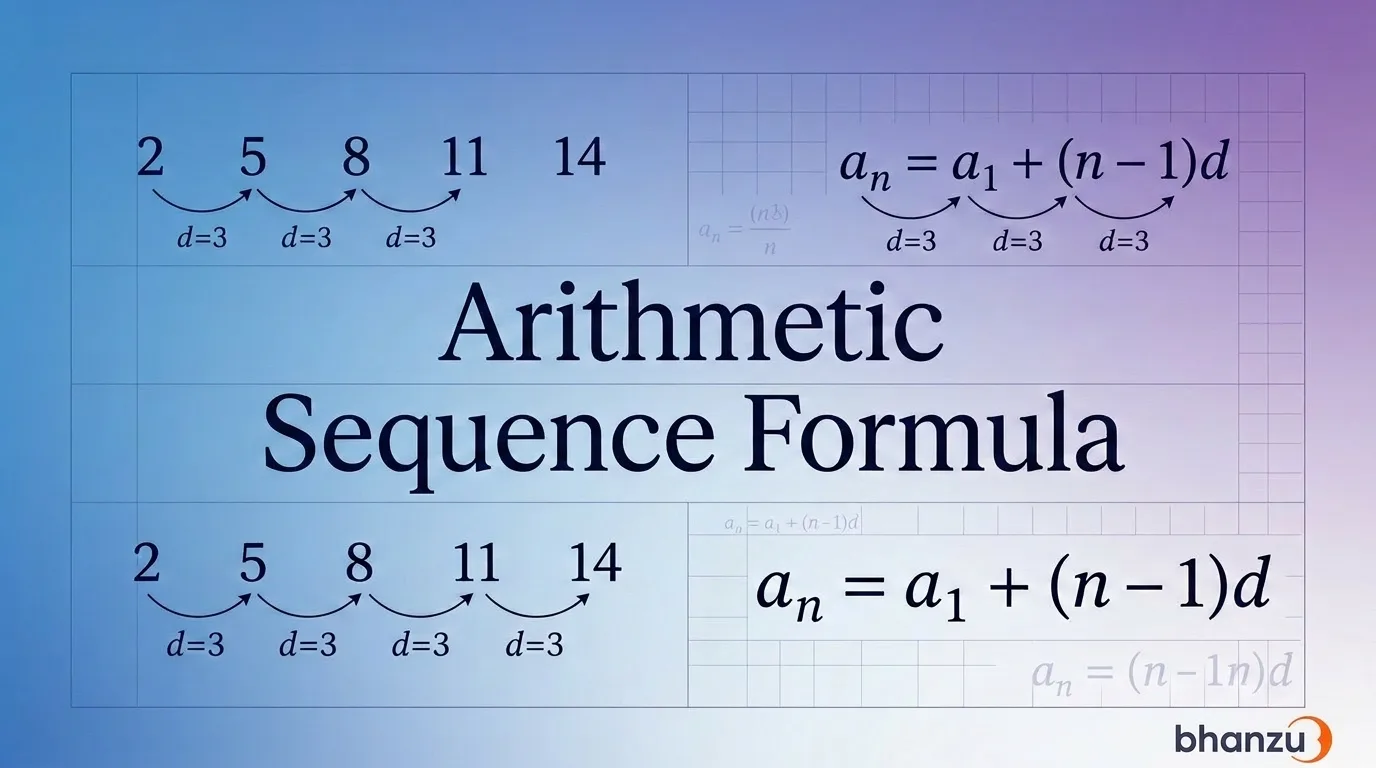
Arithmetic Sequence Formula: nth Term, Sum & Common Difference

The arithmetic sequence formula has two parts: aₙ = a₁ + (n−1)d for the nth term and Sₙ = (n/2) × [2a₁ + (n−1)d] for the sum of n terms. Here a₁ is the first term, d is the common difference, and n is the position. Use (n−1) - not n - when counting the jumps between terms.

Math Formula
Arithmetic Sequence Formula: nth Term, Sum & Common Difference
math

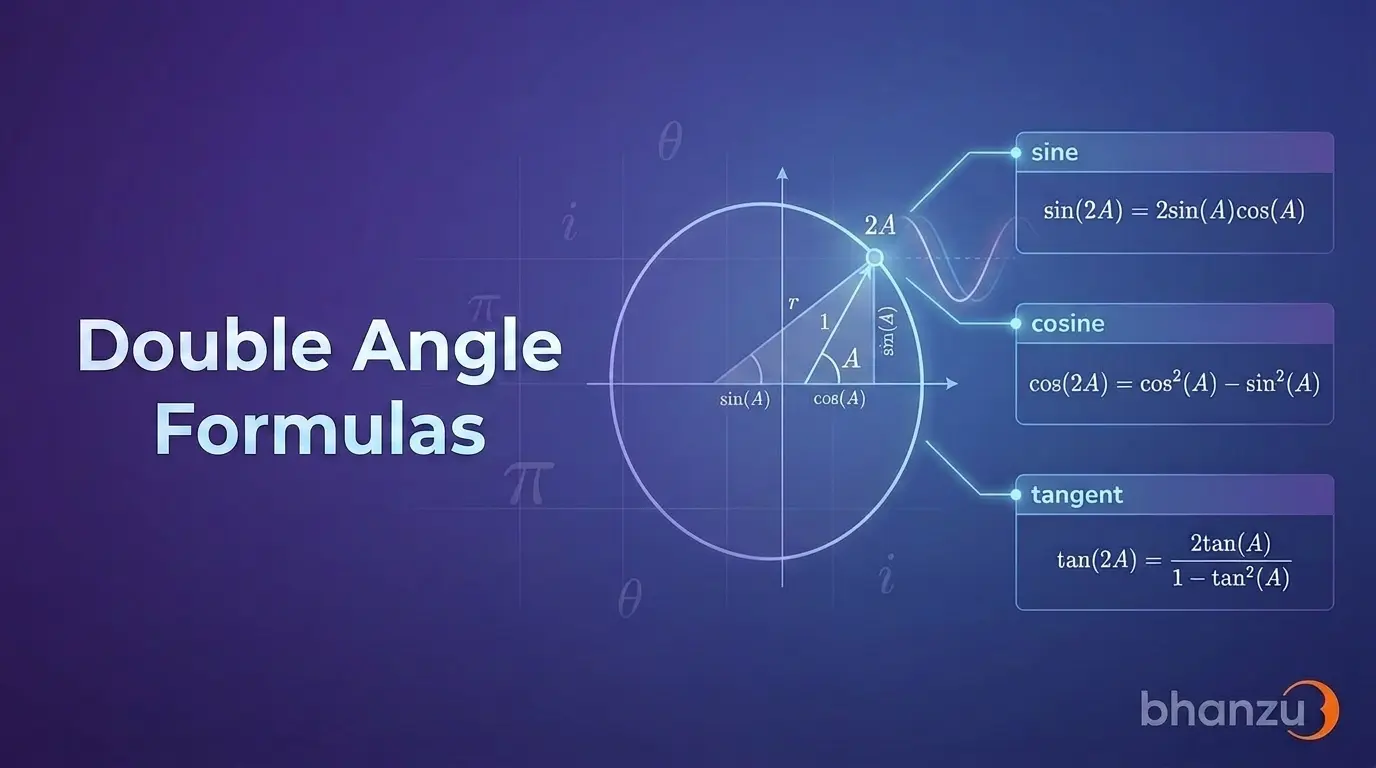
Double Angle Formulas: Sin, Cos, Tan Identities

The double angle formulas are sin 2θ = 2 sin θ cos θ, cos 2θ = cos²θ − sin²θ (also 1 − 2 sin²θ and 2 cos²θ − 1), and tan 2θ = 2 tan θ / (1 − tan²θ). All three are derived from the sum formulas by setting α = β = θ. The cosine has three equivalent forms because the Pythagorean identity converts between them.

Math Formula
Double Angle Formulas: Sin, Cos, Tan Identities
math

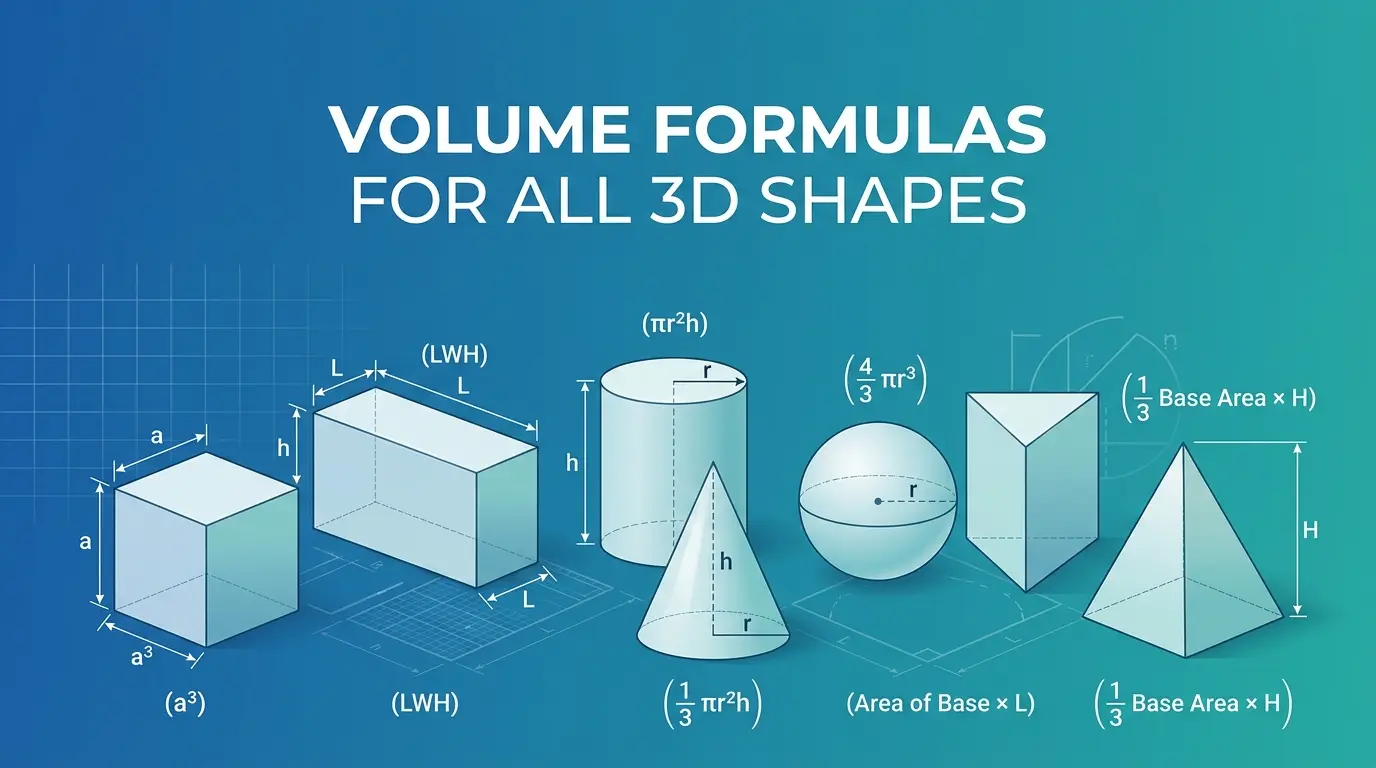
Volume Formulas for All 3D Shapes

Volume measures the space a 3D shape occupies, expressed in cubic units (cm³, m³, in³). Each shape has its own formula - cube uses V = a³, cuboid uses l × b × h, cylinder uses πr²h, sphere uses ⁴⁄₃ πr³, and cones and pyramids hold exactly one-third of their corresponding cylinder or prism.

Math Formula
Volume Formulas for All 3D Shapes
math

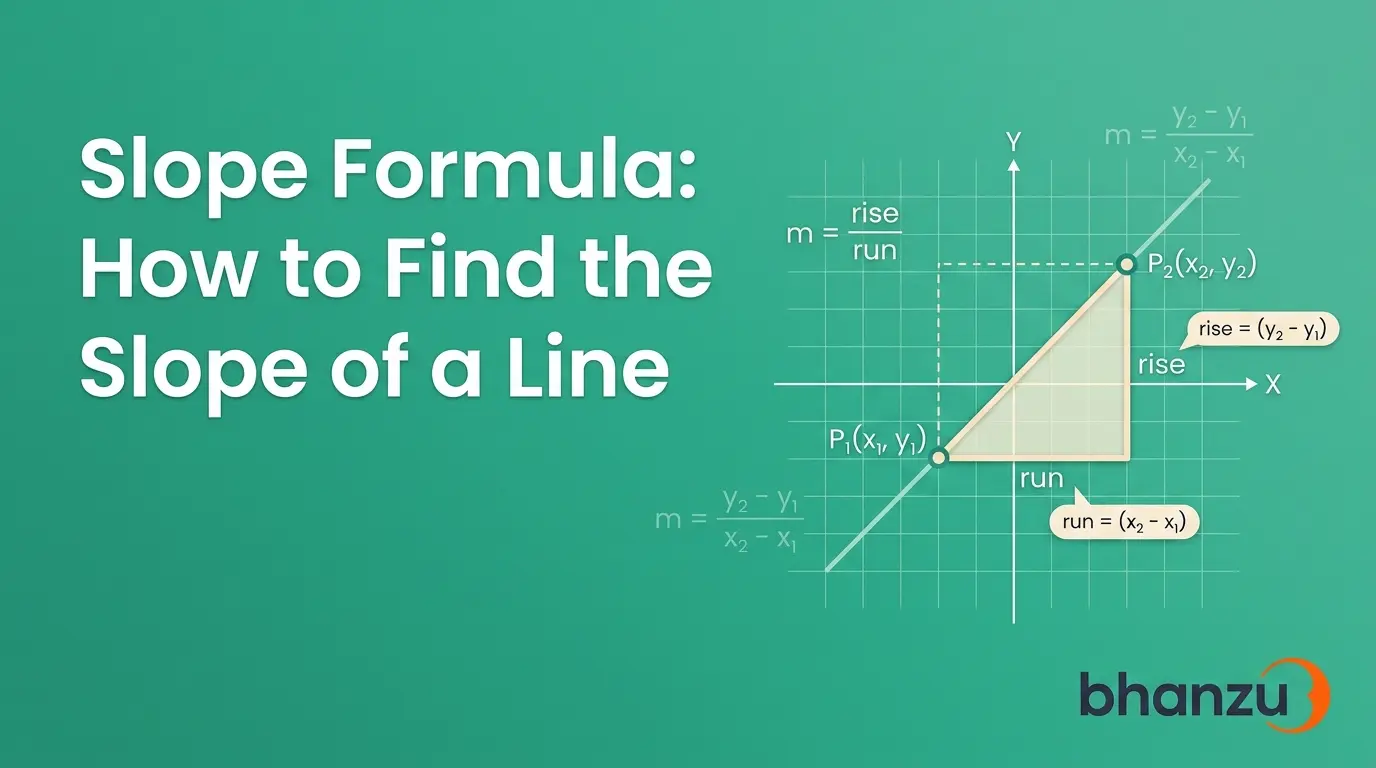
Slope Formula: How to Find the Slope of a Line

The slope formula is m = (y₂ − y₁) / (x₂ − x₁) - it calculates the steepness and direction of a line from any two points on it. Slope can be positive (line rises), negative (line falls), zero (horizontal), or undefined (vertical). The formula is also written as rise over run, where rise = Δy and run = Δx.

Math Formula
Slope Formula: How to Find the Slope of a Line
math

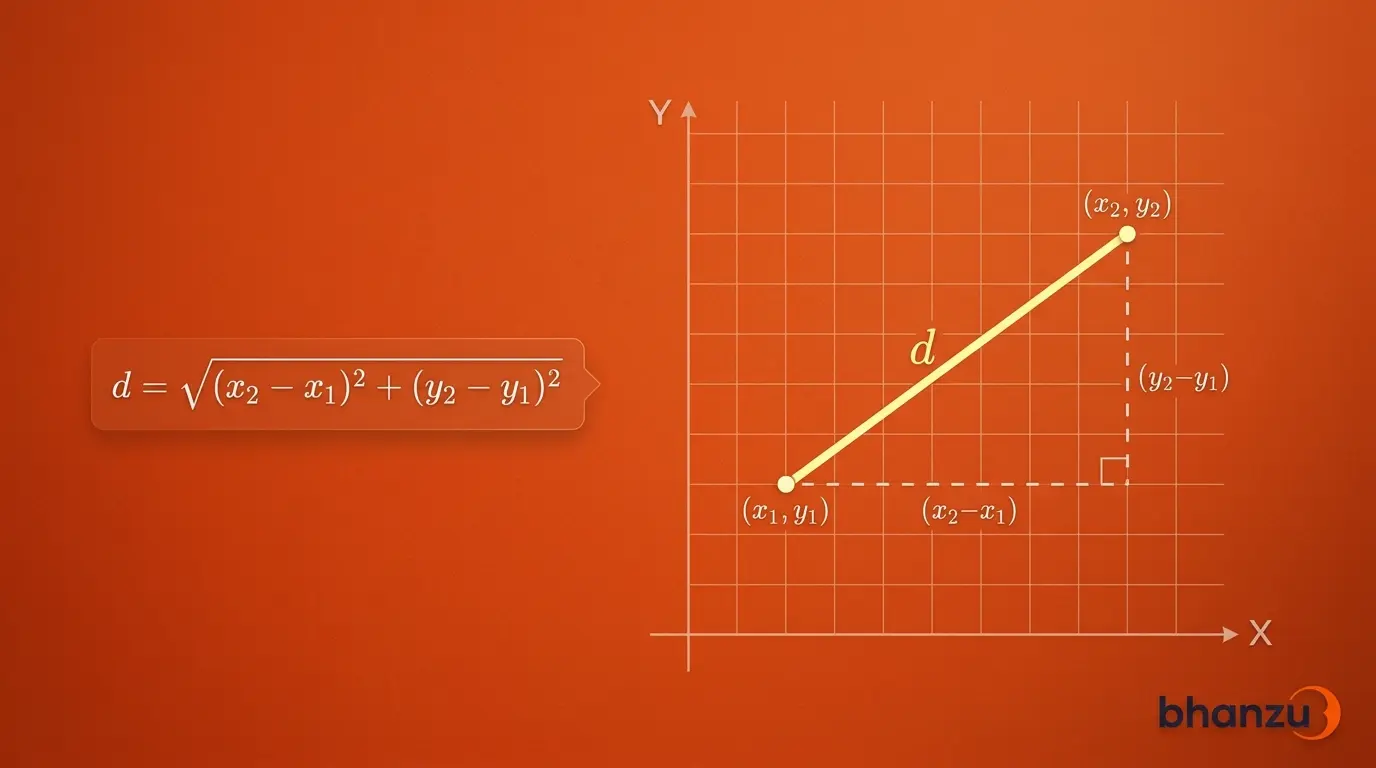
Distance Formula in Maths: Definition, Derivation, and Examples

The distance formula, d = √[(x₂ − x₁)² + (y₂ − y₁)²], gives the straight-line distance between two points on a coordinate plane. It is derived from the Pythagorean theorem and extends to 3D by adding a z-coordinate term.

Math Formula
Distance Formula in Maths: Definition, Derivation, and Examples
math

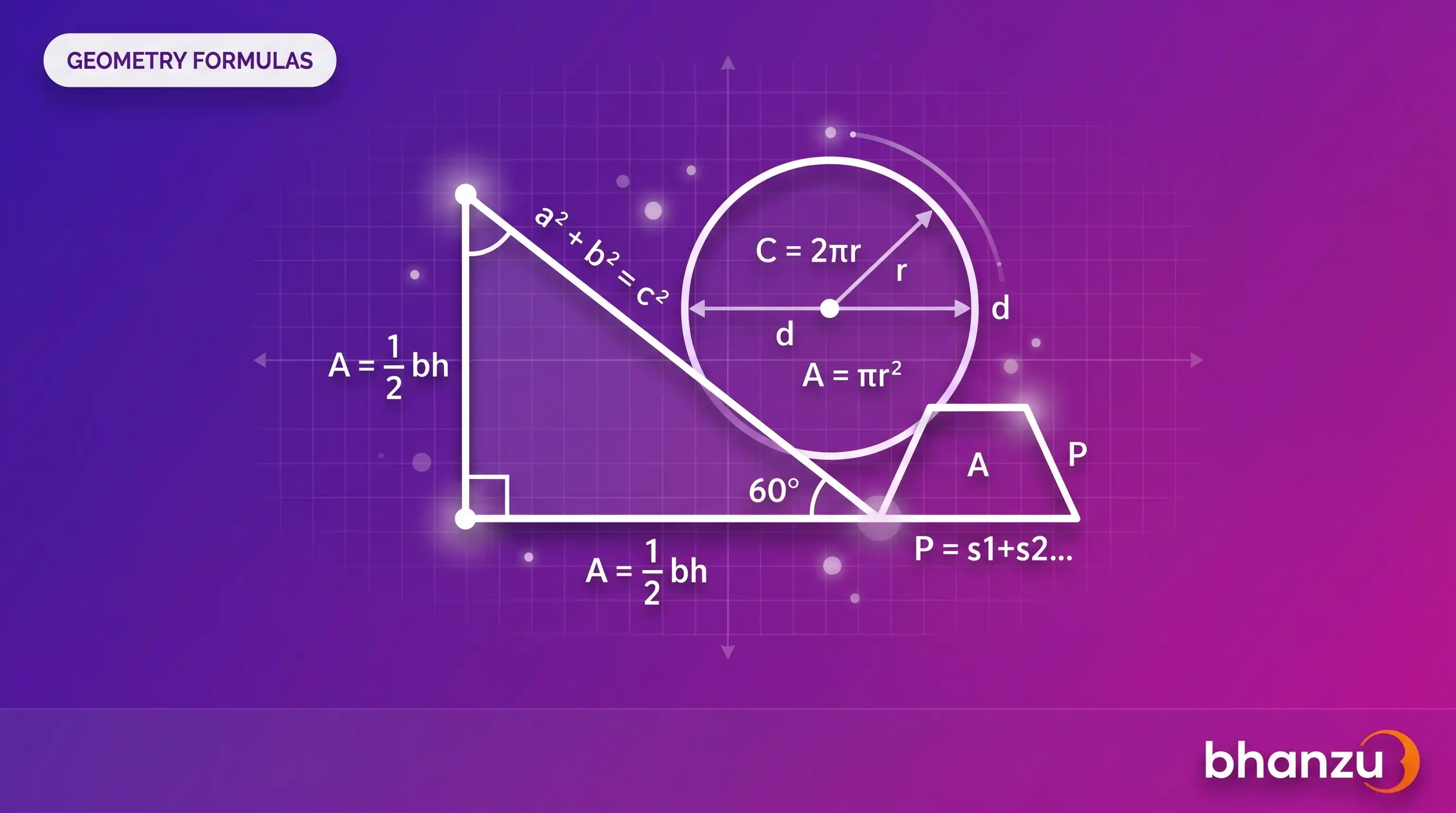
Geometry Formulas: Area, Perimeter & Volume for 2D and 3D Shapes

Geometry formulas calculate the perimeter and area of 2D shapes (square, rectangle, triangle, circle) and the surface area and volume of 3D shapes (cube, cuboid, cylinder, cone, sphere). Perimeter uses linear units (cm), area and surface area use square units (cm²), and volume uses cubic units (cm³).

Math Formula
Geometry Formulas: Area, Perimeter & Volume for 2D and 3D Shapes
math

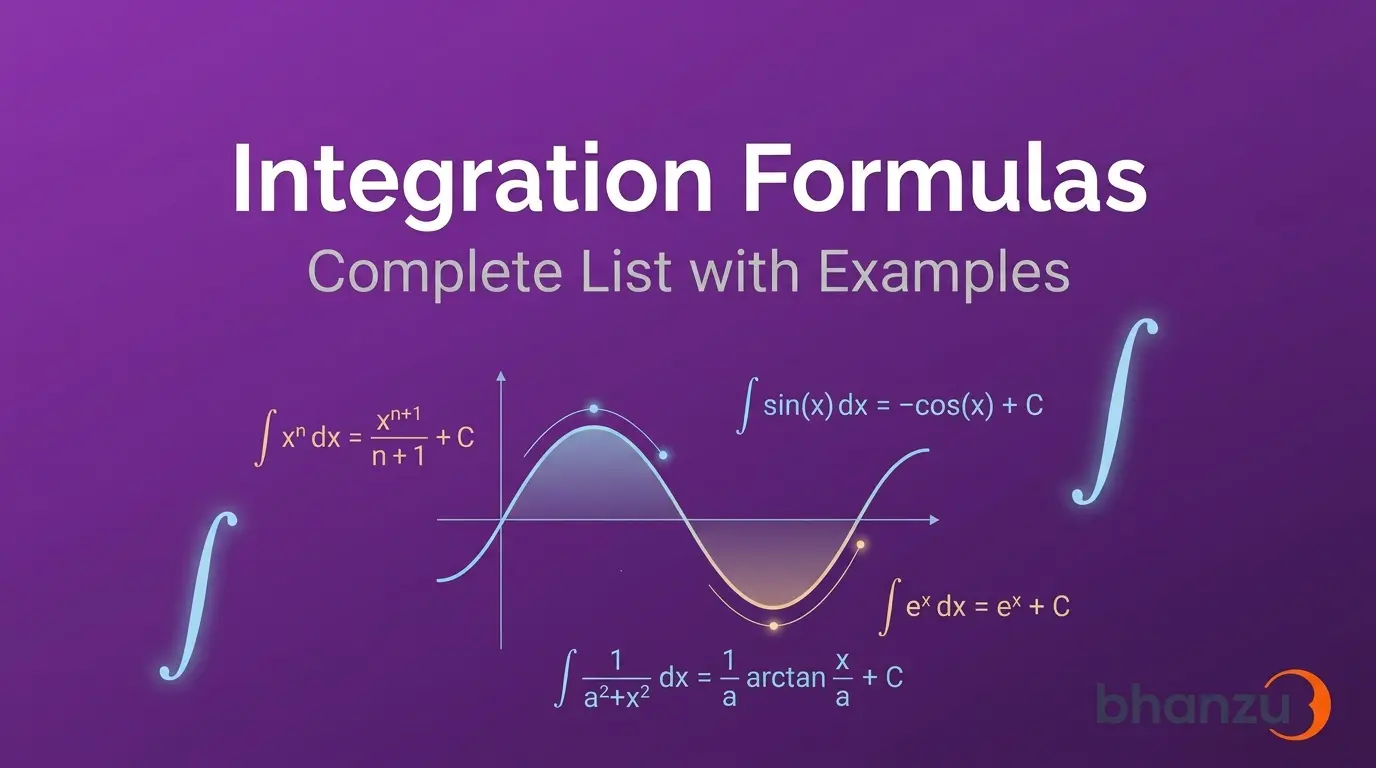
Integration Formulas: Complete List with Examples

Integration formulas are the standard antiderivative results used to solve integrals across Class 11, 12, and JEE - covering basic, trigonometric, inverse trigonometric, exponential, logarithmic, hyperbolic, and special integrals. The general form is ∫f'(x) dx = f(x) + C.

Math Formula
Integration Formulas: Complete List with Examples