The Two Classification Axes
A triangle has three sides and three angles. Each axis gives an independent classification:
By side lengths:
Equilateral — all three sides equal.
Isosceles — at least two sides equal. (Equilateral is a special case of isosceles in many definitions; we use the stricter "exactly two sides equal" convention here.)
Scalene — no two sides equal.
By angle measures:
Acute — all three angles less than .
Right — exactly one angle is .
Obtuse — exactly one angle is greater than .
The two axes are independent — every triangle has a side-type and an angle-type. Combining them gives the full classification matrix.
The Classification Matrix
Acute | Right | Obtuse | |
|---|---|---|---|
Equilateral | ✓ All . The only equilateral triangle. | ✗ Impossible — angles must all be , none can be . | ✗ Impossible — same reason. |
Isosceles | ✓ Two equal sides, all angles . | ✓ Right isosceles: angles --. | ✓ Obtuse isosceles: two equal sides with one obtuse angle. |
Scalene | ✓ No equal sides, all angles . | ✓ Most familiar right triangle — e.g., --. | ✓ Scalene with one obtuse angle. |
Seven valid types (the seven ✓ cells) and two impossibilities (equilateral + right; equilateral + obtuse).
Why the impossibilities exist
The triangle angle-sum theorem says the three interior angles add to exactly . In an equilateral triangle, all three angles must be equal — so each must be . There is no room for a or angle. That single fact rules out the two impossible combinations.
The Seven Valid Types — Details
1. Equilateral (and therefore acute)
All three sides equal in length.
All three interior angles .
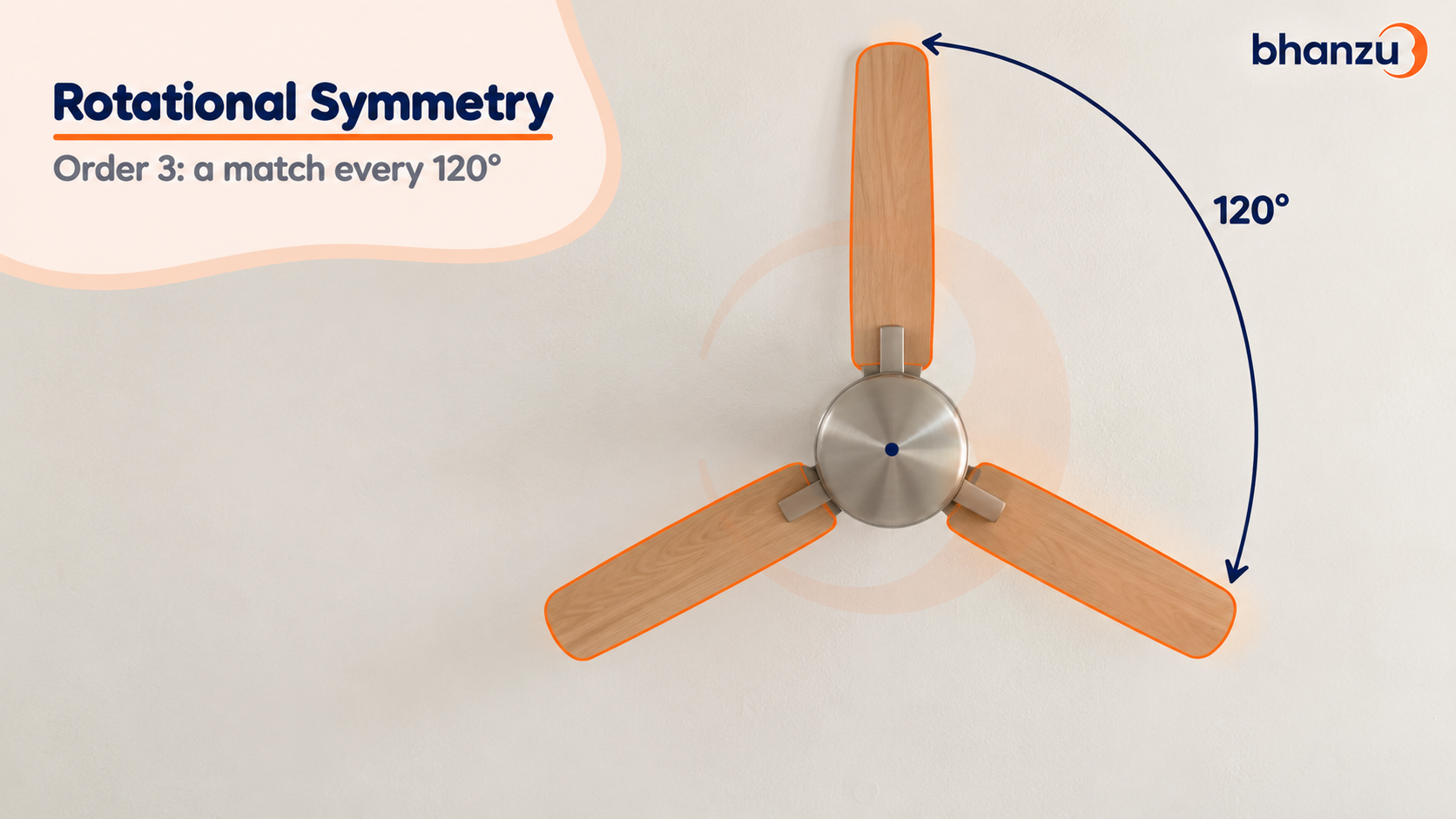
Three lines of symmetry; rotational symmetry of order .
Area where is the side length.
2. Isosceles acute
Exactly two sides equal.
All three angles less than .
One line of symmetry (the perpendicular bisector of the unique side, passing through the apex).
Example: a triangle with sides — the equal angles opposite the equal sides are each about , and the third angle is about .
3. Isosceles right
Two equal sides (the legs) and one different side (the hypotenuse).
Angles: .
The ratio of sides is .
The most-used special right triangle in trigonometry.
4. Isosceles obtuse
Two equal sides and one angle greater than .
The obtuse angle is at the apex (between the two equal sides). The two base angles are equal and acute.
Example: sides with apex angle and base angles each.
5. Scalene acute
All three sides different lengths.
All three angles less than , all different.
No lines of symmetry.
The most "generic" triangle — most random triangles in real diagrams are scalene acute or scalene obtuse.
6. Scalene right
Three different sides; one angle is exactly .
The classic Pythagorean triples — --, --, -- — are scalene right triangles.
All three angles different (apart from the ); the two acute angles are complementary.
7. Scalene obtuse
Three different sides; one angle greater than .
The other two angles are both acute and unequal.
Example: sides with angles approximately .
Three Worked Examples, From Quick to Stretch
Quick. Classify a triangle with sides , , and .
All three sides equal equilateral. All interior angles must be (so all acute). Classification: .
Standard (Wrong path first). A triangle has sides , , and . The angle opposite the side of length is the largest. Classify the triangle by both sides and angles.
Wrong path: A student sees "two equal sides" and labels it isosceles — correct. Then assumes it must be acute because it "looks compact" — and skips the angle check. But that assumption may be wrong; the largest angle's size depends on the side ratios, not on visual feel.
Diagnosing the error: To classify by angles, you must compute the largest angle (or apply the triangle-inequality-like test below). Visual reasoning is unreliable.
Correct path: using the Law of Cosines on the largest angle. The largest angle is opposite the longest side ():
Since , the angle is greater than . So the triangle is obtuse.
Classification: .
Shortcut: For a triangle with sides (with the longest), the triangle is acute if , right if , and obtuse if . Here , so obtuse — same answer, one line.
In the Bhanzu Grade 7 weekend cohort, the visual-classification slip shows up in roughly four out of every ten students on first attempt. The trainer's fix is to teach the vs shortcut first — before the Law of Cosines — because it makes the angle-type test mechanical.
Stretch. Is it possible to construct an obtuse equilateral triangle? Explain. Is it possible to construct an obtuse right triangle? Explain.
(a) Obtuse equilateral triangle: No. An equilateral triangle has all three angles equal. Since they must sum to , each is . There is no obtuse angle. So the combination is impossible.
(b) Obtuse right triangle: No, but for a different reason. A right triangle has one angle. The other two angles sum to (since the total is ), so each is less than — neither can be obtuse. So a right triangle cannot also contain an obtuse angle.
Both impossibilities are direct consequences of the triangle angle-sum theorem. This is why the classification matrix has two empty cells.
Why the Two Classifications Are Independent
It would be tempting to think that the side-classification and the angle-classification are linked — that all equilateral triangles are acute, all scalene triangles are right, etc. They are not. The matrix has seven valid types precisely because the two axes are mostly independent (with the one exception that equilateral forces acute).
The link from sides to angles is governed by the Law of Cosines — but at the school level, the simpler test does most of the work:
→ all angles acute → acute triangle.
→ one right angle → right triangle.
→ one obtuse angle → obtuse triangle.
The test only uses the longest side on the right and the other two on the left.
Where Each Type Shows Up in the Real World
Equilateral. Yield signs, the standard "warning" triangle, the geometry of musical chord triangles.
Isosceles right (--). Set squares, the diagonal of a square cut in half, the geometry of paper-folding.
Scalene right. Roof trusses, ramp inclines, surveyors' triangulation networks. The most-used type in engineering.
Obtuse triangles. Sail shapes, certain architectural cantilever supports, irregular land plots.
Equilateral and isosceles acute. Decorative tiling, music notation triangles, navigation compasses.
Where Triangles Goes Sideways
1. Treating equilateral as a separate axis from isosceles.
Where it slips in: A student labels a -- triangle as "isosceles" and gets the question wrong because the answer key wanted "equilateral."
Don't do this: Pick the broader classification when a more specific one applies.
The correct way: When a triangle has all three sides equal, classify it as equilateral — the more specific label. The stricter definition of isosceles ("exactly two sides equal") avoids the ambiguity.
2. Using visual judgement instead of computation for angle type.
Where it slips in: A diagram is drawn quickly and "looks acute" — but the side ratios force an obtuse angle, which the eye missed.
Don't do this: Trust the drawing.
The correct way: Compute. The test classifies angle type in one line. Visual classification is for first-pass identification only.
3. Forgetting the triangle inequality on a "triangle" that isn't one.
Where it slips in: A problem gives three lengths , , and asks for the triangle's type. But — the three lengths can't form a triangle at all.
Don't do this: Start classifying before checking that a triangle exists.
The correct way: For three lengths to form a triangle, each side must be less than the sum of the other two: , , . Check first. If the inequality fails, no triangle is possible — and the question may be testing this.
The Bhanzu Grade 7 trainer-floor habit is to ask, "Can this even be a triangle?" before any classification work. The triangle inequality check takes 10 seconds and prevents minutes of wasted algebra.
Bhanzu's Approach to Triangle Classification
In a Bhanzu Grade 7 geometry session, triangle classification starts with the matrix above drawn on the whiteboard. Students fill in an example for each of the seven valid cells using triangles cut from coloured paper. The two impossible cells are explicitly marked. Across cohorts since 2023, students who see the matrix first miss the "obtuse equilateral" impossibility question at roughly one-third the rate of students who learn the side-types and angle-types as separate lists. The Level 0 diagnostic catches students who haven't yet internalised the angle-sum constraint.
Conclusion
Triangles are classified along two independent axes — side lengths (equilateral, isosceles, scalene) and angle measures (acute, right, obtuse).
The two axes combine into a matrix with seven valid types and two impossibilities (obtuse equilateral, right equilateral).
The impossibilities come from the triangle angle-sum theorem: three angles must add to , and an equilateral triangle has all three at .
The angle-type can be determined from the sides alone using .
The triangle inequality ( for all three orderings) must hold before any classification — otherwise no triangle exists.
Practice These Three Before Moving On
Classify a triangle with sides , , .
Classify a triangle with sides , , .
Can a triangle have sides , , ? If yes, classify it; if no, explain.
(Answers: 1. Scalene right — ; 2. Isosceles acute — two sides equal, ; 3. Not a triangle — , so the triangle inequality fails.)
Want a Bhanzu trainer to walk through more triangle-classification problems with your child? Book a free demo class — live online globally.
Also Read:
Was this article helpful?
Your feedback helps us write better content
Frequently Asked Questions
How many types of triangles are there?
Can a triangle be both equilateral and right-angled?
Can a triangle have two right angles?
Can a triangle have two obtuse angles?
What is the most common type of triangle in real life?
How do I check if a triangle is acute, right, or obtuse?
Is every right triangle a scalene triangle?