What Is a Square?
A square is a quadrilateral (a four-sided shape) in which all four sides are equal and all four angles are right angles ( each). It is the most regular quadrilateral: equal in every direction, with the maximum possible symmetry for four sides.
Because a square has four equal sides, it satisfies the definition of a rhombus, and because it has four right angles, it also satisfies the definition of a rectangle. A square sits in the overlap of both families — it is the special rhombus with right angles, and the special rectangle with equal sides. For those relationships in full, see whether a square is a rectangle and the difference between a square and a rhombus.
What Are the Properties of a Square?
Every square, whatever its size, shares the same set of properties. These are what a student is most often asked to recall.
Four equal sides. All four sides have the same length, written .
Four right angles. Every interior angle is , and they sum to (as in every quadrilateral).
Opposite sides are parallel, so a square is also a parallelogram.
Equal diagonals. The two diagonals are the same length, .
Diagonals bisect each other at . They cross at the centre, cut each other exactly in half, and meet at right angles.
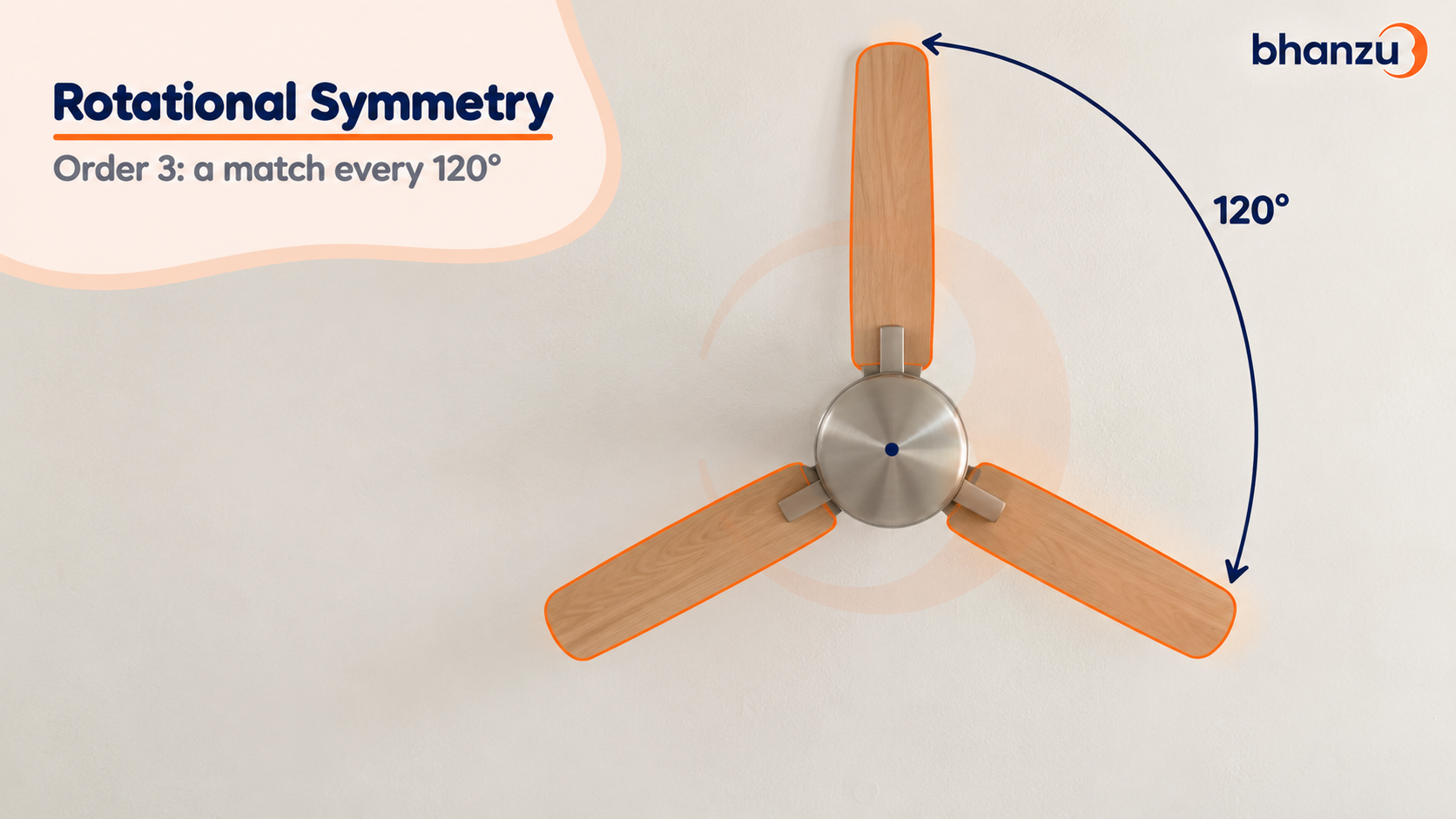
Four lines of symmetry — two through opposite-side midpoints (vertical and horizontal) and two along the diagonals. This is more than a rectangle (2) or a rhombus (2), and it is what makes the square the most symmetric quadrilateral.
A square is the only quadrilateral that is at once a rhombus, a rectangle, and a parallelogram — which is why so many of its properties read like a blend of those three.
How Do You Find the Area of a Square?
The area of a square is the amount of flat space it covers, and because all four sides are equal, it is simply a side multiplied by itself:
where is the side length. Why squared? Area counts how many unit squares fit inside. A square of side holds rows of unit squares each, so the total is — the same reason " squared" and "the area of a square" share a name. Area is always in square units (cm², m²) because two lengths are multiplied together.
How Do You Find the Perimeter of a Square?
The perimeter is the total distance around the outside — the sum of all four sides. Since all four are equal to :
There is nothing hidden here: four equal sides means four copies of , so the perimeter is four times the side. Perimeter is a single length, so it stays in linear units (cm, m), never squared.
How Do You Find the Diagonal of a Square?
The diagonal is the straight line joining two opposite corners. A diagonal cuts the square into two right-angled triangles, and in each triangle the two sides of the square are the legs and the diagonal is the hypotenuse. Applying the Pythagorean theorem to that right triangle:
so taking the square root of both sides:
Here is the diagonal and is the side length, and , so a square's diagonal is always about 1.41 times its side. This is why a diagonal is the longest straight line you can draw inside a square — and why the two diagonals, being equal and meeting at , slice the square into four identical right triangles.
Quantity | Formula | Units |
|---|---|---|
Area | square units (cm²) | |
Perimeter | linear units (cm) | |
Diagonal | linear units (cm) |
Examples of Square
With the properties and the three derived formulas in hand, here are the ideas applied to concrete cases. The problems move from a direct area up to working backward from the diagonal.
Example 1 - Find the area of a square with side 6 cm
Final answer: 36 cm².
Example 2 - A square has side 9 cm. A student finds the area as cm²
Check which formula that is. Multiplying the side by 4 gives the perimeter, the distance around the edge, not the area, the space inside. The student reached for the four-sides idea, but area counts the unit squares that fit inside the shape, which needs side times side.
The correct area squares the side:
Final answer: 81 cm²
Example 3 - Find the perimeter of a square with side 7.5 cm
Final answer: 30 cm.
Example 4 - Find the diagonal of a square with side 5 cm
Final answer: cm, about 7.07 cm.
Example 5 - A square has area 64 cm². Find its side and its perimeter
Work backward from the area. Since , the side is the square root of the area: . Then the perimeter is . Final answer: side 8 cm, perimeter 32 cm.
Example 6 - A square has a diagonal of cm. Find its side and area
Rearrange the diagonal formula for . From , divide both sides by : . Then the area is . Final answer: side 10 cm, area 100 cm².
Why the Square Matters
A square's perfect symmetry is not just neat; it is the reason this shape underpins so much of the built and digital world.
Tiling and packing. Squares tessellate — they fit edge-to-edge with copies of themselves and leave no gaps. That is why floors, walls, chessboards, and graph paper are square-gridded, and why a square uses space more efficiently than most shapes when many must sit side by side.
Screens and pixels. A digital image is a grid of tiny squares (pixels). The square's equal sides mean the grid spaces evenly in both directions, so an image scales and rotates predictably.
The diagonal and the irrational. The square's diagonal, , was how the ancient Greeks first met an irrational number — a length that cannot be written as a simple fraction. A unit square's diagonal is exactly , and discovering it could not be a fraction reshaped how mathematicians thought about number itself.
A reference for area. "Square units" exist because the square is the natural unit of area: a 1 cm by 1 cm square is one square centimetre. Every area formula, for any shape, is ultimately measured in these squares.
For a Grade 5 to 7 student, the square is where side length, area, perimeter, and the diagonal all connect in one shape — get fluent here, and rectangles, rhombi, and the Pythagorean theorem all build on the same picture.
Where Students Trip Up on Squares
Mistake 1: Swapping the area and perimeter formulas
Where it slips in: Asked for area, the student multiplies the side by 4; asked for perimeter, the student squares the side.
Don't do this: Use for area or for perimeter.
The correct way: Area is (space inside, square units); perimeter is (distance around, linear units). Check the units the answer should be in: area is squared, perimeter is not.
Mistake 2: Treating the diagonal as equal to the side or to twice the side
Where it slips in: The student assumes the diagonal is just , or guesses , instead of .
Don't do this: Use or for the diagonal.
The correct way: The diagonal is the hypotenuse of a right triangle with legs , so — longer than a side but shorter than two sides. The memorizer who never saw the Pythagorean triangle inside the square guesses here.
Mistake 3: Forgetting the diagonal divides into right triangles when reasoning about it
Where it slips in: A problem gives the diagonal and asks for the side or area, and the student has no route back.
Don't do this: Treat the diagonal as unrelated to the side.
The correct way: Use in reverse: , then . The diagonal and side are locked together by that one right-triangle relationship. The second-guesser who distrusts the should remember it is just the Pythagorean theorem applied once.
Key Takeaways
A square is a quadrilateral with four equal sides and four right angles — the most regular and most symmetric four-sided shape.
Its area is (square units), and its perimeter is (linear units) — never swap the two.
Its diagonal is , which comes straight from the Pythagorean theorem applied to the right triangle inside the square.
A square has four lines of symmetry and equal diagonals that bisect each other at .
A square is both a special rhombus and a special rectangle, sitting in the overlap of both families.
Practice These Problems to Solidify Your Understanding
Find the area and perimeter of a square with side 11 cm.
A square has area 49 cm². Find its side and its perimeter.
Find the diagonal of a square with side 8 cm, leaving your answer in surd form.
Answer to Question 1: area cm², perimeter cm. Answer to Question 2: side cm, perimeter cm. Answer to Question 3: cm (about 11.31 cm).
Want a live Bhanzu trainer to walk your child through squares, area, perimeter, and diagonals? Book a free demo class — online globally.
Was this article helpful?
Your feedback helps us write better content
Frequently Asked Questions
What is a square in geometry?
What are the area, perimeter, and diagonal formulas of a square?
Is a square a rectangle?
How many lines of symmetry does a square have?
Why is the diagonal of a square ?