The Screen You Are Reading This On Is Doing Rectangle Math
Every pixel grid, every page margin, every brick in a wall relies on one property: a rectangle's corners are exactly , so shapes tile without gaps and edges line up. Break that right angle by a single degree and tiled floors buckle, picture frames refuse to hang flush, and a phone screen no longer fits its case. The rectangle is the most-used shape in built human space precisely because those four right angles make it predictable.
What Is a Rectangle?
A rectangle is a quadrilateral in which all four interior angles are right angles () and opposite sides are equal and parallel. The longer pair of sides is usually called the length () and the shorter pair the width (), though either label works.
Because both pairs of opposite sides are parallel, a rectangle is also a special parallelogram, one whose angles have all been squared to . That inheritance is why a rectangle carries every parallelogram property and adds a few of its own.
What Are the Properties of a Rectangle?
A rectangle's properties fall into three groups, sides, angles, and diagonals. The complete list, with reasons, sits on properties of a rectangle; here is the working set:
Sides: opposite sides are equal and parallel; adjacent sides meet at a right angle.
Angles: all four interior angles equal , and they sum to .
Diagonals: the two diagonals are equal in length and bisect each other, though they do not meet at .
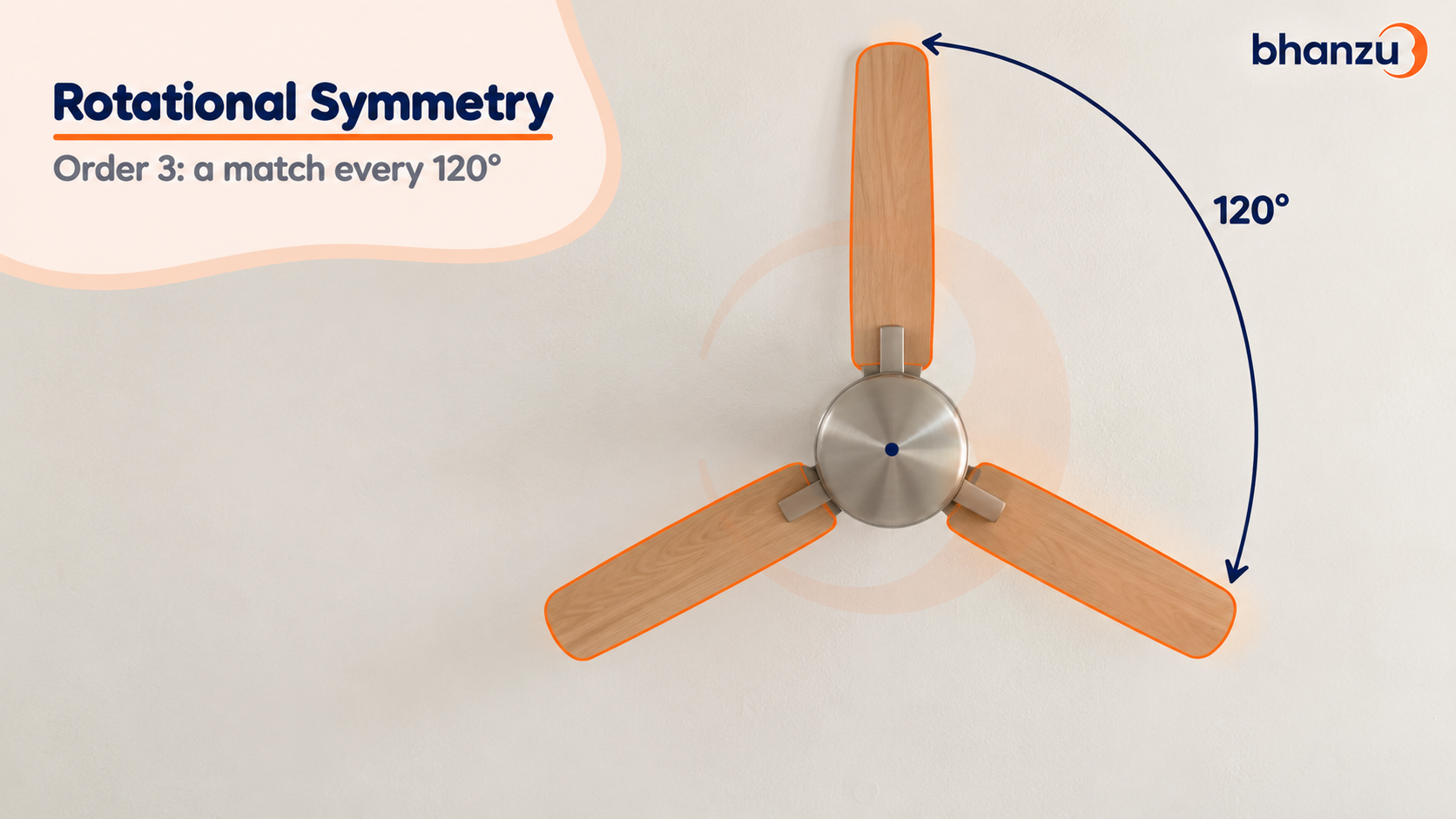
Symmetry: a rectangle has two lines of symmetry (through the midpoints of opposite sides) and rotational symmetry of order .
Vertices and edges: four vertices, four sides.
The equal-diagonal property is the one that separates a rectangle from a slanted parallelogram, and it is why angles of a rectangle stay locked at no matter the side lengths.
How Do You Find the Area and Perimeter of a Rectangle?
These two formulas answer two different questions, and mixing them up is the most common rectangle error.
Area measures the space inside the rectangle. Picture the rectangle tiled with unit squares in columns and rows; the count of tiles is length times width:
Perimeter measures the distance around the rectangle, the total edge length. Walk the boundary and you cover two lengths and two widths:
The variable key: is the length, is the width, both in the same unit; area comes out in square units, perimeter in plain units.
How Long Is the Diagonal of a Rectangle?
A diagonal joins two opposite corners and splits the rectangle into two right triangles. Each triangle has legs and and the diagonal as its hypotenuse, so the Pythagorean theorem gives:
Both diagonals have this same length, which is the equal-diagonals property in formula form. The full derivation and worked cases live on diagonals of a rectangle.
Is a Square a Rectangle?
Yes. A square is a rectangle in which the length and width happen to be equal (). It meets every rectangle condition, four right angles and equal, parallel opposite sides, and then adds the extra rule that all four sides are equal. So a square is a special rectangle, the same way a rectangle is a special parallelogram. The full argument is on is a square a rectangle, and the reverse question, why not every rectangle is a square, is the subject of difference between square and rectangle.
Examples of a Rectangle
The examples run from a direct area computation to a diagonal problem and a work-backwards case.
Example 1
Find the area of a rectangle with length cm and width cm.
Final answer: cm.
Example 2
A rectangle has length m and width m. A student computes the perimeter as m. Is that right?
Wrong attempt. The student multiplies the sides, getting m, and labels it the perimeter.
Why it breaks. Multiplying length by width gives area, not perimeter, and the units expose it: produces square metres (a region), while perimeter must come out in plain metres (a distance). A distance cannot be measured in square metres.
Correct. Perimeter adds up the four edges:
Final answer: the perimeter is m; the was the area in disguise.
Example 3
Find the diagonal of a rectangle with length cm and width cm.
Final answer: cm.
Example 4
A rectangle has area cm and length cm. Find its width and perimeter.
Work backwards from the area formula:
Now the perimeter:
Final answer: width cm, perimeter cm.
Example 5
A rectangular garden is m long and m wide. Fencing costs $$4$ per metre. What does it cost to fence the boundary?
Fencing follows the perimeter:
P = 2(20 + 15) = 70 \text{ m}, \qquad \text{cost} = 70 \times 4 = $280.
Final answer: $280.
Example 6
A rectangle has length cm and width cm. Is it still a rectangle? What else is it?
All four angles are and opposite sides are equal, so it is a rectangle. Because the length equals the width, it is also a square.
Final answer: yes, it is a rectangle, and specifically a square.
Where Do Students Trip Up on Rectangles?
The mistakes cluster around the three formulas and the square-rectangle relationship.
Mistake 1: Swapping area and perimeter
Where it slips in: any word problem that asks for "how much" without the word "inside" or "around."
Don't do this: use when the question wants fencing, edging, or a border, or use when it wants floor space or paint.
The correct way: area is the space inside (square units); perimeter is the trip around the edge (plain units). Checking the units, square metres versus metres, catches the swap before it costs marks.
Mistake 2: Adding the sides to get the diagonal
Where it slips in: diagonal problems where the shortcut looks tempting.
Don't do this: report the diagonal of a rectangle as .
The correct way: the diagonal is the hypotenuse of a right triangle, so it is , always shorter than and longer than either side alone. The habit that fixes this is drawing the diagonal and seeing the right triangle it creates.
Mistake 3: Thinking a square is not a rectangle
Where it slips in: classification questions.
Don't do this: rule out "rectangle" because the shape "looks like a square."
The correct way: a square satisfies every rectangle condition, so it is a rectangle (a special one with equal sides). This mislabelling has real cost in engineering tolerance: a machined part that was allowed to drift from a true rectangle toward a rhombus caused a famous fit failure when mismatched right angles let a component rack out of square, the same "lost right angle" that turns a rectangle into a non-rectangle.
Conclusion
A rectangle is a quadrilateral with four right angles and equal, parallel opposite sides.
Its three core formulas are area , perimeter , and diagonal .
The diagonals are equal and bisect each other, the property that distinguishes a rectangle from a slanted parallelogram.
A square is a rectangle with all sides equal, so every square is a rectangle but not the reverse.
To build rectangle skills with a teacher, explore Bhanzu's geometry tutor or an elementary math tutor, or browse math classes online.
Practice These to Solidify Your Understanding
Work through the exercises below. Compute area and perimeter for given sides; find a diagonal with the Pythagorean relationship; recover a missing width from a known area; and settle whether a given figure is a square, a rectangle, or both. If area and perimeter keep swapping on you, reread the units cue. To work through rectangle problems live with a Bhanzu trainer, book a free demo class.
Read More
Difference Between Rectangle and Parallelogram — how the right angles set a rectangle apart from a general parallelogram.
Area vs Perimeter — a deeper look at the two measurements students most often swap.
Lines of Symmetry in a Rectangle — the two axes of symmetry and how to find them.
Perimeter Formula — the general perimeter idea across shapes, with the rectangle case.
Types of Quadrilaterals — where the rectangle sits among all four-sided shapes.
Was this article helpful?
Your feedback helps us write better content
Frequently Asked Questions
What is a rectangle in simple terms?
What is the formula for the area of a rectangle?
How do you find the perimeter of a rectangle?
How do you find the diagonal of a rectangle?
Is a rectangle a parallelogram?