What Is the Circumference of Earth?
The circumference of Earth is the total distance around the planet — the length of a complete loop along its surface. Because Earth is very slightly flattened at the poles (an oblate spheroid, not a perfect sphere), the distance depends on the path you take:
Equatorial circumference: about 40,075 km (24,901 miles) — the loop around the widest part.
Polar (meridional) circumference: about 40,008 km (24,860 miles) — the loop over both poles.
The two differ by only about 67 km, which is why a single round-number value of roughly 40,000 km is often quoted. These figures come from precise modern surveying and satellite measurement, as catalogued by sources such as Wikipedia's record of Earth's circumference. The radius and circumference are tied together by the same relationship that holds for any circle, which is where the formula comes in.
How Is The Circumference of Earth Calculated Today?
The modern approach is short: measure Earth's radius (from satellites and geodetic surveys), then apply the circle formula. The mean equatorial radius is about 6,378 km, and the circumference is times that. The hard part is measuring the radius accurately — the formula itself is the same one used for a coin.
The Formula for Earth's Circumference
Earth's circumference uses the standard circle formula. Treating the planet as a sphere of radius (or diameter ):
This is worth understanding rather than memorising. The number (about 3.14159) is defined as the ratio of any circle's circumference to its diameter — so circumference divided by diameter always equals , which rearranges to . Since the diameter of a circle is twice the radius, as well.
Variable key: is the circumference (distance around); is the radius (centre to surface); is the diameter (full width through the centre); is the fixed circle ratio. All distances use the same unit; the answer comes out in that unit.
How Eratosthenes Measured Earth's Circumference
The historical method is the best worked example the formula has, so it is worth following step by step. Eratosthenes of Cyrene (c. 276–194 BCE), the chief librarian at Alexandria, built his estimate on three observations:
At Syene (modern Aswan), at noon on the summer solstice, the Sun was directly overhead — a vertical well lit all the way to the bottom and a rod cast no shadow.
At Alexandria, due north, a vertical rod at the same moment cast a shadow whose angle was about 7.2° from vertical.
The two cities were about 5,000 stadia apart (roughly 800 km) along the same north–south line.
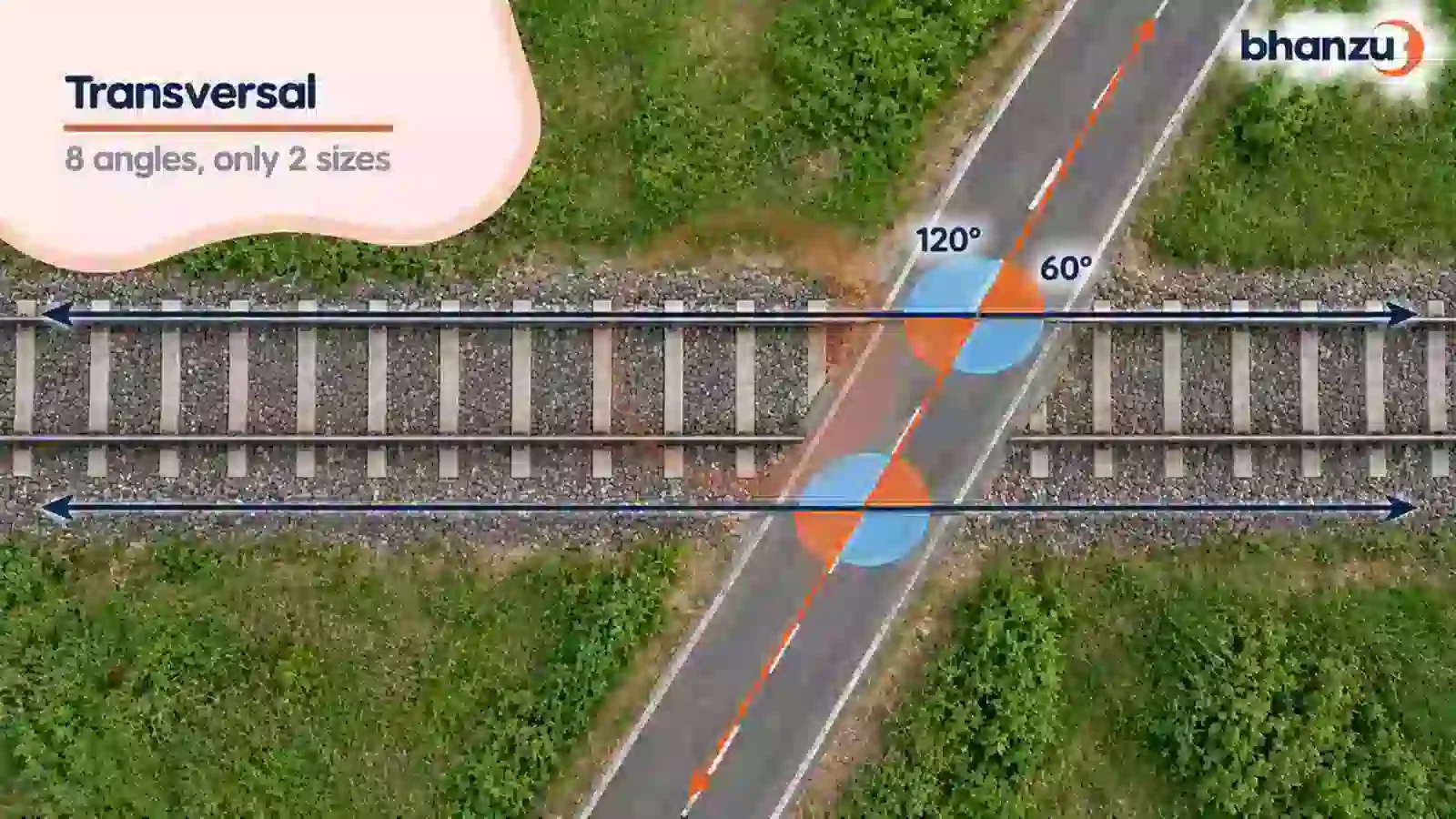
Because the Sun is so distant, its rays arrive essentially parallel. The 7.2° shadow angle at Alexandria therefore equals the central angle between the two cities measured at Earth's centre — a result that comes straight from the alternate-angles rule for parallel lines crossed by a transversal.
That 7.2° is exactly of a full 360° turn:
So the distance between the cities is of the whole way around. Multiply up:
Eratosthenes' figure, often cited as 252,000 stadia, lands close to 39,000–40,000 km depending on the exact length of his "stadion" — within about 1% of the true value, achieved with shadows and arithmetic. A century or so later Posidonius (c. 135–51 BCE) made an independent estimate using the star Canopus and reached a comparable figure; both are recorded in the historical sources above.
How Accurate Was Eratosthenes' Measurement?
Remarkably accurate — his figure lands within roughly 1% of the modern value of about 40,075 km, depending on the exact length of the stadion he used. For a measurement made with a vertical rod, a shadow, and the distance between two cities, an error of around 1% is extraordinary, and it stood as the best estimate for centuries.
Examples of Circumference of Earth
The examples move from a direct formula application to the Eratosthenes-style reasoning. Each states its units and the value of used.
Example 1
Find Earth's equatorial circumference from its equatorial radius, km. Use .
This matches the surveyed value of about 40,075 km.
Example 2
A student is told Earth's diameter is about 12,742 km and computes the circumference as , getting about 20,015 km. Find the slip and the correct value.
The student used radius and the diameter formula together. A quick check kills the answer: 20,015 km is less than the diameter doubled, yet a circle's circumference is always more than three times its diameter. Something is mismatched.
The error is mixing (which needs the diameter) with the radius. Using the diameter correctly:
Or with the radius, where km gives the same answer. Both forms agree; mixing one form's input with the other does not.
Example 3
Eratosthenes measured a 7.2° shadow angle and a 5,000-stadia (about 800 km) distance between cities. Find the circumference.
The 7.2° is of 360°, so the city distance is of the circumference:
Example 4
Suppose two cities on the same meridian are 555 km apart and the Sun's shadow angle differs by 5° between them. Estimate Earth's circumference.
The 5° is of a full turn, so:
Close to the true value, using the same logic Eratosthenes used.
Example 5
How far does a point on the equator travel in one full rotation of Earth (one day)? Use km.
A point on the equator traces the full equatorial circle once per day, so it travels the whole circumference:
That is a speed of about km/h — you are moving that fast right now, standing still.
Example 6
A plane flies a great-circle route once around Earth over the poles at an average 900 km/h. Roughly how long does the flight take? Use the polar circumference km.
So a non-stop polar circumnavigation at that speed takes a little under two days of flying.
Why Measuring the Planet Still Matters
Knowing Earth's size is the foundation under navigation, mapping, and space travel.
Navigation and GPS — every satellite position and map distance is computed against a precise model of Earth's circumference and shape; a wrong size means a wrong location.
Aviation and shipping — great-circle routes, the shortest paths between distant cities, are planned using the planet's true circumference.
Space launches — the equatorial speed of about 1,670 km/h is free velocity for rockets, which is why launch sites sit near the equator and fire eastward.
The lasting lesson sits underneath all of it: Eratosthenes showed that a careful measurement of a small thing, plus the right geometric relationship, measures the largest thing in reach. He never saw the whole Earth, yet he sized it — the original proof that geometry lets you reason far beyond what you can see.
Where Earth-Circumference Problems Go Wrong
Mistake 1: Mixing the radius and diameter forms
Where it slips in: Choosing between and when the problem gives one of radius or diameter.
Don't do this: Put the radius into (or the diameter into ) — it halves or doubles the answer.
The correct way: Match the formula to what you are given: radius goes with , diameter with . The first-instinct error is grabbing whichever formula is remembered and feeding it the wrong length; the check is that circumference is always a bit over three times the diameter.
Mistake 2: Treating Earth as a perfect sphere when precision matters
Where it slips in: Problems that distinguish equatorial from polar circumference.
Don't do this: Report a single circumference as if every great-circle loop were identical.
The correct way: Earth bulges at the equator, so the equatorial loop (about 40,075 km) is longer than the polar loop (about 40,008 km). For a rough estimate, 40,000 km is fine; when the question asks for equatorial versus polar, keep them apart. The memorizer who learned only "40,000 km" can't answer which loop is longer.
Mistake 3: Confusing the shadow angle with the wrong central angle
Where it slips in: Eratosthenes-style problems, when relating the measured shadow to Earth's central angle.
Don't do this: Assume the city distance is some random fraction of the circumference instead of the fraction the angle dictates.
The correct way: Because the Sun's rays are parallel, the shadow angle equals the central angle between the cities, so the distance is of the circumference. The second-guesser who measured the angle correctly but distrusts the parallel-rays step is exactly who stumbles here — the parallel rays are what make the two angles equal.
Conclusion
The circumference of Earth is about 40,075 km at the equator and 40,008 km over the poles, with 40,000 km as the common round value.
It follows the standard circle formula , where is the circumference-to-diameter ratio.
Eratosthenes found it in 240 BCE from a 7.2° shadow angle and an 800-km city distance, landing within about 1% of today's value.
Earth's equatorial circumference is slightly larger than its polar one because the planet bulges at the equator.
The most common mistakes are mixing the radius and diameter forms and ignoring the equatorial–polar difference.
Practice and Next Steps
Work through these problems to solidify your understanding, then check each against the formula above.
Find Earth's circumference from a mean radius of 6,371 km ().
Two cities on the same meridian are 1,000 km apart with a 9° shadow-angle difference. Estimate the circumference.
At the equatorial circumference of 40,075 km, how fast (in km/h) does an equatorial point move during one 24-hour rotation?
To explore circles, , and measurement with a teacher who builds each idea from the ground up, explore Bhanzu's geometry tutor, our middle school math tutor, or math classes online. Want a live Bhanzu trainer to walk through more circle and circumference problems? Book a free demo class.
Read More
Area of a circle — measuring the space a circle encloses, alongside its perimeter.
Circles — the full anatomy of a circle, from centre to circumference.
Equation of a circle — describing a circle algebraically on the coordinate plane.
Parts of a circle — radius, diameter, chord, arc, and sector defined.
Was this article helpful?
Your feedback helps us write better content