What Is a Superset?
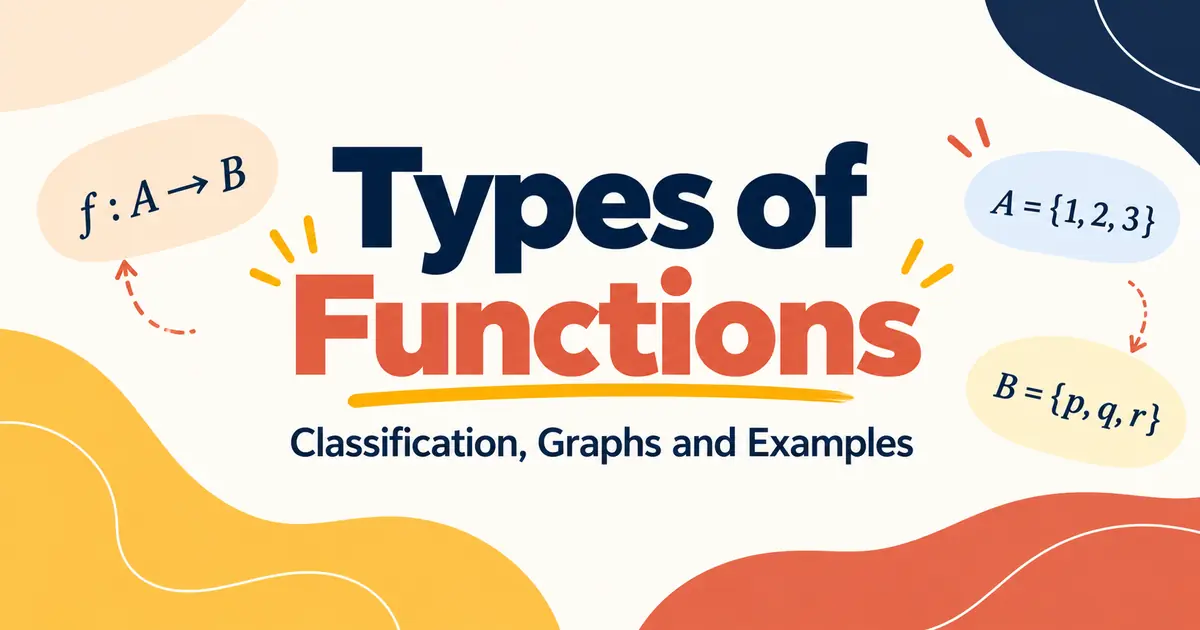
A set is a superset of a set if contains every element of . Written in symbols, , read " is a superset of " or " contains ."
Superset and subset are two views of the same fact. Saying (B is a superset of A) is exactly the same as saying (A is a subset of B). Nothing changes about the sets — only which one you name first.
Superset symbol: means "superset of or equal to"; means "proper (strict) superset of."
Proper vs Improper Superset
The two superset symbols mark a real difference, and it is the same distinction as versus for numbers.
An improper superset uses and allows equality. is true even when and are the same set. Every set is an improper superset of itself: .
A proper (strict) superset uses and forbids equality. requires to contain every element of and at least one extra element that does not have, so is strictly larger.
Relationship | Symbol | Equality allowed? | Meaning |
|---|---|---|---|
Improper superset | Yes | contains all of , possibly equal | |
Proper superset | No | contains all of and is strictly larger |
For example, is true (improper), but is false, because the two sets are equal and neither has an extra element.
Examples of Superset
The examples build from checking the relationship to counting proper supersets.
Example 1
If and , is a superset of ?
Check every element of . ? Yes. ? Yes.
Every element of is in , so . is a superset of .
Example 2
A student sees and and writes and also . Are both correct?
Take the tempting path first.
The student reasons that supersets go "both ways," the same way " is next to " means " is next to ."
Watch it break. For to hold, every element of must be in . But and , so is missing an element of . That claim fails.
The correct way: check direction by direction. Every element of ( and ) is in , so is true. But is false. Superset is a one-directional claim unless the sets are equal.
Example 3
If and , is a superset of ?
Every element of is in (they are identical). So is true.
Because , this is an improper superset: holds, but (proper) does not.
Example 4
Is the set of natural numbers a superset of the set of even numbers ?
Every even number is a natural number. So every element of is in .
, and since contains odd numbers too, (a proper superset).
Example 5
How many supersets does have inside the universal set ?
A superset of must contain and may contain any combination of the remaining elements . There are leftover elements, each in or out: choices.
The supersets are : that is 4 supersets within .
Example 6
Is every set a superset of the empty set ?
The empty set has no elements to check. So the condition "every element of is in " is satisfied automatically (vacuously).
Yes — every set is a superset of the empty set. And every set is a superset of itself.
Why the Superset Idea Matters
The superset relation is the backbone of how mathematics organises "bigger" and "smaller" collections — and it is quieter but more fundamental than it first looks.
Number systems nest as supersets. The reals are a superset of the rationals, which are a superset of the integers, which are a superset of the naturals: . That single chain of superset relations organises all of number theory.
The universal set is the ultimate superset. In any problem, the universal set is a superset of every set under discussion — that is what makes it "universal."
Supersets have no upper limit. Any set has infinitely many supersets, because you can always add one more element and get a larger one. Subsets, by contrast, are limited — you can only remove elements you already have.
The asymmetry between subset (bounded below by ) and superset (unbounded above) is why the two words, though describing one relationship, are not interchangeable in a proof.
Properties of Supersets
These rules capture how the superset relation behaves, and each one falls straight out of the definition "contains every element of."
Reflexive: every set is a superset of itself, (an improper superset).
Superset of the empty set: every set is a superset of , because has no element that could fail the test.
Transitive: if and , then .
Antisymmetric: if and , then .
Mirror of subset: holds exactly when — the same fact read from the other end.
Unbounded count: every set has infinitely many supersets, since you can always add one more element.
Counting within a universe: in a universal set of elements, a set of elements has supersets.
Where Supersets Trip Students Up
Mistake 1: Reading the symbol backwards
Where it slips in: and look like mirror images, and under time pressure the mouth opens toward the wrong set.
Don't do this: Write when you mean " is contained in ."
The correct way: The open side of the symbol faces the larger set. In , the open mouth faces , so is the bigger (super) set. The reader who pictures the symbol "eating" the larger collection stops flipping it; the memorizer who learned it as a shape without meaning keeps guessing.
Mistake 2: Assuming superset means strictly bigger
Where it slips in: The prefix "super-" suggests "more than," so equality feels excluded.
Don't do this: Claim is false when .
The correct way: allows equality (improper superset); only demands the superset be strictly larger (proper superset). This is the same confusion between and , moved from numbers to sets — and it is the most common source of wrong answers on the topic.
Mistake 3: Forgetting the empty-set case
Where it slips in: "Every set is a superset of " feels like it can't be true because has nothing in it.
Don't do this: Say has no superset because it is empty.
The correct way: The condition holds vacuously — there is no element of that could fail the test.
Conclusion
A superset contains every element of ; it is subset read from the other end.
The symbol allows equality; marks a strict (proper) superset.
Every set is a superset of itself and of the empty set.
Number systems nest as a superset chain: .
The open side of the symbol always faces the larger set — a quick check against reading it backwards.
To take the superset relation further with a teacher, explore Bhanzu's algebra tutor, help with algebra, or math classes online. Want to work through set theory with a live trainer? Book a free demo class.
Now try these: with , decide whether , whether , and how many supersets has in . If the symbol direction slips, return to Mistake 1.
Read More
Was this article helpful?
Your feedback helps us write better content