
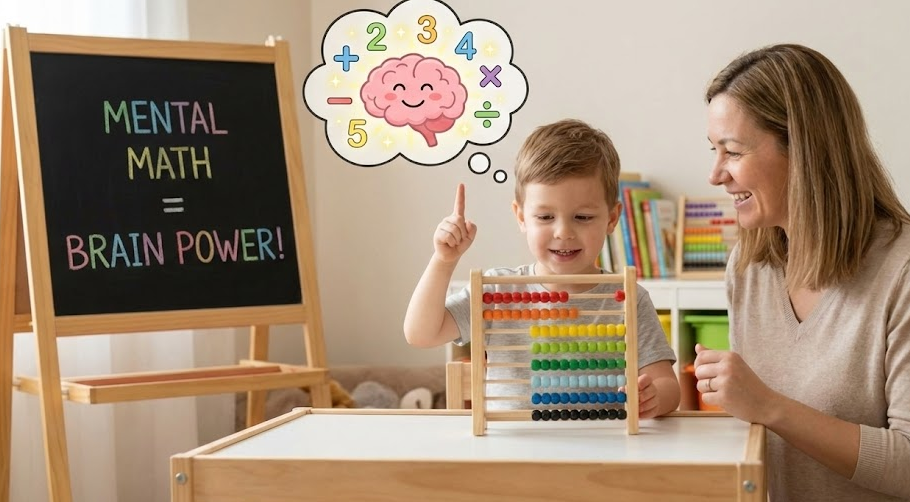
Every child approaches numbers differently. Some see patterns, some enjoy solving little puzzles, and some just love the satisfaction of finding an answer on their own. Learning mental math early taps into these natural abilities, helping children think faster, make connections, and feel confident in their skills.
It’s not about memorizing tricks or rushing through sums. Mental math nurtures curiosity, logical thinking, and creativity, turning numbers into exciting challenges. With the right guidance, children can strengthen problem-solving skills and build a foundation for lifelong learning.
Here are five benefits of learning mental math early, along with actionable ways to help your child thrive:
1. Boosts Confidence and Independence
Solving calculations in their head can make children feel proud of their achievements. This confidence reduces math anxiety and encourages children to tackle challenges independently, setting the stage for lifelong self-reliance.
Fun Way to Practice: Ask your child to calculate totals while shopping, estimate the remaining time before an event, or divide snacks among friends.
Encourage approaches like breaking numbers into parts or using left-to-right calculation methods. This strengthens speed, accuracy, and independent thinking.
2. Improves Focus and Concentration
Mental math requires children to keep numbers and operations in mind while solving problems. This sustained focus trains their brain to concentrate on details, follow sequences, and ignore distractions. These skills benefit learning in every subject.
Developing a strong focus early helps children manage multi-step tasks more efficiently and succeed in environments that require sustained attention.
Fun Way to Practice: Short exercises using visual aids or structured speed math techniques help maintain attention while making abstract concepts tangible and fun. Introduce timed exercises, like addition or subtraction races, or use number lines and grids to keep them engaged. Gradually increase the difficulty to challenge attention without overwhelming.
3. Encourages Creative Thinking
Mental math shows children that there is often more than one way to solve a problem. They experiment with strategies, notice patterns, and develop flexible thinking skills that foster innovation. Early exposure to creative problem-solving strengthens adaptability, helping children approach both academic challenges and everyday situations with curiosity and resourcefulness.
Fun Way to Practice: Challenge your child to solve problems using two or three different strategies, like breaking numbers apart, left-to-right methods, or pattern spotting. Praise creative approaches to reinforce experimentation.
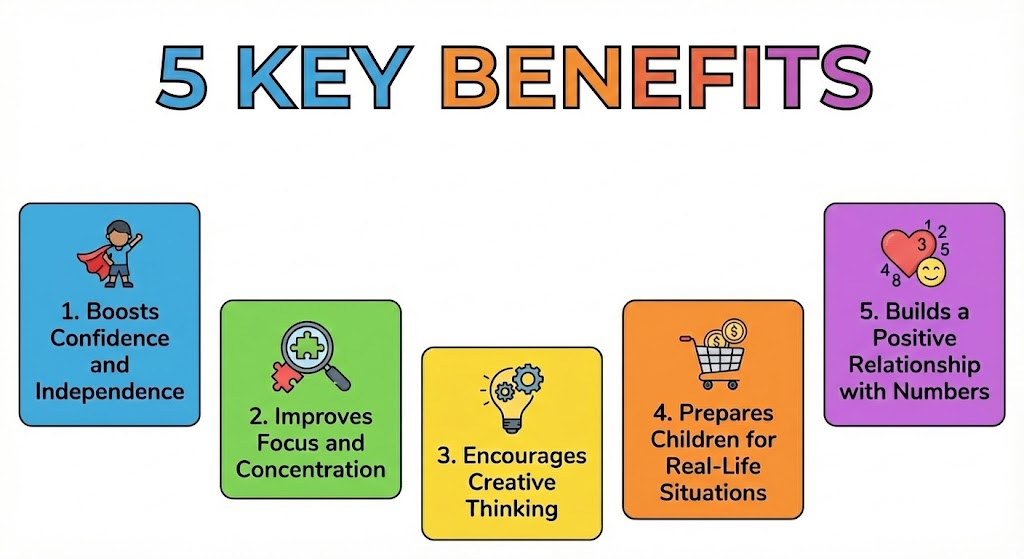
4. Prepares Children for Real-Life Situations
Mental math teaches children to apply numbers in practical ways. Estimating costs in real life makes math tangible, helping children see its relevance outside the classroom. Early practice in applying math to daily life builds independence, reduces reliance on adults for simple calculations, and cultivates practical problem-solving skills.
Fun Way to Practice: Include your child in cooking, shopping, or trip planning. Ask questions like, “If we have 12 cookies and 4 friends, how many does each get?” or “We have 30 minutes to reach the park. By what time should we leave?” These exercises make math relevant and enjoyable.
5. Builds a Positive Relationship with Numbers
Early mental math practice helps children enjoy numbers rather than fear them. They develop curiosity, persistence, and a mindset that values exploration and discovery. Cultivating a positive relationship with numbers from an early age encourages lifelong learning, enthusiasm for STEM subjects, and confidence in one's abilities.
Fun Way to Practice: Make math playful with timed challenges, number games, or scavenger hunts.

Making Mental Math Fun and Engaging
Introducing mental math early can be a fun and exciting journey for your child. Well-researched strategies that combine speed techniques, visual aids, and real-world applications help children develop accuracy and a deeper understanding. When you treat math as a human experience, it makes learning enjoyable while fostering problem-solving and creativity.
At Bhanzu, children learn mental math through fun, hands-on techniques that spark curiosity while boosting confidence and speed. If you would like your child to explore numbers with curiosity, confidence, and joy while building a strong foundation for lifelong mathematical success, book a demo with Bhanzu today.
Was this article helpful?
Your feedback helps us write better content