Online math programs are changing how elementary students engage with math by offering structured guidance, timely feedback, and clarity on progress without turning learning into pressure.
When used well, they help children build confidence, strengthen foundations, and move forward at a steady pace.
This article explains how online math programs for elementary learning are reshaping education and how to choose a curriculum that supports your child’s needs.
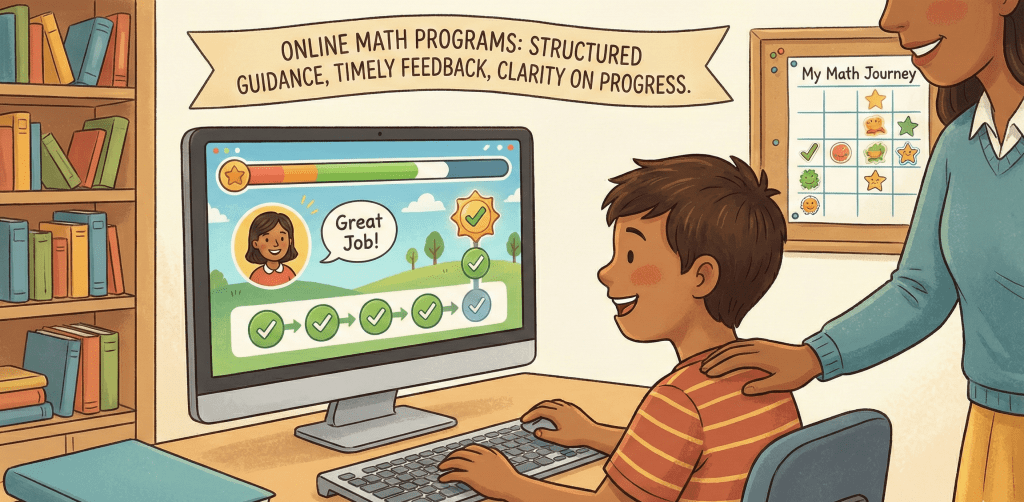
5 Ways Online Learning Transforms Elementary Math Education
Online math curriculum elementary programs have evolved far beyond digital worksheets. Here's what makes modern platforms different and why it matters for your child.
1. Learning Progression Replaces One-Size-Fits-All Worksheets
Traditional worksheets give every student the same 20 problems regardless of their skill level. Well-designed online programs adjust the pace based on how your child responds during practice.
If your child struggles with regrouping, the program reinforces the concept with additional examples before moving forward. If they grasp a topic quickly, it allows them to progress without unnecessary repetition.
What this means for you: Your child practices math at the right pace, reducing frustration while keeping engagement steady.
2. Immediate Feedback Corrects Errors Before They Become Habits
Paper homework gets checked hours or days later. Online programs flag errors instantly and explain why an answer is incorrect.
What this means for you: Your child doesn't practice the wrong method 15 times before anyone notices.
3. Skill Sequencing Fills Hidden Gaps Systematically
The best online math programs for elementary students use diagnostic assessments to identify exactly where understanding breaks down.
If your fourth grader struggles with long division, the program might reveal they never fully mastered multi-digit multiplication. The program then sequences practice to address the foundational gap first.
What this means for you: You understand precisely what your child needs to work on rather than guessing from homework errors.
4. Data Dashboards Show Progress You Can Actually Use
You may log in at any time to view clear information about your child's learning:
What You See | What It Tells You | How You Can Use It |
|---|---|---|
Problems completed | Practice consistency | Adjust daily schedule if sessions are skipped |
Accuracy percentage | Skill mastery level | Celebrate improvements; identify struggling topics |
Time per problem | Processing speed | Determine if your child needs more fact fluency work |
Topics mastered | Ready for advancement | Know when to request harder material at school |
5. Engagement Features Keep Practice Sessions Productive
Quality programs use game elements strategically. Your child earns points for accuracy, unlocks new problem types as rewards, and sees visual progress toward mastery goals.
What this means for you: Your child completes practice sessions with less resistance, and you fight fewer homework battles.
Understanding these five advantages helps you evaluate platforms, but choosing the right one requires a systematic approach.
How to Choose the Right Program for Your Child
You can follow these three steps to select the best online elementary math curriculum for your family.
Step 1: Run a Quick Skills Snapshot (Week 1)
You could start with a 15-minute diagnostic on your candidate platform to establish a baseline.

What to watch for:
Clarity of skill labels: Does it say "adding fractions with unlike denominators" or vague terms like "fractions"?
Appropriate pacing: Can your child complete problems without rushing or dragging?
Frustration signals: Are they sighing, asking for help constantly, or giving up?
Your goal: Identify your child's 3 weakest topics in one session.
Step 2: Match Program to Learning Style and Schedule (Week 1)
You might choose the practice format that fits your family's rhythm and your child's learning needs:
Format | Best For | Time Commitment |
|---|---|---|
Short daily sessions | Building habits, fact fluency | 10-15 minutes/day |
Deeper twice-weekly | Concept development, problem-solving | 30-40 minutes, 2x/week |
Mixed approach | Balancing both needs | 10 min daily + 30 min weekend |
You could set a clear goal: "Master grade-level place value within 4 weeks" or "Achieve 75% accuracy across multiplication facts before moving to division."
Step 3: Trial and Measure for Two Weeks (Weeks 2-3)
You can track three success markers during your trial period:
✓ Time-on-task: Can your child focus for the full session?
✓ Accuracy trends: Is the percentage improving week over week?
✓ Willingness to retry: Do they attempt problems independently?

These three steps give you a clear framework for making an informed decision within your first month.
Building Math Confidence Through the Right Online Program
Choosing the right online math programs for elementary students creates real benefits beyond convenience. With targeted program selection and weekly progress reviews, your child gains fluency in foundational skills, you gain clarity about exactly what they're learning, and homework becomes less stressful for everyone.
To see a parent dashboard in action and explore guided support that complements independent practice, you could consider booking a demo class where you'll experience personalized instruction firsthand.
Was this article helpful?
Your feedback helps us write better content