Have you ever watched your fifth grader pause over a math problem and suddenly light up, saying, “Oh, I get it!”? Maybe it’s splitting 12 cookies among friends or figuring out if a $4.99 snack is cheaper than the $5.25 option. Fifth-grade math is where numbers stop being abstract and start connecting to real life. It’s the year your child begins thinking critically, spotting patterns, and solving problems on their own. Let’s see what they’ll be learning:
1. Fractions and decimals
This is the heart of 5th grade math because it’s the first year kids learn to combine, break apart, and compare numbers that aren’t whole.
✨ Kids learn to: |
2. Multi-digit multiplication and division
This is the year kids shift from basic facts to calculations that look more like what adults do. They start using standard algorithms, understanding place value deeply, and breaking down complex problems across multiple steps.
✨ Kids learn to: |
3. Place value up to the millions
By 5th grade, place value becomes more than reading large numbers. It’s about understanding how numbers grow, shrink, and compare. Kids learn how each digit changes depending on its position and how rounding helps simplify real-world calculations.
✨ Kids learn to: |
4. Volume and geometry
This is the major geometry leap in 5th grade. Kids move from flat shapes to three-dimensional thinking. They not only measure objects but understand how space is occupied. Students begin to see how length, width, and height work together to form volume.
✨ Kids learn to: |
5. Numbers and operations
Kids deepen their understanding of number properties and start using rules to solve problems more efficiently.
✨ Kids learn to:
a) classify numbers (prime, composite, odd, even)
b) understand properties like commutative, associative, and distributive
c) use BODMAS confidently to solve expressions
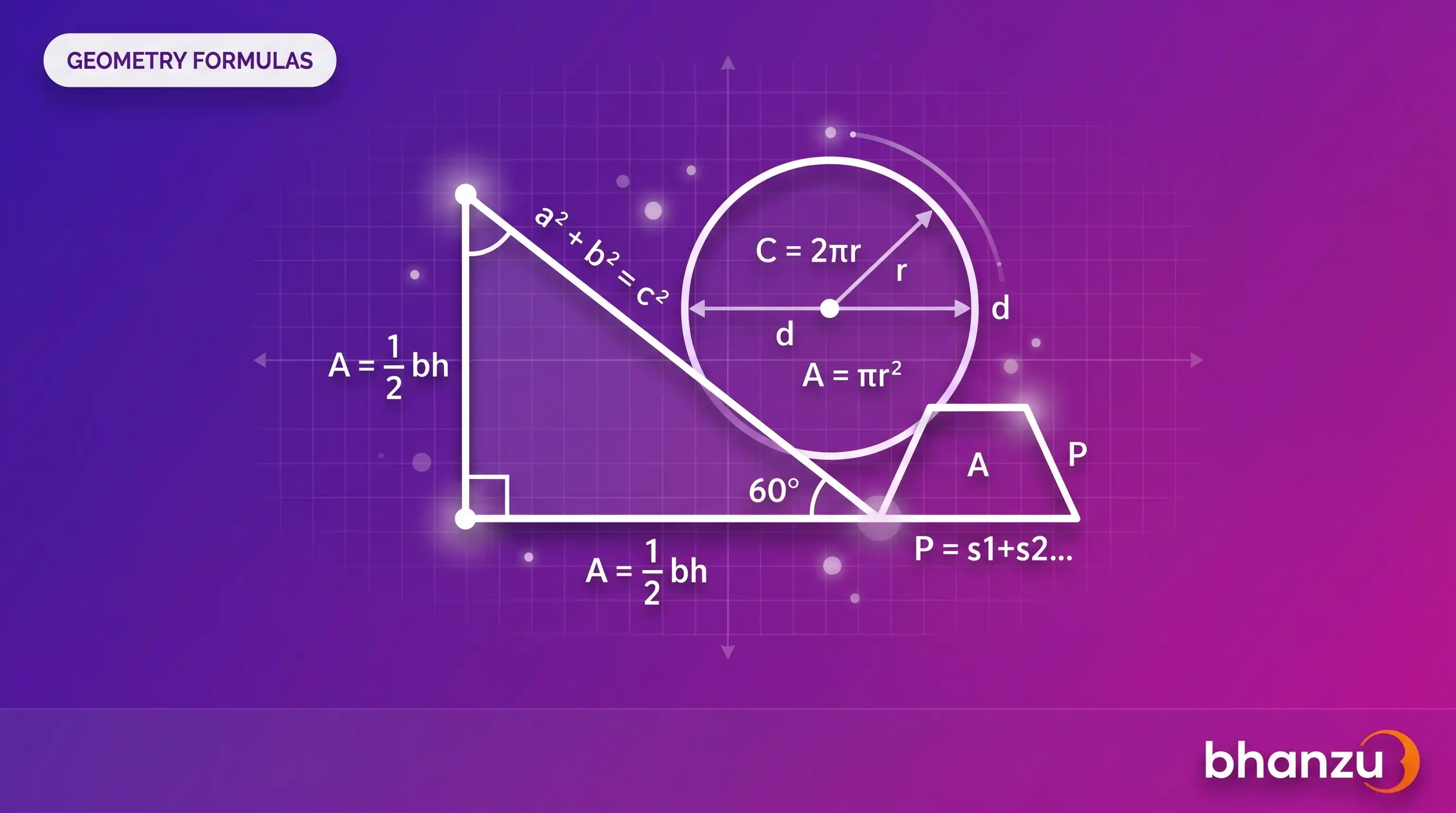
d) discover the history of Pi and calculate circumference and area of circles

Helping Your Child Overcome Common 5th Grade Math Challenges
Fifth grade introduces math concepts that can feel tricky even for confident learners. Understanding these challenges and knowing how to support your child can make math less stressful and more enjoyable:
Challenge | How to Support Your Child |
|---|---|
Problems that require more than one calculation or operation can confuse kids about the order of steps | Break problems into smaller steps and guide your child to solve one part at a time. For example, “If a store sold 125 pencils and 47 more are delivered, how many pencils are in the store?” first add the delivery, then subtract any sold items. |
Comparing, converting, or operating with fractions and decimals can feel abstract and confusing | Use a recipe to show ½ cup vs ¼ cup, or calculate sale prices with decimals while shopping. |
Turning a story problem into a math equation can be tricky because it requires reading comprehension and critical thinking | Teach your child to underline key information and identify what the question is asking. “Sam has 12 apples and gives 5 away. How many are left?” becomes 12 − 5. |
Ideas like algebra, volume, and area are less tangible, requiring imagination and visualization | Build a rectangular box to explore volume, or draw shapes to understand area and perimeter. |
Watching Confidence Grow Through Math
By the end of fifth grade, you’ll notice your child thinking differently about problems. They might figure out the fastest way to pack a lunchbox, estimate how long a road trip will take using decimals, or explain a pattern they spotted in a game.
This year, math has become more than homework. It becomes a tool your child uses to reason, make decisions, and feel confident tackling challenges on their own. With Bhanzu, these everyday moments turn into opportunities to practice and strengthen skills that actually stick. Book a demo now to get started.
Was this article helpful?
Your feedback helps us write better content