Your child can solve "8 - 3 = 5" without hesitation but freezes when asked: "Maya collected 8 seashells but lost 3 at the beach. How many did she bring home?
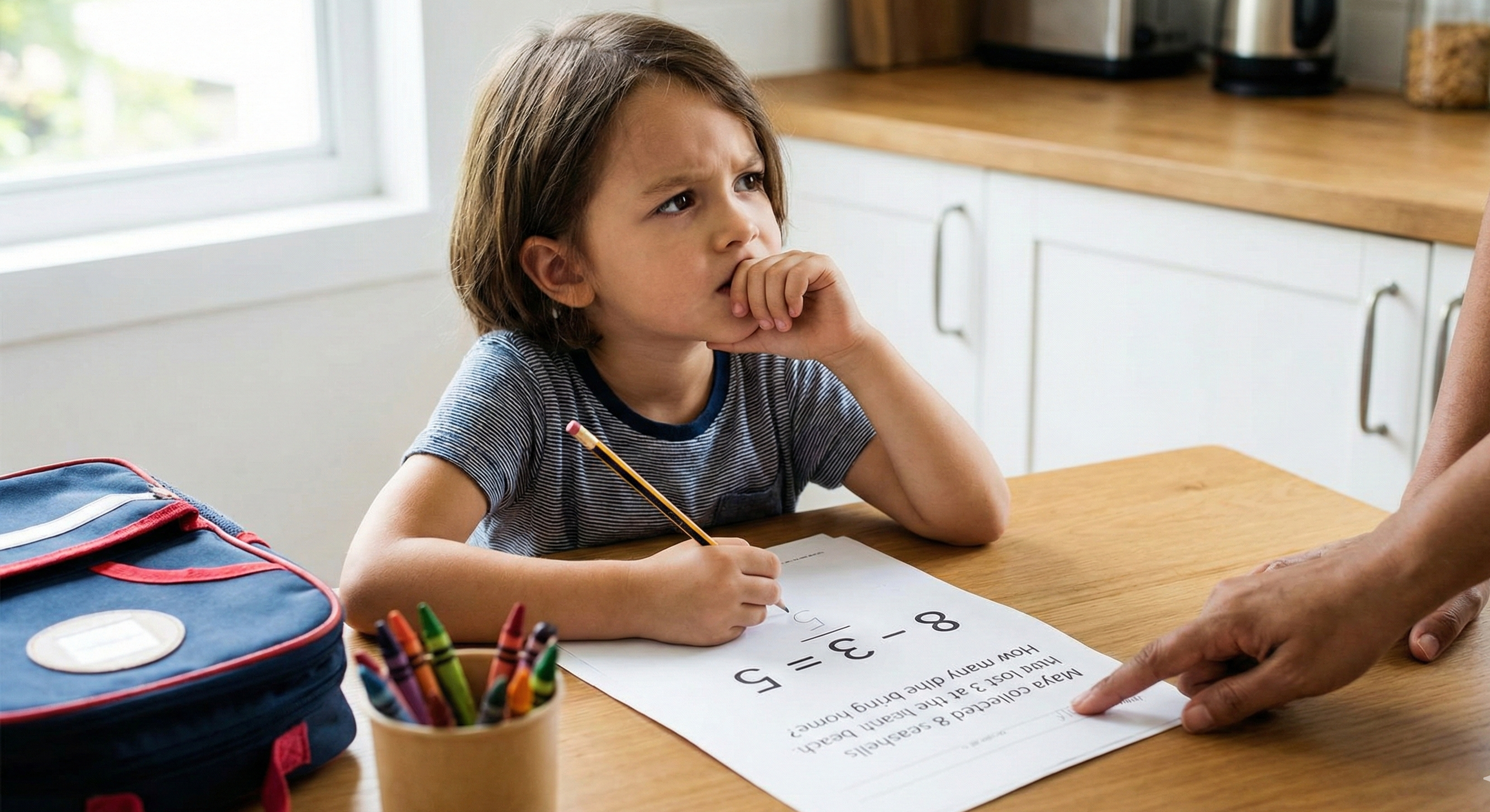
This isn't a subtraction problem: it's a translation problem. Once your child learns to recognize the patterns in such story-based subtraction word problems, solving them becomes as natural as basic arithmetic.
How to Help Your Child Solve Subtraction Word Problems
Here's a 5-step approach you can use at home to build your child's confidence with subtraction word problems.
Step 1: Know the Four Problem Types
[Visual idea 1:Four-panel comic strip showing each problem type with simple stick figures and objects]
Your child will see four main patterns in word problems on subtraction:
Problem Type | What It Looks Like | Key Words |
|---|---|---|
Take-away | "Maria had 12 stickers and used 4. How many left?" | gave away, ate, lost, used |
Compare | "Jake has 15 marbles, Lisa has 8. How many more does Jake have?" | how many more, how many fewer, difference |
Change | "20 birds were in the tree, then 7 flew away. How many remain?" | then, after, now |
Missing number | "Some children played. After 5 left, 8 remained. How many started the game?" | some, before, originally |
Notes:
Take-away problems are easiest because the story mirrors the subtraction action.
Compare problems trip up many children because nothing is physically removed.
Missing number problems require working backward, which doesn't click until children master the other types.
Step 2: Follow a Clear Solving Process
Walk through this approach with your child for any word problem involving subtraction:
1. Read & Retell
Read the word problem aloud together
Child retells the story in their own words
If they can’t retell → Go back and reread
2. Identify What You Know
Circle the numbers
Underline the question
Ask:
“What’s happening here?”
“What are we finding?”
3. Show the Problem (Choose the Method)
Young children: Act it out with toys/snacks
Visual learners: Draw pictures
Kinesthetic learners: Use a number line
Abstract thinkers: Write the equation
4. Solve & Check
Solve the subtraction
Reread the story and ask: “Does this answer make sense?”
Check using addition
Example: If 8 – 3 = 5, then 5 + 3 = 8
Step 3: Watch for Common Mistakes
These four errors show up repeatedly, but they're easy to fix once you know what to look for.
Adding instead of subtracting: Children see two numbers and automatically add without thinking about the action in the story. You can fix this by asking: "Are we putting things together or taking them apart?" before they calculate.
Misreading comparisons: Kids often subtract the larger number from the smaller in "how many more" problems. Practice by asking "Who has more?" first, then "How much more?"
Backward thinking on missing numbers: Problems like "x - 4 = 6. What's the value of x?" feel confusing. Use physical objects in this manner: "We took away 4 and got 6, so how many did we start with?"
Ignoring logic: If a problem asks about 3 cookies and your child answers 47, something went wrong. Always check if the answer makes sense in the story.
Step 4: Practice With Hands-On Activities
[Visual idea 2: Photo-style illustrations of these five activities set up at home with clear before/after states]
Turn everyday moments into math subtraction word problems:
Snack subtraction: Start with 10 crackers. Have your child give away some, count what's left, then write the equation together.
Missing number detective: Set up toy cars. Say: "Some cars were in the garage. After 3 drove away, 5 remained. How many started?" Let them work backward.
Comparison practice: Line up 12 spoons and 8 forks. Ask: "How many more spoons?" This makes abstract comparison visible.
Number line hops: Draw numbers 0-20. Show how to start at the larger number and hop backward to subtract.
Grocery store math: While shopping, create problems: "We need 6 bananas but only 4 look ripe. How many more should we pick?"
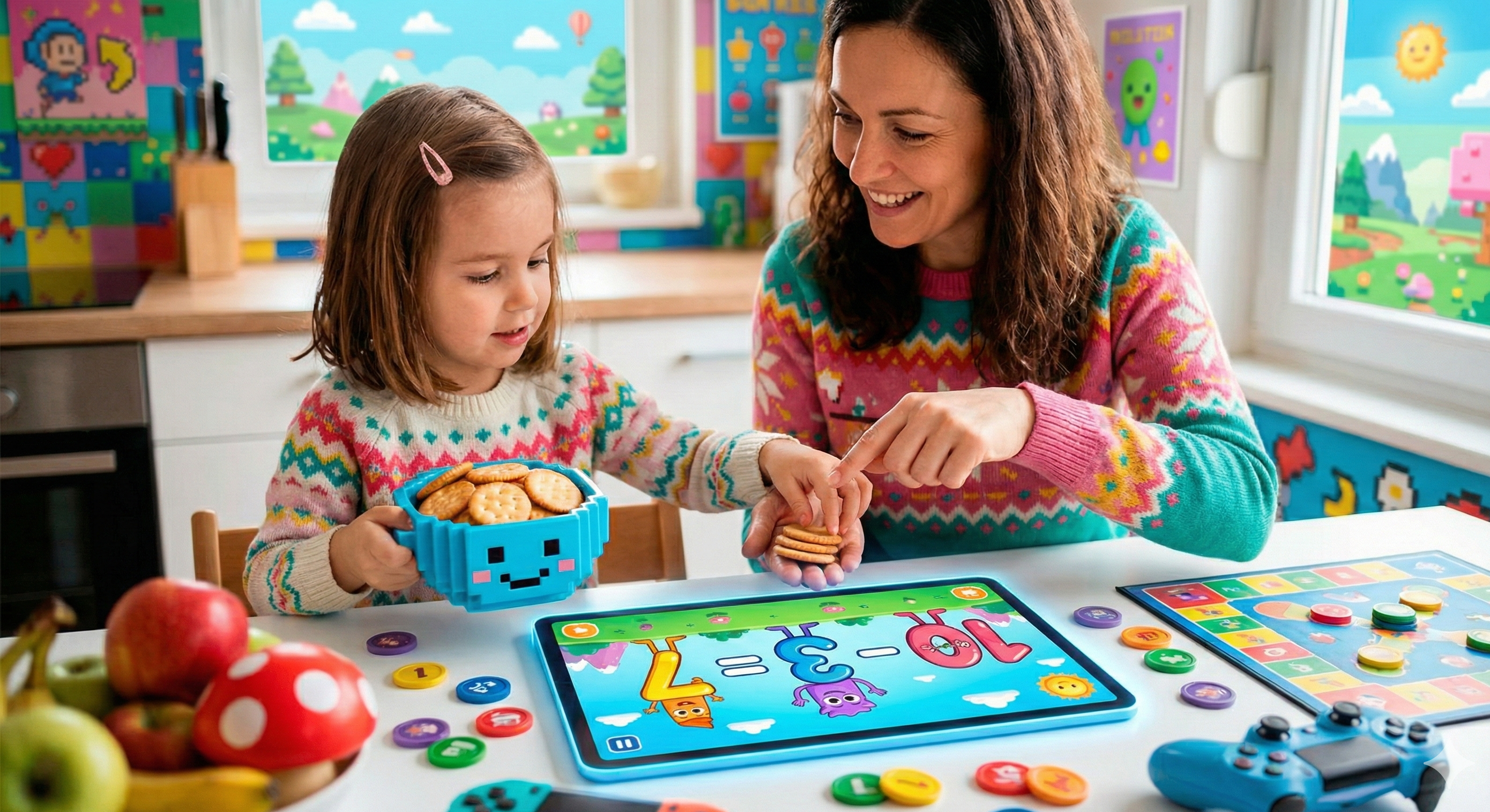
From Confusion to Confidence: Your Child's Word Problem Journey
Your child will gain fluency through consistent practice and patient guidance. As they master simple problems, the stories that once seemed confusing become familiar patterns they recognize instantly.
The skills they gain will serve them throughout school and beyond. You're building problem-solvers who face challenges with confidence.
Book a demo with Bhanzu to see how personalized guidance can support your child's math journey and build lasting confidence in word problem solving.
Was this article helpful?
Your feedback helps us write better content