
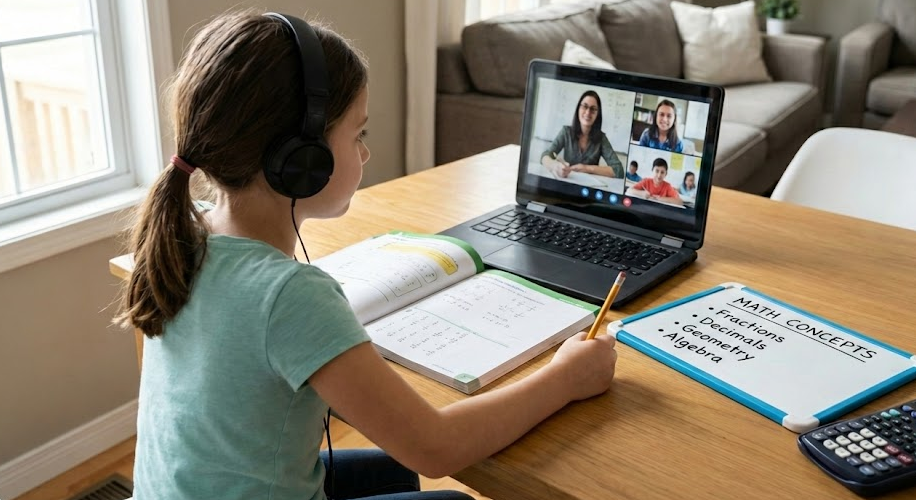
Is your kitchen table now a classroom? If the chaotic clutter of open laptops, charging cables, and scattered assignments has replaced quiet mealtimes, please know this format is far more than a temporary measure.
It is an outstanding opportunity for your child to develop self-reliance, resilience, and essential digital fluency that will serve them for life. And, you hold the ability to shape this experience for the better.
Let's transition from survival mode to success. We will explore practical strategies that help focus, establish dependable structure, and lead to truly rewarding academic A+ results even in remote learning models!
What is Remote Learning?
If you’re wondering what is remote learning in practice, remote learning, also called online or distance learning, is when children learn outside a regular classroom, usually using the internet. Lessons can happen in two ways:
Live video classes where students learn at the same time as their teacher (synchronous learning)
Pre-recorded lessons and online assignments that students can do on their own schedule (asynchronous learning)
How Remote Learning Works for Children
Remote learning mixes technology, planning, and communication to help kids learn outside a traditional classroom. Here’s what it looks like:
Digital Tools: Platforms like Google Classroom, Zoom, and Microsoft Teams host lessons, homework, and class chats. Kids can join live classes, submit work, and team up with classmates from anywhere.
Learning Management Systems (LMS): These tools keep assignments organized, track progress, and let teachers give feedback. Parents can check in too, so they know how their child is doing.
Interactive Content: Learning isn’t just reading or watching videos. Quizzes, games, and group projects make lessons fun and help kids understand better.
Teacher Support: Teachers stay connected through emails, messages, and online discussions. Regular check-ins give guidance, answer questions, and keep kids motivated, just like in a real classroom.
Benefits of Remote Learning for Children
Remote learning can be a great fit for many children when it’s done well. Here’s why it works:
Learn at Their Own Pace
Kids can pause, rewind, and review lessons anytime. No pressure to keep up with the fastest learner in the class, they move forward once they truly understand.
More Attention
Online tools often adjust to a child’s level. Extra practice for tough topics or advanced work for curious minds helps learning feel more natural and less frustrating.
Comfort of Home
Learning in a familiar space can help children feel calmer and more focused, especially those who struggle with anxiety or distractions in busy classrooms.
Parents Stay in the Loop
Parents can easily see what’s being taught and how their child is doing. This makes it easier to step in and support learning at the right time.
More Fun, Less Boring
Games, quizzes, videos, and group activities keep lessons lively. Learning feels interactive instead of just listening and writing.
Saves Time and Energy
No travel means more time for rest, play, hobbies, or family. Kids start lessons with more energy and less stress.
Prepares Kids for the Future
Using technology, communicating online, and working independently helps children build skills they’ll need later in school and beyond.
How Parents Can Support Remote Learning
Here are practical, proven strategies for helping your child stay on track and succeed with online learning:
Support strategy | How to make it work |
|---|---|
Create a focus zone | Set up a quiet, well-lit learning corner with all essentials nearby. Use small cues like a whiteboard or focus playlist to signal study time |
Build a daily rhythm | Keep consistent start times, breaks, and wrap-ups, with flexibility for low-energy moments. Add short movement breaks to reset attention |
Track real engagement | Notice participation, questions, and explanations. Ask one reflection question daily to check understanding |
Mix screen and real life | Reinforce lessons with hands-on activities, drawing, or talking through problems away from the screen |
Break big tasks into steps | Use mini-deadlines and celebrate checkpoints to maintain momentum |
Use smart learning tools | Choose tools that match your child’s learning style. Focus on meaningful use, not more apps |
Encourage peer connections | Support virtual study groups or paired work to strengthen reasoning and confidence |
Celebrate every win | Recognize effort and progress, not just outcomes. Small acknowledgment boosts motivation |
Why Remote Learning Can Work for Your Child
Remote learning can be exciting when kids feel supported and motivated. With the right space, routines, and your encouragement, they can take charge of their learning, stay curious, and enjoy discovering new things. Every small win from finishing a tricky assignment, asking a smart question, or mastering a concept is a step toward confidence, independence, and a lifelong love of learning.
For parents looking for extra support, Bhanzu offers interactive math learning that makes tricky concepts easier to understand and fun to practice. Book a demo now to get started.
Was this article helpful?
Your feedback helps us write better content