
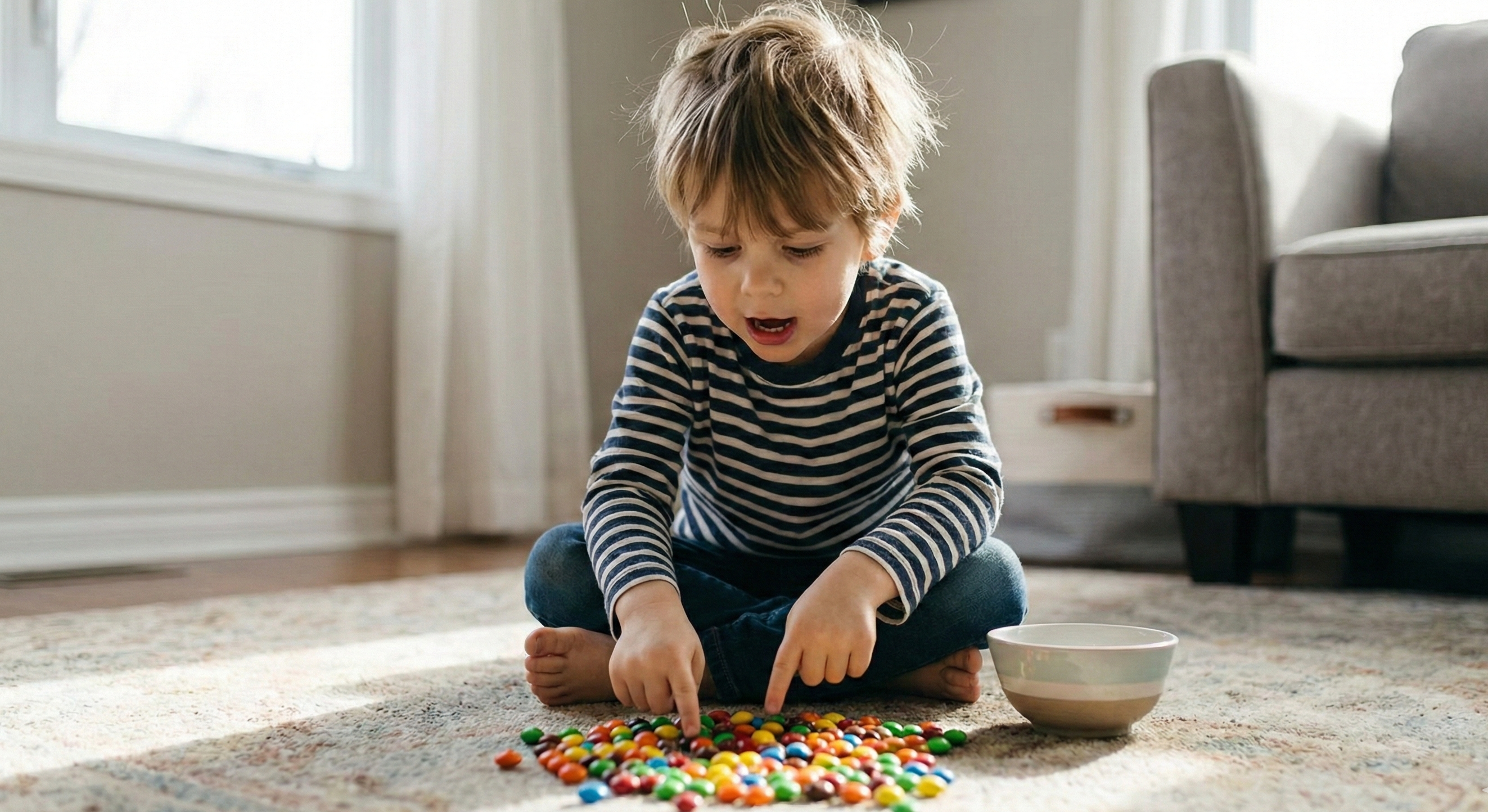
Can counting candy make your child smarter? Absolutely!
When numbers become part of play, learning sticks without any pressure. By the time the game ends, your little one is thinking, reasoning, and discovering the magic of math all on their own. Let’s explore how you can help your child develop strong math skills while keeping learning playful.
Here are math activities for 5-year-olds that take their curiosity even further, turning everyday moments into fun, hands-on math adventures your child will love
What is early math learning?
Early math is more than memorizing numbers. It’s about exploring, experimenting, and understanding patterns in everyday life. At this age, children learn best when concepts are connected to objects, actions, and games.
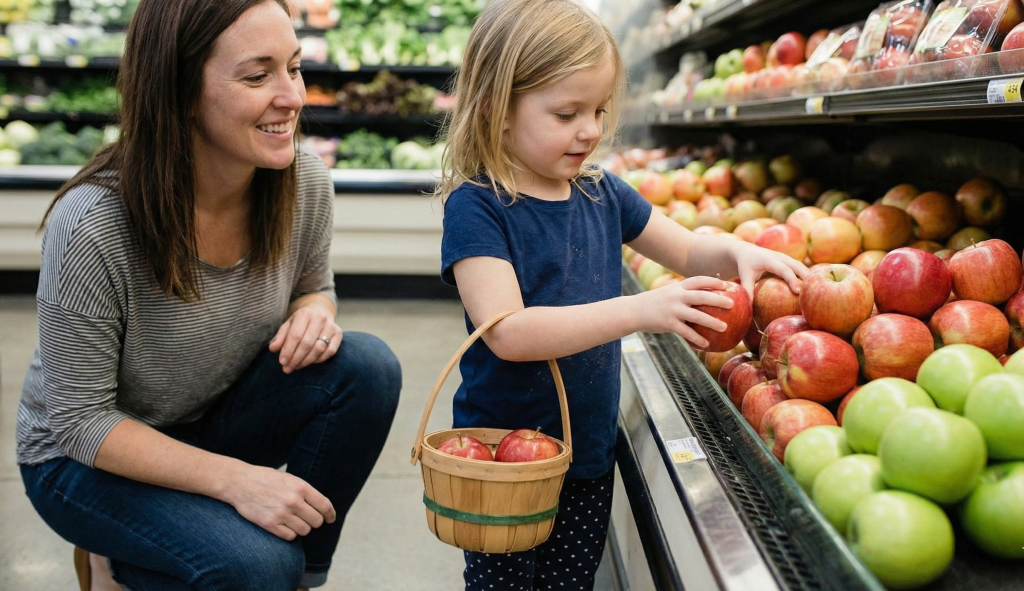
Other key concepts to explore:
Concept | What it means | Example activity |
|---|---|---|
Shapes & Spatial Awareness | Recognizing and sorting shapes | Shape hunt around the house. Ask to spot triangles, circles, and squares indoors or outdoors |
Patterns | Spotting repeating colors, sounds, or shapes | Let them continue or create new sequences. Build a red-blue-red-blue block pattern |
Measurement & Comparison | Understanding bigger/smaller, longer/shorter | Compare toy cars by length. You can also try simple math games for 5 year olds online that reinforce numbers and patterns in a playful way |
Simple Addition & Subtraction | Combining or separating groups | Add or remove candies from a bowl |
🧠 Key Insight: Instead of showing the answer, ask “How can we check if this pile has more?” or “Can you find a different way to sort these?” This pushes children to reason and experiment instead of memorizing.
How do I teach these concepts step by step?
Here are some simple ways to make math activities for 5 year olds stick:
Start with what they love
Grab toys, blocks, or even snacks your child enjoys. Counting grapes at snack time or lining up cars by size turns something ordinary into a playful math lesson. When children use objects they care about, learning feels like a game instead of a task.Ask fun, curious questions
Swap instructions for questions that spark thinking. Try asking, “Which pile has more?” or “Can you make a new pattern with these beads?” These questions encourage your child to experiment, make choices, and figure things out on their own.Let them play and explore freely
Sorting, stacking, and arranging objects is more than just fun—it’s how children grasp numbers, shapes, and patterns. Mistakes aren’t failures; they are discoveries. Every try teaches reasoning and problem-solving in a hands-on way.Introduce symbols when they’re ready
After they’re confident with physical objects and patterns, show numbers, shapes, or simple drawings. Linking hands-on experiences to symbols makes abstract concepts meaningful and memorable.Keep sessions short and exciting
Attention spans are tiny at this age. Ten to fifteen minutes of active, playful engagement is perfect. Stop while your child is still interested, and you’ll leave them eager for the next round.
🧠 Key Insight: Turn counting into a mini experiment. For example, ask your child to predict how many candies will fit in a cup before filling it. Then compare the prediction to the actual count. This builds estimation skills and a sense of quantity while making counting activities for 5 year olds exciting.
Common mistakes parents make
Mistake | Why it happens | How to fix it |
|---|---|---|
Overcorrecting | Kids need trial and error | Instead of fixing mistakes, ask “What happens if we try it this way?” |
Rushing concepts | Impatience to move on | Introduce one skill at a time and repeat in different contexts |
Abstract too soon | Numbers on paper feel hard | Start with physical objects and visuals, like toys or snacks |
Turn Everyday Play Into Math Adventures
Learning math for 5-year-olds can pop up in the funniest places. When your child lines up toy cars by size, sorts crayons by color, or counts steps on the stairs, they are learning in ways worksheets never can.
Picture them spotting a pattern in their snack, figuring out how many blocks fit in a row, or guessing how many jumps it will take to cross the room. That is learning becoming a game, and games turning into learning.
With Bhanzu, your child can take these playful experiences further. Structured, hands-on activities help them explore numbers, experiment with patterns, and build skills that last a lifetime. Book a demo class today and watch your child fall in love with math while having fun.
Was this article helpful?
Your feedback helps us write better content