Have you ever noticed the joy on your child’s face right before they start stacking a tower of Jenga blocks? The thrill of balance, angles, and shapes keeps them awestruck far longer than you’d expect.
That's Greek mathematics in motion. The beauty of logic meeting imagination has given us geometry and number theory. All of these concepts are riddled with ancient stories.
Before you leave it at that, how about getting them hooked on that instead of a long math worksheet? All you need is a few creative ways to bring ancient Greek mathematics home.
How To Explore Ancient Greece Math With Your Child
Consider these five ways to get your child curious about Greek mathematics:
1. Build An Ancient Geometry Toolkit
The history of mathematics in ancient Greece began with simple tools and deep curiosity. Everything from your compass to a straight line was a doorway to discovery. This activity helps your child see patterns, explore balance, and understand how shapes connect, building strong spatial reasoning and visual logic.
How to get started:
Gather a compass (or string and pencil), ruler, printable angle templates, and scrap cardboard.
Draw circles, bisect lines, and create equal-angle shapes.
Ask, “Why do these shapes fit so neatly?” or “What happens if we change the angle?”
Ways to keep it engaging:
Turn it into a design challenge: “Create a Greek-inspired floor pattern.”
Let your child color or decorate their final geometric masterpiece.
2. Turn Coin Designs and Tiles into Mini Research
Greek mathematics is all about beauty in balance, especially in coin engravings and mosaic floors. This activity helps your child explore that same harmony by connecting art, history, and math. It strengthens visual reasoning, pattern recognition, and observation skills in a fun, hands-on way.
How to get the investigation started:
Gather a few coins or tile photos and let your child look for repeating shapes or symmetry lines.
Have them sketch or snap photos, then ask, “How many ways can this design turn and still look the same?”
Label symmetry types and compare across different objects.
Ways to keep it engaging:
Create a “mini symmetry museum” at home.
Hunt for patterns outdoors or on everyday objects.
Compete to find the most symmetrical item in 10 minutes.
3. Play "Euclid's Detective" With Simple Proof Puzzles
Euclid represents the beginning of mathematics in Greece, a thinker whose vision shaped the very language of geometry. His brilliance was in seeing patterns and proving ideas through simple visuals. This activity turns your child into a math detective, uncovering hidden truths using drawings and logic instead of formulas.
What you and your child will do:
Set up: Gather the printable puzzle cards, a whiteboard or sheet of paper, and colored markers.
Observe: Look closely at each puzzle or shape with your kid. Ask guiding questions like, “Are all sides of this triangle really equal?”
Investigate: Use drawings and colors to test, measure, mark, or compare their ideas on shapes.
Explain: Talk about each step of your child’s reasoning for a clear “proof trail” that brings their thinking alive and heard.
Ways to dial up the mystery:
Hide each clue card and reveal the next only when your child justifies their reasoning.
Add mini time challenges: “Solve it in 5 minutes!”
Celebrate creative logic. Even if the answer isn’t perfect, every explanation builds insight.
4. Hands-On Pythagoras Challenge
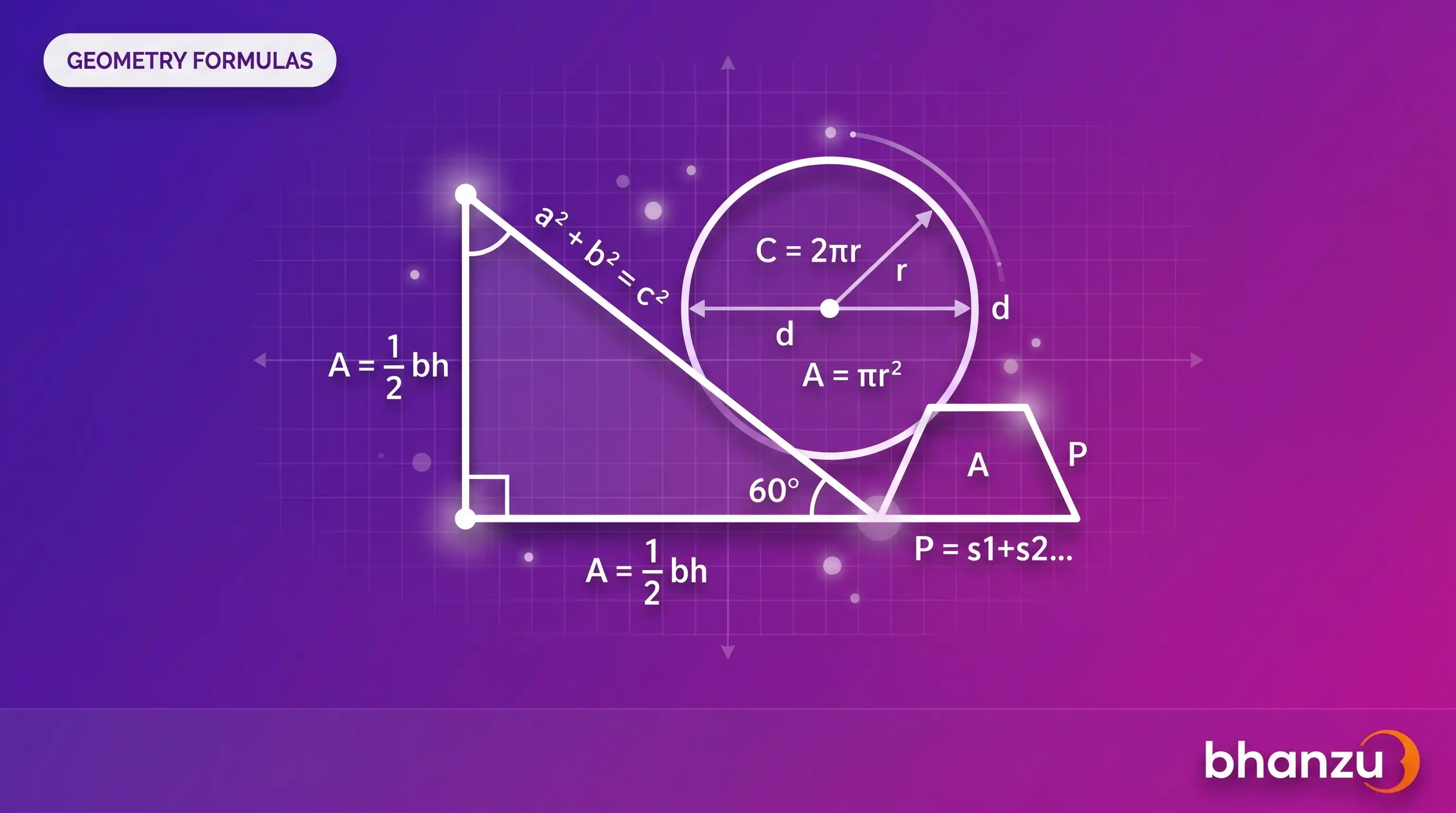
Pythagoras is a famous part of Greek mathematics history who loved uncovering patterns hidden between numbers and shapes. This hands-on activity lets your child experience math through discovery, not memorization. As they build and explore, they’ll strengthen spatial reasoning, logical prediction, and confidence in visual problem-solving.
What your child will do:
Use masking tape to form a large right triangle on the floor.
Stretch a string from corner to corner to see the hypotenuse in action.
Walk along each side, counting steps to understand how side lengths relate.
Ways to keep it fun:
Turn it into a “geometry race” to form accurate triangles.
Have them predict which sides’ squares will fit the largest one before checking.
Celebrate with a “Triangle Trophy” for creative discoveries or clever reasoning.
5. Act Out Tales of Greek Mathematicians
Stories of discovery help children remember math through imagination and empathy. This activity combines storytelling and mini-experiments to bring Greek ideas to life.
Script for Your Scenes:
“The Overflowing Tub”: Archimedes discovers the principle of water displacement. Test this with toy boats and containers.
“The Shape Debate”: Kids act as thinkers, arguing which shape is most stable and proving it with building blocks.
“The Shadow Clock”: Build a simple sundial to measure time by angles.
How to keep the stage lively:
Use props and quick role switches.
Let your child narrate what the “scientist” discovered.
Record short clips and name them “Greek Math Moments.”
Power Your Child's Mathematical Thinking, Ancient Greece Style
Greek mathematics teaches kids how to ask better questions, design quick experiments, and explain their answers. Asking more "why" questions, designing their own puzzles, and using logical reasoning in school projects develop skills that go beyond math class.
Your role as facilitator makes this growth possible, providing materials, asking questions, and celebrating discoveries.
Ready to support your child's mathematical curiosity further? Book a free demo class with Bhanzu to combine your child's natural curiosity with Greek mathematics for confident mathematical thinking that lasts a lifetime.
Was this article helpful?
Your feedback helps us write better content