

"My child forgets concepts quickly: is it because we don't have a consistent routine?"
Think of math like brushing teeth: it works best when it's a small, daily habit, not a once-a-week cram session! Just as we wouldn't expect healthy teeth from brushing once weekly, we can't expect math fluency from sporadic practice sessions squeezed in before tests.
Home routine can fill a gap that exists in even the best educational systems. You don't need hours of drills: just a few minutes of the right activities can boost your child's confidence and create a foundation for lifelong mathematical thinking. Here's how you can go about it.
Step 1: Set Goals That Inspire, Not Pressure
Children thrive when they know what they’re working toward. Keep goals small and achievable so they encourage progress instead of anxiety:
Daily sessions: 20–30 minutes of focused practice is enough.
Weekly focus: Mix arithmetic, logic puzzles, and problem-solving for variety.
Milestones: Celebrate small wins like mastering multiplication tables or improving speed.
Clarity makes children feel capable, while pressure only holds them back.
Step 2: Focus on Understanding, Not Memorizing
Rote learning fades quickly. When children connect math to meaning, it sticks. Try:
Visuals and manipulatives: Use blocks, drawings, or number lines.
Real-life applications: Show how math works in budgeting, measuring, or planning.
Mental math: Start small and increase difficulty over time.
Once your child has understood a concept, they can practice building speed.

Step 3: Make Math Playful and Interactive
Math sticks when it’s enjoyable, not repetitive. Incorporating fun keeps children engaged and motivated:
Games and challenges: Turn drills into fun competitions.
Creative tasks: Ask them to design a mini project, like planning a trip or splitting snacks fairly.
Quick puzzles: Card games, riddles, or short logic exercises keep curiosity alive.
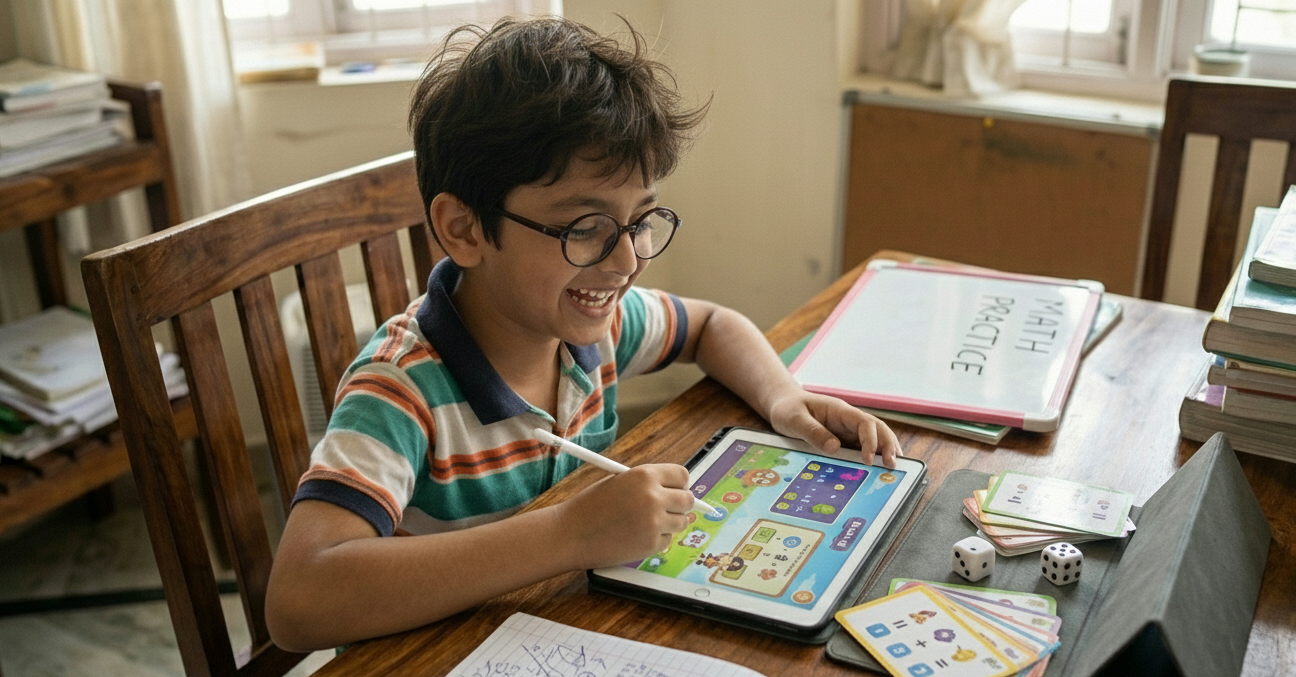
Even simple activities like math card games, logic puzzles, or problem-based storytelling can turn ordinary practice into an engaging experience. The goal is to make math a part of daily curiosity, not just homework.
Step 4: Recognize Effort and Progress
Acknowledgment builds motivation. Try these simple strategies:
Track progress with charts or journals.
Celebrate milestones with praise or small rewards.
Highlight effort, not just accuracy.
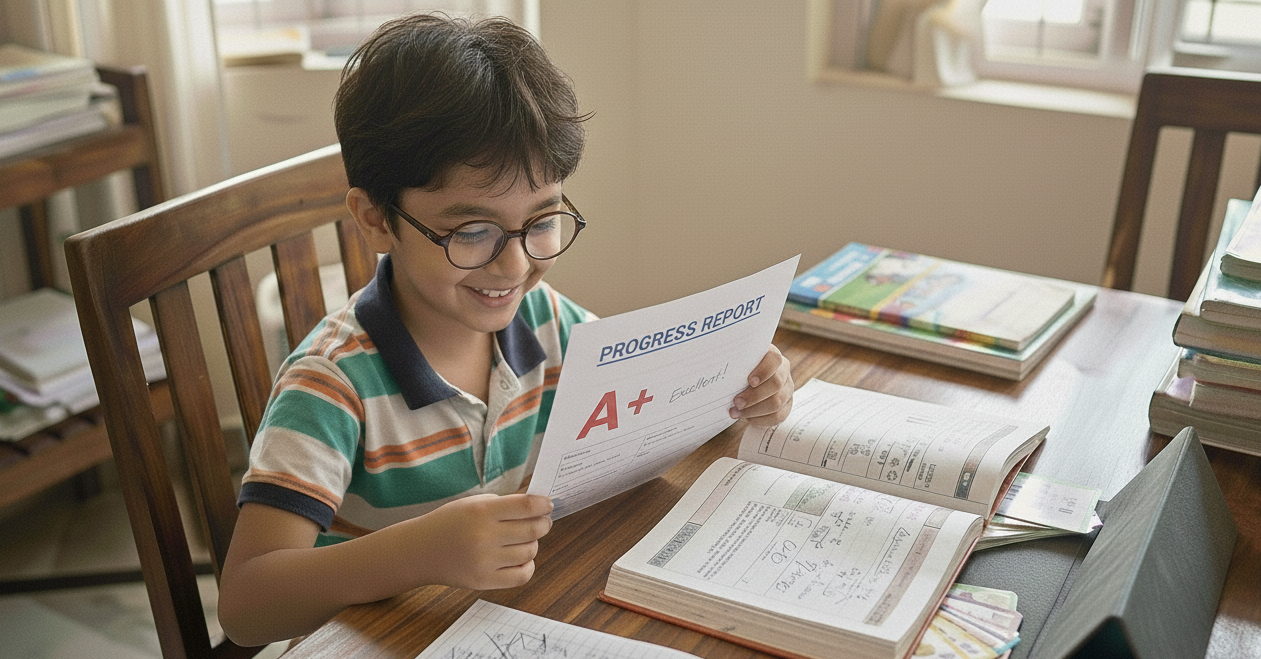
When progress is visible, children approach math with pride instead of fear.
Step 5: Add Reflection to Strengthen Learning
A short review at the end of each session helps knowledge stick:
Ask your child to explain their reasoning.
Encourage them to spot shortcuts or repeated strategies.
Connect lessons to daily life, like comparing prices or measuring ingredients.
Reflection turns practice into lasting understanding.
Pro Tip: Keep routines flexible. Consistency matters, but flexibility prevents burnout. If your child seems tired or frustrated, shorten the session or switch to a fun puzzle. The goal is to make math part of life, not a rigid schedule. Allowing small adjustments keeps children engaged while maintaining steady progress.
Sample Home Math Routine
Time | Activity | Focus | Tools / Examples |
|---|---|---|---|
5–10 min | Speed Math Warm-Up | Build mental agility, accuracy, and number sense | Left-to-Right addition/subtraction races, flashcards, timers |
10–15 min | Concept Exploration | Understand new topics through real-world connections | Visual aids, manipulatives, interactive explanations (e.g., exploring fractions through slicing a pizza, mapping distances on a travel plan) |
10–15 min | Guided Practice | Apply concepts with curiosity-driven challenges | Worksheets with real-life problems: Weather Tracker (temperature trends), Sports Math (cricket scores, basketball percentages), Travel Planner (estimating distances, time, tickets, fuel) |
5 min | Reflection & Discussion | Retain learning, develop reasoning, and connect ideas | Parent conversation, journaling, “Explain to me” challenge |
Weekly | Challenge Day | Logic, creativity, and application of multiple skills | Speed math races, real-world puzzles, logic games, pattern explorations in art (rangolis, mandalas) or nature (Fibonacci spirals, shells) |
This routine balances structure, engagement, and reflection, keeping math manageable and enjoyable without overwhelming children.

Make Math Part of Everyday Confidence
Creating a math routine at home is less about drilling and more about curiosity, progress, and encouragement. With steady practice and playful learning, math transforms from a source of stress into a source of pride.
Bhanzu’s structured programs and tools are designed to help parents make this journey easier. Try a free math class today to see how Bhanzu can support your child’s growth in math: Book a demo.
Was this article helpful?
Your feedback helps us write better content