Whole numbers include zero and all counting numbers: 0, 1, 2, 3, and so on, with no fractions, decimals, or negative values. Integers take this further by adding negative numbers to the mix: ..., -3, -2, -1, 0, 1, 2, 3, continuing infinitely in both directions.
So, when your child counts pocket money ($0, $1, $2, $3), they're using whole numbers, but when tracking temperature changes that dip below zero (-5°F, 0°F, 15°F), they're working with integers.
This distinction becomes essential as children progress from basic arithmetic in elementary school to algebra concepts in middle school, where negative numbers appear regularly in equations and real-world problem solving.
What Makes Whole Numbers Special?
Whole numbers represent the foundation your child builds upon in early math education. These numbers start with zero and continue with all positive counting numbers without any fractional parts.
Your child encounters whole numbers daily through counting activities, basic addition and subtraction, and place value work. When they count toys, calculate simple sums like 7 + 5 = 12, or work with money amounts like $23, they're operating entirely within the whole number system.
The key characteristic that defines whole numbers is their completeness, that is, they're "whole" without pieces or parts. You won't find 2.5 or 3¼ in this number family. This makes whole numbers perfect for counting discrete objects and building fundamental arithmetic skills.
Think about how naturally whole numbers fit everyday situations. Your child can have 3 apples, 0 homework assignments, or 15 stickers, but they can't have -2 pets or 4.7 siblings when counting actual family members.
How Integers Expand Your Child's Number World
Integers include all whole numbers plus their negative counterparts. This expansion happens when your child needs to represent quantities that go below zero or express opposite relationships.
The number line helps visualize this concept beautifully. Whole numbers occupy the right side starting from zero, while integers extend infinitely in both directions. Each positive whole number has a corresponding negative integer: 5 and -5, 12 and -12, and so forth.
[Suggested visual: Number line showing whole numbers (0, 1, 2, 3...) highlighted on the right side, with integers extending left (-3, -2, -1) and right, demonstrating the relationship]
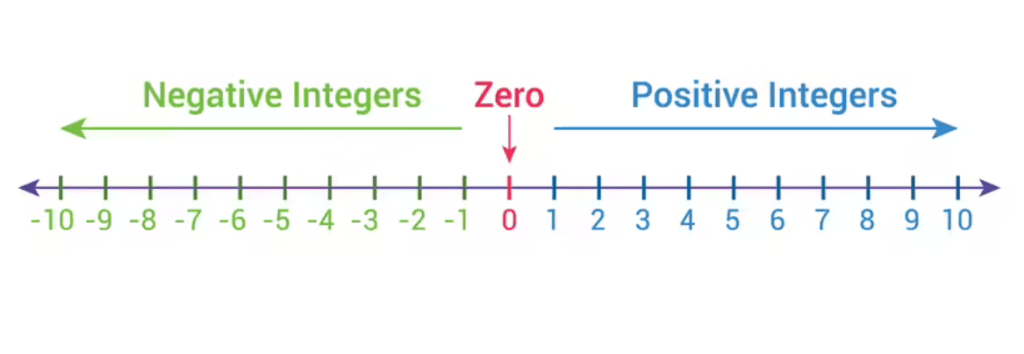
Your child typically encounters integers around grades 6-8, when mathematical problems begin involving temperatures below freezing, bank account overdrafts, or elevation changes below sea level. These contexts require numbers that can represent "less than nothing" or "opposite directions."
The critical difference lies in the integers' ability to express debt, deficits, and directional changes that whole numbers simply cannot capture.
Common Mix-Ups and How to Clear Them Up
Several predictable mistakes occur when children first learn about integers vs whole numbers.
Mixing up negative signs with subtraction signs happens frequently. Your child might read -3 + 5 as "three minus five" instead of "negative three plus five." Help them by emphasizing that the negative sign attaches directly to the number, while subtraction signs appear between two separate numbers.
Thinking negative numbers are "smaller" in absolute terms creates confusion. Children often believe -10 is smaller than -2 because 10 is bigger than 2. Use a number line to show that -10 sits farther left, making it smaller in value, even though the distance from zero is greater.
Assuming all numbers with negative signs are integers leads to an incomplete understanding. Remind your child that -2.5 and -¾ contain negative signs but aren't integers because they have fractional parts.
Practice these corrections by asking your child to place numbers on a number line and explain their reasoning aloud. This approach reveals their thinking process and highlights areas needing attention.
Simple Home Activities That Make It Click
Create engaging practice opportunities that reinforce the whole numbers vs integers distinction through hands-on exploration.
Try the "Temperature Detective" game using a thermometer app. Check daily temperatures together for a week, recording them on a simple chart. Ask your child to identify which readings are whole numbers versus integers, and discuss why some temperatures require negative values.
Set up a "Number Line Hopscotch" using tape on the floor. Start at zero and call out addition or subtraction problems. Your child physically moves right for positive numbers, left for negative numbers, landing on their final answer.
Helping Your Child Master Number Types with Confidence
Your child will develop strong number sense by understanding that whole numbers and integers serve different mathematical purposes. Whole numbers handle counting and basic arithmetic perfectly, while integers expand possibilities to include real-world situations requiring negative values.
This foundation prepares your child for algebraic thinking, coordinate graphing, and advanced problem-solving where both number types appear regularly. They'll approach middle school mathematics with confidence, knowing exactly which numbers to use for different mathematical situations.
Continue practicing through daily examples and encouraging your child to explain their number choice reasoning. You can book a demo class to experience our approach and see how we can help support your child's math journey through structured, engaging lessons that build lasting understanding.
Was this article helpful?
Your feedback helps us write better content