A stack of timed practice rounds sits on the kitchen table while your middle schooler scans problem after problem, pencil flying. Many parents witness these intense prep sessions and competition-day energy but lack clarity on the structure, preparation strategies, and realistic goals that actually matter.
With a clear plan and realistic goals, preparation becomes calmer, more focused, and far more effective. This guide helps you support your child in a way that builds confidence, sharpens problem-solving, and makes the Mathcounts journey something they can feel proud of.
What Is Mathcounts?
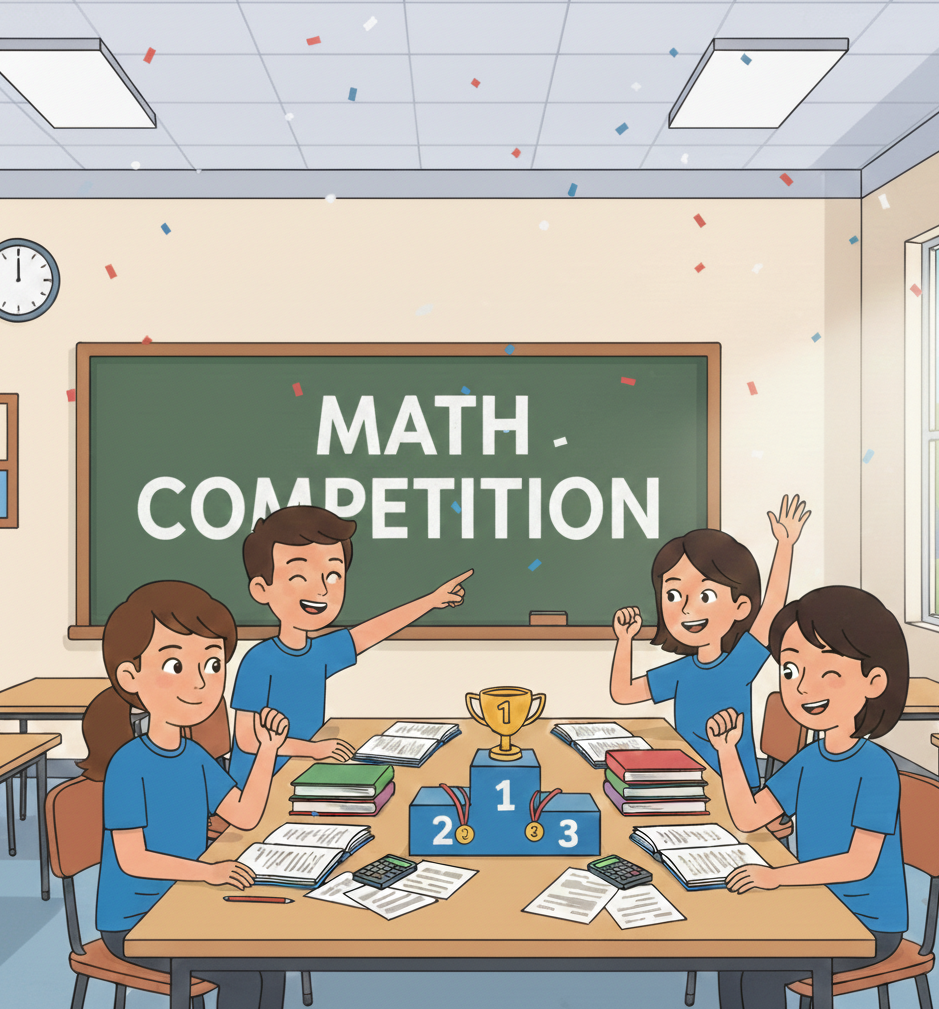
Mathcounts is a nationwide middle school mathematics competition program for grades 6-8 that tests speed, problem-solving, and mathematical reasoning through school clubs and tiered competitions. Students compete individually and in teams, progressing from school-level contests to chapter, state, and national championships between November and May.
The competition includes four distinct rounds:
Sprint Round: 30 problems in 30 minutes (no calculator)
Target Round: 8 problems in 24 minutes (calculator allowed)
Team Round: 10 problems in 20 minutes (collaborative)
Countdown Round: Head-to-head oral competition (top scorers only)
Beyond trophies and recognition, Mathcounts builds semantic number sense, strengthens reasoning abilities, and develops contest stamina that transfers to classroom success and standardized testing.
Core Skills to Prioritize
Focus your practice on these high-impact areas with measurable goals:
Number Sense & Estimation
Goal: Reduce reliance on scratch work
Measure: Solves 8/10 mental arithmetic problems in 60 seconds
Problem Translation & Reasoning
Goal: Accurately interpret word problems
Measure: 70% correct on target-style prompts
Speed Techniques
Goal: Master shortcuts for fractions, permutations, algebraic simplification
Measure: Cut average sprint problem time by 20% in 3 weeks
Test Stamina & Contest Mindset
Goal: Build endurance for full competitions
Measure: Completes full 40-question timed sprint twice without check-ins
Three Micro-Drills for Tonight:
• Mental-math rapid-fire: 5 minutes, 10 mixed computations (time-based)
• Target translation: 2-minute accuracy drill on word problems
• Pair-explain: Solves and explains one problem aloud (confidence-building)
6-Week Step-by-Step Prep Plan
Week 1 — Baseline & Quick Wins: Take a 10-problem mini-sprint; identify 3 weak areas. Goal: "Identify 3 repeat error types in one session."
Week 2 — Build Number Sense: Daily 10-minute mental-math drills. You time your child for 5 minutes; record speed. Success: 80% accuracy on set.
Week 3 — Target-style Reasoning: Two paired-problem nights; practice writing one-line explanations. Success: 6/8 target problems solved with correct reasoning.
Week 4 — Teamwork & Strategy: Mock team problem session; your child practices explaining solutions aloud. Behavioral indicator: leads 2 problems.
Week 5 — Full Mock Sprint + Review: Timed full 40-problem sprint; measure accuracy & time per problem. Goal: achieve 60-70% accuracy as baseline improvement.
Week 6 — Countdown & Confidence: Short oral drills; relaxation techniques for contest day. Confidence indicator: your child reports lower anxiety on 1-5 scale.
Quick Tip: Micro-Scorecard
Track progress with this simple template:
Date | Problems Attempted | Correct | Time | Notes
Calculate accuracy percentage and average time per problem weekly
Note improvement patterns and persistent challenge areas
Common Mistakes & Fixes
Overemphasis on drills without reasoning
Fix: Alternate speed drills with one target-style reasoning task daily.
Anxiety under time pressure
Fix: Practice timed segments shorter than actual contest rounds to build success momentum gradually.
Using calculators or over-scaffolding
Fix: Enforce "no calculator" practice windows and encourage self-correction before checking answers.
When to Consider Extra Support & What to Look For
Seek additional help when progress stalls after 6 weeks, repeated conceptual errors persist, or contest anxiety rises despite practice.
Look for programs offering:
Small-group contest-focused practice
Timed-sprint sessions with immediate feedback
Reasoning explanations and strategy development
Mock team collaboration opportunities
Success metric for program choice: measurable improvement like 15 percentage point bump in mock sprint accuracy within 4-6 weeks.
Contest-Day Checklist & Success Signs
Essential Items:
• Extra pencils and erasers
• Printed warm-up problems
• Clear water bottle
• 2-minute breathing exercise routine
• 30-minute arrival buffer
Success Signs to Watch:
• Completes sprint without meltdown
• Volunteers ideas during team round
• Maintains calm between rounds
Fun Fact: Mathcounts was founded in 1983 and has engaged over 10 million students nationwide, with many alumni crediting the program for their STEM career paths.

Join the Mathcounts Community
Many families successfully navigate this journey together through local clubs, practice groups, and shared resources. Picture your child confidently answering countdown questions, contributing solutions to their team, and carrying these contest habits into daily math class and beyond.
For structured, contest-focused practice and guidance, explore a demo class that aligns with Mathcounts preparation goals.
Was this article helpful?
Your feedback helps us write better content