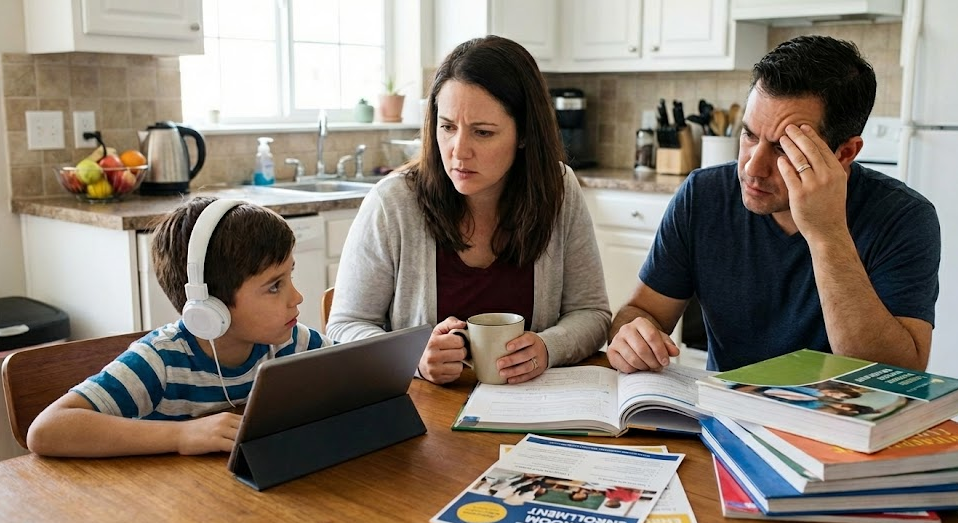
Most parents today feel stuck between two extremes: increasing screen time for online learning or relying only on traditional, teacher-led classes. Both have their strengths, but neither fully supports how children learn in a changing world.
That’s exactly why many schools are now defining blended learning as the smarter, more balanced way forward.
What Blended Learning Really Means
Instead of treating digital tools as an “add-on,” blended learning intentionally combines in-person instruction with structured online practice. It’s planned. It’s purposeful. And it’s built around how students actually learn today.
When defining blended learning in simple terms, think of it as a model where:
Teachers guide students through focused instruction.
Digital tools reinforce concepts at the student’s pace.
Parents get clearer visibility into progress and strengths.
Students receive flexibility and support. Teachers get better insights. Parents get clarity instead of confusion. It’s a win for everyone.
Common Myths vs. Reality
Myth 1: “Blended = Less teacher time.”
Reality: Teachers spend more targeted time with students through small-group instruction. Look for rotations, teacher-led mini-sessions, and personalized feedback.
Myth 2: “Blended means too much screen time.”
Reality: High-quality programs use screen time intentionally, with clear learning goals and not endless clicking. Every digital activity connects back to the classroom lesson.
Myth 3: “It replaces hands-on learning.”
Reality: Strong blended learning models alternate digital practice with hands-on manipulatives, group discussions, reading, and real-world projects.
How Blended Learning Looks Day-to-Day
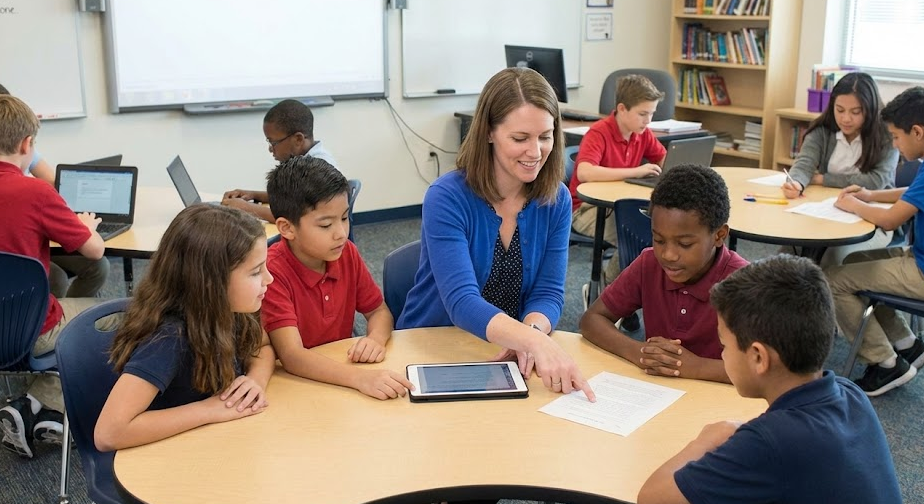
A typical classroom using blended learning may follow a weekly rhythm:
Monday/Wednesday: Small-group teaching
Tuesday/Thursday: Independent online practice
Friday: Collaborative problem-solving and application
Teachers rotate between groups while students work on adaptive modules that adjust difficulty in real time.
Quality signals parents can observe:
Teacher comments referencing online work
Weekly goals that connect in-person and online tasks
Adaptive activities adjusting to your child’s performance
Evidence teachers review platform data before teaching
Example:
In math class, the teacher explains fractions to a small group while others work on personalized fraction modules. After 20 minutes, groups switch. Students who need help get extra support based on their online performance.
Practical Steps Parents Can Take Tonight and This Week
3 Questions to Ask the Teacher
“What skills are targeted in this week’s online modules?”
“How do you use my child’s online scores during planning?”
“Can I access the parent dashboard for progress updates?”
Check-in Questions for Your Child
Ask:
“What skill were you practicing online today?”
“Show me one thing you learned.”
Look for vocabulary connecting to classroom lessons.
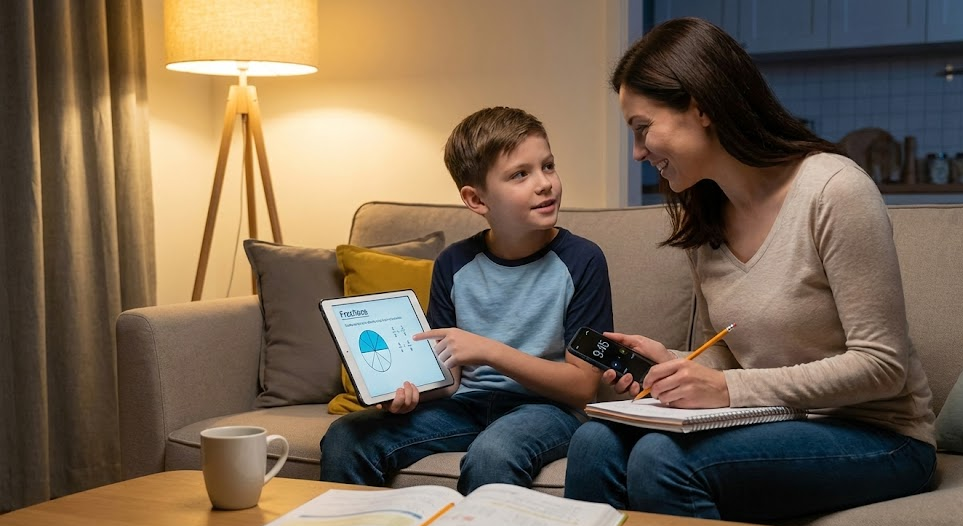
Mini-Review (10 minutes tonight)
Have your child show you one online lesson?
Ask them to explain one new term in under 60 seconds, then apply it to a homework problem.
Weekly Routine
Schedule 10–15 minutes twice a week for short review sessions.
Let your child “teach” you what they learned online.
Reading Progress Reports
Focus on mastery percentage, not minutes logged.
80% mastery with 20 minutes is more meaningful than 50% with an hour.
Quick Parent Checklist to Evaluate Blended Programs
Choosing the right blended learning program starts with knowing what a high-quality model looks like. Not all programs are created equal, and the best ones give teachers meaningful insight, keep screen time purposeful, and make learning clearer for families.
Use this quick parent checklist to evaluate whether a school’s blended learning approach is truly effective and aligned with your child’s needs.
Is online content aligned with classroom lessons?
Does the teacher act on student data?
Is screen time purposeful with off-screen follow-ups?
Are families given simple indicators of progress?
Is weekly small-group instruction guaranteed?
Supporting Your Child’s Blended Learning Journey
Now that you understand the basics of defining blended learning and what it looks like in practice, the next step is simple: try one strategy this week. A single check-in question or a 10-minute review can boost clarity and confidence.
Over time, these small habits help your child become more independent, more skilled, and more prepared for real-world learning.
If you want a deeper look, join a demo class to see how expert-designed blended learning programs balance digital tools with strong classroom teaching. Imagine your child confidently explaining concepts and switching smoothly between online and classroom tasks; that’s the promise of well-implemented blended learning.
Was this article helpful?
Your feedback helps us write better content